
Understanding how your Social Security retirement benefits are calculated is a cornerstone of effective retirement planning. For many Americans, Social Security represents a significant portion, if not the majority, of their retirement income. Yet, the precise methodology behind these calculations often remains a mystery, shrouded in complex terms like “bend points” and “indexed earnings.” This article aims to demystify the process, breaking down the intricate formula into understandable components. By grasping these mechanics, you can make more informed decisions about when to claim your benefits, how to optimize your earnings, and ultimately, how to secure your financial future.

Understanding the Basics: The Foundation of Your Benefits
Before diving into the complex math, it’s crucial to establish a foundational understanding of what Social Security is and who it serves. This system is more than just a retirement plan; it’s a vital social insurance program designed to provide financial protection to millions of Americans.
A Brief Overview of the System
Created in 1935, Social Security was designed to provide a safety net for workers and their families. It encompasses retirement, disability, and survivor benefits. The system operates on a “pay-as-you-go” basis, meaning current workers’ contributions largely fund the benefits of current retirees and beneficiaries. While often perceived as a savings account, it’s more accurately described as an intergenerational social insurance program. It’s a promise from one generation to the next, ensuring a basic level of financial security in various life stages.
Who is Eligible for Retirement Benefits?
Eligibility for Social Security retirement benefits is primarily based on your work history. You earn “credits” as you work and pay Social Security taxes. In 2024, you receive one credit for each $1,730 of earnings, up to a maximum of four credits per year. To qualify for retirement benefits, you generally need to accumulate 40 credits, which typically translates to 10 years of work. However, some exceptions exist for disability or survivor benefits where fewer credits might be required. Once you meet this credit threshold, you are considered “fully insured” and eligible to receive benefits at your chosen claiming age.
Funding the System: Payroll Taxes
Social Security is predominantly funded through dedicated payroll taxes, known as Federal Insurance Contributions Act (FICA) taxes. Employees and employers each pay 6.2% of earnings up to an annual earnings limit ($168,600 in 2024) for Social Security, plus 1.45% each for Medicare, totaling 7.65%. Self-employed individuals pay both the employee and employer portions, a total of 15.3%, though they can deduct one-half of their self-employment taxes. These contributions are fundamental to the system’s ability to pay out benefits, linking your work history directly to your future entitlements.
The Core Calculation: How Your Benefits Are Determined
The calculation of your Social Security retirement benefit is not a simple average of all your earnings. It involves a specific, multi-step process designed to provide a progressively higher replacement rate for lower-income earners. This process culminates in what’s called your Primary Insurance Amount (PIA).
The 35 Highest-Earning Years Rule
The Social Security Administration (SSA) looks at your entire earnings record from the time you started working. However, for the calculation, they specifically identify your 35 highest-earning years. This is a critical point: if you have fewer than 35 years of earnings, the missing years will be counted as zeros in the calculation, which can significantly lower your average. This rule emphasizes the importance of a long and consistent work history. Working longer, especially into your peak earning years, can replace earlier, lower-earning years with higher ones, boosting your average.
Indexed Earnings: Adjusting for Inflation
Raw historical earnings are not directly used in the calculation. Instead, the SSA “indexes” your past earnings to account for changes in the average wage level in the U.S. economy. This indexing ensures that your past earnings are expressed in terms of their relative value closer to retirement age, preventing inflation from eroding the real value of your earlier contributions. For instance, a salary of $10,000 in 1980 had far more purchasing power than $10,000 today. Indexing adjusts that 1980 figure upwards to reflect its equivalent value in a more recent year (typically two years before your eligibility year). Earnings from the year you turn 60 and subsequent years are not indexed, as they are considered recent enough to reflect current economic conditions.
Calculating the Average Indexed Monthly Earnings (AIME)
Once your 35 highest years of earnings are identified and indexed, these figures are summed up. This total is then divided by 420 (which is 35 years multiplied by 12 months) to arrive at your Average Indexed Monthly Earnings (AIME). The AIME is a crucial intermediate step, representing your average monthly indexed earnings over your career. It’s the base figure from which your actual benefit amount will be derived. A higher AIME directly translates to a higher potential benefit, underscoring the value of maximizing your earnings over your career.
Applying the Bend Points: Progressive Benefit Formula
The final step in determining your Primary Insurance Amount (PIA) involves applying a progressive formula to your AIME using “bend points.” Social Security uses a weighted progressive formula, meaning that lower portions of your AIME are replaced at a higher percentage than higher portions. For example, for individuals who become eligible for retirement benefits in 2024:
-
90% of the first $1,174 of your AIME
-
32% of your AIME between $1,174 and $7,078
-
15% of your AIME above $7,078
These dollar amounts (the “bend points”) are adjusted annually based on changes in the national average wage index. The sum of these three percentages applied to your AIME is your Primary Insurance Amount (PIA). Your PIA is the benefit you would receive if you claim exactly at your Full Retirement Age (FRA). This progressive structure ensures that individuals with lower lifetime earnings receive a higher percentage of their earnings back in benefits, providing a safety net for those who need it most, while still offering benefits to higher earners.
Factors Influencing Your Benefit Amount
While the PIA is the foundational figure, several other factors can significantly increase or decrease the actual monthly benefit you receive. These include your claiming age, marital status, and ongoing work activity.
Your Primary Insurance Amount (PIA)
As discussed, your PIA is the monthly benefit you are entitled to at your Full Retirement Age (FRA). It is the reference point for all other benefit calculations. Every adjustment, whether for early claiming, delayed claiming, or spousal benefits, starts with your PIA. Understanding this figure is paramount, as it directly reflects your lifetime indexed earnings. The SSA provides this figure in your annual Social Security Statement, which is an invaluable tool for retirement planning.
Full Retirement Age (FRA) Explained
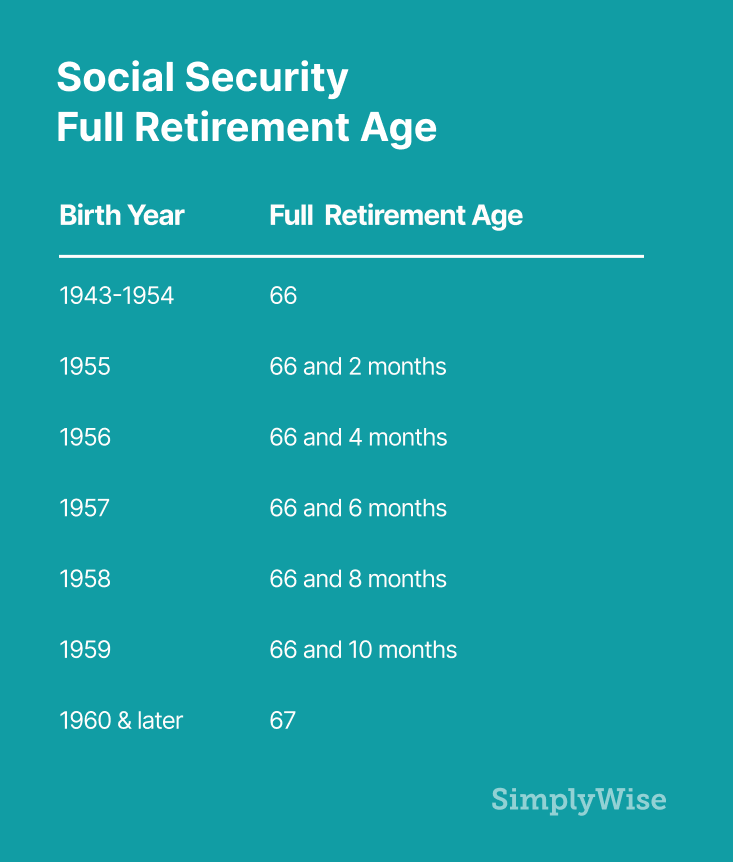
Your Full Retirement Age (FRA) is the age at which you are entitled to 100% of your PIA. This age varies depending on your birth year. For those born between 1943 and 1954, FRA is 66. It gradually increases for those born in later years, reaching 67 for anyone born in 1960 or later. Claiming benefits before or after your FRA will result in a permanent adjustment to your monthly payment. Knowing your specific FRA is crucial for strategizing your claiming decision.
Claiming Benefits Early: Reductions
You can claim Social Security retirement benefits as early as age 62. However, choosing to claim early comes with a permanent reduction in your monthly benefit amount. The reduction is calculated based on the number of months you claim before your FRA. For instance, if your FRA is 67, claiming at age 62 would result in a permanent reduction of approximately 30%. This reduction rate is roughly 5/9 of 1% for each month up to 36 months early, and 5/12 of 1% for each additional month. While receiving benefits earlier might seem appealing, it’s essential to weigh this against the significant and permanent decrease in your monthly income.
Delaying Benefits: Increases
Conversely, delaying the start of your benefits past your FRA can significantly increase your monthly payment. For each year you delay, up to age 70, you earn Delayed Retirement Credits (DRCs). These credits permanently increase your monthly benefit by approximately 8% per year (or 2/3 of 1% per month). For example, if your FRA is 67 and you delay claiming until age 70, your monthly benefit could be 124% of your PIA (100% at 67 + 24% for 3 years of delay). This strategy can provide a substantial boost to your retirement income, particularly for those who can afford to wait. Beyond age 70, there are no additional increases for delaying, so there’s no financial incentive to wait past that point.
Impact of Spousal and Survivor Benefits
Social Security is designed to protect families, not just individual workers. If you are married, divorced, or widowed, your benefit amount can be affected by your spouse’s or former spouse’s earnings record.
-
Spousal Benefits: A spouse can claim up to 50% of the primary earner’s PIA, provided they are at least their own FRA. If they claim early, their spousal benefit is also reduced. The primary earner must have filed for their own benefits for the spouse to claim spousal benefits.
-
Survivor Benefits: If your spouse passes away, you (or certain other family members) may be eligible for survivor benefits, which can be up to 100% of the deceased worker’s benefit. Special rules apply to claiming age and other factors for survivor benefits.
-
Divorced Spouse Benefits: You may be eligible for benefits on a former spouse’s record if the marriage lasted at least 10 years, you are currently unmarried, and are at least 62 years old. This does not affect your former spouse’s benefit.
These auxiliary benefits are an important consideration, especially for couples, as they can significantly enhance overall household retirement income.
Maximizing Your Social Security Benefits
Understanding the calculation is the first step; strategically applying that knowledge to maximize your benefits is the next. There are several levers you can pull throughout your working life and into retirement to optimize your Social Security income.
Working Longer and Earning More
Given the “35 highest-earning years” rule, one of the most direct ways to increase your AIME, and therefore your PIA, is to work longer and earn more during your career. By extending your working years, you can replace lower-earning years from your youth with higher-earning years from later in your career. Even a few extra years of high earnings can significantly impact your average, especially if earlier years had low or zero earnings. Continuously striving for career advancement and higher salaries will pay dividends not just in your immediate income but also in your future Social Security checks.
Understanding Your Earnings Record
It’s critical to periodically review your Social Security earnings record for accuracy. The SSA provides an annual statement that details your reported earnings year by year. Mistakes can happen – a miskeyed Social Security number, an employer error, or unreported income – and these errors can permanently reduce your future benefits. You can create an account at ssa.gov/myaccount to check your earnings record. Discrepancies should be reported and corrected promptly, as there are time limits for making corrections. Think of it as auditing your future retirement income.
Coordinated Claiming Strategies for Couples
For married couples, the claiming decision becomes more complex but also offers more opportunities for optimization. Coordinated claiming strategies can significantly increase the total lifetime benefits received by a couple. For example, the higher-earning spouse might delay claiming until age 70 to maximize their individual benefit (and potential survivor benefit), while the lower-earning spouse might claim earlier to provide some income. There are numerous scenarios, and often the best strategy involves careful analysis of life expectancies, health statuses, and other retirement income sources. Seeking advice from a financial advisor specializing in Social Security can be highly beneficial for couples.
The Role of Work While Receiving Benefits (Earnings Test)
If you claim benefits before your Full Retirement Age (FRA) and continue to work, your benefits may be subject to an earnings test. For example, in 2024, if you are under FRA for the entire year, $1 in benefits will be withheld for every $2 you earn above $22,320. In the year you reach FRA, the limit is higher ($59,520 in 2024), and $1 in benefits will be withheld for every $3 you earn above that limit until the month you reach FRA. Once you reach your FRA, the earnings test no longer applies, and you can earn as much as you want without your benefits being reduced. Any benefits withheld due to the earnings test are not permanently lost; your future benefits will be recalculated at your FRA to account for the withheld amounts, resulting in a slightly higher monthly payment moving forward.
Planning for Retirement: Integrating Social Security
Social Security is a crucial piece of the retirement puzzle, but it rarely forms the complete picture. Integrating your understanding of Social Security into a broader financial plan is essential for a secure and comfortable retirement.
Social Security as Part of a Holistic Plan
View Social Security as one leg of a multi-legged stool that supports your retirement. Other legs typically include personal savings (401(k)s, IRAs, taxable investments), pensions (if applicable), and possibly part-time work in retirement. Relying solely on Social Security is often insufficient, especially for those accustomed to a higher standard of living. By understanding your projected Social Security income, you can better determine how much you need to save and invest independently to bridge any income gaps and achieve your desired retirement lifestyle. It provides a baseline, allowing you to tailor your other financial strategies accordingly.
Checking Your Social Security Statement
As mentioned earlier, your annual Social Security Statement is an indispensable tool. It provides an estimate of your future benefits at different claiming ages (early, FRA, and age 70), a summary of your lifetime earnings, and information about potential disability and survivor benefits. Reviewing this statement annually allows you to track your progress, verify your earnings record, and make adjustments to your retirement plan as needed. It’s available online via your “my Social Security” account at ssa.gov/myaccount. Make it a habit to check it regularly.

The Future of Social Security: What to Expect
Concerns about the long-term solvency of Social Security are common. Demographic shifts, such as lower birth rates and increased life expectancies, mean fewer workers are supporting more retirees. While the system faces financial challenges, it’s highly unlikely to disappear entirely. Projections from the Social Security Administration indicate that without legislative changes, the trust funds could be depleted in the 2030s, at which point continuing tax revenue would still be sufficient to pay a significant portion (around 80%) of scheduled benefits. Potential solutions often discussed include raising the full retirement age, increasing the payroll tax rate, adjusting the cost-of-living-adjustment (COLA) formula, or increasing the earnings cap subject to Social Security taxes. While these discussions can cause anxiety, it’s important to base your planning on current law while staying informed about potential future changes. For most current and near-term retirees, Social Security will remain a dependable source of income, albeit one that requires strategic planning and a realistic assessment of its role in your overall financial picture.
By understanding the intricacies of how Social Security retirement benefits are calculated, you empower yourself to make intelligent choices that can profoundly impact your financial well-being throughout your golden years. It’s not just about math; it’s about making smart life decisions.
aViewFromTheCave is a participant in the Amazon Services LLC Associates Program, an affiliate advertising program designed to provide a means for sites to earn advertising fees by advertising and linking to Amazon.com. Amazon, the Amazon logo, AmazonSupply, and the AmazonSupply logo are trademarks of Amazon.com, Inc. or its affiliates. As an Amazon Associate we earn affiliate commissions from qualifying purchases.