
Social Security stands as a cornerstone of retirement planning for millions of Americans, providing a vital income stream that complements savings, pensions, and investments. While many workers contribute to this system throughout their careers, the precise methodology by which the Social Security Administration (SSA) determines individual retirement benefits often remains a mystery. Understanding this calculation is not just an academic exercise; it’s a critical component of informed financial planning, enabling future retirees to make strategic decisions about their retirement age, savings goals, and overall financial security.
This guide will demystify the complex process behind your Social Security retirement benefit calculation, breaking down the key factors, formulas, and decisions that ultimately shape your monthly payout. By understanding how your earnings history, claiming age, and various other elements interact, you can gain a clearer picture of what to expect and how to optimize this crucial retirement income.

The Foundation: Eligibility and Earnings History
Before any benefit can be calculated, an individual must first meet the basic eligibility requirements. Once eligibility is established, the SSA meticulously reviews a person’s earnings history, which forms the bedrock of their potential benefits.
Earning Your Stripes: Work Credits
To qualify for Social Security retirement benefits, you need to earn “work credits.” These credits are accumulated through your annual taxable earnings. In 2024, you earn one credit for every $1,730 in wages or self-employment income, up to a maximum of four credits per year. Most people need 40 work credits, which typically translates to 10 years of work, to be eligible for retirement benefits. Once you’ve earned 40 credits, you are “fully insured” and eligible to receive benefits at retirement age.
The 35-Year Rule: Your Top Earning Years
The SSA doesn’t just look at whether you’ve worked; it specifically focuses on your highest earning years. For retirement benefit calculations, the SSA considers your 35 highest-earning years. If you have fewer than 35 years of earnings, the missing years are counted as zero, which can significantly reduce your overall average. This rule underscores the importance of consistent earnings throughout your career, as gaps or periods of low income can disproportionately impact your future benefits. It’s a powerful incentive to maintain employment or find ways to supplement income, especially in the years leading up to retirement.
Indexing Your Earnings: Adjusting for Inflation
One of the most crucial steps in the calculation process is “indexing” your earnings. This process adjusts your past earnings to account for changes in the national average wage level over time. Without indexing, earlier earnings would appear much lower in real terms than more recent earnings, unfairly penalizing those who started working decades ago. The SSA applies an indexing factor to your earnings from past years, bringing them up to near current wage levels. This ensures that your benefits reflect your earnings’ true value in the economy over your career, rather than just their nominal dollar amount at the time they were earned. Earnings from the year you turn 60 and all subsequent years are not indexed, as they are considered recent enough to reflect current economic conditions.
From Earnings to Benefits: The AIME and PIA Formula
Once your indexed earnings history is compiled, the SSA proceeds to calculate your Average Indexed Monthly Earnings (AIME) and, subsequently, your Primary Insurance Amount (PIA). These two figures are central to determining your baseline benefit.
Calculating Your Average Indexed Monthly Earnings (AIME)
After indexing your 35 highest-earning years, the SSA sums up these indexed earnings. This total is then divided by the total number of months in those 35 years (35 years x 12 months = 420 months). The result is your Average Indexed Monthly Earnings (AIME). The AIME represents the average of your monthly earnings over your career, adjusted for inflation, and serves as the primary input for the next stage of the calculation. For example, if your total indexed earnings over your 35 highest years amounted to $2,100,000, your AIME would be $2,100,000 / 420 = $5,000.
The Bend Points: A Progressive Formula
The Social Security benefit formula is progressive, meaning it replaces a higher percentage of earnings for lower-income workers than for higher-income workers. This progressivity is achieved through “bend points.” These are specific dollar amounts in the AIME formula where the percentage of earnings replacement changes. For instance, for individuals becoming eligible in 2024, the formula uses three percentages applied to different segments of your AIME:
-
90% of the first $1,174 of your AIME
-
32% of your AIME between $1,174 and $7,078
-
15% of your AIME above $7,078
These bend points are adjusted annually based on changes in the national average wage index. The progressive nature of the bend points ensures that Social Security provides a safety net for all retirees, but particularly those with lower lifetime earnings, while still providing a proportional benefit to higher earners.
Arriving at Your Primary Insurance Amount (PIA)
By applying the bend point percentages to your AIME, the SSA calculates your Primary Insurance Amount (PIA). The PIA is the benefit amount you would receive if you start collecting Social Security benefits exactly at your Full Retirement Age (FRA). It’s the benchmark figure from which all other benefit adjustments are made, depending on whether you claim early or delay benefits. For example, if your AIME is $5,000, your PIA might be calculated as:
(90% of $1,174) + (32% of ($5,000 – $1,174)) = ($1,056.60) + (32% of $3,826) = $1,056.60 + $1,224.32 = $2,280.92. This $2,280.92 would be your PIA.
The Critical Factor: Your Claiming Age
While your PIA represents your benefit at Full Retirement Age, the age at which you actually decide to begin receiving benefits is perhaps the single most significant factor influencing your monthly payout. This decision can result in a substantially higher or lower monthly check for the rest of your life.
Full Retirement Age (FRA): The Benchmark
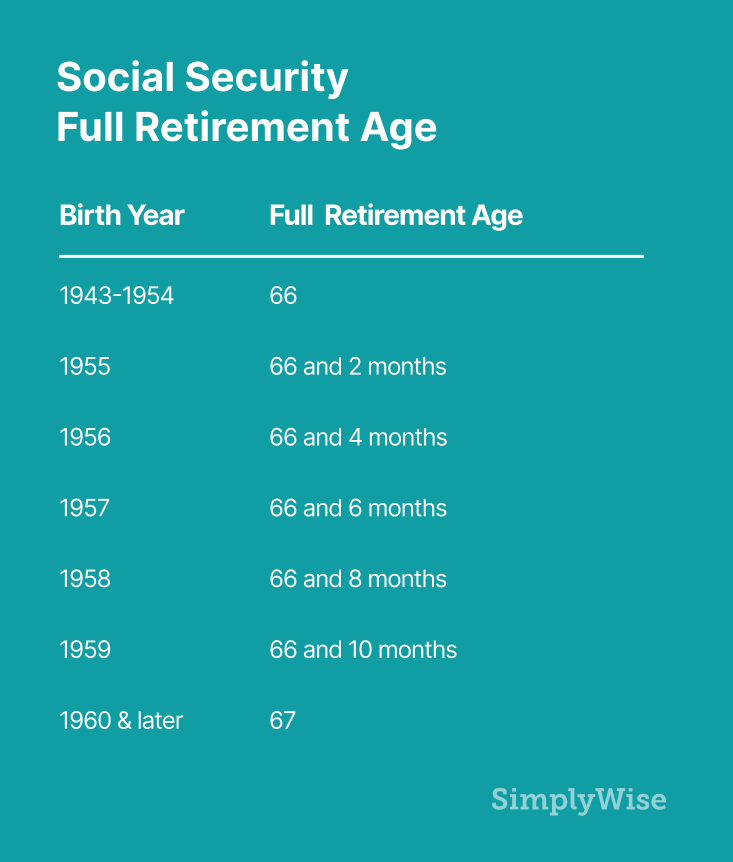
Your Full Retirement Age (FRA) is the age at which you are entitled to receive 100% of your calculated PIA. This age varies depending on your birth year. For those born between 1943 and 1954, FRA is 66. It gradually increases for later birth years, reaching 67 for anyone born in 1960 or later. Knowing your FRA is crucial because it serves as the pivot point for benefit adjustments. Claiming before your FRA results in reduced benefits, while delaying beyond it leads to increased benefits.
Claiming Early: Reduced Benefits
You can start collecting Social Security retirement benefits as early as age 62. However, if you claim before your FRA, your monthly benefit will be permanently reduced. The reduction is approximately 5/9 of 1% for each month you claim early, up to 36 months. For any months beyond 36, the reduction is 5/12 of 1% per month. Claiming at age 62, for example, typically results in a permanent reduction of about 25% to 30% of your PIA, depending on your FRA. While it provides income sooner, this reduction significantly impacts your lifetime benefits, a trade-off that requires careful consideration.
Delaying Benefits: Increased Payouts
Conversely, if you delay claiming Social Security benefits beyond your FRA, you can earn Delayed Retirement Credits (DRCs). These credits permanently increase your monthly benefit. The increase is 2/3 of 1% for each month you delay, up to age 70. This translates to an 8% increase for each full year you delay past your FRA. For someone with an FRA of 67, delaying until age 70 would result in a 24% increase over their PIA (3 years x 8% per year). There is no additional benefit to delaying past age 70, so claiming at age 70 is the maximum benefit you can achieve from delayed retirement credits. This substantial increase often makes delaying benefits an attractive strategy for those who can afford to wait.
Spousal and Survivor Benefits: An Overview
It’s also important to note that your Social Security record can impact others. A spouse may be eligible for benefits based on your earnings record, typically up to 50% of your PIA, if they are not claiming on their own higher record. Similarly, upon your death, your surviving spouse or dependent children may be eligible for survivor benefits based on your work record. These benefits also factor in the deceased’s PIA and the survivor’s age at claiming. Understanding these intertwined benefits is vital for comprehensive family financial planning.
Beyond the Basics: Other Influencing Factors
While the core calculation revolves around your earnings and claiming age, several other factors can affect the actual amount you receive or the net value of your Social Security benefits.
Cost-of-Living Adjustments (COLAs)
Once you start receiving Social Security benefits, your monthly payment is subject to annual Cost-of-Living Adjustments (COLAs). These adjustments are designed to help your benefits keep pace with inflation, maintaining your purchasing power over time. COLAs are typically announced in October and applied to benefits starting in January of the following year. They are based on the Consumer Price Index for Urban Wage Earners and Clerical Workers (CPI-W) and ensure that your real benefit value doesn’t erode due to rising costs.
The Annual Earnings Limit (Before FRA)
If you claim Social Security benefits before reaching your Full Retirement Age and continue to work, your benefits may be reduced if your earnings exceed an annual limit. For 2024, if you are under FRA, the SSA will deduct $1 from your benefits for every $2 you earn above $22,320. In the year you reach your FRA, the deduction is $1 for every $3 earned above a higher limit ($59,520 in 2024) until the month you reach FRA. Once you reach your FRA, there is no earnings limit, and you can earn as much as you want without your benefits being reduced. The benefits withheld due to the earnings limit are not lost forever; they effectively increase your future monthly benefit slightly once you reach FRA.
Taxation of Social Security Benefits
It’s a common misconception that Social Security benefits are entirely tax-free. Depending on your “provisional income,” a portion of your Social Security benefits may be subject to federal income tax. Provisional income includes your adjusted gross income, tax-exempt interest, and 50% of your Social Security benefits. If your provisional income exceeds certain thresholds ($25,000 for individuals, $32,000 for married couples filing jointly), up to 50% of your benefits may be taxable. If your provisional income exceeds higher thresholds ($34,000 for individuals, $44,000 for married couples), up to 85% of your benefits may be taxable. Some states also tax Social Security benefits, adding another layer of complexity to your retirement income planning.
Maximum Benefits and High Earners
While the progressive formula aims to provide more for lower earners, there is also a maximum monthly Social Security benefit. This maximum is reached by individuals who consistently earn above the Social Security taxable earnings limit throughout their 35 highest-earning years and claim at age 70. For example, in 2024, the maximum monthly benefit for someone claiming at FRA (67) is $3,822, while someone claiming at age 70 could receive up to $4,873. These figures demonstrate that even for high earners, there’s a ceiling to the Social Security payout, reinforcing the need for other retirement savings vehicles.
Why Understanding Your Social Security Calculation Matters
Demystifying the Social Security calculation is more than just satisfying curiosity; it’s a foundational step in building a robust retirement plan.
Empowering Your Retirement Planning
Knowing how your benefits are calculated allows you to project a more accurate picture of your future retirement income. This knowledge empowers you to set realistic savings goals, determine if your current savings trajectory is sufficient, and identify potential shortfalls that need to be addressed. It transforms Social Security from an abstract concept into a tangible component of your financial future.

Making Informed Claiming Decisions
The decision of when to claim Social Security is one of the most significant financial choices you’ll make in retirement. Understanding the direct impact of claiming early versus delaying—and the permanent reductions or increases that result—enables you to make a decision that aligns with your financial needs, health status, and overall retirement strategy. Whether you prioritize immediate income, maximizing lifetime benefits, or leveraging spousal benefits, a clear grasp of the calculation methodology is indispensable.
In conclusion, Social Security is a complex but vital system. While the precise calculation involves many steps, the core principles revolve around your lifetime earnings, adjusted for inflation, and the age at which you choose to begin receiving benefits. By actively engaging with these principles and utilizing resources like the SSA’s online statements and calculators, you can transform uncertainty into clarity, paving the way for a more secure and predictable retirement.
aViewFromTheCave is a participant in the Amazon Services LLC Associates Program, an affiliate advertising program designed to provide a means for sites to earn advertising fees by advertising and linking to Amazon.com. Amazon, the Amazon logo, AmazonSupply, and the AmazonSupply logo are trademarks of Amazon.com, Inc. or its affiliates. As an Amazon Associate we earn affiliate commissions from qualifying purchases.