
Understanding how your Social Security benefits are calculated is a crucial step in financial planning for retirement, disability, or survivor benefits. While it might seem like a straightforward addition of your lifetime earnings, the Social Security Administration (SSA) employs a complex, multi-step process designed to ensure fairness and sustainability. This calculation is not static; it considers your entire earnings history, adjusted for inflation, and applies a formula that favors lower earners. This article will delve into the intricate details of this calculation, demystifying the process and empowering you with the knowledge to estimate your future benefits.

The Foundation: Your Earnings Record and Average Indexed Monthly Earnings (AIME)
The bedrock of any Social Security benefit calculation is your individual earnings record. The SSA tracks all the income on which you (or your employer) have paid Social Security taxes throughout your working life. This record is not simply a summation of every dollar earned; it’s a carefully curated history that plays a pivotal role in determining your eventual payout.
Identifying Your “Most Productive” Years
The SSA doesn’t use every single year you’ve ever worked to calculate your benefits. Instead, they focus on your highest-earning years. Specifically, they look at the 35 years in which you earned the most. If you haven’t worked for 35 years, the years you did work will be included, and any remaining years will be counted as zero earnings. This is a significant point: working fewer than 35 years will directly reduce your average earnings and, consequently, your benefit amount. This emphasizes the importance of consistent employment throughout your career.
The Crucial Role of Wage Indexing
Simply averaging your earnings over your 35 highest-earning years wouldn’t be fair given the significant changes in wages and inflation over time. A dollar earned in 1970 is worth considerably more than a dollar earned in 2020. To account for this, the SSA “indexes” your past earnings. Wage indexing adjusts your earnings to reflect the general rise in wages across the economy up to the year you become eligible for benefits (typically age 62). This process ensures that your earlier earnings are brought up to a comparable value to your more recent earnings, providing a more accurate representation of your lifetime earning potential.
The indexing process is applied to all earnings up to age 60. Earnings from age 60 onward are used at their nominal value. The SSA uses a specific formula and tables to perform this adjustment, based on national average wage indices for each year. This indexing is a critical component that prevents older, lower nominal earnings from unfairly dragging down your average.
Calculating Your Average Indexed Monthly Earnings (AIME)
Once your highest 35 years of earnings have been identified and indexed, they are summed up. This total sum is then divided by 420 (the number of months in 35 years). The result is your Average Indexed Monthly Earnings, or AIME. This AIME is the primary figure that forms the basis for calculating your primary insurance amount (PIA), which is the benefit you would receive if you claim retirement benefits at your full retirement age.
It’s important to note that there’s an annual limit on earnings subject to Social Security taxes, known as the Social Security taxable maximum. This limit increases each year. Therefore, if your earnings in a particular year exceeded this maximum, only the amount up to the maximum is considered for your AIME calculation. This caps the benefit of very high earners, ensuring a degree of progressivity in the system.
The Benefit Formula: Formulas and Bend Points
Your AIME is a number, but it doesn’t directly translate into your monthly benefit check. The SSA uses a progressive formula to convert your AIME into your Primary Insurance Amount (PIA). This formula is designed to provide a higher replacement rate for lower-income workers and a lower replacement rate for higher-income workers. This is a core principle of Social Security: to provide a basic safety net for everyone, with more generous support for those who rely on it most.
Understanding the Progressive Formula and Bend Points
The Social Security benefit formula is comprised of three “bend points.” These bend points are set by law and are adjusted annually for inflation. For individuals who turn 62 in the current year, the formula typically looks something like this:
- 90% of the first portion of your AIME: This is the most generous part of the formula, providing a high replacement rate for the lowest earners.
- 32% of the portion of your AIME between the first and second bend points: This middle tier offers a moderate replacement rate.
- 15% of the portion of your AIME above the second bend point: This is the least generous part of the formula, applying to the highest earners.
For example, if the bend points for the current year were $1,110 and $6,700, the calculation for an AIME of $4,000 would be:
- (0.90 * $1,110) + (0.32 * ($4,000 – $1,110)) = $999 + (0.32 * $2,890) = $999 + $924.80 = $1,923.80 (PIA).
The actual bend points change each year. The SSA publishes these figures annually. Using the correct bend points for the year you become eligible for benefits is crucial for an accurate calculation.
The Role of Cost-of-Living Adjustments (COLAs)
Once your PIA is determined, it represents your monthly benefit at your full retirement age. However, this amount can be further adjusted over time. The most significant adjustment is the annual Cost-of-Living Adjustment (COLA). COLAs are designed to protect the purchasing power of Social Security benefits from inflation. They are typically tied to the Consumer Price Index (CPI) and are applied each year to benefits in payment status. This means that once you start receiving benefits, your monthly payment will likely increase each year to keep pace with rising prices.
However, it’s important to distinguish between wage indexing (applied to earnings before benefits begin) and COLAs (applied to benefits after they begin). Wage indexing ensures that your past earnings are relevant in today’s economy, while COLAs ensure that your received benefits maintain their value over time.
Factors That Can Affect Your Benefit Amount
While your AIME and the benefit formula are the primary drivers of your Social Security benefit calculation, several other factors can significantly influence the final amount you receive. These factors can either increase or decrease your benefit, so understanding them is vital for accurate financial forecasting.
Claiming Age: Early, Full, or Delayed Retirement
One of the most impactful decisions you will make regarding your Social Security benefits is when you choose to claim them. The age at which you start receiving benefits directly affects your monthly payment.
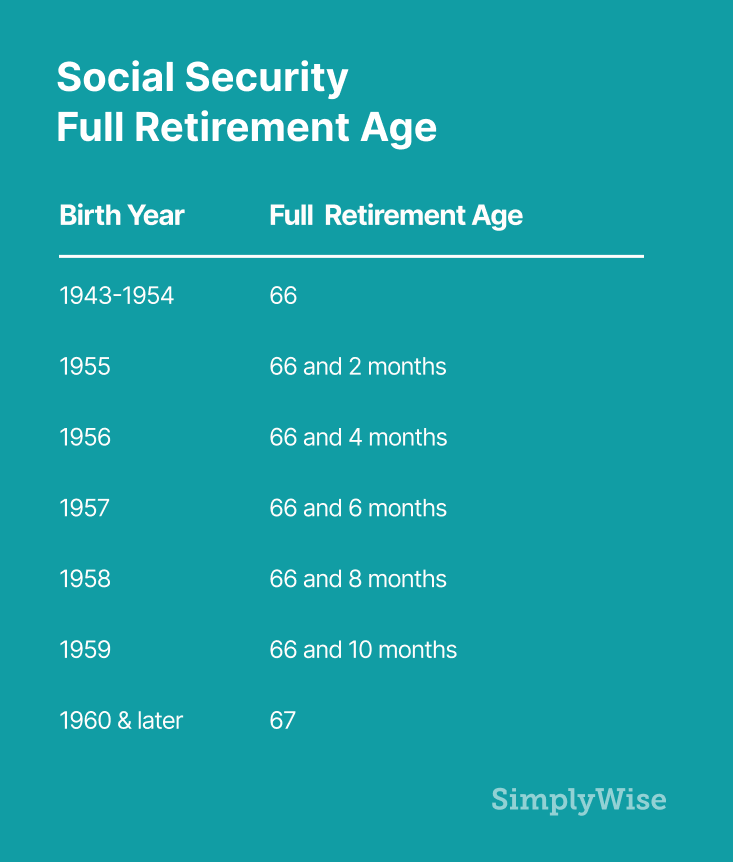
- Claiming Before Full Retirement Age: If you choose to claim benefits before your full retirement age (FRA – which is determined by your birth year, ranging from 66 to 67), your monthly benefit will be permanently reduced. For each month you claim before your FRA, your benefit is reduced by a small percentage. Claiming at the earliest age of 62 results in a significant reduction in your monthly benefit, often around 30%.
- Claiming at Full Retirement Age: If you claim benefits at your FRA, you will receive 100% of your calculated PIA. This is the baseline amount.
- Claiming After Full Retirement Age (Delayed Retirement Credits): If you delay claiming benefits beyond your FRA, you will earn Delayed Retirement Credits. These credits increase your monthly benefit by a certain percentage for each month you postpone claiming, up to age 70. For individuals born after 1943, the increase is approximately 8% per year for each year you delay past your FRA. This can substantially boost your lifetime benefits, especially for those who are healthy and can continue working or have other financial resources.
Work Credits and Eligibility
To be eligible for Social Security benefits at all, you must earn a certain number of “work credits.” You earn these credits by working and paying Social Security taxes. You can earn up to four credits per year. For 2024, you earn one credit for every $1,730 in earnings, up to the maximum of four credits per year.
- Retirement Benefits: To qualify for retirement benefits, you generally need 40 work credits, which is equivalent to about 10 years of work.
- Disability Benefits: Eligibility for disability benefits has the same work credit requirement as retirement benefits, but the number of credits needed may be reduced depending on your age at the time you become disabled.
- Survivor Benefits: Eligibility for survivor benefits for a spouse or child depends on the deceased worker’s work credits.
If you haven’t accumulated enough work credits, you won’t be eligible for any benefits, regardless of your earnings history.
Spousal and Survivor Benefits
Social Security also provides benefits to spouses and surviving family members. The calculation of these benefits is also tied to the primary worker’s earnings record.
- Spousal Benefits: A spouse who has not worked or has earned significantly less than their working spouse may be eligible for a spousal benefit. This benefit is typically up to 50% of the working spouse’s primary insurance amount. If the spouse claims benefits before their own FRA, their spousal benefit will also be reduced.
- Survivor Benefits: When a worker dies, their surviving spouse, widow(er), or eligible children may receive survivor benefits. These benefits are based on the deceased worker’s earnings record and are typically 71.5% to 100% of the deceased worker’s PIA, depending on the survivor’s age and relationship to the deceased.
The calculation of these ancillary benefits ensures that families are provided for even in the absence of a primary earner, further underscoring the comprehensive nature of the Social Security system.
Estimating Your Future Benefits and Important Considerations
While the mechanics of Social Security benefit calculation are complex, the Social Security Administration provides tools and resources to help you estimate your future benefits. Proactive engagement with these tools can lead to better retirement planning and informed decisions about claiming age.
Utilizing the Social Security Administration’s Resources
The most reliable source for estimating your Social Security benefits is the Social Security Administration itself. They offer several valuable resources:
- “My Social Security” Account: Creating a personal “My Social Security” account on the SSA’s website (ssa.gov) is essential. Once you log in, you can access your personalized Social Security Statement. This statement provides an estimate of your future retirement, disability, and survivor benefits based on your actual earnings record to date. It also shows your complete earnings history, allowing you to verify its accuracy.
- Online Calculators: The SSA provides online calculators that allow you to run different scenarios. You can input various claiming ages and see how your monthly benefit would change. These calculators are invaluable for understanding the trade-offs associated with claiming early, at full retirement age, or delaying.
- Contacting the SSA: If you have complex questions or believe there might be errors in your earnings record, contacting the SSA directly through their website or by phone is recommended. They can provide personalized assistance and clarification.
The Impact of Future Earnings and Legislation
It’s crucial to remember that benefit estimates are just that – estimates. They are based on current laws and your projected future earnings. Several factors can influence the accuracy of these estimates:
- Future Earnings: Your benefit calculation is based on your 35 highest-earning years. If you continue to work and earn more in the future, especially in years that replace lower-earning years in your record, your AIME and PIA could increase. Conversely, periods of unemployment or lower earnings can negatively impact your estimated benefits.
- Legislative Changes: The Social Security system is subject to ongoing legislative debate and potential reforms. Changes to eligibility requirements, benefit formulas, or taxation of benefits could alter future calculations. While major overhauls are infrequent, it’s wise to stay informed about potential policy shifts that could affect the system.
- Inflation and COLAs: As mentioned earlier, COLAs adjust benefits for inflation. The rate of inflation can fluctuate, so the actual increase in your benefits each year may vary.

The Importance of an Accurate Earnings Record
Maintaining an accurate earnings record is paramount. Errors can occur, and it’s your responsibility to ensure that all your wages have been reported correctly to the SSA. You have up to three years, three months, and 15 days after the end of the year in which you earned the wages to report any discrepancies. Regularly reviewing your Social Security Statement from your “My Social Security” account can help you identify and correct any errors promptly. An accurate earnings record ensures that your calculated benefits are based on the full picture of your lifetime contributions.
In conclusion, understanding how Social Security benefits are calculated is a vital aspect of personal financial planning. By grasping the concepts of your earnings record, wage indexing, the progressive benefit formula, and the impact of claiming age, you can make informed decisions that optimize your retirement security. The SSA’s resources are readily available to help you navigate this complex, yet essential, aspect of your financial future.
aViewFromTheCave is a participant in the Amazon Services LLC Associates Program, an affiliate advertising program designed to provide a means for sites to earn advertising fees by advertising and linking to Amazon.com. Amazon, the Amazon logo, AmazonSupply, and the AmazonSupply logo are trademarks of Amazon.com, Inc. or its affiliates. As an Amazon Associate we earn affiliate commissions from qualifying purchases.