
The Dow Jones Industrial Average (DJIA), often simply referred to as “the Dow,” stands as one of the most venerable and widely observed indicators of the U.S. stock market’s health. For well over a century, its movements have captivated investors, economists, and the general public, serving as a daily pulse check on corporate America and, by extension, the broader economy. While its methodology and composition have evolved significantly since its inception, the Dow’s symbolic power and influence on market sentiment remain undeniable. Understanding “how the Dow is doing” requires more than just glancing at its daily closing number; it demands a deeper dive into its mechanics, the forces shaping its performance, and what its movements genuinely signify for investors navigating an increasingly complex financial landscape.

In this comprehensive analysis, we will demystify the Dow, exploring its unique characteristics and recent performance trends. We’ll delve into the key economic and corporate factors that drive its fluctuations, examine the role of its constituent companies, and offer insights into how investors can interpret its movements within the context of a well-informed financial strategy. By dissecting the Dow’s current state, we aim to provide a professional, insightful, and engaging perspective on this iconic market barometer.
Understanding the Dow Jones Industrial Average (DJIA)
To truly grasp the Dow’s current performance, one must first understand what it is and how it functions. Unlike other popular indices, the DJIA possesses unique characteristics that shape its perceived and actual utility.
What is the DJIA? A Brief Overview
The Dow Jones Industrial Average is a stock market index that measures the stock performance of 30 large companies listed on stock exchanges in the United States. Founded by Charles Dow in 1896, it is the second-oldest U.S. market index after the Dow Jones Transportation Average. What sets the DJIA apart from broader market indices like the S&P 500 or the Nasdaq Composite is its selective nature and its price-weighted methodology. The 30 companies chosen for the Dow are typically large, well-established “blue-chip” firms that are leaders in their respective industries and are generally seen as bellwethers for the U.S. economy. These companies are selected by a committee, not through a strict set of quantitative rules, and substitutions are rare, occurring only when a company’s business is significantly diminished or when it no longer represents its industry segment.
Crucially, the DJIA is a price-weighted index, meaning stocks with higher share prices have a greater impact on the index’s value than stocks with lower share prices, regardless of their total market capitalization. This contrasts with market-capitalization-weighted indices (like the S&P 500), where companies with larger total market values (share price multiplied by the number of shares outstanding) have a greater influence. A one-dollar change in a high-priced stock within the Dow will move the index more than a one-dollar change in a low-priced stock, even if the lower-priced stock represents a much larger overall company. This unique weighting system is often cited as both a feature and a limitation of the Dow.
Why Does the Dow Matter?
Despite its inherent limitations, such as its narrow focus on just 30 stocks and its price-weighted methodology, the Dow remains a powerful and widely cited market indicator. Its significance stems from several factors. Firstly, its long history provides a continuous narrative of American economic performance and corporate evolution, offering a historical benchmark for market trends. Secondly, the companies comprising the Dow are often household names—global giants whose financial health and operational successes (or failures) broadly reflect the state of major sectors within the U.S. economy. When these industrial behemoths, financial titans, and tech leaders are thriving, it often signals a robust economic environment.
Beyond its representativeness, the Dow holds considerable sway over investor psychology and media narratives. Its daily percentage changes are a headline staple, influencing public perception of market stability and economic confidence. A surging Dow can foster optimism, encouraging investment and consumer spending, while a significant drop can trigger fear and caution. For many individual investors, the Dow serves as an accessible entry point into understanding market movements, even if they invest in broader index funds or individual stocks not listed in the index. It acts as a simplified barometer, often the first number people check to gauge the overall market mood, making its performance a crucial aspect of financial discourse.
Current Performance and Recent Trends
Analyzing the Dow’s current health requires an examination of its recent trajectory, acknowledging the periods of both robust growth and unsettling volatility that characterize modern markets. The recent past has presented a complex tapestry of economic forces, each leaving its mark on the index.
A Look at Recent Volatility and Growth
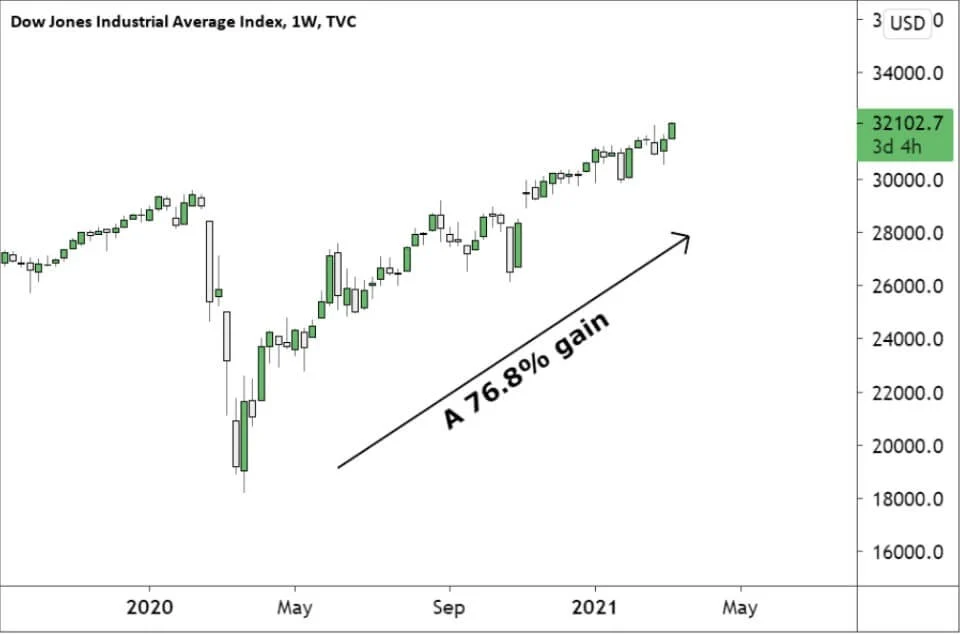
Over the past year, the Dow Jones Industrial Average has reflected the broader market’s journey through a landscape of evolving economic data, geopolitical shifts, and corporate earnings reports. We’ve witnessed periods of impressive upward momentum, often fueled by optimism surrounding disinflationary trends, the prospect of interest rate cuts, or strong performances from its constituent companies. These growth phases have typically seen the index challenging and often surpassing previous all-time highs, signaling a resilient corporate sector and an underlying belief in continued economic expansion. Such rallies are often characterized by broad participation across several Dow components, indicating robust investor confidence.
However, this growth has rarely been linear. The Dow has also experienced significant bouts of volatility, marked by sharp pullbacks and fluctuating daily movements. These periods of turbulence are often triggered by a confluence of factors: persistent inflation data that challenges disinflationary narratives, hawkish signals from central banks indicating higher-for-longer interest rates, geopolitical conflicts escalating, or unexpected slowdowns in key economic indicators like manufacturing or consumer spending. Corporate earnings disappointments from a few large Dow components can also trigger cascading effects across the index. These fluctuations underscore the market’s sensitivity to macro-economic developments and its constant re-evaluation of future growth prospects, making for an often-exhilarating yet sometimes nerve-wracking ride for investors tracking its performance.
Key Drivers Behind the Dow’s Movements
The forces influencing the Dow’s direction are multifaceted, encompassing macroeconomic policies, corporate fundamentals, and global events. Understanding these drivers is essential for interpreting its daily gyrations and long-term trends. One of the most significant influences is the Federal Reserve’s monetary policy. Decisions regarding interest rates, quantitative easing, or tightening directly impact borrowing costs for businesses and consumers, affecting corporate profitability, investment appetite, and economic growth potential. Higher interest rates typically weigh on stocks as future earnings are discounted more heavily and borrowing becomes more expensive, while the prospect of rate cuts often acts as a catalyst for market rallies.
Corporate earnings and economic data are equally critical. Strong earnings reports from major Dow companies signal healthy business operations and robust consumer demand, bolstering investor confidence. Conversely, widespread earnings misses or cautious forward guidance can trigger sell-offs. Key economic indicators such as inflation rates (Consumer Price Index, Producer Price Index), employment reports (non-farm payrolls, unemployment rate), GDP growth figures, and consumer confidence surveys provide crucial insights into the overall health of the economy, which in turn influences corporate prospects and market sentiment. High inflation erodes purchasing power and corporate margins, while a robust job market typically supports consumer spending. Beyond these, geopolitical developments, such as trade disputes, regional conflicts, or shifts in international relations, can introduce significant uncertainty, disrupt supply chains, and impact global demand, leading to market volatility as investors reassess risks. The interplay of these complex factors creates the dynamic environment in which the Dow operates.
Deeper Dive into Component Performance
While the Dow is often discussed as a monolithic entity, its movements are, in fact, an aggregation of the performance of its 30 constituent companies. A granular look at these individual giants and the sectors they represent offers a more nuanced understanding of the index’s overall health and direction.
The Influence of Individual Giants
Due to the Dow’s price-weighted methodology, the performance of its highest-priced stocks can disproportionately sway the entire index. A significant move in a single high-priced component, whether up or down, can have a more substantial impact on the Dow’s points than a similar percentage move in a lower-priced stock, even if the latter represents a larger market capitalization. For instance, a tech titan like Apple or Microsoft, an industrial giant like Caterpillar, or a healthcare stalwart like UnitedHealth Group, all of which tend to have higher share prices, can exert considerable influence. When one of these companies announces a stellar earnings report, a groundbreaking product, or a major strategic acquisition, its stock price surge can pull the entire index upward. Conversely, a poor earnings outlook, regulatory challenges, or a significant product recall for such a high-priced component can drag the Dow down, even if the majority of other stocks in the index are performing well.
This concentrated influence means that investors tracking the Dow often pay close attention not just to the overall index but also to the individual fortunes of its heavier-weighted members. Analyst upgrades, dividend announcements, M&A rumors, or C-suite leadership changes for these key players are scrutinized, as their ripple effects can be felt across the broader index. This focus highlights both the Dow’s strength—as it often includes market leaders—and its potential vulnerability to company-specific risks that might not truly reflect the broader economic picture or the performance of smaller, more numerous companies.
Sectoral Shifts and Economic Health
The Dow’s 30 companies are diversified across various major sectors of the economy, including technology, financials, industrials, healthcare, consumer discretionary, consumer staples, materials, and energy. Analyzing the performance of these different sectors within the Dow can provide valuable insights into underlying economic health and prevailing market trends. For example, robust performance from industrial companies (like Boeing or Caterpillar) often signals strong global manufacturing and trade activity. A surging financial sector (represented by institutions like Goldman Sachs or JPMorgan Chase) can indicate a healthy banking environment, strong lending, and positive interest rate outlooks.
Similarly, the performance of consumer-oriented companies, both discretionary (like Nike or Home Depot) and staples (like Procter & Gamble or Walmart), offers clues about consumer spending habits and confidence. Strong discretionary spending often points to a robust economy where consumers feel secure enough to make non-essential purchases, while resilience in staples suggests stable underlying demand regardless of economic cycles. Lately, the technology components within the Dow have often been significant drivers, reflecting the increasing dominance of tech in economic growth. Shifts in leadership among these sectors—for instance, a rotation from growth-oriented tech stocks to value-oriented industrials or financials—can indicate changing investor sentiment, perhaps a move towards more cyclical stocks in anticipation of economic expansion or a defensive shift during periods of uncertainty. By observing which sectors within the Dow are leading or lagging, one can infer broader economic narratives about growth, inflation, and market sentiment.
Navigating the Market: Implications for Investors
For both seasoned and nascent investors, understanding the Dow’s performance extends beyond mere observation; it involves interpreting its signals within a broader investment strategy. The Dow, while powerful, is a tool, not a complete roadmap.
The Dow as an Indicator, Not a Strategy
It is crucial for investors to view the Dow Jones Industrial Average as an economic indicator and a sentiment barometer rather than an investing strategy in itself. While its daily movements are widely reported and can influence short-term market psychology, making investment decisions based solely on the Dow’s daily performance is generally not advisable. The index’s narrow scope (30 companies) and price-weighted methodology mean it doesn’t fully capture the breadth or depth of the entire U.S. stock market. A strategy built around mimicking the Dow directly without deeper analysis might overlook opportunities in thousands of other publicly traded companies or expose an investor to concentrated risk in a few high-priced stocks.
A sound investment strategy typically emphasizes diversification across various asset classes, industries, and geographies to mitigate risk. Rather than trying to “beat the Dow” by trading its components daily, many investors utilize the Dow’s performance as one piece of information in a larger mosaic. They might use it to gauge overall market sentiment, identify broad economic trends, or understand how large-cap U.S. industrial companies are faring. For long-term wealth creation, a well-thought-out financial plan, consistent contributions, and a diversified portfolio tailored to individual risk tolerance and financial goals usually outperform reactive trading based on daily index fluctuations. The Dow provides context; it doesn’t dictate individual portfolio moves.
Long-Term vs. Short-Term Perspectives
One of the most valuable lessons for investors observing the Dow is the critical distinction between long-term and short-term perspectives. In the short term, the Dow can be highly volatile, reacting to news cycles, geopolitical events, and even algorithm-driven trading. Daily swings of hundreds of points, representing significant percentage changes, are not uncommon and can be alarming to those focused purely on immediate results. These short-term movements are often characterized as “market noise,” and while they can present trading opportunities for highly sophisticated short-term traders, they rarely provide meaningful insights for long-term wealth building. Chasing these daily fluctuations often leads to suboptimal returns, increased transaction costs, and emotional decision-making.
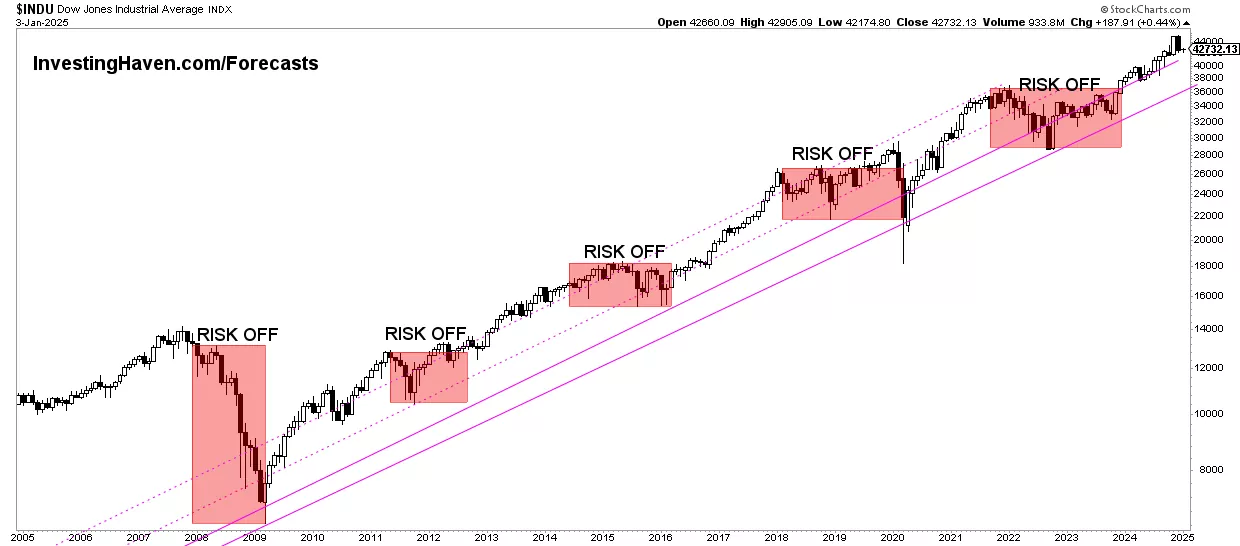
From a long-term perspective, however, the Dow’s trajectory has historically been upward, reflecting the underlying growth and innovation of the U.S. economy and the resilience of its leading corporations. Over decades, despite numerous recessions, market crashes, and periods of high inflation, the Dow has consistently recovered and reached new highs. This long-term trend underscores the power of compounding and the enduring strength of well-established companies. Investors with a long-term horizon can largely disregard daily volatility, focusing instead on broader economic trends, fundamental company health, and maintaining a consistent investment strategy. The Dow, when viewed through a multi-year lens, serves as a powerful testament to the benefits of patient, disciplined investing.
Outlook and What to Watch For
The future performance of the Dow Jones Industrial Average is subject to a complex interplay of economic forces and policy decisions. While precise predictions are impossible, identifying potential headwinds and tailwinds can help investors anticipate future movements.
Potential Headwinds and Tailwinds
Looking ahead, several factors could influence the Dow’s trajectory. Potential headwinds include persistent inflationary pressures that could force central banks to maintain higher interest rates for longer, thereby increasing borrowing costs and dampening corporate profits. A slowdown in global economic growth, driven by geopolitical tensions, supply chain disruptions, or reduced consumer demand in key markets, could also weigh on the multinational corporations within the Dow. Regulatory changes, particularly in sectors like tech or finance, could introduce uncertainty and impact profitability. Moreover, the ongoing debate around national debt and fiscal policy could create market jitters.
Conversely, potential tailwinds could propel the Dow higher. A successful disinflationary path, allowing central banks to ease monetary policy and cut interest rates, would likely be a significant boon for equities. Robust corporate earnings growth, driven by innovation, efficiency gains, and strong consumer spending, would naturally support stock prices. Breakthroughs in artificial intelligence, biotechnology, or renewable energy could spark new waves of economic expansion and create new revenue streams for Dow components. Finally, an environment of geopolitical stability and constructive international trade relations would foster business confidence and facilitate global commerce, benefiting the large, internationally-exposed companies in the index. The balance between these opposing forces will largely determine the Dow’s path.
Expert Consensus and Divergent Views
The financial world rarely speaks with one voice, and discussions surrounding the Dow’s future are no exception. Expert consensus often converges around themes like a “soft landing” for the economy (avoiding a recession while bringing inflation down) or a period of modest, yet stable, growth. Many analysts expect corporate earnings to continue growing, albeit perhaps at a slower pace than during periods of extreme market exuberance. They often point to the resilience of U.S. consumers and the innovative capacity of American businesses as key strengths. The general sentiment often hovers on cautious optimism, acknowledging underlying economic strengths while remaining vigilant about potential risks.
However, divergent views are equally prevalent and healthy for market discourse. Some economists and strategists warn of potential “hard landing” scenarios, anticipating a recession due to the lagged effects of past interest rate hikes, or significant market corrections if inflation proves more stubborn than expected. Others might highlight specific vulnerabilities within the Dow’s composition, such as over-reliance on a few mega-cap stocks or exposure to sectors facing structural headwinds. Bearish outlooks often emphasize elevated valuations, geopolitical risks, and the potential for unexpected shocks. It is this very divergence of opinion that reflects the inherent uncertainty of financial markets and underscores the importance of conducting one’s own due diligence and maintaining a well-diversified, long-term investment strategy rather than relying solely on any single forecast.
Conclusion
The Dow Jones Industrial Average, with its rich history and enduring prominence, remains an indispensable, albeit imperfect, barometer for assessing the health of the U.S. stock market and the broader economy. Its recent journey has mirrored the complexity of current economic conditions, oscillating between periods of strong growth fueled by corporate resilience and optimism, and moments of volatility triggered by inflation concerns, monetary policy shifts, and global events. Understanding “how the Dow is doing” requires more than just tracking its daily points; it demands an appreciation for its price-weighted methodology, the pivotal role of its 30 blue-chip constituents, and the intricate dance between macroeconomic forces and corporate performance.
For investors, the Dow serves as a powerful indicator of market sentiment and an historical testament to long-term economic expansion. However, it should be viewed as one piece of a larger puzzle, informing rather than dictating investment strategy. The future path of the Dow will undoubtedly be shaped by the interplay of persistent inflation, evolving monetary policy, corporate earnings, and the ever-present geopolitical landscape. By maintaining a professional, insightful, and long-term perspective, investors can effectively interpret the Dow’s signals and navigate the dynamic world of financial markets with greater confidence and clarity.
aViewFromTheCave is a participant in the Amazon Services LLC Associates Program, an affiliate advertising program designed to provide a means for sites to earn advertising fees by advertising and linking to Amazon.com. Amazon, the Amazon logo, AmazonSupply, and the AmazonSupply logo are trademarks of Amazon.com, Inc. or its affiliates. As an Amazon Associate we earn affiliate commissions from qualifying purchases.