
Navigating the world of mortgages can feel like deciphering a complex financial code, with the interest rate being the most critical number to understand. A mortgage rate is not a random figure pulled from thin air; rather, it’s a meticulously calculated reflection of numerous interconnected factors, ranging from broad economic currents to your individual financial profile. For most people, a mortgage represents the single largest financial commitment of their lives, making even a slight difference in the interest rate translate into tens of thousands of dollars over the loan’s lifetime. Therefore, understanding the intricate web of influences that determine your mortgage rate isn’t just academic; it’s a fundamental step towards making informed decisions, optimizing your borrowing costs, and securing your financial future.
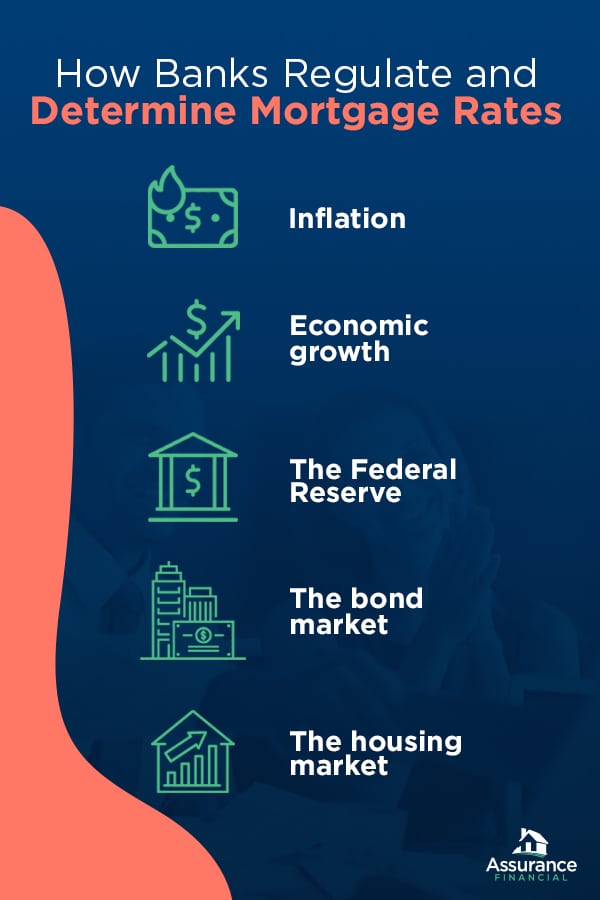
This article delves into the multifaceted mechanisms behind mortgage rate determination, dissecting the macro-economic forces, lender-specific considerations, and personal financial attributes that collectively shape the offers you receive. By the end, you’ll have a clearer picture of why rates fluctuate, what you can control, and how to position yourself for the most favorable terms.
The Macro-Economic Bedrock: Economic Indicators and Monetary Policy
At the highest level, mortgage rates are heavily influenced by the broader economic landscape. These foundational elements act as the tide, lifting or lowering all boats in the financial market, including the cost of borrowing for a home.
Federal Reserve Policy and the Federal Funds Rate
The Federal Reserve (the Fed) is the central bank of the United States, and its monetary policy decisions cast a long shadow over all interest rates. The primary tool the Fed uses to influence the economy is the federal funds rate, which is the target rate for overnight lending between banks. While the federal funds rate doesn’t directly dictate mortgage rates, changes to it have a significant ripple effect:
- Impact on Short-Term Rates: An increase in the federal funds rate typically leads to higher short-term interest rates across the board, affecting things like credit cards and adjustable-rate mortgages (ARMs).
- Influence on Long-Term Rates: For fixed-rate mortgages, which are long-term loans, the connection is more indirect but still powerful. When the Fed signals a commitment to fighting inflation by raising rates, it often leads to an increase in long-term rates as well, as markets anticipate future economic conditions and the potential for sustained higher rates. Conversely, a dovish stance or rate cuts can push long-term rates down.
Inflation Expectations
Inflation is the rate at which the general level of prices for goods and services is rising, and subsequently, the purchasing power of currency is falling. Lenders are acutely aware of inflation because it erodes the value of future loan repayments. If a lender loans you money today and inflation significantly increases over the next 30 years, the money they receive back in the future will be worth less in real terms.
- Protecting Purchasing Power: To compensate for anticipated inflation, lenders factor in an inflation premium into the interest rates they offer. Higher inflation expectations generally lead to higher mortgage rates, as lenders seek to protect their real return on investment.
- Real vs. Nominal Rates: Mortgage rates are nominal rates. The lender’s true return is the “real rate,” which is the nominal rate minus the inflation rate. Lenders aim for a positive real return.
Treasury Yields: The Benchmark for Long-Term Debt
One of the most direct and frequently cited influences on fixed mortgage rates is the yield on U.S. Treasury bonds, particularly the 10-year Treasury note. Treasury bonds are considered among the safest investments globally, making their yields a benchmark for other long-term debt.
- Competition for Capital: Mortgage-backed securities (MBS), which are bundles of mortgages sold to investors, compete with Treasury bonds for investor capital. If Treasury yields rise, MBS must offer higher yields (and thus higher mortgage rates) to remain attractive to investors.
- Market Sentiment: Treasury yields reflect investors’ collective outlook on economic growth, inflation, and monetary policy. A rise in yields often indicates market expectations of stronger economic growth or higher inflation, both of which generally push mortgage rates higher.
Economic Growth and Stability
The overall health and stability of the economy play a crucial role. A robust economy, characterized by strong GDP growth, low unemployment, and rising wages, can sometimes lead to higher mortgage rates. This is because a strong economy can fuel inflation, and the Fed might raise rates to cool an overheating economy. Conversely, during periods of economic slowdown or recession, the Fed might cut rates to stimulate activity, leading to lower mortgage rates. Lenders also perceive less risk in a stable, growing economy, which can contribute to more competitive rates.
Lender-Specific Factors: Business Operations and Profitability
Beyond the broad economic backdrop, individual lenders also have their own internal considerations that influence the mortgage rates they offer. These factors are tied to their business models, operational costs, and competitive strategies.
Lender’s Cost of Funds
Mortgage lenders don’t create money out of thin air; they themselves borrow funds to lend out to homebuyers. This “cost of funds” is a primary determinant of the rates they offer.
- Deposits and Wholesale Markets: Banks primarily source funds from customer deposits. Non-bank lenders often rely on wholesale credit lines and the secondary mortgage market (selling mortgages to investors). The interest rates these lenders pay to acquire funds directly impact the minimum rate they can offer to borrowers while remaining profitable.
- Short-Term Borrowing Costs: For ARMs, a lender’s short-term borrowing costs, often tied to benchmarks like the Secured Overnight Financing Rate (SOFR) or the London Interbank Offered Rate (LIBOR before its phase-out), directly feed into the adjustable rate.
Profit Margins and Overhead
Like any business, mortgage lenders operate to generate a profit. The interest rate they charge includes a margin above their cost of funds to cover their operational expenses and deliver a return to shareholders.
- Operational Costs: This includes salaries for loan officers, underwriters, and support staff; technology infrastructure; marketing expenses; regulatory compliance costs; and office overhead.
- Risk Premium: Lenders also build in a risk premium to cover potential losses from loan defaults, particularly for less qualified borrowers or riskier loan products.
Market Competition
The competitive landscape among mortgage lenders can significantly influence rates. In a highly competitive market with many lenders vying for business, rates tend to be more aggressive as lenders try to undercut each other.
- Volume vs. Margin: Some lenders prioritize capturing a larger market share by offering slightly lower rates, aiming for higher loan volume. Others might focus on higher-margin loans or specific niches.
- Shopping Around: This is why it’s always advisable for borrowers to shop around and get quotes from multiple lenders – competition can lead to better terms.
Loan Officer Commissions and Fees
While less direct than other factors, the compensation structure for loan officers and the various fees associated with originating a mortgage can also subtly influence the final rate presented to a borrower.
- Commissions: Loan officer compensation is often tied to the loan amount or the interest rate. While regulatory safeguards exist, a lender’s overall compensation model can factor into the rate structure.
- Lender Fees: These can include application fees, underwriting fees, processing fees, and origination fees. Sometimes, a lender might offer a slightly lower interest rate but charge higher upfront fees, or vice-versa, allowing borrowers to choose between paying more now or more over time.
Borrower-Specific Characteristics: Your Financial Profile
While the economy and lender operations set the baseline, your individual financial health is arguably the most impactful determinant of the specific mortgage rate you qualify for. Lenders assess your risk profile to determine the likelihood of repayment.
Credit Score and History
Your credit score is a numerical representation of your creditworthiness, derived from your credit history. It is one of the most critical factors lenders use to assess risk.
- Risk Assessment: A higher credit score (e.g., FICO score of 740+) signals to lenders that you have a strong track record of managing debt responsibly and are less likely to default. This translates into lower perceived risk for the lender and, consequently, a lower interest rate.
- Score Tiers: Lenders typically have tiers for credit scores, with different rates offered for excellent, good, fair, and poor credit. Even a small bump in your score can move you into a better rate tier.
Loan-to-Value (LTV) Ratio
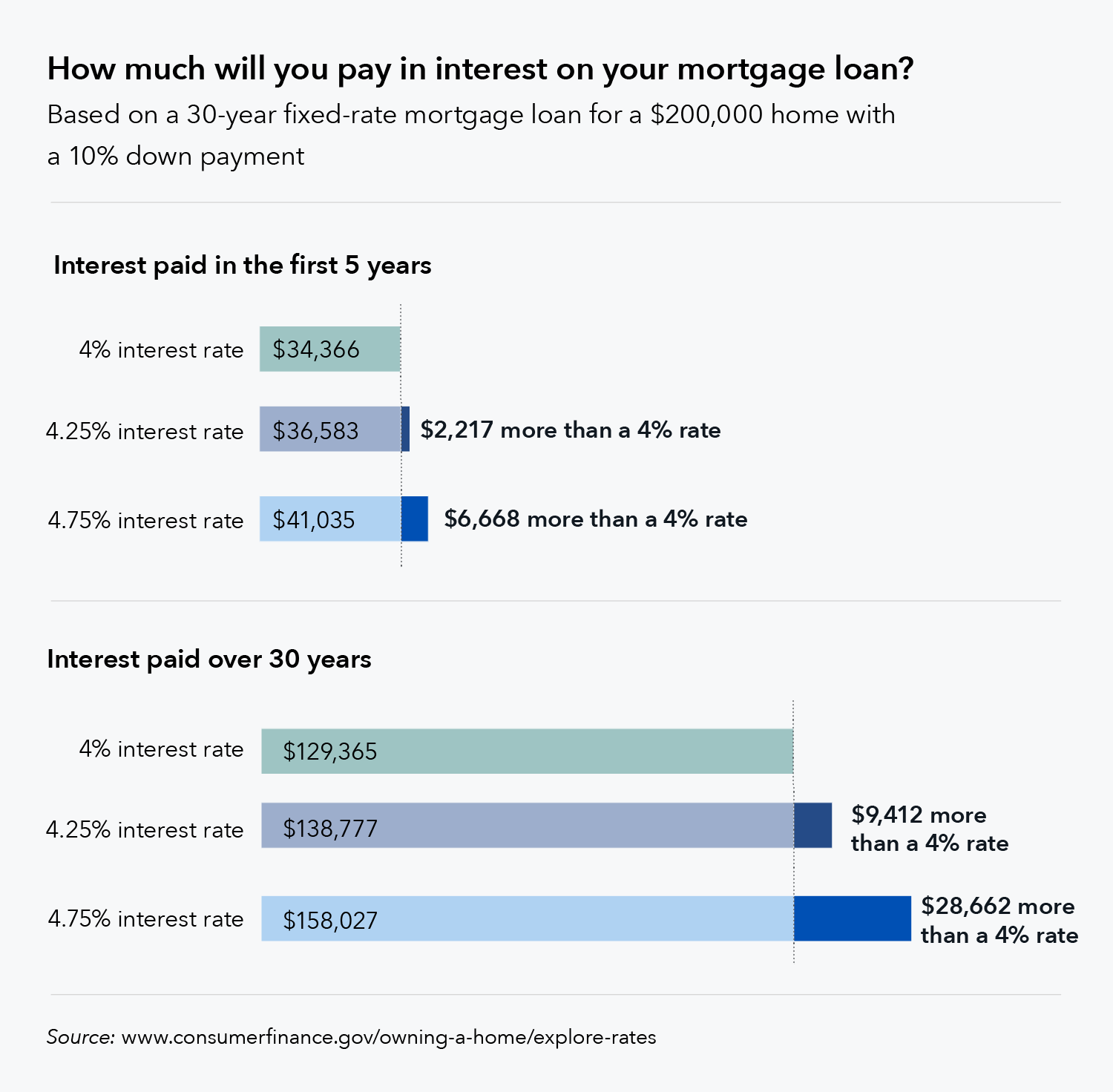
The Loan-to-Value (LTV) ratio compares the amount of the mortgage to the appraised value of the property. It’s calculated by dividing the loan amount by the home’s value.
- Down Payment Impact: A lower LTV (meaning a larger down payment) indicates that you have more equity in the property from the start. This reduces the lender’s risk, as you have a stronger financial stake in the home and there’s more collateral in case of default. A lower LTV typically results in a lower interest rate.
- Private Mortgage Insurance (PMI): If your LTV is above 80% (i.e., your down payment is less than 20%), lenders usually require you to pay for Private Mortgage Insurance (PMI), which protects the lender in case you default. While not part of the interest rate, it’s an additional cost related to a higher LTV.
Debt-to-Income (DTI) Ratio
Your Debt-to-Income (DTI) ratio is a measure of your gross monthly income that goes toward paying your monthly debt payments. Lenders typically look at two DTIs:
- Front-End DTI: The percentage of your gross monthly income that goes toward housing costs (mortgage principal and interest, property taxes, homeowner’s insurance).
- Back-End DTI: The percentage of your gross monthly income that goes toward all monthly debt payments, including housing, credit cards, car loans, and student loans.
- Repayment Capacity: A lower DTI ratio indicates that you have more disposable income to cover your mortgage payments and are less likely to struggle financially, reducing the lender’s risk and potentially earning you a better rate. Most lenders prefer a back-end DTI below 43%.
Loan Type and Term
The specific type of mortgage you choose and its duration also directly impact the interest rate.
- Fixed-Rate Mortgages (FRM): The interest rate remains constant for the entire loan term (e.g., 15 or 30 years). Lenders charge a higher rate for longer terms because they take on more interest rate risk over a longer period. A 30-year FRM usually has a higher rate than a 15-year FRM.
- Adjustable-Rate Mortgages (ARM): The interest rate is fixed for an initial period (e.g., 3, 5, 7, or 10 years) and then adjusts periodically based on a market index. ARMs typically offer a lower initial interest rate than fixed-rate mortgages because the borrower assumes some of the interest rate risk.
- Government-Backed Loans: FHA, VA, and USDA loans have specific eligibility requirements but can offer more favorable terms, including potentially lower interest rates, for qualifying borrowers.
Property Type and Location
While less common than other factors, the nature and location of the property being financed can also slightly influence the mortgage rate.
- Property Type: Condominiums, co-ops, or multi-unit properties (like a duplex or triplex) can sometimes carry slightly higher rates or stricter requirements compared to single-family homes, as lenders may perceive higher risks associated with these property types or their collective management.
- Geographic Risk: In rare cases, specific geographical areas might be deemed higher risk due to natural disaster vulnerability or economic instability, which could subtly influence rates.
Market Dynamics and External Influences
Beyond the core economic factors and individual profiles, other market dynamics and unpredictable global events can create ripples that affect mortgage rates.
Supply and Demand for Mortgage-Backed Securities (MBS)
The mortgage market is closely tied to the capital markets through Mortgage-Backed Securities (MBS). Lenders originate mortgages and then often package and sell them as MBS to investors.
- Investor Demand: The demand from investors for MBS influences how much lenders can sell their mortgages for, and therefore, how much they can afford to lend and at what rate. High demand for MBS allows lenders to offer lower rates, as they can quickly offload the loans and replenish their capital.
- Market Liquidity: When the market for MBS is liquid and robust, it helps keep mortgage rates competitive. During times of financial stress, demand for MBS can dry up, pushing rates higher.
Global Economic Events
In today’s interconnected world, global economic events can have a surprising impact on local mortgage rates.
- Geopolitical Instability: International crises, wars, or political instability can lead to a “flight to safety” where investors move capital into traditionally safer assets like U.S. Treasury bonds. This increased demand for Treasuries can push their yields down, which can, in turn, lower mortgage rates.
- Trade Policies and Currency Fluctuations: Major shifts in global trade policies or significant currency devaluations can influence inflation expectations and overall economic sentiment, indirectly affecting bond markets and mortgage rates.
Seasonal Trends
While not a primary driver, some minor seasonal fluctuations in mortgage rates can occur. The housing market typically sees more activity in the spring and summer. This increased demand for mortgages can sometimes lead to slight upward pressure on rates, though this effect is usually marginal compared to larger economic forces.
Understanding Rate Locks and Closing Costs
Beyond the interest rate itself, two related concepts are crucial for borrowers to understand as they approach closing.
The Importance of a Rate Lock
Once you’ve been pre-approved and found a property, you’ll want to “lock” your interest rate.
- Protection from Fluctuations: A rate lock guarantees that your interest rate will remain the same for a specified period (e.g., 30, 45, or 60 days) regardless of market fluctuations. This protects you from rates rising between your application and closing.
- Lock-in Fees: Longer rate locks sometimes come with a slightly higher interest rate or an upfront fee because the lender is taking on more risk.
Discount Points vs. Lender Credits
When finalizing your loan, you’ll encounter options to adjust your interest rate through points or credits.
- Discount Points: These are upfront fees paid to the lender at closing in exchange for a lower interest rate over the life of the loan. One “point” equals 1% of the loan amount. Paying points can be beneficial if you plan to stay in the home for a long time.
- Lender Credits: Conversely, you might receive lender credits, which are funds provided by the lender to help cover closing costs. In exchange for these credits, you typically accept a slightly higher interest rate. This can be useful if you have limited funds for closing.
Closing Costs Beyond Interest
It’s important to remember that the interest rate is just one component of the total cost of a mortgage. Various other closing costs, such as appraisal fees, title insurance, legal fees, and escrow fees, are also part of the overall transaction and should be factored into your budget.

Conclusion
The determination of a mortgage rate is a dynamic and intricate process, influenced by a confluence of global economic forces, the competitive strategies of individual lenders, and the unique financial profile of each borrower. From the Federal Reserve’s monetary policy decisions and the ebb and flow of inflation expectations to the lender’s operational costs and your personal credit score, every factor plays a role in shaping the final interest rate you’re offered.
For aspiring and current homeowners, understanding these mechanisms is not just academic; it’s a powerful tool. It empowers you to:
- Anticipate Market Movements: By keeping an eye on economic indicators, you can better understand why rates are moving and potentially time your mortgage application.
- Optimize Your Financial Profile: Focus on improving your credit score, increasing your down payment, and managing your debt-to-income ratio to qualify for the most favorable terms.
- Shop Smart: Always compare offers from multiple lenders to leverage market competition in your favor.
- Make Informed Choices: Understand the implications of different loan types, terms, and the trade-offs between paying discount points and accepting lender credits.
While some factors are beyond your control, many others are within your influence. By taking proactive steps to strengthen your financial standing and diligently researching your options, you can demystify the mortgage rate determination process and position yourself to secure a loan that aligns perfectly with your financial goals, ultimately saving you a substantial amount over the life of your home loan.
aViewFromTheCave is a participant in the Amazon Services LLC Associates Program, an affiliate advertising program designed to provide a means for sites to earn advertising fees by advertising and linking to Amazon.com. Amazon, the Amazon logo, AmazonSupply, and the AmazonSupply logo are trademarks of Amazon.com, Inc. or its affiliates. As an Amazon Associate we earn affiliate commissions from qualifying purchases.