
For over a decade, Bitcoin has transitioned from an obscure cryptographic experiment to a legitimate global asset class. What began as a “peer-to-peer electronic cash system” has evolved into what many financial analysts now call “digital gold.” As the asset continues to mature, the most pressing question for investors, financial institutions, and retail traders remains: how high can the price of Bitcoin actually go?
Predicting the future value of a decentralized asset requires a multidisciplinary approach. It involves analyzing macroeconomic trends, institutional liquidity, supply-and-demand mechanics, and the psychological thresholds of the global market. In this analysis, we will explore the financial catalysts that could drive Bitcoin to unprecedented heights and the structural barriers it must overcome to get there.

The Institutional Influx: Wall Street’s Role in Price Discovery
The primary driver of Bitcoin’s price in the current era is no longer the individual hobbyist mining on a laptop, but the massive influx of institutional capital. The approval and launch of Spot Bitcoin ETFs (Exchange-Traded Funds) in the United States marked a “watershed moment” for the asset’s financial trajectory.
The Impact of Spot ETFs and Liquidity
The introduction of Spot ETFs by giants like BlackRock and Fidelity has fundamentally changed the supply-demand equation. These financial products provide a regulated, accessible bridge for pension funds, 401(k) providers, and sovereign wealth funds to allocate capital into Bitcoin without the complexities of managing private keys.
When billions of dollars flow into these ETFs, the providers must purchase “physical” Bitcoin on the spot market to back the shares. This creates a persistent buy-side pressure that did not exist in previous cycles. As institutional adoption moves from the early-adopter phase to the early-majority phase, the sheer volume of capital seeking exposure could push Bitcoin toward the six-figure territory much faster than historical models predicted.
Bitcoin as a Corporate Treasury Asset
Beyond ETFs, we are seeing a shift in how corporations view their balance sheets. Led by companies like MicroStrategy and Tesla, the concept of using Bitcoin as a primary reserve asset is gaining traction. In an era of high inflation and currency debasement, Bitcoin offers a “pristine” collateral that is not subject to the whim of any central bank. If a significant percentage of S&P 500 companies decide to allocate even 1% to 3% of their cash reserves to Bitcoin, the resulting market capitalization growth would likely propel the price toward the $250,000 to $500,000 range.
Scarcity and the Halving Cycle: Understanding Supply Dynamics
Unlike fiat currencies, which can be printed in infinite quantities, Bitcoin is governed by a strict mathematical protocol. There will only ever be 21 million Bitcoins. This absolute scarcity is the cornerstone of its value proposition as a hedge against inflation.
The Mechanics of the Halving
Every four years, a pre-programmed event called “the halving” occurs. This event reduces the reward given to Bitcoin miners by 50%, effectively slashing the rate at which new Bitcoin enters circulation. Historically, each halving has served as a catalyst for a massive bull run.
The logic is simple: if the demand for Bitcoin remains constant or increases while the daily supply of new coins is cut in half, the price must rise to reach a new equilibrium. As we move deeper into the 2020s, the “block subsidy”—the new Bitcoin created—becomes increasingly negligible. This makes the existing supply on exchanges even more valuable, leading to “supply shocks” where there simply isn’t enough Bitcoin available to meet the demand from institutional buyers.
The Stock-to-Flow Model and Long-Term Value
Many investors use the Stock-to-Flow (S2F) model to project Bitcoin’s future price. This model, often used for commodities like gold and silver, measures the current stock (total supply) against the flow (annual production).
As Bitcoin’s “flow” decreases every four years, its scarcity ratio increases. If Bitcoin follows the historical trajectory of other scarce assets, models suggest that its market capitalization could eventually rival that of gold. With gold’s market cap sitting at approximately $14 trillion, a Bitcoin market cap of equal size would put the price per coin at over $700,000. While these models are not guarantees, they provide a mathematical framework for why a six-figure or even seven-figure Bitcoin is within the realm of financial possibility.
Macroeconomics and the Global Financial Landscape
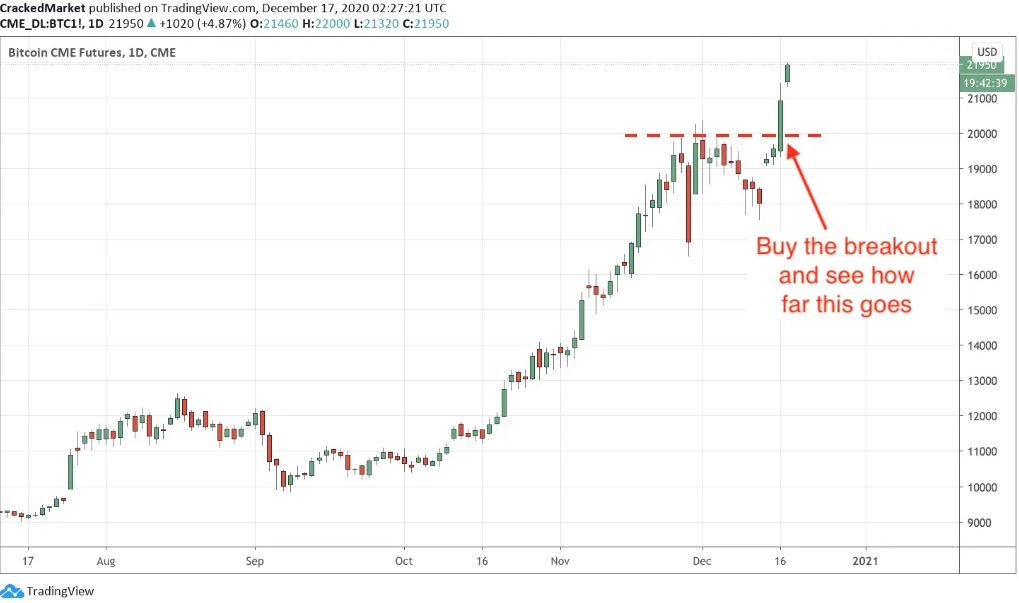
Bitcoin does not exist in a vacuum. Its price is heavily influenced by the global macroeconomic environment, specifically the health of the US Dollar and the monetary policies of the Federal Reserve.
A Hedge Against Currency Debasement
In recent years, global debt levels have skyrocketed, leading to aggressive money printing and the subsequent debasement of fiat currencies. For investors, this creates a desperate need for “hard assets.” In the past, this role was filled exclusively by gold and real estate. However, Bitcoin offers several advantages over traditional hedges: it is more portable than gold, more divisible than real estate, and more verifiable than either.
As central banks continue to grapple with the choice between high interest rates (which can trigger recessions) and printing money (which triggers inflation), Bitcoin stands out as a “neutral” asset. In scenarios where the US Dollar weakens or inflation remains “sticky,” Bitcoin often sees an uptick in valuation as investors move away from depreciating cash and into “fixed-supply” digital assets.
The Role of Global Interest Rates
Interest rates play a critical role in the “risk-on” vs. “risk-off” appetite of investors. When rates are high, investors can find yield in “safe” assets like Treasury bonds. However, when the Federal Reserve begins to pivot toward lower interest rates to stimulate the economy, liquidity enters the market. This excess liquidity typically flows into high-growth assets. Given Bitcoin’s high historical returns, it often becomes a primary beneficiary of “cheap money” environments, fueling vertical price action during periods of monetary easing.
Price Targets: From Psychological Milestones to Extrapolated Growth
When discussing “how high” Bitcoin can go, it is helpful to categorize targets based on different financial horizons.
The $100,000 Psychological Barrier
For many years, $100,000 has been the “holy grail” for Bitcoin enthusiasts. Psychologically, reaching six figures would signal to the world that Bitcoin is no longer a speculative niche but a permanent fixture of the global financial system. From a technical perspective, many analysts believe that once Bitcoin breaks and stabilizes above $100k, it will enter a new phase of price discovery, where the “unit bias” of retail investors shifts toward buying “Satoshis” (fractions of a Bitcoin) rather than whole coins.
The Comparison to Gold: $500,000 and Beyond
A more sophisticated way to view Bitcoin’s ceiling is through the lens of total addressable market (TAM). If Bitcoin is truly “Digital Gold,” its ultimate target is the market capitalization of physical gold. Currently, Bitcoin’s market cap is a fraction of gold’s. If Bitcoin captures 50% of gold’s market share, we are looking at a price of roughly $350,000 per coin. If it surpasses gold due to its superior utility in a digital-first world, a price of $1 million per coin by the 2030s—as predicted by analysts like Cathie Wood of ARK Invest—becomes a plausible, albeit optimistic, scenario.
Navigating the Risks: What Could Cap Bitcoin’s Growth?
While the upside potential is significant, any professional financial analysis must account for the risks that could limit Bitcoin’s upward trajectory.
Regulatory Hurdles and Governance
The greatest threat to Bitcoin’s price growth is not technological, but regulatory. Excessive taxation, restrictive “Anti-Money Laundering” (AML) laws, or outright bans on self-custody in major economies could dampen institutional appetite. While the ETF approvals suggest a more friendly regulatory environment in the West, the landscape is constantly shifting. Investors must remain aware that “regulatory friction” can lead to prolonged periods of stagnation or sharp corrections.
Market Volatility and Investor Sentiment
Bitcoin remains one of the most volatile assets in existence. 20% to 30% drawdowns are common even in the midst of a bull market. This volatility is often driven by “leverage washouts,” where traders using borrowed money are forced to sell, creating a domino effect of liquidations. For Bitcoin to reach the higher echelons of valuation ($500k+), it will likely need to see a decrease in volatility and a shift toward long-term “HODLing” by institutional entities rather than short-term speculative trading.

Conclusion: The Path Forward
The question of “how high will Bitcoin go” is ultimately a question of how much the world values a decentralized, borderless, and unforgeable store of value. As institutional rails are built and global economic uncertainty persists, the case for Bitcoin as a core component of a modern investment portfolio grows stronger.
While the path to $100,000, $500,000, or even $1,000,000 will undoubtedly be marked by extreme volatility and regulatory challenges, the underlying fundamentals of scarcity and increasing demand suggest that Bitcoin’s journey is far from over. For the disciplined investor, Bitcoin represents a unique asymmetrical opportunity—an asset with a limited downside compared to its potentially transformative upside in the evolving global financial landscape.
aViewFromTheCave is a participant in the Amazon Services LLC Associates Program, an affiliate advertising program designed to provide a means for sites to earn advertising fees by advertising and linking to Amazon.com. Amazon, the Amazon logo, AmazonSupply, and the AmazonSupply logo are trademarks of Amazon.com, Inc. or its affiliates. As an Amazon Associate we earn affiliate commissions from qualifying purchases.