
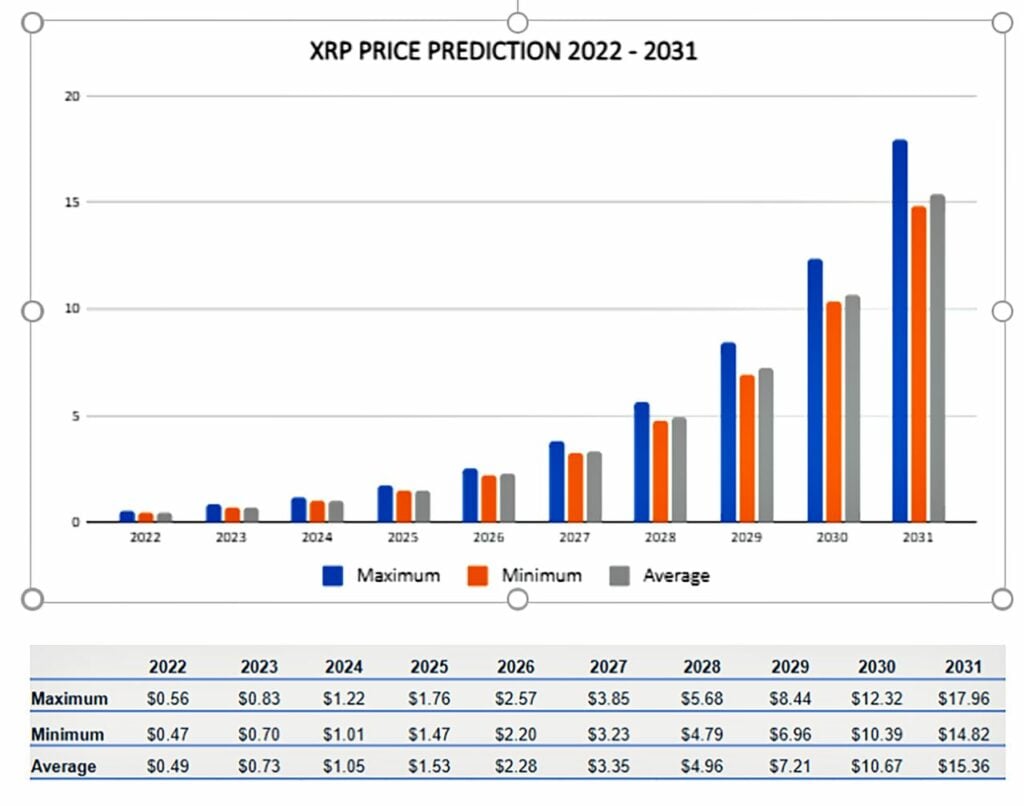
The world of cryptocurrency investment is a dynamic and often volatile landscape, captivating investors with its promise of transformative returns and disruptive technology. Among the myriad digital assets, XRP, a cryptocurrency created by Ripple Labs, has consistently held a prominent position, sparking intense debate and speculation about its future price trajectory. For many, the central question revolves around its ultimate ceiling: “How high is XRP expected to go?” Delving into this requires a multi-faceted analysis, encompassing its fundamental utility, market dynamics, regulatory environment, and broader economic forces, all firmly rooted in the realm of financial analysis and investment strategy.
Understanding XRP’s Core Value Proposition
At its heart, XRP is designed for one primary purpose: to facilitate fast, low-cost, and scalable cross-border payments. Unlike many cryptocurrencies that focus on decentralized applications or store-of-value propositions, XRP is intrinsically linked to Ripple’s vision of a more efficient global financial system. Understanding this foundational utility is crucial for any investor attempting to project its future value.
The RippleNet Ecosystem and Cross-Border Payments
RippleNet is a global network of financial institutions and payment providers that use Ripple’s technology to send money globally. XRP acts as a bridge currency within this ecosystem, allowing institutions to source liquidity on-demand for cross-border transactions. Traditionally, international payments involve multiple intermediary banks, resulting in high fees, slow settlement times, and pre-funded nostro/vostro accounts. XRP, via RippleNet’s On-Demand Liquidity (ODL) service, aims to eliminate these inefficiencies by enabling near-instantaneous transfers with minimal costs, effectively “tokenizing” fiat currency for quicker exchange. As more financial institutions adopt RippleNet and ODL, the demand for XRP as a liquidity tool theoretically increases, providing a fundamental driver for its value.
Technical Advantages: Speed, Cost, and Scalability
The XRPLedger (XRP Ledger), the decentralized, open-source blockchain on which XRP operates, boasts significant technical advantages over many legacy systems and even some newer blockchain technologies. Transactions on the XRPLedger can settle in 3-5 seconds, a stark contrast to the days it can take for traditional wire transfers. Furthermore, transaction fees are minuscule, often a fraction of a cent, making it an economically viable option for frequent, high-volume transfers. Critically, the XRPLedger is designed for enterprise-grade scalability, capable of handling thousands of transactions per second (TPS), far exceeding the capacity of Bitcoin or Ethereum in their current iterations. These technical merits underpin its potential as a global payment rail, a key aspect investors evaluate when considering its long-term potential.
XRPLedger’s Decentralized Exchange Capabilities
Beyond its role in cross-border payments, the XRPLedger also hosts a built-in decentralized exchange (DEX). This feature allows users to trade any asset issued on the ledger directly with other assets, including fiat currencies, other cryptocurrencies, and even commodities. While often overshadowed by its payment utility, the DEX capability enhances the XRPLedger’s overall ecosystem, providing a robust platform for asset issuance and trading. This contributes to the network’s overall utility and can indirectly bolster demand for XRP, which is used to pay transaction fees and serves as a base currency within the DEX. The broader the adoption of the XRPLedger for various financial activities, the stronger the underlying network effect and, potentially, the value proposition for XRP holders.
Key Factors Influencing XRP’s Price Trajectory
Predicting XRP’s future price requires navigating a complex interplay of various factors, each capable of significantly impacting its market valuation. Investors must consider not just the intrinsic utility but also external market forces and regulatory landscapes.
Regulatory Clarity and the SEC Lawsuit
Perhaps the most significant external factor influencing XRP’s price has been the ongoing legal battle between Ripple Labs and the U.S. Securities and Exchange Commission (SEC). The SEC’s lawsuit, alleging that XRP is an unregistered security, created immense uncertainty, leading to delistings from some U.S. exchanges and a considerable drag on investor sentiment. Positive developments in this case, particularly the ruling that XRP is not a security when sold on exchanges, provided substantial relief and immediate price surges. Further regulatory clarity, especially a definitive resolution or a clear framework for digital assets in key jurisdictions, is paramount. A favorable outcome could unlock significant institutional investment and broader market acceptance in the U.S., while adverse rulings or continued uncertainty could hinder its growth potential.
Adoption by Financial Institutions and ODL Growth
XRP’s value proposition is heavily reliant on its adoption by financial institutions and payment providers for On-Demand Liquidity (ODL). The more banks and payment companies use ODL to facilitate cross-border transactions, the greater the utility and demand for XRP. Investors closely watch reports on Ripple’s partnerships, ODL transaction volumes, and geographical expansion. Consistent growth in these metrics signals increasing real-world utility, which in turn strengthens the fundamental case for XRP’s appreciation. Conversely, stagnant adoption or a pivot by institutions towards alternative solutions would pose a significant challenge to its price growth.
Broader Cryptocurrency Market Trends and Investor Sentiment
No cryptocurrency operates in a vacuum, and XRP is no exception. Its price often correlates with the broader cryptocurrency market, particularly Bitcoin (BTC), which often acts as the market’s bellwether. Bull markets tend to lift all boats, including XRP, while bear markets typically see widespread declines. Investor sentiment, often driven by macroeconomic news, technological breakthroughs, or even social media trends, can also play a crucial role. A general shift towards risk-on assets in the financial world can benefit cryptocurrencies, while a flight to safety can trigger sell-offs. Understanding these macro and micro market trends is essential for contextualizing XRP’s individual performance.
Macroeconomic Factors and Global Financial Stability
Beyond the crypto specificities, global macroeconomic factors exert considerable influence. Inflation rates, interest rate decisions by central banks, geopolitical events, and the overall health of the global economy can impact investor appetite for speculative assets like cryptocurrencies. When traditional markets are robust and liquidity is abundant, investors might be more willing to allocate capital to higher-risk, higher-reward assets. Conversely, economic downturns or periods of high uncertainty can lead to deleveraging across all asset classes, including crypto. As a remittance-focused asset, global financial stability and cross-border trade volumes are also indirectly relevant, as they drive the underlying demand for the services XRP facilitates.
Analyzing Potential Price Targets and Methodologies
Forecasting specific price targets for any cryptocurrency is inherently speculative. However, investors employ various methodologies to arrive at educated projections, blending technical analysis with fundamental understanding and a dash of market psychology.
Technical Analysis: Chart Patterns, Support, and Resistance
Technical analysis involves studying historical price charts to identify patterns, trends, and key support and resistance levels. Traders look for indicators like moving averages, Bollinger Bands, and the Relative Strength Index (RSI) to gauge momentum and potential turning points. For XRP, analysts might identify strong accumulation zones or areas where previous price surges encountered heavy selling pressure. Breaking through significant resistance levels can signal a new leg up, while failing to hold support can indicate further downside. While not a crystal ball, technical analysis provides a framework for understanding market structure and potential short-to-medium term movements.
Fundamental Analysis: Utility, Partnerships, and Market Share
Fundamental analysis focuses on the intrinsic value of an asset. For XRP, this means evaluating the growth of RippleNet, the number of institutions using ODL, the volume of transactions facilitated by XRP, and its overall market share in the cross-border payments sector. A robust fundamental case would show increasing real-world utility, expanding partnerships, and a clear path to becoming a dominant player in its target market. The larger the addressable market XRP captures and the more entrenched it becomes in the global financial infrastructure, the stronger its long-term fundamental valuation is likely to be.
Expert Price Predictions: A Range of Perspectives
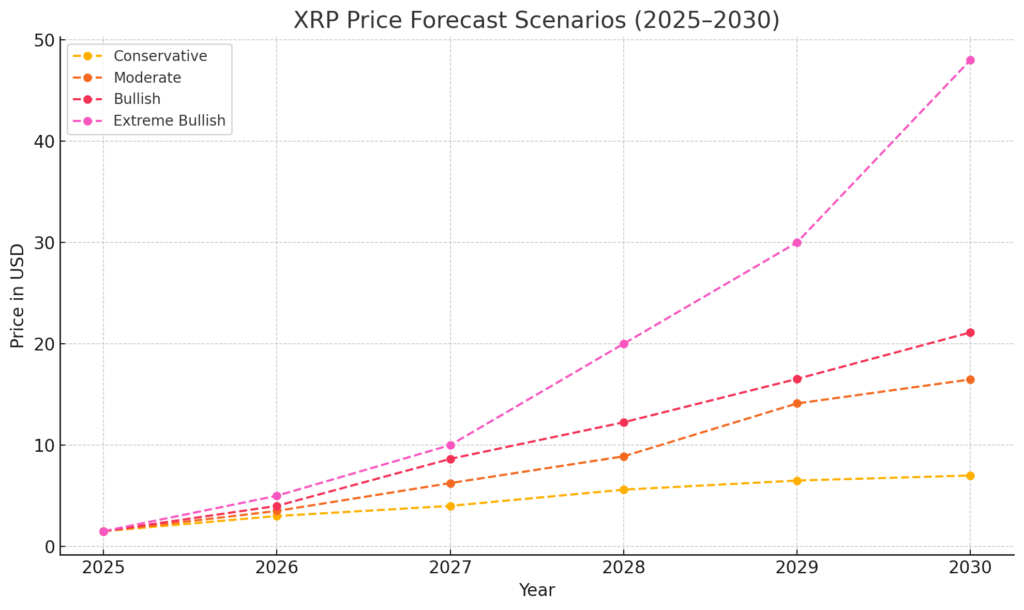
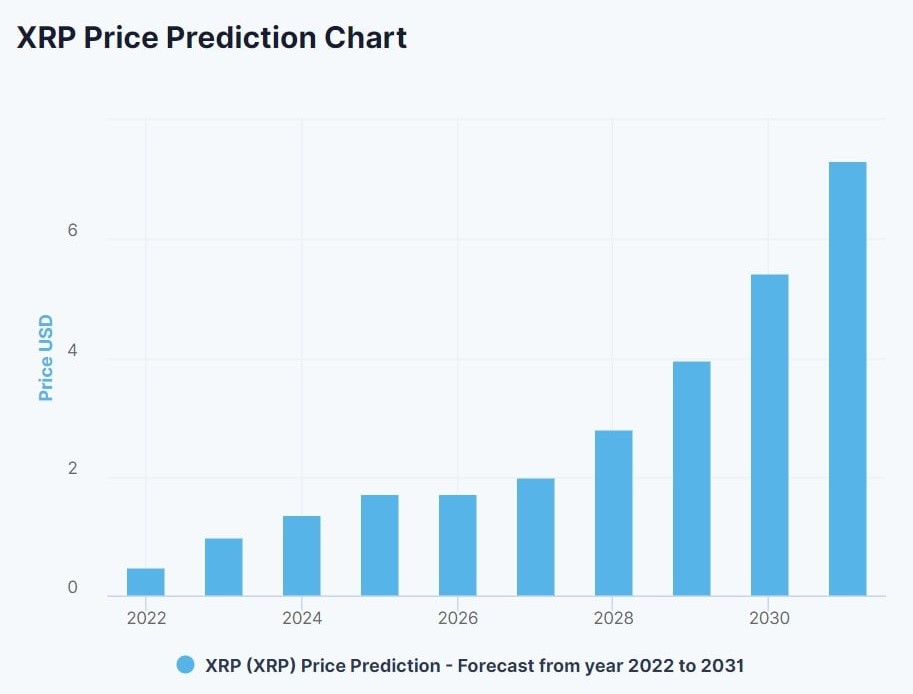
The crypto space is rife with price predictions from analysts, influencers, and investment firms. These projections can vary wildly, from conservative estimates to incredibly bullish forecasts. It’s crucial for investors to treat these predictions as just that – predictions – rather than guarantees. Some predictions are based on sophisticated models, while others might be pure speculation. Often, predictions are conditional, depending on factors like the outcome of the SEC lawsuit, the next bull run, or specific adoption milestones. A prudent investor will consult a range of credible sources, understand the underlying assumptions, and integrate them into their own risk assessment rather than relying on a single, potentially biased, outlook.
The Role of Supply and Demand Dynamics
Ultimately, price is determined by the forces of supply and demand. XRP has a maximum supply of 100 billion tokens, with a significant portion held by Ripple Labs in escrow. The rate at which these tokens are released into circulation and the overall circulating supply can influence price. On the demand side, factors like ODL adoption, retail investor interest, and institutional accumulation drive purchasing pressure. If demand outstrips the available supply, prices will rise. Conversely, if supply overwhelms demand (e.g., through large selling events or dwindling interest), prices will fall. Understanding these dynamics, including Ripple’s management of its escrowed XRP, is key to comprehending its potential for appreciation.
Risks and Challenges on XRP’s Path
Despite its promising utility, XRP faces several significant risks and challenges that investors must carefully consider before committing capital. A balanced view acknowledges both the upside potential and the inherent downsides.
Regulatory Uncertainty Beyond the US
While the U.S. SEC lawsuit has been a primary concern, regulatory uncertainty extends globally. Different countries are adopting varied approaches to digital asset regulation, creating a patchwork of rules that can be challenging for global entities like Ripple to navigate. Unfavorable regulatory decisions in other major financial hubs could impede Ripple’s expansion and the adoption of XRP. A cohesive and favorable global regulatory framework is crucial for XRP to realize its full potential as an international payment solution.
Competition from Other Payment Solutions and Cryptocurrencies
XRP is not alone in its quest to revolutionize cross-border payments. It faces fierce competition from traditional remittance services, established fintech companies, and a growing number of other blockchain-based solutions. Central Bank Digital Currencies (CBDCs) also present a potential long-term threat or, conversely, an opportunity for interoperability. If competitors develop superior, more widely adopted, or more cost-effective solutions, XRP’s market share and utility could be eroded. Continuous innovation and strategic partnerships are vital for Ripple to maintain its competitive edge.
Volatility and Market Manipulation
Like all cryptocurrencies, XRP is subject to extreme price volatility. Rapid price swings, sometimes unrelated to fundamental news, are common. This volatility can make it a challenging asset for risk-averse investors. Furthermore, the cryptocurrency market is not immune to market manipulation, including “pump-and-dump” schemes or coordinated trading activities that can artificially inflate or depress prices. Investors need to be aware of these risks and exercise caution, avoiding impulsive decisions based on short-term price movements.
Technological Obsolescence and Innovation Pace
The technology landscape evolves at an incredibly rapid pace. While the XRPLedger currently boasts impressive technical specifications, there’s always a risk of technological obsolescence. Newer, more efficient, or more secure blockchain solutions could emerge, potentially diminishing XRP’s competitive advantage. Ripple must continue to innovate and upgrade the XRPLedger and its services to remain at the forefront of the payment technology sector. Failure to adapt could see its technology become outdated, impacting its utility and long-term value.
Long-Term Outlook and Investment Considerations
Projecting “how high” XRP can go in the long term requires a nuanced perspective, balancing its foundational strengths with the significant hurdles it faces. For investors, it’s about making informed decisions aligned with their financial goals and risk tolerance.
XRP’s Role in a Future Digital Economy
Should Ripple succeed in its mission, XRP could cement its position as a critical component of a future digital global economy. Its ability to facilitate instant, cheap, and scalable value transfer makes it a strong contender for an interbank settlement layer, a bridge currency for CBDCs, or even a foundational element for tokenized assets. If the vision of a highly interconnected, efficient, and digital global financial system materializes, XRP, with its established infrastructure and partnerships, is well-positioned to play a significant role. This long-term potential for pervasive utility is a key driver for many bullish projections.
Diversification and Risk Management
Investing in any single cryptocurrency, including XRP, carries substantial risk. Prudent financial planning dictates diversification across various asset classes, and within the crypto space, spreading investments across multiple promising projects. XRP should ideally be part of a broader, well-diversified investment portfolio, with an allocation that aligns with an investor’s overall risk tolerance. Investors should never allocate more capital than they can afford to lose, given the inherent volatility and speculative nature of the crypto market.
The Importance of Due Diligence and Informed Decision-Making
Ultimately, the decision of whether and how much to invest in XRP, and what “high” means for an individual portfolio, rests with the investor. Thorough due diligence is paramount. This includes understanding Ripple’s business model, keeping abreast of regulatory developments, analyzing market trends, and critically evaluating expert opinions. Informed decision-making, coupled with a long-term perspective and disciplined risk management, is the most robust approach to navigating the complexities of the cryptocurrency market and assessing the true potential of assets like XRP. While no one can definitively say how high XRP will go, understanding its multifaceted drivers and risks provides a clearer lens through which to evaluate its financial journey.
aViewFromTheCave is a participant in the Amazon Services LLC Associates Program, an affiliate advertising program designed to provide a means for sites to earn advertising fees by advertising and linking to Amazon.com. Amazon, the Amazon logo, AmazonSupply, and the AmazonSupply logo are trademarks of Amazon.com, Inc. or its affiliates. As an Amazon Associate we earn affiliate commissions from qualifying purchases.