
Since its inception in 2009, Bitcoin has evolved from an experimental cryptographic project into a globally recognized financial asset. For investors, the central question has shifted from “Is Bitcoin real?” to “How high can Bitcoin go?” Determining the ceiling for a decentralized, borderless asset with a fixed supply requires a deep dive into monetary theory, institutional adoption, and macroeconomic trends. This article explores the factors driving Bitcoin’s valuation and the potential price targets that lie ahead in the coming decade.
The Fundamentals of Scarcity and Digital Gold
To understand Bitcoin’s price potential, one must first understand its supply-side mechanics. Unlike fiat currencies, which can be printed at the discretion of central banks, Bitcoin is governed by immutable code.
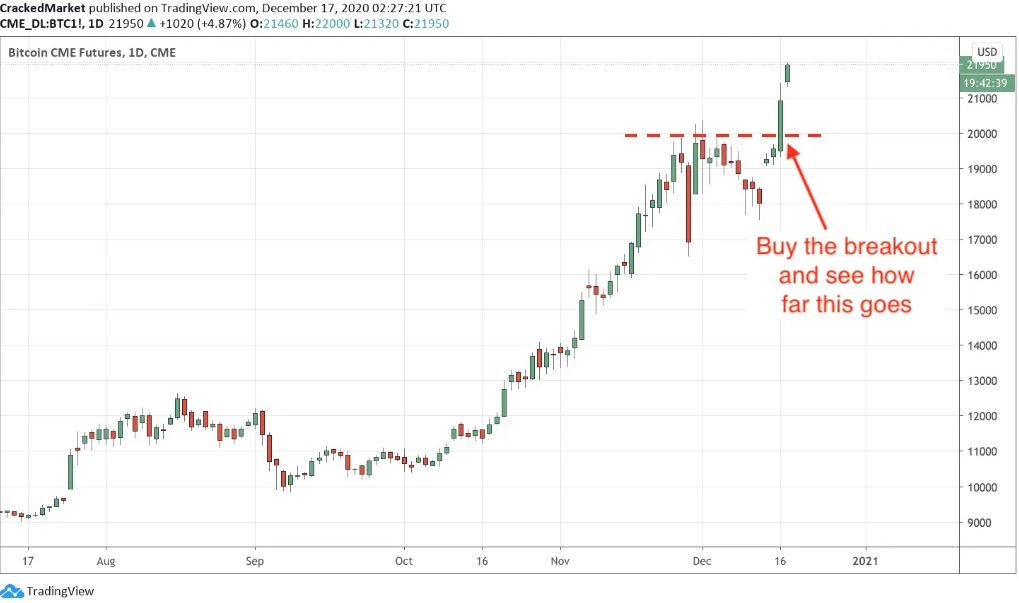
The Impact of the Halving Cycles
At the core of Bitcoin’s value proposition is the “Halving.” Approximately every four years, the reward for mining new blocks is cut in half, effectively slashing the rate of new supply entering the market. Historically, these events have acted as catalysts for massive bull runs. By creating a supply shock in the face of steady or increasing demand, the halving forces the market to find a new, higher equilibrium price. As we move toward the final Bitcoin being mined around the year 2140, the diminishing supply makes the asset increasingly “hard” money.
The Stock-to-Flow Model and Market Cap
The Stock-to-Flow (S2F) model, often used for commodities like gold and silver, measures the current stockpile of an asset against its annual production. Bitcoin’s S2F ratio currently rivals that of gold, and after subsequent halvings, it will become the scarcest liquid asset in human history. If Bitcoin were to reach the market capitalization of gold—currently valued at approximately $14 trillion—the price per coin would exceed $700,000. Many analysts view gold parity not as the ceiling, but as a logical mid-term milestone.
Institutional Adoption and the Maturity of the Asset Class
The narrative surrounding Bitcoin has transitioned from “magic internet money” to a legitimate institutional reserve asset. This shift is perhaps the most significant driver of long-term price appreciation.
The Era of Spot ETFs and Wall Street Integration
The approval of Spot Bitcoin Exchange-Traded Funds (ETFs) in the United States marked a turning point in financial history. By providing a regulated, accessible vehicle for pension funds, 401(k) providers, and retail brokerage accounts to allocate to Bitcoin, billions of dollars in “dry powder” have begun flowing into the ecosystem. This institutional “wrapper” reduces the friction of custody and security, allowing for a broader base of capital that was previously sidelined.
Corporate Treasuries and Nation-State Adoption
Beyond individual investors, corporations like MicroStrategy and Tesla have blazed a trail by adding Bitcoin to their balance sheets. When a company converts its cash reserves into Bitcoin, it signals a lack of confidence in fiat’s ability to store value over time. Furthermore, the adoption of Bitcoin as legal tender by nations like El Salvador—and the potential for other emerging economies to use it as a hedge against sovereign debt crises—creates a floor for demand that is independent of speculative trading.
Macroeconomic Factors and Global Liquidity
Bitcoin does not exist in a vacuum; its price is heavily influenced by the global “liquidity tide.” As the world’s major economies grapple with debt and inflation, the “Money” niche of the financial world is looking for an escape hatch.

Fiat Devaluation and the Inflation Hedge
Since the decoupling of the US dollar from gold in 1971, the global money supply has expanded at an exponential rate. This expansion results in the debasement of currency, where the purchasing power of $100 today is significantly less than it was a decade ago. Bitcoin, with its fixed supply of 21 million, acts as a “lifeboat” for capital. In environments of high inflation or aggressive quantitative easing, Bitcoin tends to outperform traditional assets because it cannot be debased.
The Correlation with M2 Money Supply
Data suggests a strong correlation between the global M2 money supply and Bitcoin’s price. As central banks inject liquidity into the system to prevent economic stagnation, that capital flows into high-performing, scarce assets. If the global debt-to-GDP ratio continues to climb, the nominal price of Bitcoin could reach heights that seem unfathomable today, simply because the denominator (the dollar or euro) is losing value.
Price Predictions and Future Valuation Models
When discussing how high Bitcoin can go, it is helpful to look at various mathematical and social models that attempt to project the asset’s terminal value.
The Path to $1 Million and Beyond
Prominent figures in the investment world, such as Cathie Wood of ARK Invest and various analysts from major global banks, have posited that a price of $1 million per Bitcoin is achievable by 2030. This projection is based on Bitcoin capturing a significant percentage of the global “store of value” market, including shares of gold, offshore banking, and real estate. If Bitcoin captures just 5% of the global wealth currently stored in these sectors, a seven-figure price tag becomes a mathematical probability.
Hyperbitcoinization and the Unit of Account
The most bullish scenario is often referred to as “Hyperbitcoinization.” This is a theoretical state where Bitcoin becomes the primary global reserve currency and the standard unit of account. In this scenario, we would no longer measure Bitcoin’s value in dollars; instead, we would measure the value of goods and services in “Sats” (Satoshi, the smallest unit of Bitcoin). While this remains a fringe theory, the continued instability of the global financial system makes the move toward a decentralized monetary standard a topic of serious academic and financial debate.
Navigating the Volatility: Risks to the Ceiling
While the upward potential is vast, the journey is rarely a straight line. Investors must account for the hurdles that could dampen the asset’s growth.
Regulatory Challenges and Government Intervention
The greatest “known unknown” for Bitcoin is regulation. While the US has moved toward acceptance via ETFs, other nations could impose restrictive taxes or outright bans on on-ramps and off-ramps. High-level regulatory friction can stifle liquidity and delay the price discovery process. However, as Bitcoin becomes more integrated into the portfolios of the voting public and major financial institutions, the political “will” to ban it diminishes.
Market Volatility and Investor Psychology
Bitcoin is famous for its 80% drawdowns. These corrections are a natural part of an asset’s price discovery phase as it moves from the hands of “weak hands” (speculators) to “strong hands” (long-term believers). For Bitcoin to reach the six or seven-figure range, it must survive multiple cycles of boom and bust. Investors who view Bitcoin through the lens of a “Side Hustle” or a “get-rich-quick” scheme often wash out during these periods, while those who treat it as a foundational piece of “Personal Finance” tend to reap the long-term rewards.

Conclusion: A Shift in the Monetary Paradigm
The question of “how high can Bitcoin go” is ultimately a question of how much trust the world is willing to lose in traditional financial institutions. If Bitcoin continues to prove itself as a secure, decentralized, and scarce alternative to fiat currency, its valuation is limited only by the total amount of value currently held in less efficient stores of wealth.
As institutional adoption accelerates and the global macro-environment remains uncertain, Bitcoin stands as a unique financial instrument—one that combines the properties of a commodity, a currency, and a tech network. Whether it reaches $100,000, $500,000, or $1 million, the underlying trend is clear: Bitcoin is eating into the market share of traditional money, and the ceiling for such a transformation is remarkably high. For the modern investor, the goal is not just to time the top, but to understand the fundamental shift toward a digital, sovereign financial future.
aViewFromTheCave is a participant in the Amazon Services LLC Associates Program, an affiliate advertising program designed to provide a means for sites to earn advertising fees by advertising and linking to Amazon.com. Amazon, the Amazon logo, AmazonSupply, and the AmazonSupply logo are trademarks of Amazon.com, Inc. or its affiliates. As an Amazon Associate we earn affiliate commissions from qualifying purchases.