
The Dow Jones Industrial Average (DJIA), often simply referred to as “the Dow,” stands as one of the most recognized and frequently cited stock market indices in the world. Its daily movements frequently headline financial news, dictating market sentiment and often influencing individual investor decisions. Yet, despite its pervasive presence, many investors, both novice and experienced, may not fully grasp the intricacies of how the Dow is constructed, what its fluctuations truly signify, and how it fits into a well-rounded investment strategy. Understanding “how Dow” functions is crucial for anyone looking to navigate the complexities of the financial markets and make informed investment choices.

The Dow Jones Industrial Average: A Historical Perspective
The story of the Dow is a journey through American economic history, reflecting the evolution of its industrial might and, subsequently, its broader corporate landscape.
Origins and Evolution
Conceived by Charles Dow, co-founder of Dow Jones & Company and The Wall Street Journal, the index was first published on May 26, 1896. Initially, it comprised just 12 predominantly industrial companies, a testament to the manufacturing-driven economy of the late 19th century. Companies like General Electric (which remained an original component until 2018), American Cotton Oil, and U.S. Leather represented the titans of that era. The original intent was to provide a clear, simple barometer of the overall health of the U.S. industrial sector.
Over the decades, the Dow has expanded and adapted, growing from 12 to 20, and eventually to its current roster of 30 component companies in 1928. This evolution wasn’t merely about adding more companies; it was about reflecting the changing face of American industry. As the economy diversified from heavy manufacturing to technology, finance, healthcare, and consumer goods, so too did the Dow’s composition. Companies are regularly added and removed to ensure the index remains a relevant reflection of the broader market, though it retains its “Industrial Average” moniker more out of tradition than strict adherence to its original industrial focus.
What the Dow Represents Today
Today, the Dow is not a comprehensive measure of the entire U.S. stock market, nor is it strictly “industrial” in the traditional sense. Instead, it serves as an indicator of the performance of 30 of the largest, most influential, and publicly traded companies in the United States. These “blue-chip” companies span a wide array of sectors, including technology giants like Apple and Microsoft, financial institutions like Goldman Sachs, healthcare leaders like UnitedHealth Group, and consumer staples like Coca-Cola. Their sheer size and market capitalization mean their performance often reflects broader economic trends, making the Dow a significant, though not exhaustive, gauge of market health and investor sentiment.
Deciphering the Dow: How It’s Calculated and What It Measures
Unlike other major indices, the Dow’s calculation methodology is unique and often misunderstood, leading to potential misinterpretations of its daily movements.
The Price-Weighted Methodology
Crucially, the Dow is a price-weighted index. This means that companies with higher stock prices have a greater impact on the index’s value than companies with lower stock prices, regardless of their market capitalization (total value of all outstanding shares). For example, if a company with a $300 stock price moves up by $10, it will affect the Dow more significantly than a company with a $100 stock price that also moves up by $10, even if the latter company has a much larger market capitalization. This contrasts sharply with market-cap-weighted indices like the S&P 500, where larger companies inherently exert more influence.
This price-weighted structure can sometimes lead to a skewed perception of market movements. A strong performance by a single high-priced stock can give the impression of a robust market, even if many other components are underperforming. Conversely, a substantial drop in a high-priced stock can drag the entire index down, overshadowing positive movements elsewhere.
The Role of the Dow Divisor
To maintain historical continuity and ensure that stock splits, dividends, or changes in the index’s composition do not artificially alter the index’s value, a special adjustment factor known as the “Dow Divisor” is used. When Charles Dow first calculated the index, he simply added up the stock prices of the component companies and divided by the number of companies (12). However, over time, stock splits (e.g., one share becoming two shares, each at half the price) would unfairly reduce the index value if the simple average method were still used.
The Dow Divisor is adjusted to counteract these events. Its value is continually modified so that the sum of the prices of the 30 companies, when divided by the divisor, remains comparable over time. For instance, if a stock splits, its price effectively halves, reducing its contribution to the sum. The divisor is then reduced proportionally so that the index value remains unchanged immediately after the split. This ensures that the only changes in the Dow’s reported value are due to actual market price movements, not administrative adjustments. As of late 2023, the divisor was a very small number, typically less than 0.15, meaning every $1 change in a component stock’s price translates to a move of roughly 6-7 points in the Dow.
Composition: More Than Just “Industrials”
Despite its name, the Dow’s 30 components are far from exclusively industrial. The index aims to represent a diverse cross-section of the U.S. economy, encompassing various sectors that drive growth and innovation. The selection of companies is not based on a formula but rather on the discretion of a committee, which aims for broad market representation, reputation, sustained growth, and investor interest. This committee considers factors like a company’s financial health, its ability to withstand economic downturns, and its overall contribution to the economy. This dynamic selection process ensures that the Dow remains a relevant, albeit selective, snapshot of corporate America.
The Dow’s Influence on Market Sentiment and Your Portfolio
The Dow’s prominence means its daily performance reverberates throughout the financial world, influencing both broad market sentiment and individual investment strategies.
A Bellwether of Economic Health

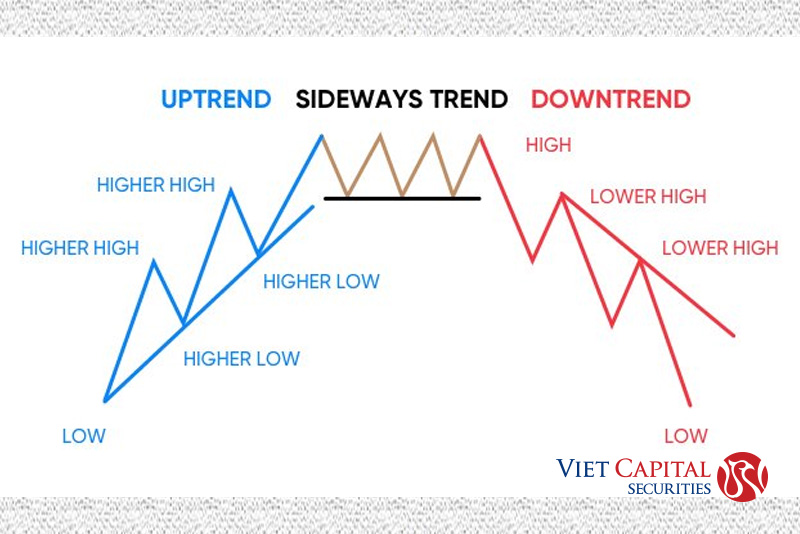
Because its components are large, established companies, their collective performance is often seen as a bellwether for the broader U.S. economy. When the Dow rises consistently, it can signal investor confidence, economic expansion, and strong corporate earnings. Conversely, a prolonged decline in the Dow often points to economic concerns, recessionary fears, or widespread investor pessimism. While it’s a useful indicator, it’s crucial to remember that the Dow is just one data point, and a narrow one at that. Economic health is a multifaceted concept that cannot be fully captured by 30 companies, however large.
Psychological Impact on Investors
The Dow’s round numbers and daily percentage changes are frequently cited in news reports, making it a primary source of information for many investors. A 1,000-point gain can generate euphoria, while a similar drop can induce panic. This psychological impact can lead to herd behavior, where investors might make decisions based on fear of missing out (FOMO) or fear of further losses, rather than on sound financial analysis. Understanding that the Dow is merely an index, and not the entirety of your portfolio or the market, can help mitigate these emotional responses.
Diversification Beyond the Dow
For individual investors, relying solely on the Dow as an indicator or as an investment vehicle can be problematic due to its concentrated nature. While its 30 components are diverse among themselves, they represent only a tiny fraction of the thousands of publicly traded companies. A truly diversified portfolio would include exposure to a wider range of companies, including mid-cap and small-cap stocks, international markets, and different asset classes like bonds and real estate. The Dow provides valuable insight but should be considered within the context of a much broader investment strategy focused on diversification and long-term goals.
Investing in the Dow: Strategies and Considerations
For those looking to gain exposure to the Dow’s performance, several avenues exist, each with its own set of advantages and considerations.
Direct Stock Ownership vs. Index Funds/ETFs
One approach is to directly invest in the individual stocks that comprise the Dow. However, this can be capital-intensive given the high share prices of many of these companies and does not automatically replicate the index’s exact weighting. A more practical and common method is to invest through exchange-traded funds (ETFs) or mutual funds that track the Dow Jones Industrial Average. These funds hold shares of all 30 companies in the appropriate proportions, providing instant diversification across the index’s components. Examples include the SPDR Dow Jones Industrial Average ETF (DIA), often referred to as “Diamonds,” which seeks to replicate the price and yield performance of the DJIA.
Dollar-Cost Averaging and Long-Term Outlook
When investing in an index like the Dow, adopting strategies like dollar-cost averaging can be beneficial. This involves investing a fixed amount of money at regular intervals, regardless of market fluctuations. This approach helps mitigate the risk of investing a large sum at a market peak and allows investors to accumulate more shares when prices are low and fewer when prices are high, potentially lowering the average cost per share over time. Given the long-term upward trend of major market indices, a long-term outlook is generally advisable, rather than attempting to time the market based on daily Dow movements.
Risks and Rewards of Concentrated Exposure
While the Dow comprises large, stable companies, it still carries inherent risks. Its price-weighted nature means a few high-priced stocks can disproportionately influence its performance. If one of these influential components faces significant headwinds, the entire index can be affected. Furthermore, while the 30 companies are diverse, they are all U.S.-based equities, meaning the index is still susceptible to specific risks tied to the U.S. economy or policy changes. The reward, historically, has been participation in the growth of some of America’s most successful corporations, offering a balance of stability and potential for capital appreciation, albeit within a relatively concentrated portfolio.
Beyond the Headlines: The Dow’s Limitations and Broader Market Context
While the Dow is an undeniable icon, it’s essential to understand its limitations and contextualize its movements within the broader financial landscape.
A Narrow Lens: Why the S&P 500 Offers a Wider View
For a more comprehensive snapshot of the U.S. stock market, many financial professionals consider the S&P 500 index a superior benchmark. The S&P 500 tracks 500 of the largest U.S. companies, making it a broader and more representative measure of the market’s health. Furthermore, the S&P 500 is market-capitalization-weighted, meaning companies with larger total market values have a greater impact, which is often considered a more accurate reflection of the overall market. While the Dow represents roughly 25-30% of the U.S. stock market’s value, the S&P 500 covers approximately 80%.
Volatility and Short-Term Noise
Like all stock market indices, the Dow is subject to volatility. Daily fluctuations, often driven by news events, economic reports, or geopolitical developments, can create significant “noise.” For long-term investors, it’s critical to look past these short-term movements and focus on the underlying fundamentals of the economy and the companies themselves. Reacting impulsively to daily Dow swings can lead to poor investment decisions.
Global Factors and the Dow
In an increasingly interconnected global economy, the performance of the Dow is not solely dictated by domestic factors. Global economic growth, international trade policies, currency fluctuations, and geopolitical events worldwide can significantly impact the earnings and outlook of the multinational corporations within the index. Therefore, a holistic understanding of investment performance requires considering these broader global influences, rather than viewing the Dow in isolation as purely a U.S. phenomenon.
Ultimately, the Dow Jones Industrial Average serves as a powerful historical benchmark and a frequently referenced indicator of market sentiment. However, a prudent investor understands its specific construction, its limitations as a comprehensive market gauge, and how to integrate its insights into a well-diversified, long-term investment strategy rather than relying on it as the sole barometer of financial success.
aViewFromTheCave is a participant in the Amazon Services LLC Associates Program, an affiliate advertising program designed to provide a means for sites to earn advertising fees by advertising and linking to Amazon.com. Amazon, the Amazon logo, AmazonSupply, and the AmazonSupply logo are trademarks of Amazon.com, Inc. or its affiliates. As an Amazon Associate we earn affiliate commissions from qualifying purchases.