
Venmo has transformed the landscape of peer-to-peer payments, making the act of sending and receiving money as casual and immediate as a text message. But behind its user-friendly interface lies a sophisticated technological architecture designed to facilitate these digital transactions securely and efficiently. Understanding “how Venmo works when someone pays you” delves into the intricate technical processes that move money from one user to another’s digital wallet, focusing on the app’s functionality, security protocols, and integration points.
The Digital Handshake: Understanding Venmo’s Core Payment Process
At its heart, Venmo operates as a digital intermediary, streamlining the transfer of funds without the traditional delays associated with bank-to-bank wire transfers. When a user sends money via Venmo, they are essentially authorizing the platform to debit funds from their linked source (bank account, debit card, credit card, or existing Venmo balance) and credit it to the recipient’s Venmo account. This process is far from a direct bank transfer; instead, it leverages a network of financial partnerships and robust software infrastructure.

Initiating a Payment and Notification Protocol
The journey of a payment begins with the sender. They select the recipient, input the amount, add a note (often accompanied by emojis), and tap “Pay.” Crucially, this action triggers a cascade of events within Venmo’s backend. The app’s servers first verify the sender’s account status, available funds (if using Venmo balance), and the validity of their linked payment method. Simultaneously, a secure token is generated for the transaction.
Upon successful initiation, Venmo’s notification system immediately springs into action. The recipient typically receives an instant push notification on their mobile device (if enabled) and an in-app alert. This real-time notification is a cornerstone of Venmo’s design, providing immediate confirmation of incoming funds and reinforcing the app’s promise of speed and convenience. The notification protocol also often includes an email confirmation, serving as a secondary record for both parties. This multi-channel notification strategy ensures high visibility and reduces uncertainty about payment status.
The Backend Data Flow and Authorization
Behind the scenes, once the sender initiates a payment, Venmo acts as an orchestrator, communicating with various financial institutions. If the sender is paying from a linked bank account or debit card, Venmo initiates a request to the respective bank or card network to authorize the transaction. This involves encrypted data packets containing transaction details being sent and received between Venmo’s servers and the financial institution’s API. The authorization process verifies that the sender has sufficient funds or credit and that the payment method is valid and secure.
For payments made using a credit card, Venmo typically processes these as cash advances, which can incur fees for the sender. However, for the recipient, the source of the funds is largely abstracted; they simply see an incoming payment from the sender. Once authorization is granted, Venmo updates its internal ledger, crediting the recipient’s Venmo balance. This entire backend data flow is designed for speed and security, relying on advanced encryption standards and secure network protocols to prevent data interception and unauthorized access. The system is engineered to handle millions of transactions daily, maintaining high availability and processing integrity.
Your Venmo Balance: Where the Money Resides
Once a payment is successfully processed, the money doesn’t immediately appear in the recipient’s traditional bank account. Instead, it lands in their Venmo balance. This is a digital ledger within the Venmo ecosystem, representing the funds available to the user within the app. This balance is technically held by Venmo’s banking partners in pooled, omnibus accounts, with Venmo maintaining individual user balances within its system. This mechanism allows for instant internal transfers between users and forms the foundation of Venmo’s speed advantage.
Instant Access vs. Bank Transfers
Having funds in your Venmo balance provides instant access for several activities. You can immediately use these funds to:
- Send payments to other Venmo users.
- Make purchases at merchants that accept Venmo.
- Use it with the Venmo Debit Card (if you have one).
However, to move the money out of the Venmo ecosystem and into your traditional bank account, you need to initiate a transfer. Venmo offers two primary options for transferring funds to a linked bank account:
- Standard Transfer: This is typically free and usually takes 1-3 business days to complete. The process involves Venmo initiating an Automated Clearing House (ACH) transfer to your linked bank account. ACH transfers are a standard electronic network for financial transactions in the U.S., known for their reliability but not for their speed. Venmo batches these requests and sends them to its banking partners for processing, after which your bank credits your account.
- Instant Transfer: For a small fee (typically 1.75% of the transfer amount, with a minimum fee of $0.25 and a maximum fee of $25), Venmo allows you to transfer funds almost immediately to an eligible linked debit card or bank account. This service leverages real-time payment networks (like Visa Direct or Mastercard Send) or faster ACH processing, allowing funds to appear in your bank account within minutes, even on weekends and holidays. This option is crucial for users needing immediate liquidity.
The Role of Linked Bank Accounts and Debit Cards

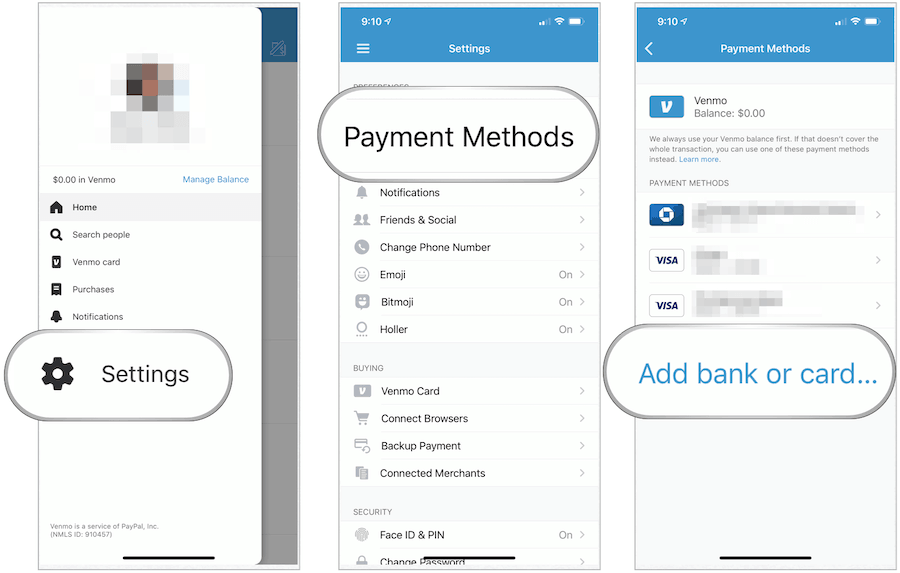
For receiving payments, while funds initially reside in the Venmo balance, linking a bank account or debit card is essential for off-ramping these funds. A linked bank account serves as the primary destination for standard transfers, facilitating the movement of funds from your Venmo balance into your personal checking or savings account. This linkage is established through secure authentication methods, often utilizing third-party services like Plaid, which securely connect your bank login credentials to Venmo without storing them directly on Venmo’s servers.
A linked debit card offers an additional layer of flexibility, primarily enabling instant transfers. Because debit cards are tied directly to your checking account and leverage card network infrastructure, they can process real-time disbursements more efficiently than traditional ACH transfers. It’s important to note the distinction: while a credit card can be a source for sending money, it generally cannot be used as a destination for receiving transfers from your Venmo balance; only bank accounts and eligible debit cards serve this purpose. These linked financial instruments are central to the practical utility of Venmo, bridging the gap between the digital wallet and traditional banking.
Safeguarding Your Digital Wallet: Venmo’s Security Measures
The ability to move money digitally comes with inherent security considerations. Venmo employs a multi-layered approach to protect user accounts and transactions, integrating advanced technological safeguards to prevent fraud, unauthorized access, and data breaches. When someone pays you, the system is actively working to ensure that the transaction is legitimate and that your funds are secure from the moment they are initiated until they reach your accessible balance.
Encryption and Fraud Protection
At the core of Venmo’s security architecture is robust encryption. All sensitive data—including personal information, payment details, and transaction data—is encrypted both in transit and at rest. This means that information is scrambled into unreadable code when it’s sent between your device and Venmo’s servers, and while it’s stored on their databases. Venmo utilizes industry-standard encryption protocols (like TLS for data in transit) to create secure communication channels, making it exceedingly difficult for malicious actors to intercept and decipher sensitive information.
Beyond encryption, Venmo implements sophisticated fraud detection systems. These systems use machine learning algorithms to analyze transaction patterns, user behavior, and various data points in real-time. If a transaction deviates from a user’s typical behavior or exhibits characteristics common in fraudulent activities (e.g., unusually large sums, payments to new or suspicious accounts, rapid sequence of transactions), the system may flag it for review or even temporarily suspend it. This proactive approach to fraud protection aims to identify and mitigate risks before they can cause financial harm. Automated tools continuously monitor the network for suspicious activity, backed by human teams for more complex investigations.
User Verification and Transaction Monitoring
To enhance security, Venmo requires users to verify their identity, especially for higher transaction limits or to access certain features. This typically involves providing personal information such as name, date of birth, the last four digits of your Social Security number, and potentially even a photo ID. This Know Your Customer (KYC) process is mandated by financial regulations and helps prevent money laundering and terrorist financing, adding a layer of trust to the network.
Every transaction that occurs on Venmo, whether incoming or outgoing, undergoes continuous monitoring. This isn’t just about fraud detection; it also ensures compliance with Venmo’s user agreement and applicable laws. If a payment is deemed suspicious after it has been credited to your account, Venmo reserves the right to review, reverse, or hold the funds. This is a critical technical safeguard to protect the integrity of the platform and all its users. For instance, if a sender’s payment source is later found to be fraudulent, Venmo may reverse the payment, even if it has already appeared in your balance. This highlights the importance of understanding that while funds appear instantly, the underlying financial settlement can take longer and may be subject to review.
Beyond the Transaction: Features for Managing Received Funds
Venmo isn’t just a conduit for payments; it’s a comprehensive platform with additional features designed to help users manage their received funds effectively. These features enhance the utility of the Venmo balance, making it more than just a temporary holding ground for money.
Splitting Payments and Requesting Money
When you receive money for a shared expense, Venmo’s “Split” feature becomes particularly useful. If you’re paid a lump sum for something multiple people contributed to, you can easily use your Venmo balance to send their share back out. Conversely, if someone owes you money, Venmo’s “Request” feature simplifies the process of asking for it. Instead of an outright payment, you can send a request to another user, who then sees it in their feed and can pay you directly from their balance or linked source. These features are built into the app’s core functionality, leveraging the existing payment infrastructure to streamline financial interactions among friends and family. They demonstrate how the technical framework supports diverse social payment scenarios, extending beyond simple one-to-one transfers.
Venmo Debit Card and Direct Deposit Options
For users who want to integrate Venmo more deeply into their daily financial lives, the platform offers the Venmo Debit Card. This Mastercard-branded card is directly linked to your Venmo balance, allowing you to spend the money you receive anywhere Mastercard is accepted, both online and in physical stores. When you make a purchase, the funds are debited directly from your Venmo balance, effectively turning your digital wallet into a usable debit account. This feature showcases Venmo’s expansion beyond pure peer-to-peer into a broader financial tool, leveraging existing payment network infrastructure for wider acceptance.
Furthermore, Venmo has introduced a direct deposit feature, allowing users to receive their paychecks or government disbursements directly into their Venmo account. By providing employers or benefit providers with a Venmo routing and account number, users can bypass traditional bank accounts for their income. When funds are directly deposited, they land instantly in the Venmo balance, making them immediately available for spending or transfer. This functionality represents a significant technological advancement for Venmo, positioning it as a primary financial hub for some users, facilitating faster access to earned income and blurring the lines between traditional banking and fintech solutions. It relies on Venmo establishing formal banking relationships and integrating with ACH networks to process these incoming funds efficiently.
In essence, Venmo’s seamless operation when someone pays you is the result of intricate technology: secure data handling, real-time notification systems, robust fraud detection, and integration with the broader financial ecosystem. It’s a testament to modern app development and financial technology innovation, transforming how individuals interact with their money.
aViewFromTheCave is a participant in the Amazon Services LLC Associates Program, an affiliate advertising program designed to provide a means for sites to earn advertising fees by advertising and linking to Amazon.com. Amazon, the Amazon logo, AmazonSupply, and the AmazonSupply logo are trademarks of Amazon.com, Inc. or its affiliates. As an Amazon Associate we earn affiliate commissions from qualifying purchases.