
TurboTax has become synonymous with digital tax preparation, transforming a historically complex and often dreaded annual task into a streamlined, user-friendly experience. At its core, TurboTax is a sophisticated software application designed to guide individuals and small businesses through the intricate labyrinth of tax laws, calculations, and filing procedures. Far beyond a simple calculator, it represents a remarkable intersection of advanced technology, intuitive design, and robust security protocols, all orchestrated to demystify the tax process. Understanding “how TurboTax works” means delving into the technological infrastructure that underpins its functionality, from the moment a user inputs their first piece of financial data to the final, secure e-filing of their return. It’s a testament to how software engineering and thoughtful user experience design can tackle real-world administrative burdens, providing clarity, accuracy, and efficiency to millions of taxpayers each year.
The Core Technological Infrastructure Powering TurboTax
At the heart of TurboTax’s capability lies a robust and highly scalable technological infrastructure. This isn’t just a desktop application; it’s a dynamic ecosystem built on cutting-edge cloud computing principles and sophisticated data processing techniques. This foundation ensures that the software can handle millions of users simultaneously, adapt to changing tax laws, and securely manage sensitive financial data.
Cloud-Native Architecture for Scalability and Accessibility
TurboTax primarily operates on a cloud-native architecture, leveraging platforms like Amazon Web Services (AWS) to host its applications and services. This approach offers several critical advantages. Firstly, scalability is paramount during peak tax season. The cloud allows TurboTax to dynamically allocate resources – computing power, storage, and network bandwidth – to meet fluctuating demand, preventing slowdowns or crashes when millions of users are active. This elasticity ensures a consistent, high-performance experience regardless of traffic volume. Secondly, a cloud-based model enhances accessibility. Users can access their tax returns from virtually any internet-connected device, whether it’s a desktop computer, laptop, tablet, or smartphone. This multi-platform access is facilitated by web-based applications and dedicated mobile apps, all drawing from the same secure cloud infrastructure, ensuring data synchronization across devices. Moreover, cloud infrastructure simplifies maintenance and updates, allowing TurboTax to roll out new features, security patches, and crucial tax law updates seamlessly and frequently without requiring users to manually download and install large software packages.
Data Processing Engines and Rule-Based Logic
The intellectual core of TurboTax resides within its sophisticated data processing engines and rule-based logic systems. These are the algorithms responsible for interpreting user-provided financial information and applying the correct tax laws. Every tax form, every deduction, every credit, and every regulation is translated into a set of intricate rules that the software can understand and execute. When a user inputs their income, expenses, or other financial details, these engines process the data against thousands of predefined tax rules to calculate their tax liability or refund. This goes beyond simple arithmetic; it involves complex conditional logic to determine eligibility for various tax breaks, navigate phase-out limits, and identify potential inconsistencies. The rule sets are meticulously updated each year by a team of tax experts and software engineers, ensuring compliance with the latest IRS and state tax codes. This iterative process of rule refinement and engine optimization is critical for maintaining the accuracy and reliability that users expect from a tax preparation tool.
Backend Systems for Secure Data Management
Handling sensitive financial and personal data requires an exceptionally secure backend system. TurboTax employs a multi-layered approach to data management, prioritizing security and integrity. Data is stored in highly protected databases within secure data centers, benefiting from physical security, environmental controls, and robust network firewalls. Beyond infrastructure security, the backend systems are designed with data encryption at rest and in transit, ensuring that all information, from Social Security numbers to bank account details, is obfuscated and inaccessible to unauthorized entities. Regular audits, penetration testing, and vulnerability assessments are conducted to identify and mitigate potential weaknesses. Furthermore, data redundancy and backup strategies are in place to prevent data loss, ensuring that user information is always recoverable in the event of an unforeseen system failure. These sophisticated backend operations are crucial for building and maintaining user trust in a service that holds their most private financial details.
Intelligent Data Capture and Seamless Integration
One of TurboTax’s most lauded features is its ability to simplify the data input process, transforming what used to be a tedious manual transcription task into a more efficient and less error-prone experience. This is achieved through a combination of advanced optical technologies and seamless integrations with financial institutions.
Leveraging OCR and AI for Document Recognition
Gone are the days of manually typing every line item from a W-2 or 1099 form. TurboTax employs Optical Character Recognition (OCR) technology, often enhanced by Artificial Intelligence (AI) and machine learning algorithms, to intelligently capture data from tax documents. Users can simply snap a photo of their W-2 (or upload a PDF), and the software’s OCR engine will analyze the image, identify key data fields (like employer EIN, wages, withholdings), and populate the corresponding sections in the tax return. The AI component continually learns from vast datasets of tax documents, improving its accuracy in recognizing different layouts, fonts, and data variations. This not only significantly speeds up the data entry process but also reduces the likelihood of manual transcription errors, which can lead to costly mistakes or audit flags. The system is designed to highlight any ambiguous readings for user review, ensuring that accuracy remains paramount.
Direct Import Functionality: Connecting Financial Accounts
Beyond document scanning, TurboTax offers a powerful direct import feature that connects directly with thousands of banks, brokerages, and payroll providers. With user permission and secure login credentials, TurboTax can securely pull in various financial data, including:
- W-2 information: Directly from employers’ payroll systems.
- 1099 forms: From investment firms for dividends, interest, stock sales, or from payment processors for freelance income.
- Mortgage interest statements.
- Student loan interest statements.
- Charitable contribution records.
- Itemized deductions: By analyzing credit card and bank statements for eligible expenses.
This direct import capability eliminates the need for users to gather numerous physical documents or manually input complex transaction data. It not only saves time but also ensures that no eligible income or deduction is overlooked due to manual error or oversight. The process adheres to strict security protocols, often utilizing bank-level encryption and secure tokenization to protect user credentials during the import process.
The Role of APIs in Third-Party Integrations
The seamless integration capabilities of TurboTax are heavily reliant on Application Programming Interfaces (APIs). APIs act as digital bridges, allowing different software systems to communicate and exchange data securely. TurboTax utilizes a variety of APIs:
- Financial Institution APIs: To enable the direct import of data from banks, investment platforms, and payroll services, as mentioned above. These APIs define how TurboTax can request and receive specific financial data points securely.
- Government Agency APIs: Crucially, TurboTax leverages APIs to interact with the IRS and state tax agencies for e-filing. These APIs ensure that tax returns are transmitted in the correct, standardized digital format required by government systems, and that confirmations of acceptance or rejection are received back by the software.
- Internal Service APIs: Within TurboTax’s own ecosystem, APIs facilitate communication between different modules and services, ensuring that data flows smoothly from input, through calculation, to the final review and filing stages.
These APIs are meticulously designed and rigorously tested to maintain data integrity, security, and compliance with various regulatory standards. They are the unsung heroes that enable the interconnectedness and automated data flow essential for a modern tax preparation platform.

Guiding Users Through Complex Tax Regulations with Smart Design
The real brilliance of TurboTax lies not just in its backend technology, but in how it presents and simplifies incredibly complex tax regulations for the average user. This is where thoughtful user experience (UX) and intelligent design principles come to the forefront, transforming the intimidating task of tax filing into a guided, step-by-step journey.
Intuitive User Interface and Workflow Automation
TurboTax employs an intuitive user interface (UI) designed to minimize cognitive load and guide users effortlessly through the tax preparation process. Instead of overwhelming users with a myriad of forms and complex instructions, it breaks down the entire process into manageable, logical steps. The UI typically features:
- Clear Progress Indicators: Users always know where they are in the filing process and what steps remain.
- Simple Language: Tax jargon is translated into plain English, making questions and explanations easy to understand.
- Consistent Layout: A predictable layout across different sections helps users navigate with confidence.
- Visual Cues: Highlighting important fields, providing visual feedback, and using color coding to draw attention to critical information.
Beyond aesthetics, the workflow is highly automated. The software dynamically presents questions based on previous answers, eliminating irrelevant sections and ensuring users only see what pertains to their unique tax situation. This intelligent automation prevents users from getting lost in unnecessary forms or feeling overwhelmed by the sheer volume of tax laws, effectively customizing the experience for each individual.
Dynamic Questionnaires and Contextual Help
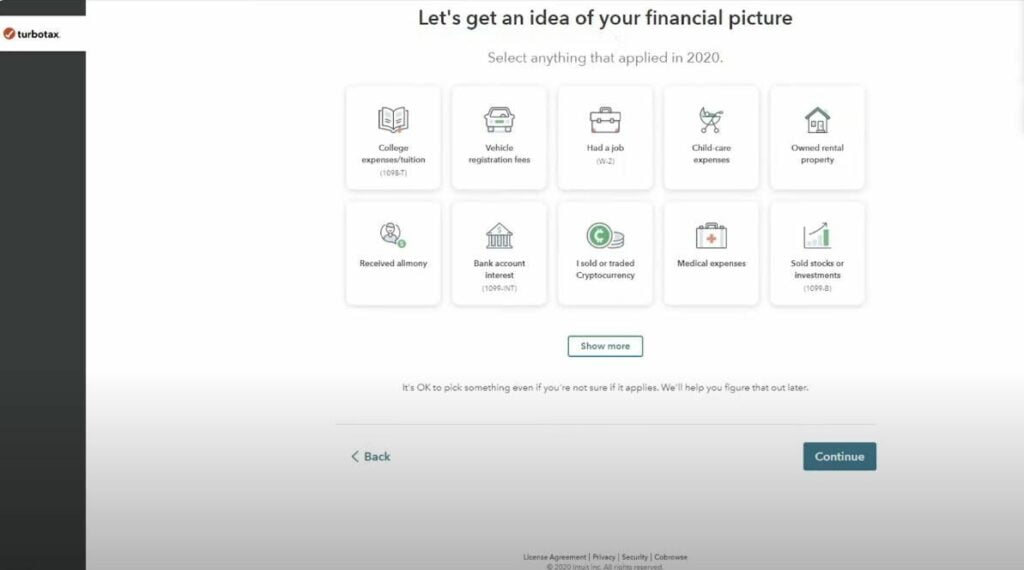
A cornerstone of TurboTax’s design is its dynamic, interview-style questionnaire. Instead of asking users to identify which forms they need, the software asks a series of simple questions about their life events and financial activities throughout the year. Based on the responses, the system intelligently determines which tax forms are necessary and what information is required. For example:
- If a user indicates they got married, the software will ask about their spouse’s income.
- If they sold stock, it will prompt for capital gains information.
- If they own a home, it will ask about mortgage interest and property taxes.
Crucially, throughout this interview process, TurboTax provides contextual help. If a user is unsure about a specific term or question, they can often click an adjacent “Learn More” or “Help” icon to access simplified explanations, examples, and links to relevant IRS publications. This immediate, on-demand support empowers users to confidently answer questions without having to leave the application or consult external resources, ensuring they understand what they’re providing and why it matters.
Error Detection and Real-time Optimization
Accuracy is paramount in tax filing, and TurboTax incorporates sophisticated error detection and real-time optimization mechanisms to minimize mistakes. As users input data and progress through the interview, the software continuously reviews the information for:
- Inconsistencies: For example, if a user claims dependents but their income suggests they don’t meet eligibility criteria for certain credits, the software might flag this.
- Missing Information: It will prompt users to fill in any required fields that have been overlooked.
- Common Audit Triggers: While not a guarantee against an audit, the software can alert users to potential red flags that might attract IRS scrutiny, offering guidance on how to clarify or document certain deductions.
- Mathematical Errors: The calculations are performed automatically, eliminating human arithmetic mistakes.
Furthermore, TurboTax offers real-time optimization. As users enter deductions and credits, the software often displays a running tally of their estimated refund or tax due. This immediate feedback helps users understand the financial impact of their entries and can motivate them to explore additional deductions they might be eligible for. Before final e-filing, a comprehensive review process highlights any remaining errors or warnings, giving users a final opportunity to correct discrepancies and ensure their return is as accurate and advantageous as possible. This blend of intelligent design and continuous feedback transforms a potentially daunting process into a manageable and confidence-inspiring one.
Upholding Digital Security and Data Privacy in Tax Software
Given the highly sensitive nature of the information processed, digital security and data privacy are non-negotiable pillars of TurboTax’s operational framework. The company invests heavily in technology and protocols to safeguard user data from unauthorized access, breaches, and cyber threats, adhering to standards often exceeding those found in typical consumer software.
Multi-Layered Encryption and Data Protection
TurboTax employs a multi-layered encryption strategy to protect user data both when it’s being transmitted and when it’s stored.
- Encryption in Transit: All data exchanged between a user’s device and TurboTax’s servers is secured using Transport Layer Security (TLS) and Secure Socket Layer (SSL) protocols, typically with 256-bit encryption. This creates a secure, encrypted tunnel, preventing eavesdropping or interception of sensitive information like Social Security numbers, financial figures, and personal details as they travel across the internet.
- Encryption at Rest: When data is stored on TurboTax’s servers in its secure data centers, it is also encrypted. This means that even if an unauthorized party were to gain access to the physical storage devices, the data itself would be unintelligible without the decryption key, which is kept separate and under stringent control.
- Data Masking/Tokenization: For certain critical pieces of information, like bank account numbers or partial Social Security numbers, TurboTax may employ tokenization or data masking techniques. This replaces sensitive data with non-sensitive substitutes (tokens) that cannot be reverse-engineered, further minimizing risk if a tokenized database were ever compromised.
These robust encryption standards are essential for maintaining the confidentiality and integrity of users’ financial lives within the digital realm.
Authentication Mechanisms and Fraud Prevention
Beyond encryption, strong authentication and proactive fraud prevention measures are crucial.
- Strong Passwords and Multi-Factor Authentication (MFA): TurboTax strongly encourages and often requires users to create strong, unique passwords. Crucially, it offers and promotes Multi-Factor Authentication (MFA), such as sending a code to a registered phone number or email address, or using an authenticator app. MFA adds a critical layer of security, making it exponentially harder for unauthorized individuals to access an account even if they manage to steal a password.
- Account Monitoring and Anomaly Detection: TurboTax employs sophisticated systems to monitor account activity for unusual patterns or suspicious login attempts. For instance, if an account typically accessed from California suddenly attempts a login from an unknown IP address in a different country, the system might flag it, require additional verification, or temporarily lock the account to prevent fraud.
- Fraud Prevention Algorithms: Specialized algorithms are used to detect common tax fraud schemes. This includes identifying potentially fraudulent returns based on certain data combinations or historical patterns, helping to protect both the taxpayer and the broader tax system.
- Identity Verification: In some cases, especially for new users or unusual filing situations, TurboTax may require additional identity verification steps to ensure the person accessing the account is indeed the legitimate taxpayer.

Adherence to Industry Standards and Regulatory Compliance
TurboTax operates within a highly regulated environment, and its security practices are not just self-imposed but also mandated by various industry standards and governmental regulations.
- IRS Security Guidelines: As a tax preparation software provider, TurboTax must comply with strict security requirements set forth by the IRS for electronic filers. These guidelines cover data handling, transmission protocols, authentication, and general cybersecurity practices.
- SOC 2 Audits: Many cloud-based service providers, including those handling sensitive data, undergo SOC 2 (Service Organization Control 2) audits. These independent assessments evaluate a service provider’s information security practices, including data privacy, availability, processing integrity, and confidentiality, providing assurance to users about the company’s controls.
- Payment Card Industry Data Security Standard (PCI DSS): While not directly a tax regulation, if TurboTax processes payments (e.g., for software upgrades or filing fees), it adheres to PCI DSS standards to secure credit card and debit card information.
- General Data Protection Regulation (GDPR) / California Consumer Privacy Act (CCPA): For users in regions covered by these laws, TurboTax implements practices to ensure data privacy, transparency in data usage, and user control over their personal information.
By integrating these advanced security technologies, stringent operational protocols, and unwavering commitment to regulatory compliance, TurboTax strives to create a trustworthy and secure environment, giving users peace of mind that their sensitive financial information is well-protected throughout the entire tax preparation and filing journey.
aViewFromTheCave is a participant in the Amazon Services LLC Associates Program, an affiliate advertising program designed to provide a means for sites to earn advertising fees by advertising and linking to Amazon.com. Amazon, the Amazon logo, AmazonSupply, and the AmazonSupply logo are trademarks of Amazon.com, Inc. or its affiliates. As an Amazon Associate we earn affiliate commissions from qualifying purchases.