
The S&P 500 is more than just a number you hear on the news; it’s a cornerstone of the global financial market, a benchmark for the health of the U.S. economy, and a vital tool for investors worldwide. Understanding how it operates is crucial for anyone looking to navigate the complexities of stock market investing, whether you’re a seasoned financier or just starting your journey into personal finance. Far from being a random collection of companies, the S&P 500 is a meticulously constructed index that offers a robust snapshot of America’s largest publicly traded corporations, reflecting their collective performance and, by extension, the economic landscape. This article will demystify the S&P 500, breaking down its composition, selection process, performance drivers, and how investors can leverage it as part of their financial strategy.
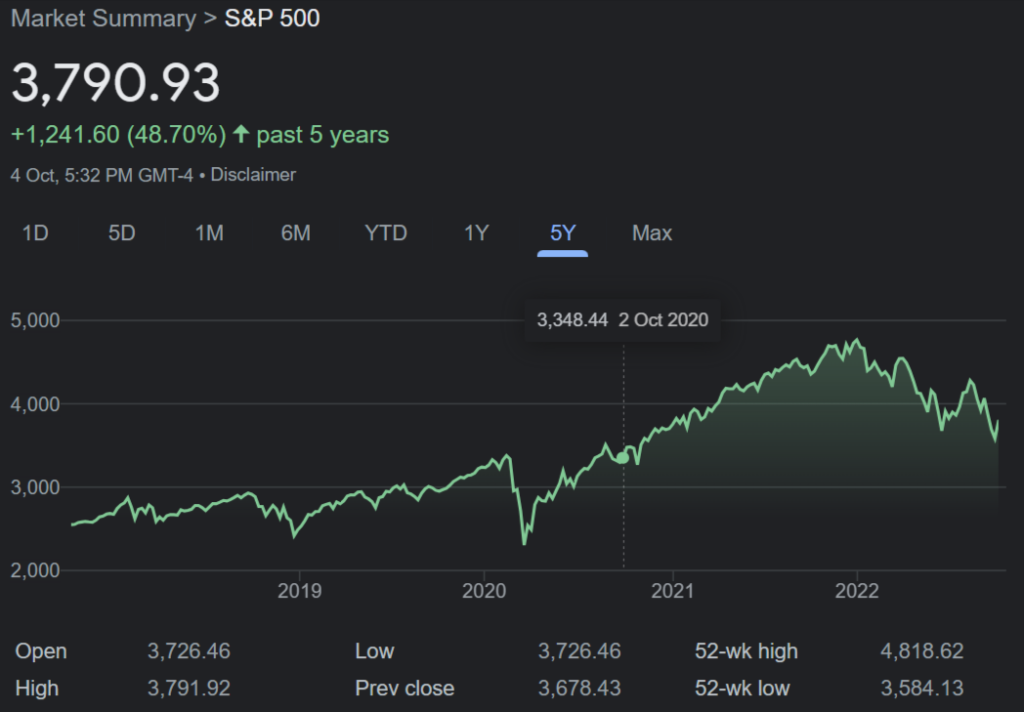
The Foundation: What is the S&P 500?
At its core, the S&P 500 is a stock market index that represents the performance of 500 of the largest publicly traded companies in the United States. It is maintained by S&P Dow Jones Indices, a joint venture majority-owned by S&P Global. Unlike some other indices, the S&P 500 is broadly diversified across various sectors of the economy, making it a comprehensive barometer for the overall U.S. equity market.
A Benchmark for the U.S. Stock Market
The S&P 500 is widely regarded as the best single gauge of large-cap U.S. equities and a leading indicator of the U.S. economy. Its broad coverage, spanning industries from technology and healthcare to finance and consumer goods, provides a more holistic view than narrower indices. Investors, financial professionals, and economists often reference the S&P 500 to assess market trends, evaluate investment performance, and forecast economic conditions. Its movements are closely watched because they reflect the earnings power and future prospects of a significant portion of the American corporate sector.
Not Just Any 500 Companies
While the name suggests it comprises the 500 largest U.S. companies, the selection process is far more nuanced than simply ranking by market capitalization. Inclusion in the S&P 500 is a prestigious accomplishment for a company, signifying its stability, liquidity, and influence. The committee overseeing the index applies stringent criteria, ensuring that constituent companies meet specific benchmarks related to market size, public float (shares available to the public), liquidity (how easily shares can be bought and sold), profitability, and adequate representation within their respective sectors. This rigorous vetting process ensures the index remains relevant and reflective of the leading edge of American industry.
Market-Cap Weighted Index
A critical characteristic of the S&P 500 is its market-capitalization weighting scheme. This means that companies with larger market capitalizations (stock price multiplied by the number of outstanding shares) have a greater impact on the index’s overall value and daily movements. For instance, a 1% price change in a mega-cap company like Apple or Microsoft will have a much more significant effect on the S&P 500’s performance than a 1% change in a smaller, albeit still large, constituent company. This weighting method naturally emphasizes the performance of the most influential and economically significant companies, aligning the index’s movements with the broader shifts driven by these market leaders.
The Selection Process: Who Gets In and How?
The inclusion criteria and ongoing management of the S&P 500 are key to its reliability and widespread acceptance. It’s not a static list; rather, it’s a dynamic index that evolves with the market and economy.
The S&P Dow Jones Indices Committee
The S&P 500 is managed by a committee at S&P Dow Jones Indices. This committee meets regularly, typically quarterly, but can convene more often as needed, to review and adjust the index’s composition. Their decisions are based on a comprehensive set of rules and guidelines designed to ensure the index remains an accurate and investable benchmark of the large-cap U.S. equity market. The committee’s independence and expertise are crucial in maintaining the index’s integrity, shielding it from external pressures or arbitrary changes.
Key Eligibility Criteria
For a company to be considered for inclusion in the S&P 500, it must satisfy several fundamental requirements:
- U.S. Company: The company must be based in the United States.
- Market Capitalization: It must have an unadjusted market capitalization of at least $14.5 billion (this threshold is subject to change). This ensures only large-cap companies are included.
- Public Float: At least 50% of the company’s outstanding shares must be available to the public for trading. This ensures sufficient liquidity.
- Liquidity: The company’s shares must be highly liquid, meaning they are frequently traded and can be bought or sold without significantly affecting their price. This is measured by metrics like the ratio of annual dollar value traded to its market capitalization.
- Profitability: The company must have positive reported earnings in the most recent quarter, and its aggregate earnings over the past four consecutive quarters must also be positive. This demonstrates financial stability.
- Sector Representation: While not a strict quota, the committee aims for sector balance to ensure the index accurately reflects the diversity of the U.S. economy.
- Listing: The company must be listed on a major U.S. exchange (NYSE or NASDAQ).
Quarterly Rebalancing and Reconstitution
The S&P Dow Jones Indices committee regularly reviews the S&P 500 constituents to ensure they continue to meet the eligibility criteria. This process involves two main activities:
- Reconstitution: This refers to the addition or removal of companies from the index. Companies might be added if they meet the criteria and fill a need, perhaps replacing a company that no longer meets the requirements due to a decline in market cap, an acquisition, or prolonged unprofitability. When a company is removed, its shares are typically sold by index funds, while the shares of newly added companies are bought, which can cause temporary price volatility for the affected stocks.
- Rebalancing: This involves adjusting the weights of existing companies in the index. Since the S&P 500 is market-cap weighted, the relative importance of each company fluctuates with its stock price. Periodically, the committee rebalances the index to reflect these shifts, ensuring that each company’s weight accurately reflects its current market capitalization relative to the others. This process keeps the index aligned with its underlying methodology and maintains its accuracy as a market benchmark.
Understanding Its Performance and Valuation
The S&P 500’s performance is a constant topic of discussion among investors, reflecting not only the fortunes of its constituent companies but also broader economic sentiment.
Tracking the S&P 500
For individual investors, direct investment in the S&P 500 as a single entity is not possible. Instead, investors gain exposure through various financial products designed to mirror its performance. The most common and accessible ways are through S&P 500 index funds (mutual funds) and Exchange Traded Funds (ETFs). These funds hold a portfolio of stocks that replicates the S&P 500’s composition and weighting. When you invest in an S&P 500 index fund or ETF, you are essentially owning a tiny piece of all 500 companies in the index, allowing for instant diversification and exposure to the broad U.S. stock market.
Factors Influencing Performance

The S&P 500’s performance is a complex interplay of numerous factors:
- Corporate Earnings: The most fundamental driver. When the 500 companies report strong earnings and positive outlooks, the index tends to rise. Conversely, disappointing earnings can lead to declines.
- Economic Indicators: Broader economic health, measured by GDP growth, unemployment rates, consumer spending, and manufacturing data, significantly impacts corporate profitability and investor confidence.
- Interest Rates: Decisions by the Federal Reserve on interest rates affect borrowing costs for companies and consumers, influencing economic activity and corporate valuations. Lower rates typically support higher stock prices, and vice-versa.
- Inflation: High inflation can erode purchasing power and corporate profits, leading to market concerns.
- Geopolitical Events: Global political instability, trade wars, or major international crises can introduce uncertainty and trigger market volatility.
- Technological Advancements and Innovation: Breakthroughs in key sectors can propel growth for certain companies and, given their weighting, uplift the entire index.
- Investor Sentiment: Psychological factors, such as fear and greed, can lead to irrational buying or selling, driving short-term market fluctuations.
Interpreting the S&P 500 Value
The S&P 500 value itself is an index level, not a dollar value that can be directly invested in per share. It represents a weighted average of the constituent stock prices, scaled to a base period. While the raw number indicates the index’s current level, investors often look at other metrics to gauge its valuation.
- Price-to-Earnings (P/E) Ratio: This measures the index’s current price relative to the aggregate earnings per share of its constituent companies. A high P/E ratio can suggest the market is optimistic about future earnings growth, but also potentially overvalued.
- Earnings Per Share (EPS): The total earnings of the 500 companies, divided by the total number of index shares.
- Dividend Yield: The aggregate dividends paid by the companies relative to the index value.
Understanding these metrics provides a deeper insight into whether the S&P 500 is trading at a fair, undervalued, or overvalued level, aiding investment decisions.
Investing in the S&P 500: Strategies and Considerations
Investing in the S&P 500 is a popular and often recommended strategy for its diversification benefits and historical returns.
Passive Investing through Index Funds and ETFs
The most straightforward and efficient way for individual investors to gain exposure to the S&P 500 is through low-cost index funds or ETFs. These funds are designed to track the performance of the index as closely as possible, typically by holding all 500 constituent stocks in the same proportions as the index.
- Benefits:
- Diversification: Instantly diversified across 500 companies and numerous sectors, reducing single-stock risk.
- Low Cost: Index funds and ETFs generally have very low expense ratios because they don’t require active management (i.e., fund managers trying to beat the market).
- Simplicity: Easy to understand and manage, making them ideal for long-term, hands-off investing.
- Long-Term Growth: Historically, the S&P 500 has delivered attractive long-term returns, averaging around 10% annually over decades, though past performance is not indicative of future results.
Diversification Benefits
By investing in an S&P 500 fund, you inherently achieve significant diversification. Instead of putting all your eggs in one basket by investing in a single company, you’re spread across a wide array of businesses. If one company performs poorly, its impact on your overall investment is mitigated by the performance of the other 499 companies. This broad exposure across various industries helps smooth out volatility and protects against the risk of catastrophic loss from any single corporate failure.
Risks and Rewards
While the S&P 500 offers substantial rewards, it’s not without risk.
- Rewards: Over the long term, the S&P 500 has been a powerful engine for wealth creation, capturing the growth of the U.S. economy and corporate innovation. It provides access to consistent dividend income (from many of its constituent companies) and significant capital appreciation potential.
- Risks:
- Market Risk: The S&P 500 is subject to overall market fluctuations. Economic downturns, geopolitical crises, or widespread investor fear can cause the entire index to decline.
- No Capital Protection: Unlike some fixed-income investments, there is no guarantee against loss of principal. The value of your investment can go down.
- Concentration Risk (U.S. Only): While diversified within the U.S., it doesn’t provide international diversification. Investors seeking global exposure might need to supplement with international funds.
Long-Term vs. Short-Term Perspective
The S&P 500 is best viewed as a long-term investment vehicle. While it experiences daily, weekly, and monthly fluctuations, its historical strength lies in its ability to recover from downturns and generate substantial returns over periods of 5, 10, or 20+ years. Attempting to time the market or speculate on short-term movements of the S&P 500 is often counterproductive and can lead to missed gains. A disciplined, buy-and-hold strategy, coupled with regular contributions, is generally the most effective approach for harnessing the power of the S&P 500 for long-term financial goals.
The S&P 500’s Role in the Broader Economy
Beyond its investment utility, the S&P 500 plays a significant role in how we perceive and measure the health of the U.S. economy.
An Economic Barometer
Because it comprises 500 of the largest and most influential American companies across almost every sector, the S&P 500 serves as a robust barometer for the U.S. economy. Its movements are often seen as a leading indicator, anticipating future economic trends. A rising S&P 500 can signal robust corporate earnings, strong consumer demand, and a healthy economic outlook, while a falling index can point to impending challenges, such as recessions or economic slowdowns. Policymakers, economists, and business leaders closely monitor the S&P 500 for insights into the current and future state of the nation’s financial and commercial landscape.
Impact on Investor Sentiment
The performance of the S&P 500 has a profound impact on investor sentiment, extending beyond those directly invested in it. When the index is rising, it often fosters optimism, encouraging further investment and consumer spending, which can create a positive feedback loop for the economy. Conversely, prolonged declines in the S&P 500 can breed pessimism, leading to reduced investment, tightened spending, and a general loss of confidence, potentially exacerbating economic downturns. This psychological effect underscores its importance as a symbol of economic stability and prosperity.

Comparison with Other Indices
While highly influential, the S&P 500 is not the only major U.S. stock market index. It is often compared to:
- Dow Jones Industrial Average (DJIA): A price-weighted index of 30 “blue-chip” U.S. companies. The DJIA is narrower and less diversified than the S&P 500, making it less representative of the broader market.
- Nasdaq Composite: A market-capitalization weighted index that includes all stocks listed on the Nasdaq stock exchange, heavily skewed towards technology and growth companies. While broader than the DJIA, it doesn’t offer the same cross-sector diversification as the S&P 500.
The S&P 500 strikes a balance, offering broad market exposure without the extreme concentration in a single sector, as seen in the Nasdaq, or the limited number of companies in the DJIA. This comprehensive nature solidifies its position as the premier benchmark for the U.S. large-cap equity market.
In conclusion, the S&P 500 is a meticulously crafted and dynamically managed index that stands as a pillar of the financial world. Its role as a leading economic indicator and a highly accessible investment vehicle makes understanding its mechanics essential for anyone interested in personal finance and investing. By offering diversified exposure to America’s leading companies, it provides a robust, low-cost pathway for long-term wealth accumulation, cementing its status as a core component of prudent financial planning.
aViewFromTheCave is a participant in the Amazon Services LLC Associates Program, an affiliate advertising program designed to provide a means for sites to earn advertising fees by advertising and linking to Amazon.com. Amazon, the Amazon logo, AmazonSupply, and the AmazonSupply logo are trademarks of Amazon.com, Inc. or its affiliates. As an Amazon Associate we earn affiliate commissions from qualifying purchases.