
For millions of Americans, Social Security represents a cornerstone of their financial future, providing a vital safety net in retirement, disability, or for survivors. Yet, the precise mechanisms by which the Social Security Administration (SSA) calculates these crucial benefits remain a mystery to many. Understanding this complex formula is not merely an academic exercise; it empowers individuals to make informed decisions about their work life, retirement timing, and overall financial planning. Far from being a simple average of your lifetime earnings, the calculation involves a nuanced interplay of your work history, inflation adjustments, specific formulas, and your claiming age. This comprehensive guide will demystify the process, breaking down the key components that determine your monthly Social Security check, ensuring you gain clarity on one of your most significant retirement assets.

Understanding the Foundation: Your Work History and Earnings Record
The bedrock of your Social Security benefits is your lifetime earnings record. The SSA meticulously tracks every dollar you’ve earned from employment or self-employment that was subject to Social Security taxes. This detailed history is paramount because it forms the raw data upon which all subsequent calculations are built.
The Importance of Reported Earnings
Every paycheck you receive contributes a portion to Social Security through the FICA (Federal Insurance Contributions Act) tax. Employers also contribute an equal share. For the self-employed, this is covered by the SECA (Self-Employment Contributions Act) tax. It’s crucial that your earnings are accurately reported to the SSA. Underreported income, even inadvertently, can directly diminish your future benefits. The SSA records your earnings annually, up to a certain maximum taxable earnings limit, which changes each year (e.g., $168,600 in 2024). Earnings above this limit are not subject to Social Security taxes and, therefore, do not count towards your benefit calculation. This emphasis on accurate and consistent reporting underscores the importance of regularly reviewing your earnings statements.
The “Highest 35 Years” Rule
Perhaps one of the most significant factors in the benefit formula is the “highest 35 years” rule. The SSA doesn’t simply average all your earnings from your first job to your last. Instead, it identifies your 35 highest-earning years, after adjusting them for inflation (a process known as “indexing,” which we’ll explore shortly). If you have fewer than 35 years of earnings, the missing years are counted as zeros in the calculation, which can significantly lower your overall benefit. This rule highlights the value of continuous employment and underscores how career gaps or periods of low earnings can impact your retirement income. For instance, someone who worked consistently for 40 years will have their lowest-earning 5 years dropped, while someone who only worked for 30 years will have 5 years of zero earnings averaged in.
Checking Your Social Security Statement
The best way to stay on top of your earnings record and get an estimate of your future benefits is to regularly review your Social Security Statement. This personalized document, accessible online through your my Social Security account at SSA.gov, provides a year-by-year breakdown of your reported earnings, an estimate of your future retirement, disability, and survivor benefits, and alerts you to any potential discrepancies. Reviewing this statement annually is a critical financial habit, as it allows you to catch and correct any errors in your earnings record promptly, ensuring your future benefits are accurately calculated.
The Calculation Mechanism: From AIME to PIA
Once your indexed earnings record is established, the SSA proceeds with a two-step calculation to determine your Primary Insurance Amount (PIA). The PIA is the benefit amount you are entitled to receive if you claim benefits at your Full Retirement Age (FRA).
Average Indexed Monthly Earnings (AIME) Explained
The first step is to calculate your Average Indexed Monthly Earnings (AIME). This isn’t just a simple average. The SSA takes your highest 35 years of earnings and “indexes” them. Indexing adjusts past earnings to reflect the general increase in wages that has occurred since the year the earnings were paid. This process ensures that your past earnings are expressed in terms of their current value, rather than their nominal value from decades ago, preventing inflation from eroding the real value of your contributions. For example, $10,000 earned in 1980 would be worth significantly more in terms of purchasing power today than its face value. Indexing accounts for this, making earnings from different decades comparable. Once your 35 highest indexed annual earnings are summed, that total is divided by 420 (the number of months in 35 years) to arrive at your AIME.
Bend Points and the Primary Insurance Amount (PIA)
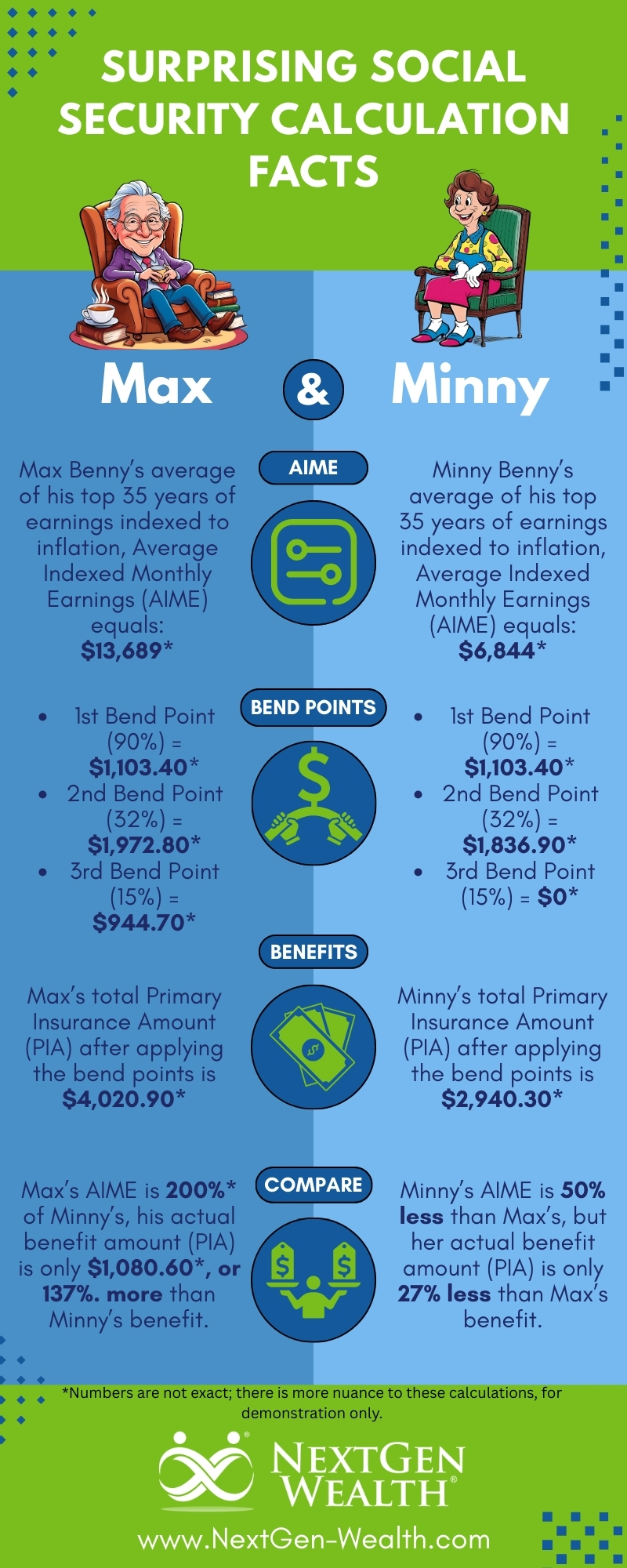
The AIME is then subjected to a progressive formula involving “bend points” to determine your Primary Insurance Amount (PIA). The formula is progressive, meaning it replaces a higher percentage of average indexed lifetime earnings for low-income workers than for high-income workers. In any given year, the SSA sets specific dollar amounts called “bend points.” These bend points divide your AIME into three segments, and different percentages are applied to each segment.
For example, for someone becoming eligible for benefits in 2024, the PIA formula is:
- 90% of the first $1,174 of AIME
- 32% of AIME between $1,174 and $7,078
- 15% of AIME over $7,078
The sum of these three calculations constitutes your PIA. This PIA is the full monthly benefit you would receive if you start collecting benefits exactly at your Full Retirement Age.
Why the Formula is Progressive
The use of bend points and different percentages ensures that the Social Security benefit formula is progressive. This design reflects Social Security’s goal to provide a floor of protection for all workers, especially those with lower lifetime earnings. While higher earners receive a larger absolute benefit amount, lower earners receive a higher percentage of their average indexed earnings back as a benefit. This progressive structure is a fundamental aspect of Social Security’s social insurance mission, aiming to prevent poverty among the most vulnerable populations in retirement.
Factors That Adjust Your Final Benefit Amount
While your PIA is a critical baseline, it’s rare that it will be the exact amount you receive monthly. Several significant factors can adjust your final benefit up or down from your PIA, primarily revolving around when you choose to claim your benefits.
Your Full Retirement Age (FRA)
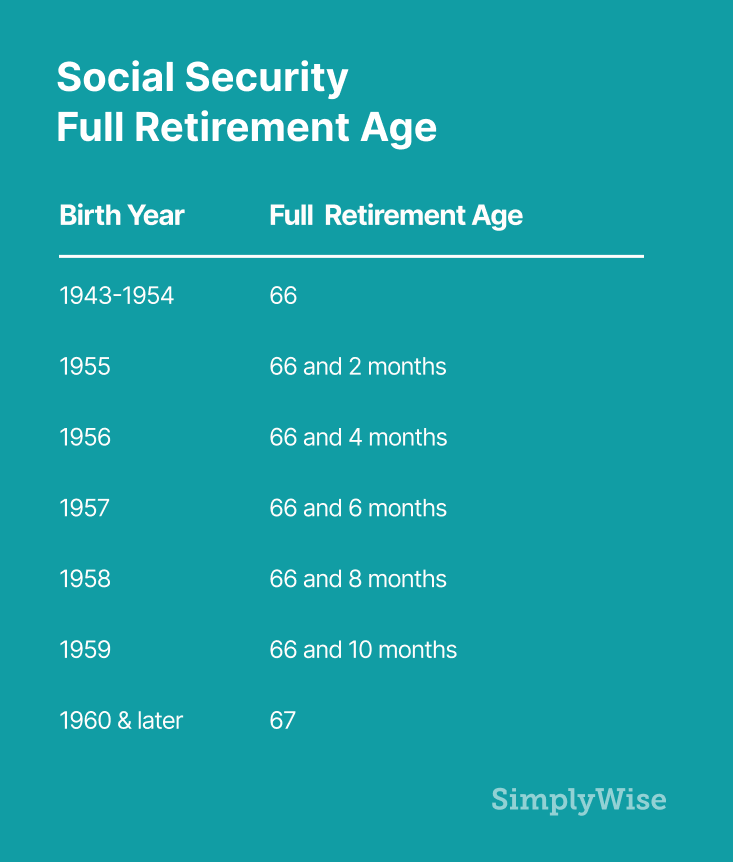
Your Full Retirement Age (FRA), also known as “normal retirement age,” is the age at which you are entitled to receive 100% of your PIA. This age is determined by your birth year. For those born between 1943 and 1954, FRA is 66. It gradually increases for those born in later years, reaching age 67 for anyone born in 1960 or later. Knowing your FRA is paramount, as it serves as the reference point for all early or delayed claiming decisions.
Claiming Benefits Early: The Reduction Factor
You can elect to begin receiving Social Security retirement benefits as early as age 62. However, choosing to claim before your FRA results in a permanent reduction of your monthly benefit. The reduction is calculated based on the number of months you claim early. For instance, if your FRA is 67 and you claim at 62, your monthly benefit will be reduced by approximately 30%. This reduction is permanent and applies for the rest of your life. The earlier you claim, the greater the reduction. This trade-off between receiving benefits sooner and receiving a smaller monthly payment is a crucial decision point in retirement planning.
Delaying Benefits: Earning Delayed Retirement Credits (DRCs)
Conversely, if you delay claiming benefits past your FRA, you can significantly increase your monthly payment through Delayed Retirement Credits (DRCs). For each year you delay claiming beyond your FRA, up to age 70, your benefit increases by a certain percentage, typically 8% per year (or two-thirds of 1% for each month delayed). This means that if your FRA is 67 and you wait until age 70 to claim, your monthly benefit could be 24% higher than your PIA. There’s no additional benefit increase for delaying past age 70, so waiting beyond that point is generally not advantageous for maximizing your monthly benefit. The decision to delay can be a powerful strategy for those with sufficient retirement savings to cover expenses in the interim or those who anticipate a longer lifespan.
Spousal, Survivor, and Dependent Benefits
Social Security isn’t just for primary workers; it also extends to family members. Spouses, ex-spouses, surviving spouses, and dependent children may be eligible for benefits based on a worker’s earnings record. Spousal benefits are generally up to 50% of the primary worker’s PIA, while survivor benefits can be up to 100% of the deceased worker’s PIA. There are specific eligibility requirements and claiming rules for these auxiliary benefits, which can add significant value to a family’s financial security. Understanding these can be particularly important for married couples and those planning for unforeseen circumstances.
The Impact of Working While Receiving Benefits
If you claim Social Security benefits before your FRA and continue to work, your earnings can temporarily reduce your benefits. The SSA has annual earnings limits; if you earn above these limits, a portion of your benefits will be withheld. This “earnings test” only applies until you reach your FRA. Once you reach your FRA, you can earn as much as you want without any reduction to your Social Security benefits. Furthermore, any benefits withheld due to the earnings test are not permanently lost; your monthly benefit will be recomputed at your FRA to account for those previously withheld amounts, potentially increasing your future payments.
Strategies to Maximize Your Social Security Benefits
Given the flexibility in claiming age and the complexity of the rules, strategic planning can significantly impact the total amount of Social Security benefits you and your family receive over your lifetimes.
Strategic Claiming Ages
The optimal claiming age is highly personal and depends on various factors, including your health, longevity expectations, current financial resources, and marital status. For single individuals, the decision often boils down to balancing the desire for early income against the higher monthly payments from delaying. For couples, strategic claiming can become more intricate, involving coordination to maximize combined lifetime benefits, such as one spouse claiming early while the other delays to build up a larger benefit. Tools and calculators on the SSA website, or professional financial advisors, can help model different scenarios.
Coordinating with Your Spouse
Married couples have unique opportunities to optimize their Social Security benefits. Strategies like “file and suspend” (though mostly phased out for those born after 1953) or “restricted application” (for those born before January 2, 1954) allowed one spouse to claim spousal benefits while the other’s own benefit continued to grow. While these specific strategies have changed, the principle of coordination remains vital. Often, the higher-earning spouse might delay claiming to maximize their benefit, which will also result in a higher potential survivor benefit for the lower-earning spouse. Simultaneously, the lower-earning spouse might claim earlier to provide some income. These decisions should be made in tandem, considering both partners’ financial needs and longevity projections.
The Role of Financial Planning
Social Security is one piece of a larger retirement puzzle. A comprehensive financial plan should integrate your anticipated Social Security benefits with your other retirement savings (401(k)s, IRAs, pensions, etc.), investment strategies, and income needs. Understanding how Social Security fits into your overall financial picture allows for more robust planning, helping you determine how much you need to save independently to achieve your desired retirement lifestyle. A financial advisor specializing in retirement planning can provide invaluable guidance in navigating these complex decisions and creating a personalized strategy.
Navigating Common Misconceptions and Future Considerations
Even with a clear understanding of the calculation, certain myths and future uncertainties often cloud perceptions of Social Security. Addressing these is crucial for sound financial planning.
Social Security’s Financial Health
A common concern is the long-term solvency of Social Security. While reports often highlight that the program faces long-term financial challenges, it’s important to differentiate between immediate crisis and long-term adjustments. The Social Security Trust Funds are projected to be able to pay 100% of promised benefits for several years, then a significant percentage (e.g., around 80%) thereafter, based on current law. This doesn’t mean the program will disappear; rather, it suggests that Congress will likely need to make adjustments, such as modest tax increases, changes to the benefit formula, or increases in the full retirement age, to ensure its full solvency for future generations. These discussions are ongoing, and staying informed about proposed changes is part of prudent financial awareness.
Taxation of Benefits
Another common misconception is that Social Security benefits are entirely tax-free. For many beneficiaries, a portion of their Social Security benefits may be subject to federal income tax. This depends on your “provisional income,” which is your adjusted gross income plus any tax-exempt interest income, plus half of your Social Security benefits. If your provisional income exceeds certain thresholds, up to 85% of your Social Security benefits could be taxable. A few states also tax Social Security benefits. Understanding these tax implications is vital for accurate retirement budgeting and tax planning.
The Importance of Professional Advice
While this guide provides a thorough overview, individual situations can be complex. Life events such as divorce, military service, government employment, or work outside the U.S. can introduce unique considerations to your Social Security benefit calculation. Furthermore, the interplay of Social Security with other retirement assets and tax strategies can be intricate. Consulting with a qualified financial advisor who specializes in retirement planning can help you navigate these nuances, optimize your claiming strategy, and ensure your Social Security benefits are integrated effectively into your overall financial plan, providing peace of mind as you approach or enter retirement.
In conclusion, Social Security is a powerful and complex financial tool. By understanding how your work history, indexed earnings, the progressive PIA formula, and your claiming age interact, you gain the knowledge to make strategic decisions. Proactive engagement with your Social Security statement, careful consideration of claiming strategies, and integration into your broader financial plan are essential steps toward maximizing this invaluable benefit and securing a more stable financial future.
aViewFromTheCave is a participant in the Amazon Services LLC Associates Program, an affiliate advertising program designed to provide a means for sites to earn advertising fees by advertising and linking to Amazon.com. Amazon, the Amazon logo, AmazonSupply, and the AmazonSupply logo are trademarks of Amazon.com, Inc. or its affiliates. As an Amazon Associate we earn affiliate commissions from qualifying purchases.