
SiriusXM has revolutionized in-car and on-the-go audio entertainment, delivering hundreds of channels ranging from music and news to sports and talk radio. Unlike traditional AM/FM radio, which relies on local terrestrial broadcasts, or internet streaming, which depends on cellular or Wi-Fi data, SiriusXM employs a sophisticated hybrid delivery system. Understanding “how SiriusXM works” requires a deep dive into its unique technological architecture, which combines satellite broadcasting with a robust internet-based streaming platform to offer unparalleled reach and content diversity. This article will deconstruct the core technological components and operational mechanics that power the SiriusXM experience, explaining everything from signal transmission to user reception across various devices.
The Dual Powerhouse: Satellite and Terrestrial Broadcast
At the heart of SiriusXM’s groundbreaking service is a two-pronged signal delivery system that ensures pervasive coverage and high-quality audio. This hybrid approach leverages geostationary satellites for wide-area coverage and a network of terrestrial repeaters to bolster signal strength in challenging urban environments.
From Orbit to Your Car: The Satellite Network
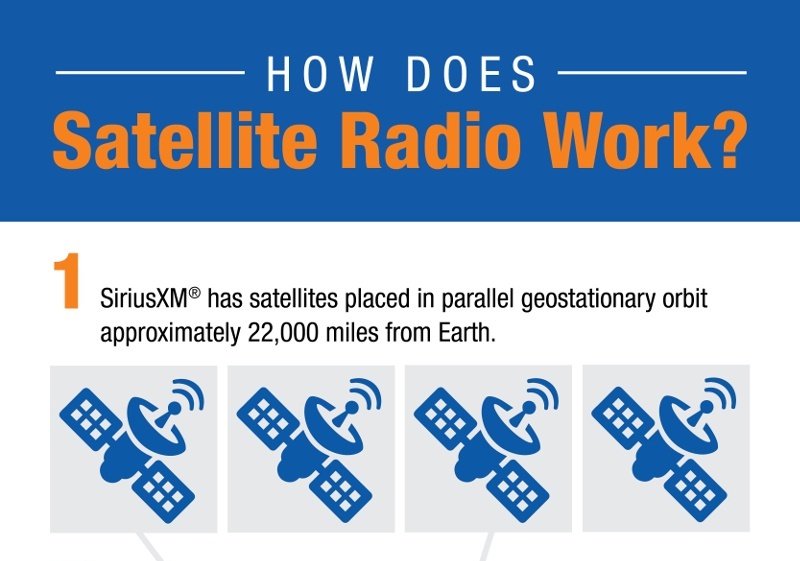
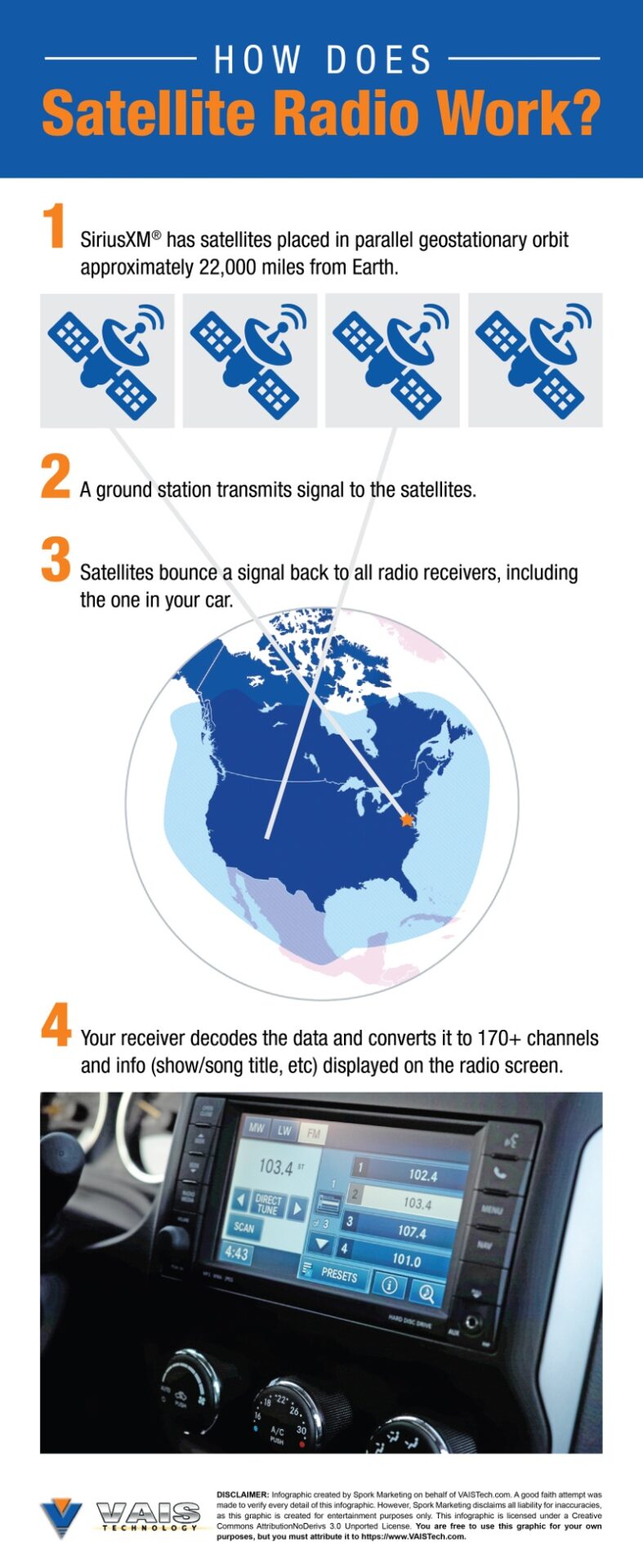
The primary method of content delivery for SiriusXM is through a fleet of geostationary satellites orbiting approximately 22,300 miles above the Earth’s equator. These satellites are positioned to cover broad geographical areas, effectively broadcasting the SiriusXM signal across North America. The process begins at SiriusXM’s broadcast centers, where audio programming is encoded, multiplexed, and uplinked to these satellites.
Each satellite acts as a powerful relay, receiving the uplinked signal and then rebroadcasting it directly down to Earth. The signals are transmitted in the S-band spectrum (specifically, 2.3 GHz), a frequency range chosen for its ability to penetrate certain types of obstructions better than higher frequencies, though it still requires a relatively clear line of sight to the satellite. This direct-to-car satellite transmission is the bedrock of SiriusXM’s mobile experience, offering a consistent signal over vast distances where traditional radio fades and cellular data can be unreliable. The vast reach of these satellites means that a single broadcast can cover millions of square miles, providing a uniform listening experience whether you’re driving across deserts or along interstate highways.
Filling the Gaps: Terrestrial Repeaters and Signal Integrity
While satellites provide expansive coverage, their direct line-of-sight requirement can be problematic in dense urban areas, under overpasses, in tunnels, or among tall buildings. To overcome these “urban canyons” and other signal-blocking obstacles, SiriusXM strategically employs a network of ground-based terrestrial repeaters. These repeaters are smaller, localized transmitters that receive the satellite signal and re-broadcast it at a slightly different frequency or with higher power, effectively filling in coverage gaps.
When a SiriusXM radio encounters a weak satellite signal, it seamlessly switches to the stronger terrestrial repeater signal without any audible interruption to the listener. This intelligent handoff ensures continuous, uninterrupted audio, making the SiriusXM experience remarkably robust in virtually all driving conditions. The repeater network is particularly crucial in major metropolitan areas, where the density of obstructions would otherwise severely degrade satellite-only reception. This dual-source approach is a critical technological differentiator, setting SiriusXM apart from purely satellite or purely internet-based audio services.
The Uniqueness of SDARS (Satellite Digital Audio Radio Service)
SiriusXM operates under the umbrella of Satellite Digital Audio Radio Service (SDARS) technology, a specialized form of digital radio broadcasting. SDARS differs significantly from traditional analog AM/FM radio by transmitting a digital signal, which allows for higher audio fidelity, more channels, and additional data services (like song titles, artist information, and traffic updates) to be sent alongside the audio. The digital nature of the broadcast means that listeners receive a clean, crisp sound, free from the static and interference often associated with analog radio, provided the signal is adequately strong. The robust error correction built into the SDARS transmission protocol further enhances sound quality and signal reliability, ensuring that minor signal disruptions don’t lead to significant audio degradation.
Decoding the Signal: Hardware and Reception
Receiving the SiriusXM signal, whether from space or a terrestrial repeater, requires specialized hardware designed to capture, demodulate, and decode the proprietary digital broadcasts.
The Brains Behind the Sound: SiriusXM Radios
The core piece of equipment for accessing SiriusXM’s satellite service is a compatible SiriusXM radio. These radios are distinct from standard car stereos or home receivers. They contain specialized chipsets and tuners engineered to receive the S-band satellite and terrestrial repeater signals. Most new vehicles come equipped with factory-installed SiriusXM radios, integrated directly into the car’s infotainment system. These OEM (Original Equipment Manufacturer) radios are designed for seamless operation and display full channel information, album art, and other metadata.
For vehicles without factory-installed radios, or for those who wish to add SiriusXM to older cars, aftermarket solutions are widely available. These include “plug-and-play” docks, standalone satellite radio units, or car kits that integrate with existing stereo systems. Regardless of the form factor, the underlying technology within these radios is built to process the encrypted digital signal, authenticate the subscriber, and render the audio for playback.
Antenna Technology: Capturing the Waves
Crucial to signal reception is the SiriusXM antenna. Unlike conventional car antennas for AM/FM radio, SiriusXM antennas are specifically designed to receive the S-band satellite signals. They are typically small, discreet units, often magnetic, placed on the exterior of a vehicle (commonly on the roof, where they have the clearest view of the sky). The antenna’s primary function is to capture the faint satellite signals and transmit them to the radio tuner for processing.
The design of these antennas is optimized for a wide field of view to maximize the chance of acquiring a signal, even when the vehicle is moving or the satellite isn’t directly overhead. For home use, dedicated indoor/outdoor antennas are also available, which can be positioned to achieve optimal signal strength, usually near a window or outdoors with a clear line of sight to the southern sky (in the Northern Hemisphere, where the satellites are positioned).
Beyond the Car: Home and Portable Solutions
While SiriusXM’s origins are deeply rooted in the automotive experience, the service has expanded its reach far beyond the car dashboard. Dedicated home kits allow users to connect a satellite radio to their home stereo systems, bringing the full channel lineup indoors. These kits typically include a receiver, a home antenna, and an audio output for connection to an amplifier or powered speakers.
Furthermore, some older portable satellite radio units allowed listeners to carry their subscription with them, though these have largely been supplanted by the ubiquity of smartphones and the SiriusXM streaming app. These portable devices often featured integrated antennas and rechargeable batteries, offering flexibility for listening on the go, whether at a park, on a boat, or in a different vehicle using an additional car kit. The emphasis today, however, has shifted significantly towards app-based streaming for “beyond the car” listening.
The Digital Frontier: SiriusXM’s Streaming Platform
Recognizing the evolving landscape of media consumption, SiriusXM has significantly invested in its digital streaming platform, allowing subscribers to access content via the internet, independent of satellite or terrestrial signals. This expansion broadens accessibility and introduces a host of features not possible with broadcast-only delivery.
The App Experience: Bridging Satellite and Internet
The SiriusXM app, available on a multitude of devices, serves as the primary gateway to the streaming service. It replicates the live broadcast experience of satellite radio but delivers it over IP networks (Wi-Fi or cellular data). This means that virtually the entire SiriusXM channel lineup can be accessed anywhere with an internet connection, effectively extending the service’s reach globally, albeit with content restrictions based on licensing agreements.
The app is not merely a mirror of the satellite broadcast; it’s a feature-rich platform. It provides enhanced functionality such as “Start Over” to replay content from the beginning, “On Demand” access to a vast library of past shows, podcasts, and exclusive content, and personalized station creation. The user interface is designed for intuitive navigation, allowing listeners to browse by genre, artist, show, or curated categories, making content discovery seamless.
Device Compatibility: Everywhere You Go
The streaming platform’s strength lies in its widespread device compatibility. The SiriusXM app is available on:
- Smartphones and Tablets: iOS and Android devices.
- Smart Speakers: Amazon Echo, Google Home, Apple HomePod.
- Smart TVs and Streaming Devices: Roku, Apple TV, Chromecast, Amazon Fire TV.
- Gaming Consoles: PlayStation, Xbox.
- Wearables: Apple Watch.
- Desktop and Laptop Computers: Via web browser.
- Connected Vehicles: Many newer vehicles integrate SiriusXM streaming directly into their infotainment systems, often leveraging the vehicle’s built-in internet connection.
This extensive ecosystem ensures that a subscriber’s SiriusXM experience is not confined to their car, but extends to virtually every aspect of their connected life, offering unparalleled flexibility in how and where they consume content.
On-Demand and Personalized Content: Leveraging Data
The internet-based nature of the streaming platform unlocks capabilities far beyond linear broadcasting. On-demand content allows subscribers to listen to their favorite shows, concerts, or interviews whenever they choose, freeing them from broadcast schedules. This “anytime, anywhere” access to a growing library of audio is a significant value proposition.
Furthermore, SiriusXM leverages data analytics to offer personalized listening experiences. Features like Pandora Stations (integrated into higher-tier plans) allow users to create custom radio stations based on their favorite artists and genres, adapting the music selection over time based on listener feedback. This blend of curated human-powered channels and algorithmic personalization represents a sophisticated approach to digital audio delivery, tailored to individual preferences.
Subscription Models and Feature Access (Tech Perspective)
Access to SiriusXM’s comprehensive content lineup is managed through tiered subscription models, each unlocking different technical capabilities and content access points. From a technological standpoint, these tiers dictate which signals a radio can decode and which features are enabled on the streaming platform.
Tiered Access: What Each Plan Unlocks Technically
SiriusXM offers various subscription plans (e.g., Platinum, Music & Entertainment, Streaming Platinum), each with distinct technical access parameters.
- Satellite-only plans: Primarily grant access to the satellite and terrestrial repeater signals, enabling listening in vehicles equipped with a satellite radio. The specific channels available are determined by the plan’s subscription level, with the radio’s chipset programmed to decode only authorized channels.
- Streaming-only plans: Provide access exclusively through the internet platform (app, web player, smart devices). These plans bypass the need for satellite radio hardware and focus solely on IP-based content delivery.
- Bundled plans: Offer the most comprehensive access, combining both satellite radio functionality (for in-car listening) and full streaming capabilities across all compatible devices. Technically, these plans activate both the satellite receiver’s decoding permissions and the streaming account’s access privileges.
The underlying technology manages these access rights, ensuring that only authenticated subscribers can decode specific channels or access premium streaming features. This system relies on robust encryption and digital rights management (DRM) technologies.
Decoding and Encryption: Ensuring Secure Access
At a fundamental level, SiriusXM’s broadcast and streaming services utilize encryption to protect its content and manage access. When a signal is broadcast from a satellite or transmitted via the internet, it is encrypted. SiriusXM radios and the streaming app contain proprietary decoding algorithms and secure keys. Upon activation of a subscription, the radio or app is authorized to decrypt the specific channels and services included in that plan. This continuous authentication process ensures that only paying subscribers can access the content, forming a critical component of SiriusXM’s business model and intellectual property protection. The digital nature of the signal also allows for over-the-air updates to radios, facilitating channel line-up changes, feature enhancements, and security updates.
The Future of SiriusXM: Integrating New Technologies
SiriusXM is continuously evolving its technological infrastructure to meet changing consumer demands and leverage emerging technologies. The integration of 5G connectivity in vehicles promises even faster and more reliable in-car streaming, potentially enhancing the quality and responsiveness of interactive features. The expansion into personalized podcasts, advanced voice controls, and deeper integration with automotive AI systems are all on the horizon, further blurring the lines between broadcast and on-demand, and solidifying SiriusXM’s position as a leader in audio entertainment technology. The company’s ongoing investment in content discovery algorithms and user experience design also points to a future where listening is more intuitive, personalized, and seamlessly integrated into daily life across all platforms.
Technical Advantages and Challenges
SiriusXM’s unique hybrid delivery system offers significant technical advantages but also presents its own set of challenges that the company continuously addresses through innovation.
Pervasive Coverage: A Seamless Listening Experience
The most significant technical advantage of SiriusXM is its unparalleled ubiquitous coverage across North America, especially in mobile environments. The combination of satellite broadcast and terrestrial repeaters ensures that listeners experience minimal signal loss, even in remote areas or dense urban centers where traditional radio fades and cellular data can be spotty or non-existent. This seamless transition between satellite and repeater signals, coupled with the streaming option, provides a truly uninterrupted listening experience, which is a core technical differentiator. The digital nature of the broadcast also ensures consistent, high-fidelity audio quality, free from static and interference that plague analog radio.
Signal Latency and Quality Considerations
While robust, the satellite broadcasting aspect of SiriusXM does introduce a degree of signal latency (delay) due to the immense distance the signal must travel to and from the satellites. This latency can be noticeable when comparing the satellite broadcast to a local event happening in real-time or to its internet stream. For most music and talk radio, this delay is inconsequential, but for live sports or breaking news, it can mean a slight lag compared to other sources. The audio quality, while generally superior to analog AM/FM, is also subject to compression to maximize the number of channels that can be transmitted within the available satellite bandwidth. While high-quality, it may not always match the uncompressed fidelity of a CD or certain high-resolution streaming services.

Evolving with Connectivity: 5G and Beyond
The future technical direction of SiriusXM lies in its continued adaptation to the ever-evolving landscape of internet connectivity. With the rollout of 5G networks, the reliability and speed of in-car streaming will dramatically increase, potentially reducing the reliance on the satellite component in highly connected areas for certain types of content. This opens doors for more interactive features, richer metadata, and even higher-quality audio streams over IP. SiriusXM is exploring ways to integrate these next-generation wireless technologies into its existing infrastructure, perhaps leading to a more dynamic and intelligent allocation of content delivery methods based on location, available bandwidth, and user preference. This evolution ensures that SiriusXM remains a technologically advanced and relevant audio entertainment service in an increasingly connected world.
aViewFromTheCave is a participant in the Amazon Services LLC Associates Program, an affiliate advertising program designed to provide a means for sites to earn advertising fees by advertising and linking to Amazon.com. Amazon, the Amazon logo, AmazonSupply, and the AmazonSupply logo are trademarks of Amazon.com, Inc. or its affiliates. As an Amazon Associate we earn affiliate commissions from qualifying purchases.