
Investing in the stock market can seem like a daunting endeavor, shrouded in complex jargon and fluctuating numbers. However, at its core, purchasing stock is a straightforward process that allows individuals to own a piece of a company and participate in its potential growth. It’s a fundamental aspect of building wealth over the long term, offering a gateway to financial independence and the realization of various financial goals. This comprehensive guide will demystify the process, breaking down the mechanics, considerations, and implications of buying stocks, empowering you to navigate the market with confidence and insight.
Understanding the Fundamentals of Stock Ownership
Before diving into the “how,” it’s crucial to grasp the “what” and “why” behind stock ownership. Stocks are more than just numbers on a screen; they represent a tangible stake in a company’s future.
What Exactly is a Stock?
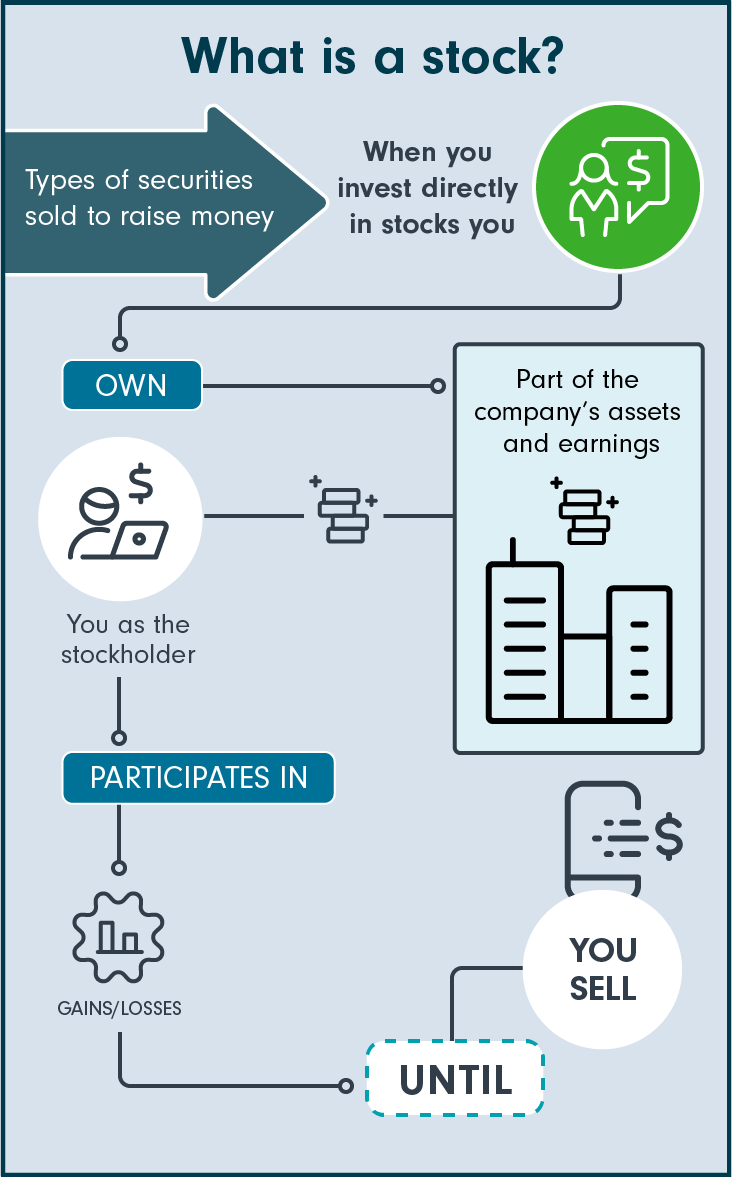
In its simplest form, a stock, also known as equity, represents a fractional ownership in a company. When you purchase a stock, you become a shareholder, meaning you own a very small slice of that business. This ownership comes with certain rights and responsibilities, most notably the right to a share of the company’s profits (through dividends, if paid) and, for common stock, the right to vote on certain corporate matters.
Companies can be either public or private. Public companies have issued shares that are traded on stock exchanges, making their ownership available to the general public. Private companies, conversely, have ownership concentrated among a small group of investors and their shares are not publicly traded. Most individual investors interact solely with public companies.
There are primarily two types of stock: common stock and preferred stock. Common stock typically comes with voting rights, giving shareholders a say in corporate governance, and its value tends to fluctuate more based on market performance and company earnings. Preferred stock usually doesn’t carry voting rights but often guarantees a fixed dividend payment and has priority over common stock if the company liquidates. For most retail investors starting out, common stock is the primary focus.
Why Do Companies Issue Stock?
Companies primarily issue stock as a mechanism to raise capital. When a company decides to go public through an Initial Public Offering (IPO), it sells shares of its ownership to investors in exchange for cash. This influx of capital is vital for various purposes:
- Expansion: Funding new projects, entering new markets, or acquiring other businesses.
- Research and Development: Investing in innovation to create new products or improve existing ones.
- Debt Repayment: Paying off existing loans to strengthen their balance sheet.
- Working Capital: Ensuring day-to-day operations run smoothly.
By selling ownership stakes, companies can grow without incurring traditional debt, allowing them to scale more rapidly. This also provides liquidity for early investors and founders who might want to cash out some of their holdings.
The Role of Stock Exchanges
Stock exchanges are centralized marketplaces where stocks are bought and sold. The most prominent examples in the United States are the New York Stock Exchange (NYSE) and the NASDAQ. These exchanges provide an organized and regulated environment for buyers and sellers to interact.
The price of a stock on an exchange is determined by the forces of supply and demand. If more investors want to buy a particular stock than sell it, the price will generally rise. Conversely, if more investors want to sell than buy, the price will typically fall. Exchanges facilitate price discovery, ensure transparency, and maintain liquidity, making it possible for investors to buy or sell shares relatively quickly and fairly.
The Mechanics of Buying Stock
Once you understand what stocks are and why they exist, the practical steps to purchasing them become clearer. It’s a process that has been significantly streamlined by technological advancements.
Opening a Brokerage Account
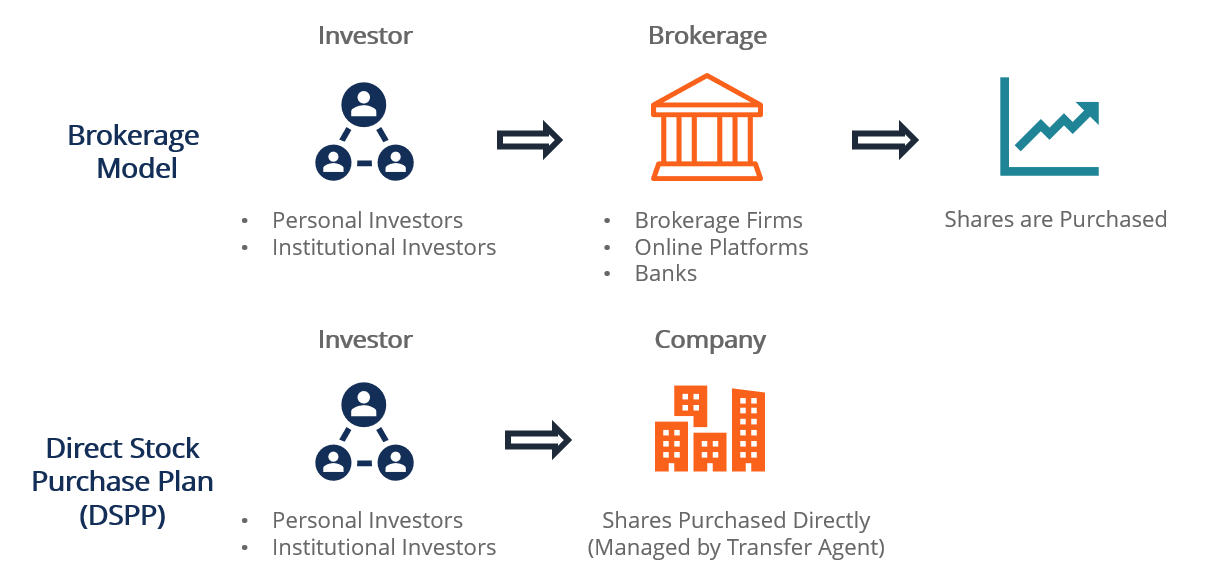
The first and most critical step in purchasing stock is opening a brokerage account. You cannot directly buy shares from a company; you need an intermediary known as a stockbroker. Today, the vast majority of individual investors use online brokerage firms. Companies like Fidelity, Charles Schwab, E*TRADE, Vanguard, and Robinhood offer platforms for self-directed investing.
When opening an account, you’ll typically need to provide personal information such as your name, address, Social Security number, and employment details. Brokers are legally required to verify your identity and often ask questions about your financial situation, investment experience, and risk tolerance to ensure they can recommend suitable investments or provide appropriate warnings.
You can open different types of brokerage accounts:
- Individual/Joint Accounts: Standard taxable accounts for general investing.
- Retirement Accounts: Such as Individual Retirement Accounts (IRAs) or Roth IRAs, which offer significant tax advantages for retirement savings.
- Custodial Accounts: For minors, managed by an adult.
Once your account is approved, you’ll need to fund it. This can usually be done via an electronic transfer from your bank account (ACH), wire transfer, or by mailing a check. The funds must clear before you can begin trading.
Understanding Order Types
When you decide to buy a stock, you’ll place an order with your broker. There are several types of orders, and understanding them is crucial for effective trading:
- Market Order: This is the simplest and most common order type. A market order instructs your broker to buy or sell a stock immediately at the best available price. While it guarantees execution, it does not guarantee a specific price, meaning the actual price paid might be slightly different from the last quoted price, especially in volatile markets.
- Limit Order: A limit order gives you more control over the price. When buying, a buy limit order specifies the maximum price you’re willing to pay. For example, a “buy 100 shares of XYZ at $50 limit” means your order will only execute if the stock can be bought at $50 or less. If the stock never drops to $50, the order won’t execute.
- Stop Order (or Stop-Loss Order): Primarily used to limit potential losses on an existing position, a stop order becomes a market order once a specified “stop price” is reached. For instance, if you own a stock trading at $60 and set a stop-loss at $55, your broker will sell the shares if the price drops to $55. There’s also a “stop-limit” order, which combines elements of both.
Choosing the right order type depends on your strategy. For long-term investors less concerned with minor price fluctuations, a market order is often sufficient. For those looking to capitalize on specific price points or mitigate risk, limit and stop orders are invaluable tools.
Placing a Trade
With your account funded and an understanding of order types, placing a trade is quite straightforward:
- Find the Stock Symbol (Ticker): Every publicly traded company has a unique ticker symbol (e.g., AAPL for Apple, MSFT for Microsoft). You’ll use this to locate the stock on your brokerage platform.
- Specify Quantity: Decide how many shares you want to buy.
- Select Order Type: Choose between a market order, limit order, etc.
- Review and Confirm: Before execution, your brokerage platform will typically provide a summary of your order for review. Check the stock, quantity, price, and total estimated cost carefully.
- Execute: Confirm the trade. You’ll receive a confirmation once the order is filled.
Key Considerations Before Investing
Purchasing stock should not be a hasty decision. Thoughtful planning and an understanding of key principles are paramount to successful investing.
Research and Due Diligence
Never invest in a company without thoroughly researching it first. This process, known as due diligence, involves understanding the company’s business model, financial health, and future prospects.
- Financial Statements: Review the company’s income statement (revenue, expenses, profit), balance sheet (assets, liabilities, equity), and cash flow statement (how cash is generated and used). These are publicly available for all listed companies.
- Industry and Competition: How does the company fare within its industry? Who are its competitors, and what is its competitive advantage (moat)?
- Management Team: Assess the leadership. Do they have a strong track record? Are their incentives aligned with shareholders?
- News and Analyst Reports: Stay updated on company news, industry trends, and read reputable analyst reports to gain different perspectives.
Understanding what you own is far more important than simply owning something.

Diversification and Risk Management
One of the most fundamental principles of investing is diversification. The adage “don’t put all your eggs in one basket” holds profound truth in the stock market. Investing in just one or a few stocks exposes you to significant company-specific risk. If that company performs poorly, your entire investment could suffer.
Diversification involves spreading your investments across different companies, industries, and even asset classes (like bonds or real estate) to reduce overall risk. While diversification doesn’t eliminate risk, it helps mitigate the impact of any single investment’s poor performance on your overall portfolio.
It’s also crucial to understand the difference between long-term and short-term investing. Historically, the stock market has trended upwards over long periods (decades), making a long-term perspective generally less risky and more rewarding. Short-term trading is far more speculative and risky.
Investment Goals and Time Horizon
Before you buy your first stock, clearly define your investment goals and time horizon. Are you saving for retirement, a down payment on a house, your children’s education, or something else?
- Retirement: A long time horizon (20+ years) allows you to take on more risk and benefit significantly from compounding returns.
- Short-term Goals: For goals within the next 1-5 years, the stock market might be too volatile, and lower-risk investments like high-yield savings accounts or short-term bonds might be more appropriate.
Your goals will dictate your risk tolerance and the types of investments that are suitable for your portfolio. A clear understanding of why you’re investing will guide your choices and help you stay disciplined during market fluctuations.
Beyond Individual Stocks: Other Investment Avenues
While purchasing individual stocks is a direct way to invest, it’s not the only route, especially for those seeking built-in diversification or professional management.
Exchange-Traded Funds (ETFs) and Mutual Funds
For many investors, particularly beginners, ETFs and mutual funds offer an excellent way to gain immediate diversification without having to research and select individual stocks.
- ETFs (Exchange-Traded Funds): These are baskets of securities (often stocks) that trade on exchanges like individual stocks. An ETF might track a specific index (like the S&P 500), an industry sector, or a commodity. They offer low expense ratios and tax efficiency.
- Mutual Funds: These are professionally managed portfolios of stocks, bonds, or other investments. Investors buy shares in the fund, and a fund manager makes investment decisions. They offer diversification and expert management but often come with higher expense ratios than ETFs.
Both ETFs and mutual funds allow you to own a piece of many companies with a single purchase, significantly reducing company-specific risk.
Robo-Advisors
Robo-advisors are automated, algorithm-driven financial advisors that manage investment portfolios with minimal human intervention. They are particularly appealing to new investors or those with smaller account balances due to their low fees and ease of use.
You typically answer a questionnaire about your financial goals, risk tolerance, and time horizon. The robo-advisor then constructs and manages a diversified portfolio for you, often using a mix of ETFs, and automatically rebalances it over time. While they don’t offer the personalized advice of a human financial advisor, they provide a cost-effective and convenient way to get started with investing.
The Tax Implications of Stock Ownership
Understanding the tax implications of stock ownership is a crucial, though often overlooked, aspect of investing. The way your investment gains and income are taxed can significantly impact your net returns.
Capital Gains and Losses
When you sell a stock for more than you bought it, you realize a capital gain. If you sell it for less, you incur a capital loss. The tax treatment of capital gains depends on how long you held the stock:
- Short-Term Capital Gains: If you held the stock for one year or less, the gain is considered short-term and is taxed at your ordinary income tax rate, which can be as high as 37%.
- Long-Term Capital Gains: If you held the stock for more than one year, the gain is considered long-term and is taxed at preferential rates (0%, 15%, or 20% for most taxpayers, depending on your income level).
Capital losses can be used to offset capital gains, and if your losses exceed your gains, you can deduct up to $3,000 of remaining losses against your ordinary income per year, carrying over any excess to future years. Maintaining accurate records of your buy and sell dates and prices is essential for tax reporting.
Dividends
Some companies pay out a portion of their profits to shareholders in the form of dividends. Dividends are typically taxed in the year they are received. Like capital gains, dividends can be classified as “qualified” or “non-qualified.”
- Qualified Dividends: These meet certain IRS criteria (e.g., held the stock for a specified period) and are taxed at the same preferential rates as long-term capital gains.
- Non-Qualified Dividends: These do not meet the criteria for qualified dividends and are taxed at your ordinary income tax rate.
Tax-Advantaged Accounts
To mitigate the impact of taxes on your investments, it’s often wise to utilize tax-advantaged accounts:
- Traditional IRA/401(k): Contributions are often tax-deductible in the year they are made, and your investments grow tax-deferred until withdrawal in retirement. Withdrawals in retirement are taxed as ordinary income.
- Roth IRA/401(k): Contributions are made with after-tax dollars, but qualified withdrawals in retirement are entirely tax-free. Your investments grow tax-free.
These accounts offer powerful ways to reduce your lifetime tax burden, allowing more of your investment returns to compound over time.
Conclusion
Purchasing stock is a foundational element of modern personal finance and investing, offering individuals a direct avenue to participate in economic growth and build wealth. From understanding what a stock represents and why companies issue them, to navigating the practical steps of opening a brokerage account and placing an order, the process is accessible to anyone willing to learn.
However, true success in the stock market extends beyond merely buying shares. It demands diligent research, a commitment to diversification and risk management, a clear articulation of personal investment goals, and an awareness of tax implications. Whether you choose to invest in individual stocks, diversify with ETFs and mutual funds, or leverage the automation of robo-advisors, the journey begins with education and a disciplined approach. By understanding these principles, you can embark on your investing journey with confidence, transforming abstract market concepts into tangible steps toward achieving your financial aspirations. The market is a powerful tool; wield it wisely and patiently, and it can serve as a potent engine for your financial future.
aViewFromTheCave is a participant in the Amazon Services LLC Associates Program, an affiliate advertising program designed to provide a means for sites to earn advertising fees by advertising and linking to Amazon.com. Amazon, the Amazon logo, AmazonSupply, and the AmazonSupply logo are trademarks of Amazon.com, Inc. or its affiliates. As an Amazon Associate we earn affiliate commissions from qualifying purchases.