
Progressive Leasing offers a distinctive lease-to-own financing solution that caters to consumers who may not qualify for traditional credit lines. It’s a popular option for acquiring essential household items like furniture, appliances, electronics, and even jewelry without needing a strong credit history. However, understanding its mechanics, costs, and implications is crucial for making sound financial decisions. This system operates as a rental agreement with the eventual option to purchase, providing accessibility but at a potentially higher cost.
Understanding Lease-to-Own Financing
Lease-to-own financing, often provided by companies like Progressive Leasing, represents an alternative pathway to acquiring goods when conventional credit avenues are unavailable or undesirable. It functions on the principle of a rental agreement rather than a direct purchase or loan.
The Core Concept of Lease-to-Own
At its heart, lease-to-own is a contract where a consumer rents an item for a specified period, with the understanding that they have the option to purchase the item at some point during or at the end of the lease term. Unlike traditional financing, which typically involves a loan or credit card that grants immediate ownership, lease-to-own arrangements defer ownership until all lease payments are made or an early purchase option is exercised.
This model serves as a vital bridge for individuals who might be rebuilding their credit, have a limited credit history, or simply prefer not to use traditional credit products. Progressive Leasing partners with thousands of retail stores, allowing customers to apply for a lease agreement directly at the point of sale or online. The merchant sells the item to Progressive Leasing, which then leases it to the consumer. The payments are made directly to Progressive Leasing, not the retailer.
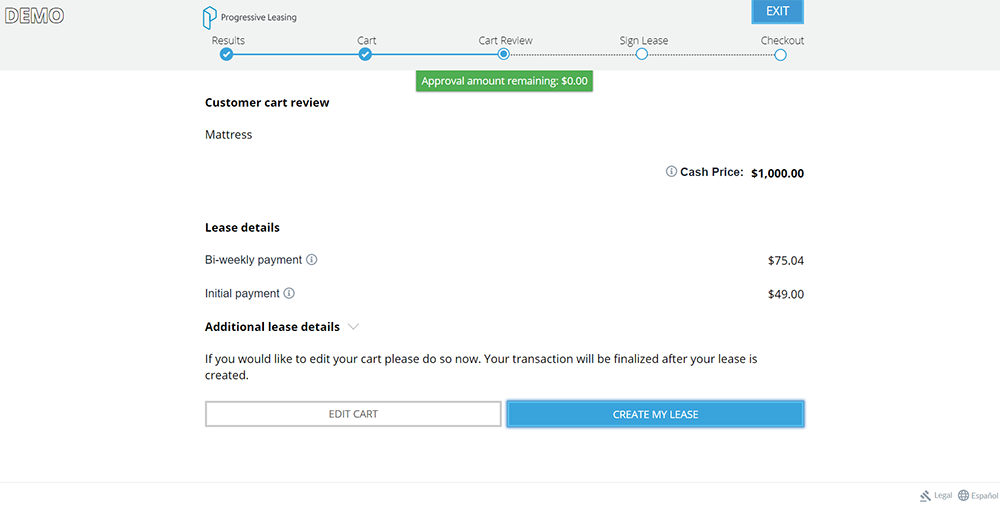
It’s important to distinguish this from a typical installment loan. With a loan, you borrow money, buy the item, and then pay back the loan plus interest. With lease-to-own, you’re essentially renting the item until you fulfill the conditions to own it. This distinction carries significant financial implications, particularly concerning the total cost of ownership and the nature of the agreement. The agreement typically outlines weekly, bi-weekly, or monthly payments over a set term, such as 12 months, along with an initial payment.
Who Benefits from Progressive Leasing?
Progressive Leasing specifically targets a demographic often underserved by traditional lenders.
- Consumers with Less-Than-Perfect or No Credit: This is the primary demographic. Many individuals may have experienced financial setbacks, are new to credit, or prefer not to undergo a hard credit inquiry. Progressive Leasing markets itself on the premise of “no credit needed,” meaning they don’t rely solely on traditional FICO scores for approval. Instead, they look at factors like income, banking history, and previous payment performance.
- Individuals Needing Essential Items Quickly: For those who need a new refrigerator, washer, dryer, or furniture and cannot wait to save up cash or secure traditional financing, lease-to-own provides immediate access. It solves an urgent need without requiring a large upfront sum.
- Those Seeking Flexible Payment Options: The ability to make smaller, more frequent payments (weekly or bi-weekly) can align better with some consumers’ pay cycles and budgeting preferences, offering a sense of financial control even if the overall cost is higher.
- Temporary Solutions: For some, it might be a temporary solution, with an intent to exercise an early purchase option (like the 90-day option) once they have the necessary funds, thereby minimizing the total cost.
While accessible, it’s crucial for beneficiaries to weigh the convenience against the ultimate financial cost, as the terms of lease-to-own agreements can make items significantly more expensive than their retail price.
The Application and Approval Process
Navigating the Progressive Leasing system begins with a straightforward application process designed to be quick and accessible. Understanding the eligibility criteria and the steps involved is key to utilizing this financing option effectively.
Eligibility Requirements
Progressive Leasing emphasizes that “no credit needed” or “bad credit OK” are hallmarks of their service. While they don’t primarily rely on a traditional credit score (like FICO) for approval, they do assess an applicant’s financial stability through other means. To be eligible, applicants typically need to meet several basic criteria:
- Age: Be at least 18 years old.
- Income: Have a regular source of income, usually requiring a minimum monthly earning. This demonstrates the ability to make consistent lease payments.
- Active Checking Account: Possess an active checking account that has been open for a specified period (e.g., three months) and is in good standing. This account is used for direct debit payments.
- Valid ID: Provide a valid government-issued photo identification (e.g., driver’s license, state ID).
- Social Security Number or ITIN: For identification and verification purposes.
It’s important to note that while they don’t perform a “hard” credit inquiry that impacts your FICO score, they do conduct a “soft” credit check, which reviews credit bureau data but doesn’t show up as an inquiry on your credit report. They also look at an applicant’s payment history with other alternative financing providers if applicable. This broader assessment allows them to approve a wider range of customers who might be declined by traditional lenders.
The Application Steps
The application for Progressive Leasing is designed for speed and convenience, often taking just a few minutes to complete.
- Initiate Application: You can apply either in-store at a participating retailer (like Best Buy, Ashley Furniture, or Big Lots) or online directly through Progressive Leasing’s website or the retailer’s e-commerce platform. Many retailers integrate the Progressive Leasing application directly into their checkout process.
- Provide Information: The application will ask for personal details such as your name, address, phone number, date of birth, Social Security Number or ITIN, income details (employer, pay frequency, income amount), and bank account information.
- Submit and Review: Once all information is entered, you submit the application. Progressive Leasing’s proprietary decision engine quickly processes the data.
- Instant Decision: Most applicants receive an approval or denial decision almost immediately, often within seconds. If approved, you’ll be given an approved lease amount, which is the maximum value of items you can lease.
This rapid approval process is a significant advantage for consumers who need items quickly and cannot wait for traditional credit applications to be processed.
Approval and Initial Payment
Upon receiving an approval, the next steps involve finalizing the lease agreement and making the initial payment.
- Lease Agreement Signing: If approved, you will be presented with a detailed lease agreement. It is critical to read and understand all terms, including payment schedules, total cost, early purchase options, fees, and the conditions for ownership. This agreement will clearly state the item(s) you are leasing, their retail price, and the total cost of the lease if all payments are made.
- Initial Payment: An initial payment is typically required to finalize the lease and take possession of the item(s). This is often equivalent to the first week’s or month’s lease payment, not a traditional down payment that reduces the principal. For example, if your weekly payment is $20, your initial payment might be $20. This initial payment activates the lease and allows you to take your merchandise home.
The entire process, from application to taking home the merchandise, can often be completed within an hour, making Progressive Leasing a highly accessible option for immediate needs.
Navigating Payment Terms and Ownership Options
Understanding the nuances of Progressive Leasing’s payment structure and the various paths to ownership is crucial for managing your finances and minimizing costs. These agreements are designed with flexibility, but that flexibility often comes with a higher price tag.
The Lease Agreement Structure
When you enter into a Progressive Leasing agreement, you commit to a series of regular payments over a defined period.
- Regular Lease Payments: Payments are typically scheduled weekly, bi-weekly, or monthly, aligning with your pay cycle. These payments are usually debited directly from your active checking account, as provided during the application. It’s essential to ensure sufficient funds are available on payment dates to avoid overdraft fees from your bank and late fees from Progressive Leasing.
- Total Lease Cost vs. Retail Price: The lease agreement will clearly outline the total cost you will pay if you complete all scheduled payments over the full lease term (e.g., 12 months). This total amount is invariably higher, often significantly higher, than the retail cash price of the item. This difference accounts for the convenience, the cost of not requiring traditional credit, and the risk assumed by Progressive Leasing.
- Duration of the Lease: Most Progressive Leasing agreements are structured for a 12-month lease term. While this is the default, the true cost depends heavily on how quickly you choose to exercise an early purchase option.
- Fees and Charges: Beyond the regular lease payments, be aware of potential additional fees. These can include late payment fees if a payment is missed or delayed, and reinstatement fees if your lease is canceled due to non-payment and you wish to reactivate it. Understanding these can help you avoid unexpected charges and keep your overall cost down.
Early Purchase Options (EPO)
Progressive Leasing offers attractive early purchase options that can substantially reduce the overall cost of the leased item. These options are designed to incentivize quicker payoff and are usually the most financially prudent choice for consumers.
- The 90-Day Purchase Option: This is the most popular and financially beneficial option. If you purchase the item outright within the first 90 days of the lease agreement, you typically pay the cash retail price of the item plus a small, fixed lease fee (often $49 or $59). All payments made up to that point count towards the cash price. For example, if an item costs $500, and you pay $200 in lease payments within 90 days, you would then pay $300 plus the small lease fee to own it. This option effectively makes the lease behave much like an interest-free financing plan for a short period, provided you can pay off the balance within the 90 days.
- Mid-Term Purchase Options: If you miss the 90-day window but still wish to purchase the item before the full 12-month lease term expires, Progressive Leasing offers mid-term purchase options. The calculation for this usually involves paying a percentage (often 65%) of the remaining lease payments, plus any past-due amounts. While more expensive than the 90-day option, it is still significantly cheaper than completing the full 12-month lease. The exact terms for mid-term options can vary and should be clearly detailed in your lease agreement or obtained by contacting Progressive Leasing directly.
Completing the Full Lease Term
If you do not exercise an early purchase option and continue making all scheduled payments until the end of the 12-month lease term, the item becomes yours.
- Ownership Transfer: Upon making the final payment, Progressive Leasing transfers ownership of the item to you. At this point, you have paid the maximum amount specified in the lease agreement.
- Total Cost Implications: This scenario is generally the most expensive way to acquire the item. The total cost, including all lease payments, will far exceed the original retail price, and often significantly more than if you had used a high-interest credit card or personal loan for the same duration. For this reason, consumers are strongly encouraged to aim for the 90-day purchase option whenever possible to mitigate costs. Understanding these cost implications upfront is vital for assessing whether Progressive Leasing aligns with your financial goals.
Financial Implications and Considerations
While Progressive Leasing offers valuable accessibility, it’s imperative for consumers to fully grasp the financial implications of such agreements. The convenience often comes at a substantial cost, and its impact on personal finance should be carefully weighed.
The Cost of Convenience
Progressive Leasing, like most lease-to-own services, is considerably more expensive than purchasing an item outright with cash or financing it with traditional credit options (like a low-interest credit card or a personal loan).
- High Effective APRs: Although lease-to-own agreements are not legally defined as loans and therefore don’t have an Annual Percentage Rate (APR) in the traditional sense, the effective cost of financing, when calculated as an equivalent APR, can be extremely high. It’s not uncommon for the implicit APR to be in the triple digits, making it one of the most expensive forms of consumer financing available. This high cost is due to the inherent risks Progressive Leasing takes by extending credit to individuals with less-than-perfect credit and the operational expenses associated with managing a vast portfolio of rental agreements.
- Why It’s More Expensive: The higher cost covers several factors: the risk of default by customers who don’t qualify for traditional credit, administrative costs, the depreciation of the leased item, and the profit margin for Progressive Leasing. Consumers pay a premium for the convenience of immediate access to goods without a stringent credit check.
- The Trade-Off: The trade-off is clear: accessibility versus cost. For someone who genuinely has no other means to acquire a necessary item, the higher cost might be an acceptable trade-off. However, for those with other options, the cost savings from traditional financing are substantial.
Impact on Credit Score
A common misconception is that making timely payments to Progressive Leasing will help build a positive credit history with the major credit bureaus (Experian, Equifax, TransUnion).
- No Positive Reporting: Generally, Progressive Leasing does not report positive payment history to the three major credit bureaus. This means that diligently making all your payments on time will not directly improve your FICO credit score. This is a critical distinction, as lease-to-own is not a credit-building tool in the conventional sense.
- Potential for Negative Impact: However, missed payments or defaults can negatively impact your credit. If you fail to make payments and the account goes to collections, or if Progressive Leasing reports negative information to specialized credit reporting agencies, it can certainly harm your ability to obtain future credit. This means you get little to no benefit for good behavior but significant penalties for poor behavior. This asymmetrical impact underscores the importance of fully understanding the terms and ensuring you can meet payment obligations.
When Progressive Leasing Makes Sense (and When It Doesn’t)
Deciding whether to use Progressive Leasing requires a clear-eyed assessment of your financial situation and needs.
- When It Makes Sense:
- Urgent Need, No Alternatives: You genuinely need an essential item (e.g., a broken refrigerator) and have exhausted all other financing options (savings, family help, traditional loans).
- Plan for 90-Day Purchase: You are confident you can utilize the 90-day purchase option. This is the only scenario where the cost becomes comparable to cash or traditional credit with a minimal fee, effectively acting as short-term, interest-free financing.
- Building a Payment History (with caveats): While it doesn’t build traditional credit, maintaining a positive payment record with Progressive Leasing could potentially be viewed favorably by other alternative finance providers who use similar assessment models.
- When It Doesn’t Make Sense:
- Non-Essential Purchases: Using it for discretionary or non-essential items when the cost is significantly higher than the retail price is rarely a good financial decision.
- Inability to Afford 90-Day Option: If you know you cannot meet the 90-day purchase option, you are committing to a significantly more expensive long-term lease, which can strain your budget.
- Available Alternatives: If you have access to cheaper financing options, such as personal loans from a bank or credit union, a low-interest credit card, or simply have the ability to save up, these are almost always preferable.

Alternatives to Lease-to-Own
Before opting for Progressive Leasing, consider these alternatives:
- Saving Up: If the item isn’t urgently needed, saving money can prevent interest or lease fees altogether.
- Used or Refurbished Items: Buying second-hand items (e.g., from consignment stores, online marketplaces, or scratch-and-dent outlets) can drastically reduce costs for items like furniture and appliances.
- Secured Credit Cards or Small Personal Loans: For those looking to build credit, a secured credit card or a small personal loan (especially from a credit union) can be a better option as they report to credit bureaus.
- Payday Alternative Loans (PALs): Offered by federal credit unions, PALs are small-dollar loans with lower interest rates than typical payday loans and often come with credit-building benefits.
- Community Resources: Local charities, churches, or community aid programs sometimes offer assistance for essential household items.
In conclusion, Progressive Leasing serves a vital role for many consumers seeking immediate access to goods. However, a thorough understanding of its financial structure, especially the higher costs associated with long-term leasing and its limited impact on traditional credit scores, is paramount. For most, leveraging the 90-day early purchase option is the most financially responsible way to engage with this service.
aViewFromTheCave is a participant in the Amazon Services LLC Associates Program, an affiliate advertising program designed to provide a means for sites to earn advertising fees by advertising and linking to Amazon.com. Amazon, the Amazon logo, AmazonSupply, and the AmazonSupply logo are trademarks of Amazon.com, Inc. or its affiliates. As an Amazon Associate we earn affiliate commissions from qualifying purchases.