
Online bill pay has transitioned from a novel convenience to an indispensable component of modern financial management. At its core, it’s a technological marvel designed to streamline the process of settling financial obligations, allowing individuals and businesses to make payments digitally without the need for checks, stamps, or physical trips. But beyond the simple click of a button, a complex web of interconnected systems, robust security protocols, and sophisticated software orchestrates these transactions. Understanding “how online bill pay works” is to delve into the underlying technological infrastructure that makes these seamless digital interactions possible, transforming mere data inputs into actual financial transfers across diverse institutions.
The Technological Backbone of Digital Payments
The ability to pay bills online relies on a sophisticated ecosystem built upon layers of interconnected technologies, standards, and regulatory frameworks. It’s not just one system, but a symphony of digital components working in harmony to ensure that funds move accurately and securely from payer to payee.
Payment Processors, Banks, and Clearing Houses
At the heart of online bill pay are a few key players: the payer’s bank, the payee’s bank, and a network of payment processors and clearing houses that facilitate the actual transfer of funds. When you initiate an online payment, your bank doesn’t directly send money to the utility company’s bank in real-time. Instead, the transaction often goes through an Automated Clearing House (ACH) network, particularly in the United States, or similar interbank networks like SEPA in Europe or Faster Payments in the UK.
Payment processors act as intermediaries, handling the technical intricacies of routing transaction data. They ensure that payment instructions are correctly formatted and transmitted between various financial institutions. These processors often work with different payment types, from credit/debit card transactions to direct bank transfers. Clearing houses, like the ACH Network, provide the infrastructure for batch processing of transactions, consolidating numerous payments and then settling them between banks, typically on a daily cycle. This system relies on secure data exchange protocols, ensuring that sensitive financial information is transmitted accurately and only between authorized parties.
Data Encryption and Secure Communication Protocols
The security of online bill pay is paramount, given the sensitive nature of financial data. This security is primarily achieved through advanced encryption and secure communication protocols. When you access an online banking portal or a biller’s website, your browser establishes a secure connection using Transport Layer Security (TLS) — the modern successor to Secure Sockets Layer (SSL). This technology encrypts all data transmitted between your device and the server, making it unreadable to unauthorized third parties.
Every piece of information, from your account numbers to the payment amount, is scrambled into an indecipherable code during transmission. Only your browser and the legitimate server have the keys to decrypt this information. Furthermore, financial institutions employ end-to-end encryption for internal data transfers between their systems and payment networks, adding another layer of protection. This robust encryption safeguards against eavesdropping, data interception, and tampering, forming the first line of defense against cyber threats.
API Integrations and System Interoperability
The seamless experience of online bill pay is heavily dependent on Application Programming Interfaces (APIs) and the overall interoperability between disparate financial systems. APIs are sets of defined rules and protocols that allow different software applications to communicate with each other. For instance, when you use your bank’s online bill pay service to pay a utility bill, your bank’s system likely communicates with the utility company’s billing system (or a third-party payment processor acting on its behalf) via APIs.
These integrations enable systems to exchange critical information, such as your billing details, payment amount, and confirmation status, without manual intervention. This interoperability is not just about communication; it’s about translating data between different proprietary systems and ensuring that the payment instructions are understood and executed correctly across various platforms and institutions. The standardization of payment data formats and communication protocols is crucial here, allowing diverse financial technologies to connect and function as a unified whole.
Navigating the Online Bill Payment Ecosystem
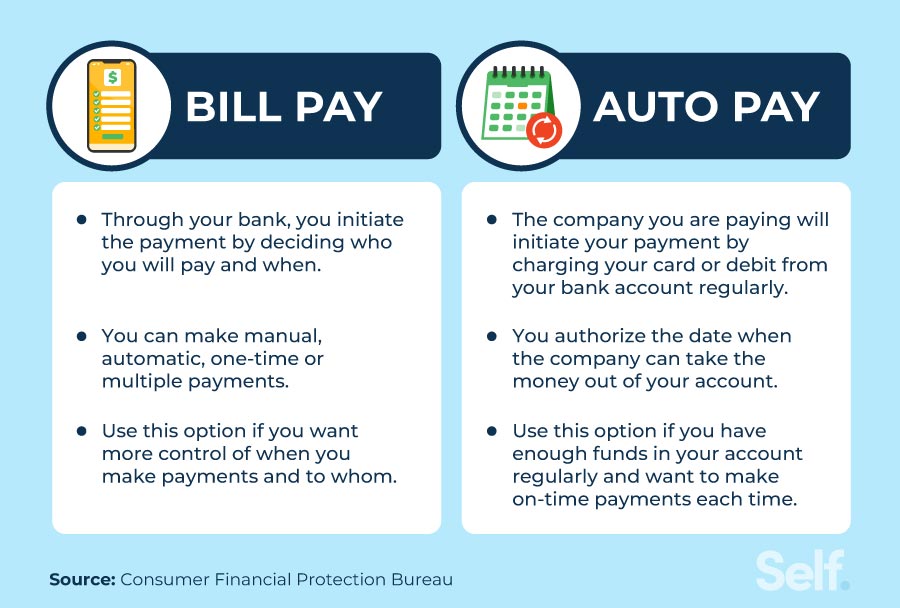
The consumer’s experience with online bill pay typically falls into one of several primary categories, each offering different levels of control, convenience, and technical integration. Understanding these modalities clarifies how the underlying technology adapts to various user preferences and institutional structures.
Direct Biller Portals: Your Account, Their System
The most common method of online bill payment is directly through a biller’s own website or mobile application. Whether it’s your electricity provider, internet service, or credit card company, most businesses now offer a dedicated online portal where customers can log in, view their statements, and initiate payments.
Technically, these portals are web applications developed by the biller (or a vendor on their behalf) that interface directly with their internal billing and accounting systems. When you enter your payment details—typically bank account (ACH) or credit/debit card information—into their secure form, that data is processed internally. For ACH payments, the biller’s system generates an electronic payment request that is then submitted to their acquiring bank, which in turn sends it through the ACH network. For card payments, the transaction is routed through credit card networks (Visa, Mastercard, etc.) via a payment gateway and processor. The key advantage here is that the payment is immediately registered within the biller’s own system, often providing real-time or near real-time updates on your account balance.
Bank-Centric Bill Pay Services: A Consolidated Hub
Many banks offer their customers a comprehensive online bill pay service that allows them to pay multiple bills from different providers through a single platform. This acts as a centralized hub for managing all your outgoing payments, regardless of who the payee is.
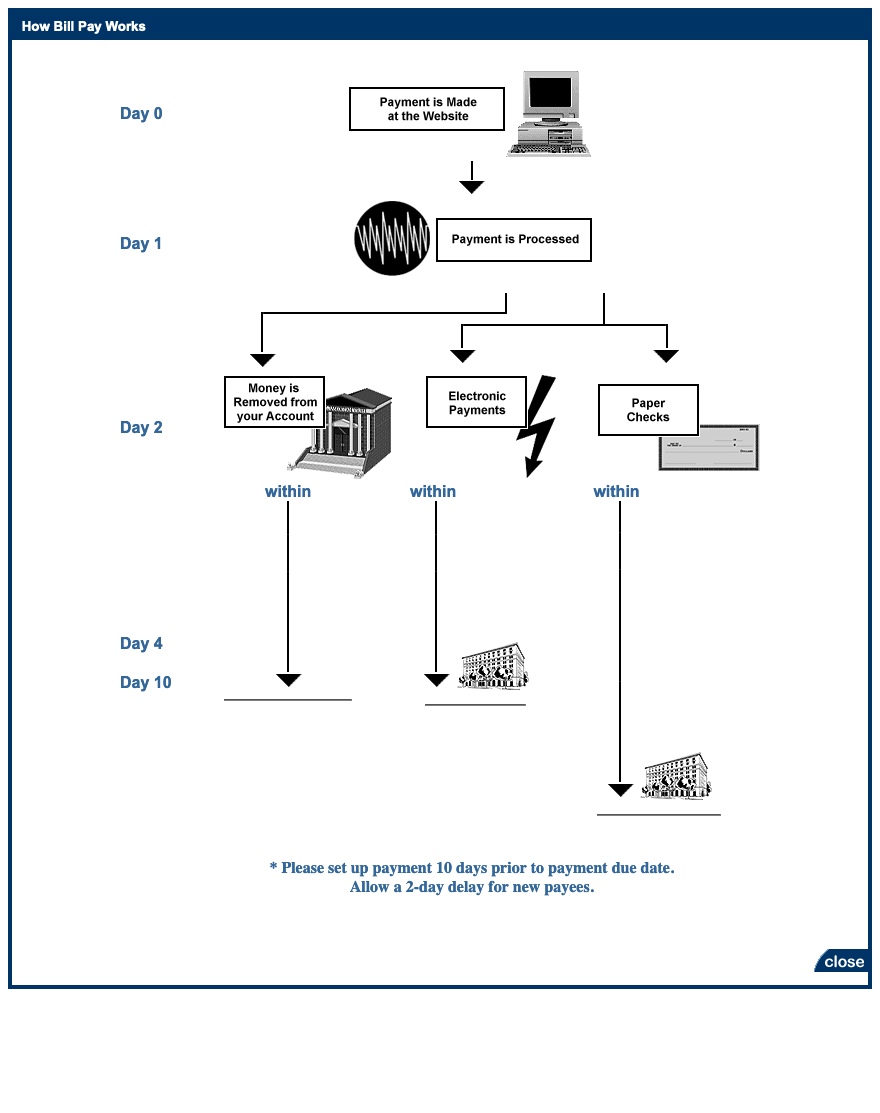
From a technical standpoint, when you schedule a payment through your bank’s bill pay service, the bank essentially acts as a payment aggregator. For major billers, the bank likely has direct electronic connections (often via APIs or established clearing house links) to send payments digitally. In these cases, your bank initiates an electronic funds transfer directly to the biller’s bank. For smaller or less common billers, the bank might actually print and mail a physical check on your behalf. The sophistication of these services means the bank maintains a database of biller information, including their payment acceptance methods and routing details. This service leverages the bank’s existing infrastructure for electronic funds transfers, providing a layer of abstraction and convenience for the user, who doesn’t need to navigate individual biller sites.
Third-Party Payment Aggregators: Bridging the Gaps
Beyond direct biller sites and bank services, a growing number of third-party payment platforms and aggregators have emerged. Services like PayPal, Venmo, or specialized bill pay apps often allow users to link multiple biller accounts and manage payments from a single interface, sometimes even offering features like payment splitting or rewards.
These platforms operate by integrating with a vast number of billers and financial institutions. They use APIs and other secure data exchange methods to retrieve billing information and submit payment instructions. For instance, a third-party app might prompt you to link your utility account by entering your login credentials for the utility’s website. The app then uses this information (often through secure tokenization or screen scraping technologies, with user consent) to fetch your bill details and initiate payment on your behalf, either by acting as an intermediary for direct bank transfers or by using a linked credit/debit card. These aggregators thrive on creating a unified user experience, abstracting away the complexities of interacting with numerous individual billing systems and often adding value through analytics or budgeting tools.
The End-to-End Technical Workflow
Regardless of the specific channel chosen, the fundamental technical workflow of an online bill payment follows a predictable sequence of operations, from the moment you click “pay” to the final settlement of funds.
Initiating a Payment: From Click to Command
The process begins with the user’s action: selecting a bill, entering payment details, and clicking the “submit” or “pay” button. This seemingly simple action triggers a cascade of digital events. Your browser or mobile app sends the payment instruction, along with encrypted payment details (e.g., bank account number, routing number, credit card number, expiration date, CVV), to the server of the biller, your bank, or the third-party payment provider.
At this stage, the system performs initial validation checks, such as ensuring all required fields are filled, that the payment amount is valid, and that the chosen payment method is accepted. This data is encapsulated into a digital message, often using standardized formats, ready for processing.
Authorization, Authentication, and Verification
Before any funds can move, the payment needs to be authorized and the user authenticated.
- Authentication: The system verifies your identity. This could be through a simple username/password combination, but increasingly involves Multi-Factor Authentication (MFA), such as a one-time passcode sent to your phone or biometric verification (fingerprint, face ID). This ensures that only the authorized account holder can initiate a payment.
- Authorization: For credit/debit card payments, the payment processor sends a request to the issuing bank (your bank) to confirm that sufficient funds or credit are available and that the card is valid. For ACH payments, while there isn’t typically real-time authorization like cards, the bank will check for funds availability when the transaction is processed.
- Verification: Systems often employ fraud detection algorithms at this stage, analyzing transaction patterns, IP addresses, and other metadata to identify and flag potentially fraudulent activities. If a payment attempt fails authorization or triggers fraud alerts, it is typically declined.
Fund Transfer and Settlement: The Digital Money Movement
Once authorized and verified, the actual fund transfer process begins.
- Credit/Debit Card Payments: The transaction details are sent through the payment gateway to the credit card network (e.g., Visa, Mastercard). The network routes the transaction to your issuing bank for approval. If approved, the funds are held or deducted from your account, and the payment processor then aggregates these approved transactions and presents them to the biller’s acquiring bank for settlement.
- ACH Payments: Your bank’s system creates an ACH entry (a digital instruction) to debit your account. This entry is then sent to the ACH network. The ACH operator bundles these entries and sends them to the payee’s bank, which then credits the payee’s account. This process is typically batch-oriented and takes 1-3 business days for settlement.
Confirmation, Reporting, and Digital Archiving
After the funds have been successfully transferred and settled, the system completes the transaction with confirmation and record-keeping.
- Confirmation: The user receives a confirmation message, often with a unique transaction ID. This might be displayed on screen, sent via email, or SMS. The biller’s system updates your account balance to reflect the payment.
- Reporting: Both the payer’s bank and the biller maintain detailed transaction logs. These logs are crucial for reconciliation, auditing, and dispute resolution.
- Digital Archiving: All transaction data is securely stored in digital archives, compliant with financial regulations, ensuring that a complete record of every payment is available for future reference, allowing users to view payment history and access statements online.
Fortifying Security in Online Transactions
The integrity of online bill pay hinges on robust security measures designed to protect sensitive financial data and prevent fraud. As cyber threats evolve, so too do the technologies employed to secure digital transactions.
Multi-Factor Authentication (MFA) and Advanced Biometrics
Standard password-based authentication alone is increasingly insufficient. Multi-Factor Authentication (MFA) adds layers of security by requiring users to provide two or more verification factors to gain access. This often includes something you know (password), something you have (a phone for an SMS code or an authenticator app token), and sometimes something you are (biometrics).
Advanced biometric technologies, such as fingerprint scanning, facial recognition, and iris scanning, are becoming more prevalent. These methods leverage unique biological characteristics for authentication, offering a highly secure and convenient alternative to traditional passwords. The underlying technology involves secure sensors capturing biometric data, which is then compared against a securely stored template, often using cryptographic hashing to ensure the template itself cannot be reverse-engineered.
Underlying Cryptographic Standards and Compliance
Beyond TLS/SSL for communication, various cryptographic standards underpin the security of data at rest and in processing. Data encryption algorithms (like AES-256) are used to protect stored financial information on servers. Tokenization is another crucial technology, where sensitive data (like a credit card number) is replaced with a unique, non-sensitive identifier (a “token”). This token can be used for processing, but if intercepted, it’s useless to an attacker as it doesn’t contain the original card data.
Financial institutions and payment processors must adhere to stringent compliance standards, such as the Payment Card Industry Data Security Standard (PCI DSS) for card payments. These standards mandate specific security controls, network architectures, and auditing processes to ensure a high level of data protection across the entire payment ecosystem. Regular security audits and penetration testing are also standard practices to identify and mitigate vulnerabilities.
Real-Time Fraud Detection and Risk Management Systems
The battle against financial fraud is an ongoing one, with advanced technologies playing a critical role. Real-time fraud detection systems employ artificial intelligence (AI) and machine learning (ML) algorithms to analyze vast amounts of transaction data instantly. These systems look for anomalies and patterns indicative of fraudulent activity—such as unusual spending habits, payments to unfamiliar recipients, transactions from new IP addresses, or excessively large transfers.
When a suspicious transaction is detected, the system can automatically flag it, decline it, or trigger additional authentication steps (e.g., contacting the user for verification). Risk management systems work in conjunction with fraud detection, evaluating the risk profile of each transaction based on various parameters, helping to strike a balance between security and user convenience.
Empowering Users Through Security Best Practices
While robust technological defenses are essential, user awareness and adherence to security best practices are equally vital. Users are educated on creating strong, unique passwords, enabling MFA, being wary of phishing attempts, regularly checking their account statements, and keeping their operating systems and antivirus software updated. Many banking and bill pay applications incorporate features like transaction alerts, giving users immediate notification of activity on their accounts, enabling them to quickly identify and report unauthorized transactions. This shared responsibility reinforces the overall security posture of online bill payment.
Evolving Horizons: The Future of Online Payments
The landscape of online payments is continuously evolving, driven by technological innovation and the demand for faster, more secure, and more integrated financial experiences. The future promises even greater fluidity and efficiency in how we manage and pay our bills.
Instant Payments and Real-Time Gross Settlement (RTGS)
Traditional ACH payments can take several business days to settle. However, the future is moving towards instant payments. Systems like RTP (Real-Time Payments) in the US and various national instant payment schemes globally are gaining traction. These systems leverage real-time gross settlement (RTGS), meaning each transaction is settled individually and immediately, rather than being batched.
Technologically, instant payment systems require highly robust and low-latency infrastructure capable of processing transactions 24/7/365. They involve direct messaging between participating banks, often through dedicated secure networks, and require banks to maintain continuous liquidity. For online bill pay, this translates to immediate payment confirmation and quicker updates to balances, eliminating the “pending” status and providing greater certainty for both payers and payees.
The Impact of Open Banking and API Economy
Open Banking initiatives, spurred by regulations like PSD2 in Europe, are fundamentally transforming how financial data is shared and how payments are initiated. It mandates that banks open up their data (with customer consent) via secure APIs to authorized third-party providers. This allows for entirely new services to emerge.
In the context of bill pay, Open Banking enables third-party apps to securely access your account information from multiple banks, offering a truly consolidated view of your finances and the ability to initiate payments directly from your bank account within their interface. This bypasses traditional card networks and even some ACH processes, leading to potentially lower transaction costs and greater innovation in personalized financial management tools. The API economy is the driving force here, allowing for the creation of intricate, interconnected financial ecosystems.

Emerging Technologies: Blockchain and AI in Payments
Looking further ahead, nascent technologies like blockchain and artificial intelligence are poised to play increasingly significant roles.
- Blockchain: Distributed Ledger Technology (DLT), or blockchain, offers the potential for highly secure, transparent, and immutable transaction records. While not yet mainstream for traditional retail bill pay, blockchain-based payment rails could facilitate cross-border payments with greater efficiency and reduced intermediary costs. Cryptocurrencies, as an application of blockchain, might also find niches in online payments, though volatility and regulatory clarity remain challenges.
- Artificial Intelligence (AI): Beyond fraud detection, AI and machine learning will enhance personalized financial advice, automate payment scheduling based on predictive analytics of income and expenses, and even streamline dispute resolution. Conversational AI, through chatbots and virtual assistants, could also make initiating and managing bill payments more intuitive and accessible.
Online bill pay, fundamentally, is a testament to the power of digital technology to simplify complex processes. From secure encryption protocols and intricate API integrations to real-time fraud detection and the promise of instant payments, the technological foundation continuously evolves, ensuring that managing our financial obligations remains efficient, secure, and increasingly intelligent.
aViewFromTheCave is a participant in the Amazon Services LLC Associates Program, an affiliate advertising program designed to provide a means for sites to earn advertising fees by advertising and linking to Amazon.com. Amazon, the Amazon logo, AmazonSupply, and the AmazonSupply logo are trademarks of Amazon.com, Inc. or its affiliates. As an Amazon Associate we earn affiliate commissions from qualifying purchases.