
For decades, MicroStrategy was known primarily as a steady, if somewhat niche, player in the enterprise software sector. Founded in 1989, the company built its reputation on high-end business intelligence (BI) and analytics software, helping large corporations make sense of their data. However, the dawn of the 2020s marked a radical transformation in the company’s financial identity. Today, MicroStrategy operates a unique, dual-pronged business model that blends traditional software-as-a-service (SaaS) revenue with a massive, aggressive institutional investment strategy centered on Bitcoin.
To understand how MicroStrategy makes money, one must look past the surface of its balance sheet. The company functions as both a technology provider and a de facto digital asset holding company. This hybrid approach has redefined its valuation and created a blueprint for how a legacy tech firm can leverage the global capital markets to pivot its financial destiny.

The Core Software Business: Enterprise Analytics and SaaS
At its heart, MicroStrategy remains a software company. Its primary product, MicroStrategy ONE, is an enterprise-grade analytics platform that allows organizations to deploy sophisticated BI tools, mobile applications, and AI-driven insights. While this segment no longer provides the explosive growth seen in the company’s early years, it remains a critical engine for cash flow and market credibility.
Software Licenses and Subscription Services
The fundamental way MicroStrategy’s software arm generates revenue is through the sale of product licenses and, increasingly, subscription services. In line with broader industry trends, MicroStrategy has aggressively transitioned its customers from on-premise perpetual licenses to cloud-based subscription models. This shift is financially strategic: while perpetual licenses provide a large upfront payment, subscriptions provide a predictable, recurring revenue stream that is highly valued by investors.
Subscription revenue is driven by the MicroStrategy Cloud environment, which offers high availability and security for enterprise data. By managing the infrastructure for its clients, MicroStrategy can charge a premium for “peace of mind” and continuous updates, ensuring a long-term financial relationship with its client base.
Product Support and Professional Services
A significant portion of MicroStrategy’s software revenue comes from product support. Large enterprises—including major banks, retailers, and government agencies—rely on MicroStrategy for mission-critical data. These organizations pay recurring annual fees to ensure they receive technical support, security patches, and version upgrades.
Additionally, the company generates income through professional services. This involves consulting, education, and implementation services where MicroStrategy experts help clients design their data architecture and optimize their BI dashboards. These services are essential for “stickiness,” making it harder for a client to churn to a competitor once their entire data ecosystem is built around MicroStrategy’s proprietary tools.
The Bitcoin Treasury Strategy: A Revolutionary Pivot
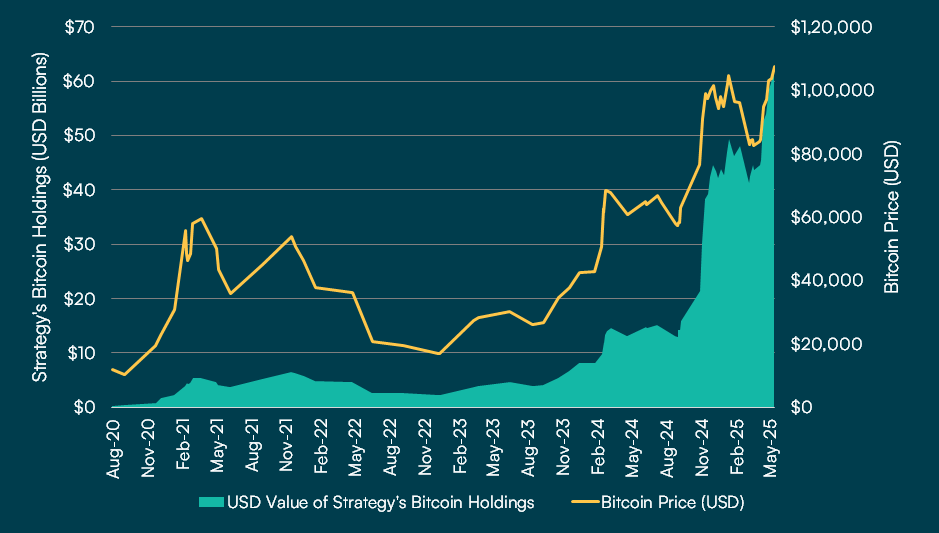
In August 2020, MicroStrategy’s leadership, spearheaded by then-CEO Michael Saylor, made a decision that would change the company forever: they adopted Bitcoin as their primary treasury reserve asset. While most companies keep their excess cash in “safe” instruments like short-term government bonds or commercial paper, MicroStrategy began converting its US dollar holdings into Bitcoin.
Capital Appreciation and Financial Engineering
MicroStrategy does not “make money” from Bitcoin in the traditional sense of a retail trader—they are not day-trading the asset. Instead, they generate value through long-term capital appreciation. By holding an asset with a fixed supply in an era of monetary expansion, the company aims to increase its book value and shareholder equity over time.
However, the real “money-making” mechanism lies in the company’s use of financial engineering. MicroStrategy has pioneered the concept of the “Bitcoin Yield.” This is a Key Performance Indicator (KPI) the company uses to describe the ratio between its Bitcoin holdings and its diluted shares outstanding. By increasing this yield, the company effectively creates value for shareholders without requiring the underlying software business to grow at double-digit rates.
The Premium to Net Asset Value (NAV)
Because MicroStrategy is a publicly-traded company on the NASDAQ, it offers investors a way to gain exposure to Bitcoin through a regulated equity instrument. Historically, the market has valued MicroStrategy at a significant premium relative to the value of the Bitcoin it holds.
This premium allows the company to engage in an “accretive” cycle:
-
The stock trades at a premium to the Bitcoin on the balance sheet.
-
The company issues new shares of stock at this elevated price.
-
The proceeds from the stock sale are used to buy more Bitcoin.
-
Because the shares were sold at a premium, each existing shareholder now owns more “Bitcoin-per-share” than they did before.
This cycle is a sophisticated method of capital accumulation that traditional software companies rarely, if ever, employ.
Leveraging the Capital Markets: Debt as a Tool
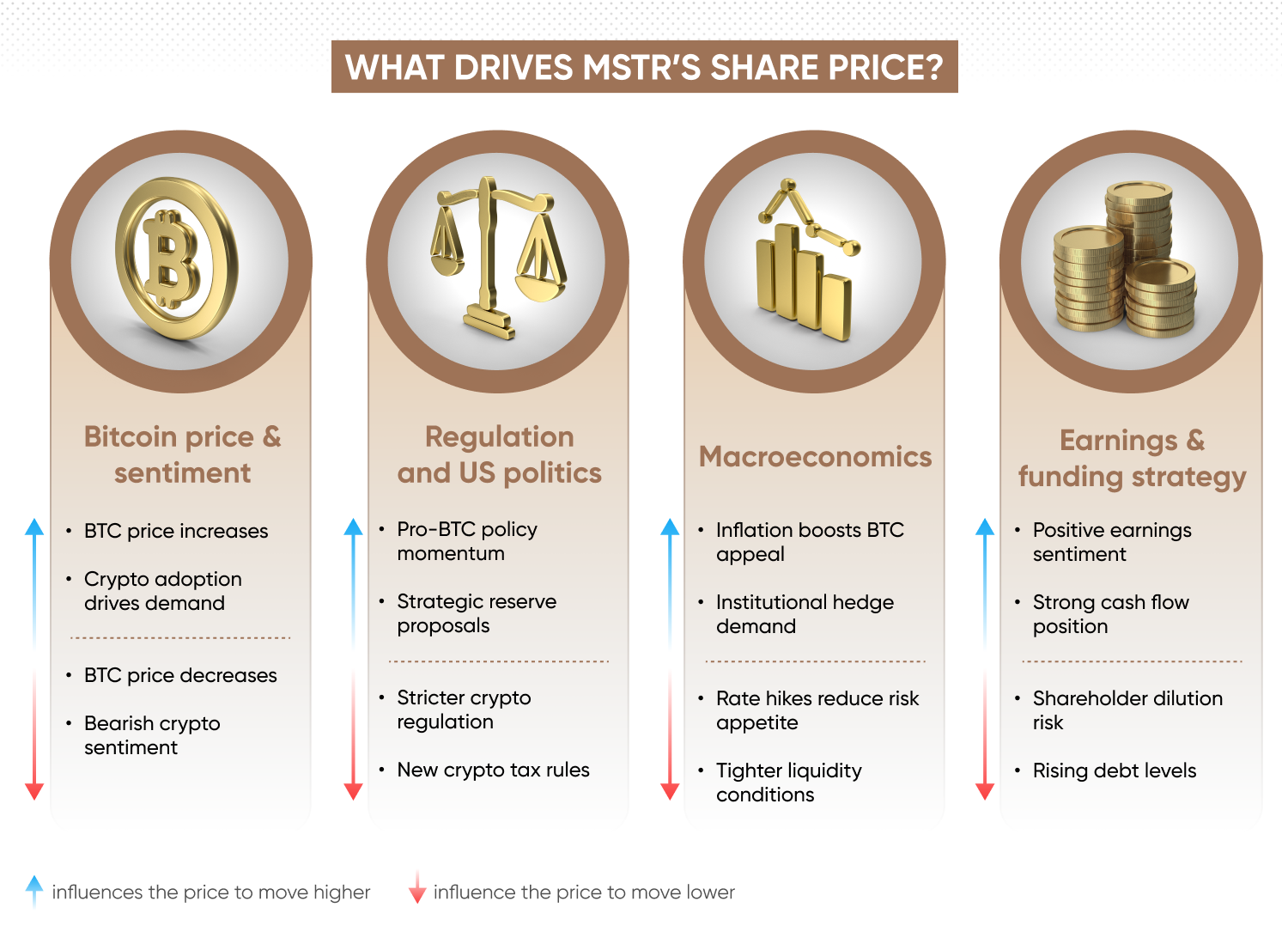
Perhaps the most complex way MicroStrategy makes money is through its masterful use of the debt markets. To accelerate its Bitcoin acquisitions, the company has issued billions of dollars in senior convertible notes.
Convertible Senior Notes
These are debt instruments that pay a relatively low interest rate—sometimes as low as 0% or 0.625%—because they give the lender the option to convert the debt into MicroStrategy stock at a future date at a specified price. For MicroStrategy, this is a form of low-cost financing.
The company takes the cash raised from these debt offerings and immediately purchases Bitcoin. If the price of Bitcoin rises faster than the interest rate on the debt, MicroStrategy has effectively used “other people’s money” to acquire an appreciating asset. This leverage magnifies the returns for equity holders.
Refinancing and Interest Expense Management
Managing this debt is a core part of the company’s financial strategy. By timing their entries into the bond market during periods of high investor demand, MicroStrategy can lock in long-term debt with minimal servicing costs. The cash flow generated by the software business (the legacy BI tools) is used to pay the interest on this debt, ensuring that the company can maintain its “HODL” (Hold On for Dear Life) strategy even during volatile market downturns.
In essence, the software business provides the defensive “moat” and the interest-paying capacity, while the Bitcoin strategy provides the offensive “growth” and capital appreciation potential.
Strategic Partnerships and the “Saylor Brand”
While not a direct line item on the income statement, the branding and intellectual leadership of MicroStrategy contributes significantly to its financial success. Michael Saylor has become one of the most prominent advocates for Bitcoin globally, which has turned MicroStrategy into a household name in the financial world.
Lowering the Cost of Customer Acquisition
This global profile acts as a massive marketing funnel. When a Fortune 500 company looks for an enterprise analytics provider, MicroStrategy is often at the top of the list simply due to its market visibility. This “brand equity” reduces the cost of customer acquisition for the software side of the business.
Attracting Institutional Capital
The company’s bold stance has attracted a unique class of investors, including major hedge funds and institutional players who want “leveraged Bitcoin” exposure without the complexities of self-custody or the fees associated with spot ETFs. This steady demand for MSTR shares keeps the stock price buoyant, which in turn facilitates the “at-the-market” (ATM) share offerings that the company uses to buy more Bitcoin.
Future Outlook: Integrating AI and Digital Assets
As we look toward the future of MicroStrategy’s revenue model, the focus is shifting toward the intersection of Business Intelligence and Artificial Intelligence (AI). The company is investing heavily in “MicroStrategy AI,” a tool that allows users to query complex datasets using natural language.
Monetizing AI Insights
By integrating generative AI into its software suite, MicroStrategy can justify higher subscription tiers and increase the average revenue per user (ARPU). This keeps the “software engine” humming, providing the necessary cash flow to support the company’s larger financial ambitions.
The Potential for “Bitcoin Applications”
There is also long-term potential for the company to develop software that interacts directly with the Bitcoin network, such as Lightning Network-based applications for corporate payments or identity verification. While this is currently in the R&D phase, it represents a third potential revenue stream: software that is purpose-built for the decentralized economy.
Conclusion: A Multi-Dimensional Financial Machine
MicroStrategy makes money through a sophisticated orchestration of software operations and macro-economic positioning. It is no longer just a vendor of dashboards and data charts; it is a pioneer in corporate treasury management.
By using its legacy software business to generate stable cash flow, and then using that cash flow (along with intelligently structured debt) to acquire a scarce digital asset, MicroStrategy has created a feedback loop of value creation. Whether the market views it as a software company with a large “savings account” or a Bitcoin fund with a software “subsidiary,” the result is the same: a high-leverage financial machine that has outperformed almost every other stock in the S&P 500 since adopting its new strategy. For the savvy investor, understanding MicroStrategy requires looking at the company not just through the lens of technology, but through the lens of innovative business finance.
aViewFromTheCave is a participant in the Amazon Services LLC Associates Program, an affiliate advertising program designed to provide a means for sites to earn advertising fees by advertising and linking to Amazon.com. Amazon, the Amazon logo, AmazonSupply, and the AmazonSupply logo are trademarks of Amazon.com, Inc. or its affiliates. As an Amazon Associate we earn affiliate commissions from qualifying purchases.