
Microsoft Corporation, a global technology powerhouse, generates its vast revenue through a highly diversified portfolio of products and services, pivoting significantly over the last decade from a pure software licensing model to a subscription-based, cloud-first strategy. This transformation has cemented its position as one of the world’s most valuable companies, driven by robust business finance strategies focusing on recurring revenue, enterprise solutions, and ecosystem expansion. Understanding Microsoft’s financial architecture reveals a sophisticated interplay of cloud computing, productivity software, personal computing, and strategic investments.
The Cloud Computing Behemoth: Microsoft Azure
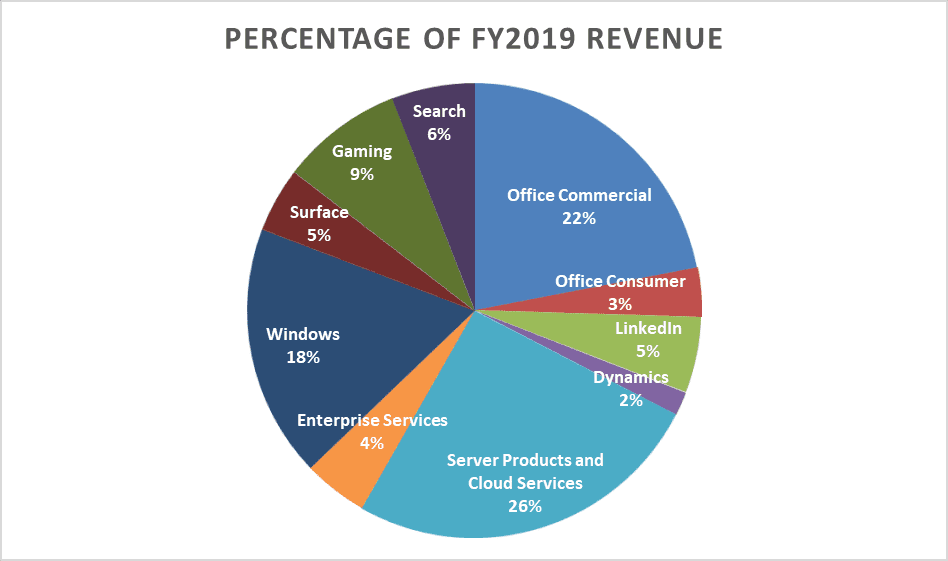
At the core of Microsoft’s financial engine is its intelligent cloud segment, predominantly fueled by Microsoft Azure. Azure is a comprehensive suite of cloud computing services that provides a range of solutions including computing power, storage, networking, analytics, machine learning, and more. This segment has become the primary growth driver for the company, boasting consistently high double-digit revenue growth rates quarter after quarter.
Infrastructure as a Service (IaaS) and Platform as a Service (PaaS)
Microsoft earns substantial revenue from businesses and organizations subscribing to Azure’s Infrastructure as a Service (IaaS) and Platform as a Service (PaaS) offerings. IaaS provides virtualized computing resources over the internet, allowing companies to rent servers, storage, and networking hardware without the upfront capital expenditure or ongoing maintenance costs. This pay-as-you-go model, often based on usage (e.g., CPU hours, data transfer, storage consumed), offers predictable recurring revenue streams for Microsoft and scalability for its clients. PaaS, on the other hand, provides a platform allowing customers to develop, run, and manage applications without the complexity of building and maintaining the infrastructure typically associated with developing and launching an app. This segment captures a significant portion of IT spending as companies migrate their operations to the cloud, reducing their own data center costs and increasing operational agility.
Software as a Service (SaaS) and Enterprise Solutions
Beyond raw infrastructure, Azure underpins a wide array of Microsoft’s Software as a Service (SaaS) offerings, including specialized enterprise applications and developer tools. Large enterprises often enter into multi-year, multi-million-dollar contracts for Azure services, encompassing a broad suite of cloud solutions tailored to their specific needs. These long-term commitments provide Microsoft with a stable and predictable revenue foundation, reducing financial volatility and enabling strategic investments. The ability to offer hybrid cloud solutions, integrating on-premises infrastructure with Azure, further expands its market reach, particularly among organizations with stringent data sovereignty or regulatory requirements.
Impact on Business Finance and Growth
Azure’s success is not just about raw revenue; it significantly enhances Microsoft’s overall business finance profile. The recurring nature of cloud subscriptions provides highly predictable income, crucial for investor confidence and long-term financial planning. High margins associated with cloud services contribute positively to the company’s profitability. Furthermore, Azure acts as a strategic entry point, allowing Microsoft to cross-sell other enterprise services, fostering a sticky ecosystem that makes it financially difficult for customers to switch providers.
Productivity and Business Processes: Office and Dynamics
Another cornerstone of Microsoft’s revenue generation is its productivity and business processes segment, dominated by Microsoft Office and Dynamics 365. This segment epitomizes the shift from one-time software license sales to a highly lucrative subscription model.
Microsoft 365 Subscriptions: The Recurring Revenue Model
The transition from perpetual licenses for desktop software (like Office 2019) to the subscription-based Microsoft 365 (formerly Office 365) has been a financial masterstroke. Microsoft 365 encompasses popular applications such as Word, Excel, PowerPoint, Outlook, and Teams, offered through various subscription tiers for consumers, small businesses, and large enterprises. This model guarantees a steady stream of recurring revenue, replacing the lumpy, cyclical revenue of traditional software upgrades. For consumers, individual or family subscriptions provide constant income. For businesses, Microsoft 365 Business and Enterprise plans often bundle not just applications but also advanced security features, cloud storage, and device management capabilities, leading to higher average revenue per user (ARPU). This recurring revenue model provides significant financial predictability and insulation from economic downturns compared to relying on discrete product releases.

Enterprise Mobility + Security (EMS)
Within the enterprise sphere, Microsoft 365’s financial strength is bolstered by the inclusion of Enterprise Mobility + Security (EMS). This suite offers identity and access management, information protection, and advanced threat protection, addressing critical enterprise needs in a complex cybersecurity landscape. By bundling these high-value security services with productivity tools, Microsoft increases the stickiness of its offerings and commands premium pricing, further enhancing its financial performance within this segment.
Dynamics 365: ERP and CRM Solutions
Microsoft Dynamics 365, an integrated suite of enterprise resource planning (ERP) and customer relationship management (CRM) applications, is another vital revenue stream. Offered as a cloud service, Dynamics 365 provides solutions for sales, customer service, field service, finance, and operations. It competes in a highly lucrative market for enterprise software, where long-term contracts and strategic partnerships translate into significant and consistent revenue. The integration of Dynamics 365 with Microsoft 365 and Azure further strengthens its appeal, driving cross-selling opportunities and cementing Microsoft’s position as a holistic provider of business solutions, thereby capturing a larger share of enterprise IT budgets.
More Personal Computing: Windows, Devices, and Gaming
While cloud and productivity lead in growth, Microsoft’s “More Personal Computing” segment remains a significant contributor to its overall financial health, encompassing Windows, Surface devices, Xbox, and search advertising.
Windows OS Licensing and Ecosystem
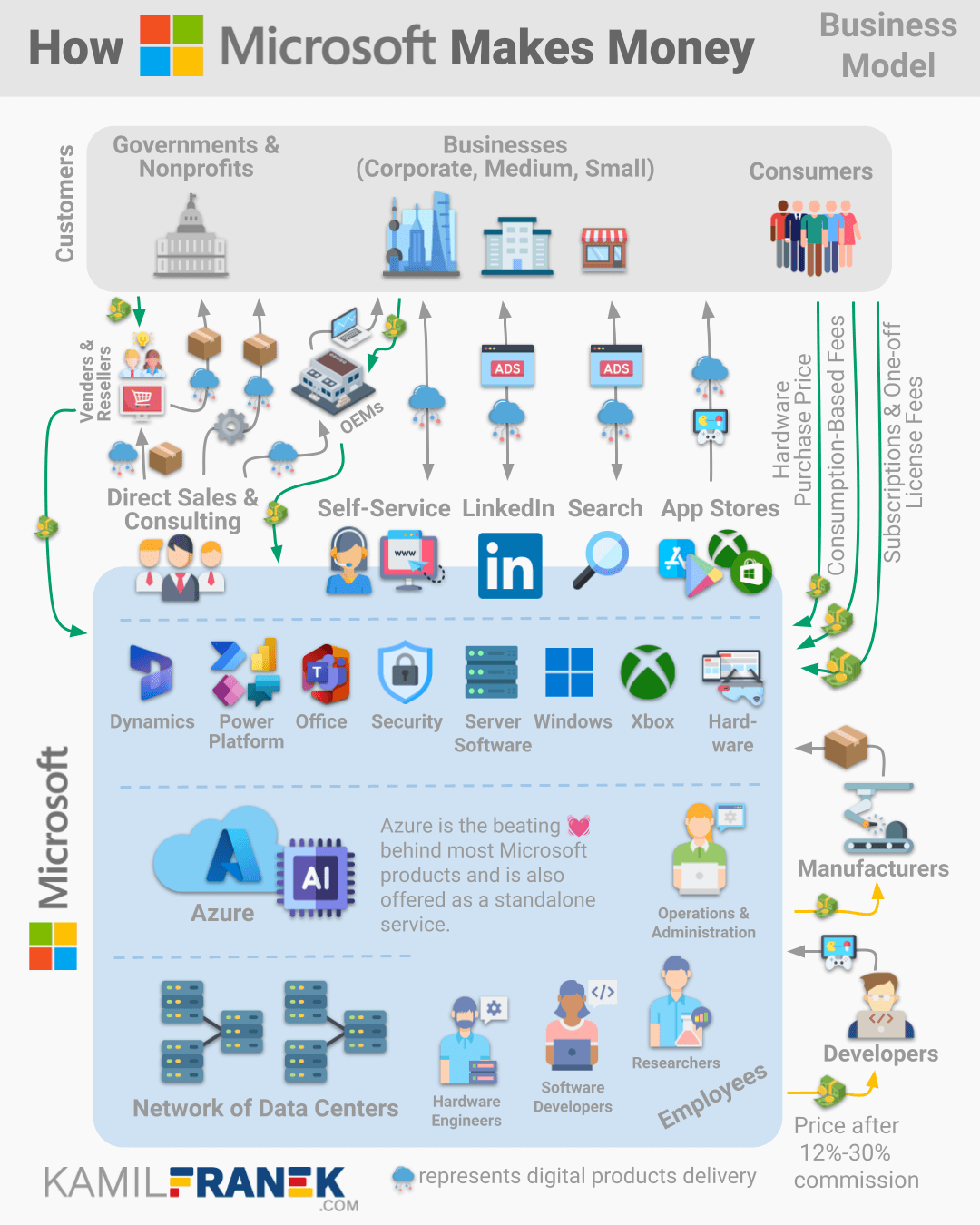
Windows operating system licenses, sold primarily to original equipment manufacturers (OEMs) for pre-installation on new PCs, still generate substantial revenue. While the growth rate for Windows has matured, its pervasive presence ensures a continuous revenue stream from new hardware sales globally. Beyond direct licensing, Windows acts as a critical platform that drives sales of other Microsoft products and services, from Microsoft 365 to games and apps in the Microsoft Store, creating a robust ecosystem that indirectly contributes to revenue. Enterprise versions of Windows also generate recurring revenue through volume licensing and subscription agreements.
Surface Devices: Hardware Revenue
Microsoft’s foray into hardware with its Surface line of laptops, tablets, and desktops adds another dimension to its revenue. While hardware sales typically have lower margins than software, Surface devices demonstrate Microsoft’s commitment to showcasing the full potential of Windows, and generate direct revenue from product sales. The Surface brand helps reinforce the premium image of Microsoft’s ecosystem and often targets business professionals and creatives, commanding higher price points and contributing to overall revenue diversification.
Xbox Ecosystem: Consoles, Games, and Services
The Xbox gaming division is a powerful entertainment revenue generator. This includes sales of Xbox consoles (Xbox Series X/S), which are often sold at near cost or even a loss to grow the user base, with the true financial value derived from high-margin game sales, subscriptions, and accessories. Xbox Game Pass, a subscription service offering a vast library of games, has become a significant recurring revenue stream, driving user engagement and loyalty. Digital game sales, in-game purchases, and advertising within the Xbox ecosystem further contribute to this segment’s robust financial performance. The recent strategic acquisitions in the gaming industry further signal Microsoft’s commitment to expanding this revenue stream.
Search Advertising (Bing) and Other Revenue Streams
Microsoft’s search advertising revenue, primarily from Bing, contributes to the “More Personal Computing” segment. While not as dominant as Google, Bing maintains a significant market share, particularly within enterprise environments and through its integration with Windows and Microsoft Edge. This advertising revenue is dependent on search volume and ad clicks, providing another stream of income. Other contributions include patent licensing and smaller software offerings.
Strategic Investments and Acquisitions
Microsoft continuously bolsters its financial position through strategic investments and major acquisitions. These moves are crucial for entering new markets, acquiring innovative technologies, and expanding its existing revenue streams. Recent high-profile acquisitions, particularly in the gaming sector, exemplify this strategy, aiming to consolidate market share, diversify offerings, and secure future growth engines. By integrating acquired entities into its vast ecosystem, Microsoft leverages its financial strength to enhance its overall market position and revenue-generating capacity.
In essence, Microsoft’s financial success is built upon a dynamic and interconnected web of cloud services, subscription-based software, hardware innovation, and strategic acquisitions. This diversification ensures resilience and continuous growth, making it a financial titan in the global economy.
aViewFromTheCave is a participant in the Amazon Services LLC Associates Program, an affiliate advertising program designed to provide a means for sites to earn advertising fees by advertising and linking to Amazon.com. Amazon, the Amazon logo, AmazonSupply, and the AmazonSupply logo are trademarks of Amazon.com, Inc. or its affiliates. As an Amazon Associate we earn affiliate commissions from qualifying purchases.