
Purchasing a home is arguably the most significant financial commitment the average person will make in their lifetime. While the “sticker price” of the property often dominates the conversation, the true cost of homeownership is hidden within the mechanics of the mortgage. Specifically, interest—the price you pay to borrow the bank’s money—can often result in a borrower paying back double or even triple the original loan amount over the life of the loan. Understanding how interest works on a home loan is not merely an academic exercise; it is a critical skill for managing personal wealth and ensuring long-term financial stability.

To navigate the complexities of a mortgage, one must look beyond the monthly payment and understand the mathematical relationship between the principal, the interest rate, and the amortization schedule.
The Mechanics of Mortgage Interest: Principal vs. Interest
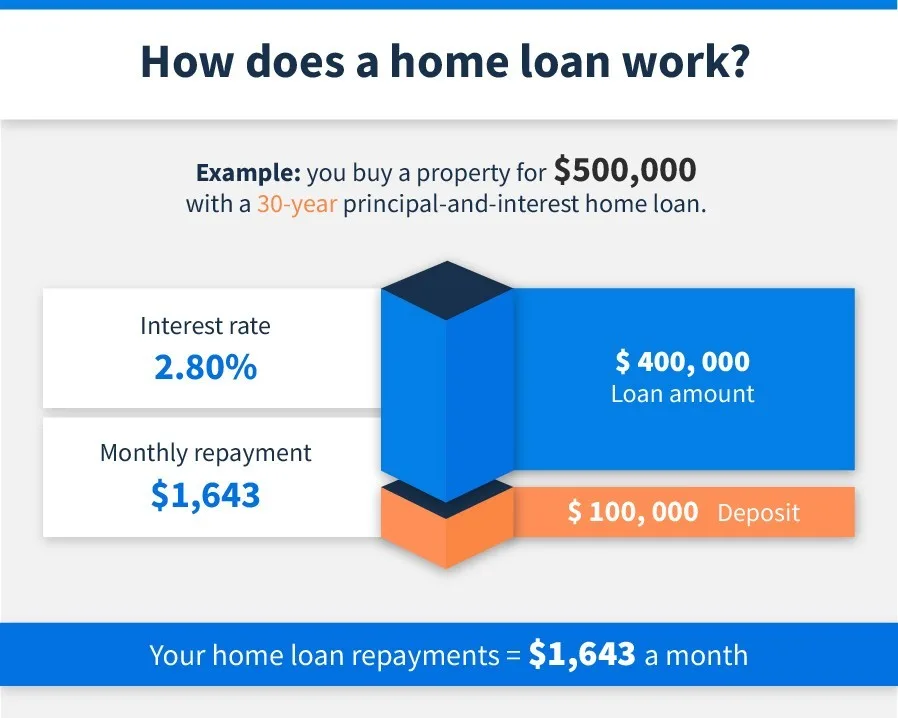
At its most basic level, a mortgage is composed of two primary parts: the principal and the interest. The principal is the actual amount of money you borrowed to purchase the home, while the interest is the profit the lender earns for taking the risk of lending you that capital.
How Interest is Calculated Monthly
Unlike many consumer loans that use simple interest based on the original balance, mortgage interest is typically calculated using “simple interest” on the remaining balance, but it is applied monthly. Each month, the lender takes your current outstanding principal balance, multiplies it by your annual interest rate, and divides that number by 12 (the months in a year).
For example, if you have a $300,000 loan balance with a 6% interest rate, your interest for the first month would be $1,500 ($300,000 x 0.06 / 12). If your total monthly payment is $1,800, only $300 goes toward reducing the principal. The next month, the interest is calculated based on the new, slightly lower balance of $299,700. This cycle continues for the duration of the loan.
The Annual Percentage Rate (APR)
When shopping for a home loan, you will encounter two different rates: the interest rate and the APR. The interest rate is the percentage used to calculate your monthly interest payment. The APR, however, is a more comprehensive figure that includes the interest rate plus other costs, such as loan origination fees, mortgage insurance, and closing costs. For a borrower, the APR is the more accurate representation of the total cost of the loan, as it spreads these additional fees over the life of the mortgage.
The Role of Amortization: Why Interest is Front-Loaded
The most surprising aspect of a home loan for many first-time buyers is the amortization schedule. Amortization is the process of paying off a debt over time through regular installments. In a standard 30-year fixed-rate mortgage, your monthly payment remains the same, but the proportion of that payment going toward interest versus principal shifts dramatically over time.
The Front-Loading Phenomenon
In the early years of a mortgage, the vast majority of your monthly payment is dedicated to interest. This is because the interest is calculated based on a very high principal balance. Because the lender wants to ensure their profit is realized and their risk is mitigated, the math of the amortization schedule is designed so that the bank gets paid their interest first.
During the first five to ten years of a 30-year loan, you may feel as though you are barely making a dent in the principal balance. This is a crucial phase for homeowners to understand, as selling the home or refinancing too early can result in very little equity being built from the monthly payments alone.
The Tipping Point
As the years progress and the principal balance slowly decreases, the interest portion of your payment also decreases. Consequently, a larger share of your monthly payment begins to attack the principal. This “tipping point” usually occurs around the midpoint of the loan term. From that point forward, your equity begins to grow at an accelerating rate. By the final year of the mortgage, the payment is almost entirely principal, with only a negligible amount going toward interest.
Fixed-Rate vs. Adjustable-Rate Mortgages (ARMs)
The way interest works on your loan is also heavily dictated by the type of interest rate structure you choose. The two primary categories are fixed-rate and adjustable-rate mortgages, each serving different financial strategies.

The Stability of Fixed-Rate Mortgages
A fixed-rate mortgage is the most popular choice because it offers predictability. Whether you choose a 15-year or a 30-year term, the interest rate remains the same for the entire life of the loan. This protects the borrower from rising interest rates in the broader economy. If you lock in a 5% rate and market rates jump to 8% five years later, your payment stays exactly the same. This stability is invaluable for long-term budgeting and financial planning.
The Volatility and Potential Savings of ARMs
An Adjustable-Rate Mortgage (ARM) works differently. It typically offers a lower “teaser” interest rate for an initial period (such as 5, 7, or 10 years). After that period ends, the rate adjusts periodically—usually annually—based on a specific financial index plus a margin set by the lender.
While ARMs can save borrowers money in the short term, they carry the risk of “payment shock.” If interest rates rise significantly when the adjustment period begins, the monthly payment can skyrocket. ARMs are generally used by individuals who plan to sell the home or refinance before the initial fixed period ends, utilizing the lower interest rate to maximize cash flow in the early years.
Factors That Influence Your Interest Rate
Not every borrower is offered the same interest rate. Lenders determine the rate they offer based on a variety of risk factors. Understanding these can help you position yourself for a more favorable deal.
Credit Score and Financial History
Your credit score is the primary indicator of your “creditworthiness.” Lenders use this score to estimate the likelihood that you will default on the loan. A borrower with a 780 credit score will likely receive a significantly lower interest rate than someone with a 640 score. Even a difference of 1% in the interest rate can result in tens of thousands of dollars in savings over the life of a 30-year mortgage.
Loan-to-Value (LTV) Ratio and Down Payments
The LTV ratio compares the amount of the loan to the value of the home. If you put down a 20% down payment, your LTV is 80%. Lenders view lower LTV ratios as lower risk. If you have a small down payment (e.g., 3.5% or 5%), the lender faces a higher risk if the market dips and you owe more than the home is worth. Consequently, higher LTV ratios often come with higher interest rates or the added cost of Private Mortgage Insurance (PMI).
Economic Conditions and the Federal Reserve
While personal factors matter, the broader economy sets the baseline. Mortgage rates are influenced by the yield on the 10-year Treasury note and the monetary policy of the Federal Reserve. When the Fed raises the federal funds rate to combat inflation, mortgage rates typically follow suit. Conversely, in a sluggish economy, rates may drop to encourage borrowing and spending.
Strategies to Minimize Interest Costs
Because interest is the largest expense of a home loan, savvy borrowers employ various strategies to reduce the total amount paid to the bank.
Refinancing for a Lower Rate
Refinancing involves taking out a new mortgage with better terms to pay off the old one. If interest rates have dropped significantly since you bought your home, or if your credit score has improved, refinancing can lower your interest rate. This reduces your monthly payment and the total interest paid over time. However, borrowers must be mindful of closing costs, which can eat into the savings provided by a lower rate.
Choosing a Shorter Loan Term
While a 30-year mortgage offers the lowest monthly payment, a 15-year mortgage offers a much lower total interest cost. Because the loan is paid off in half the time, the interest has less time to compound. Furthermore, 15-year mortgages almost always come with lower interest rates than their 30-year counterparts. For those who can afford the higher monthly payment, a shorter term is the most effective way to build equity rapidly.
Making Extra Principal Payments
One of the most powerful tools for a homeowner is the ability to pay extra toward the principal balance. Because mortgage interest is calculated based on the remaining balance, any extra payment you make directly reduces the base upon which next month’s interest is calculated.
Even one extra payment per year can shave years off a 30-year mortgage and save a homeowner tens of thousands of dollars in interest. Many people achieve this by making bi-weekly payments instead of monthly payments. By paying half of the monthly amount every two weeks, you end up making 26 half-payments, or 13 full payments per year, significantly accelerating the path to a debt-free home.
In conclusion, interest is the engine that drives the cost of homeownership. By understanding how it is calculated, how it behaves over the life of an amortization schedule, and how various loan structures affect it, you can make informed decisions that align with your broader financial goals. Managing interest isn’t just about getting the lowest rate; it’s about understanding how to use the structure of the loan to your advantage to build wealth and secure your financial future.
aViewFromTheCave is a participant in the Amazon Services LLC Associates Program, an affiliate advertising program designed to provide a means for sites to earn advertising fees by advertising and linking to Amazon.com. Amazon, the Amazon logo, AmazonSupply, and the AmazonSupply logo are trademarks of Amazon.com, Inc. or its affiliates. As an Amazon Associate we earn affiliate commissions from qualifying purchases.