
In an era defined by soaring healthcare costs and a fragmented pharmaceutical supply chain, platforms that promise to alleviate financial burdens often capture significant attention. GoodRx stands as a prime example, having carved out a formidable niche by helping millions of Americans save on prescription medications. While its value proposition for consumers is clear—providing access to discount coupons—the underlying mechanics of how this seemingly altruistic service translates into a multi-billion dollar enterprise are less apparent. This article delves into the sophisticated business model that allows GoodRx to generate substantial revenue, illustrating its strategic positioning within the complex landscape of prescription drug pricing. By understanding its intricate web of partnerships, diversified services, and market leverage, we uncover the financial ingenuity that drives GoodRx’s success.
The Core Mechanism: PBM Partnerships and Referral Fees
At the heart of GoodRx’s revenue generation lies a clever financial arrangement with Pharmacy Benefit Managers (PBMs). PBMs are the largely unseen intermediaries that negotiate drug prices between manufacturers, pharmacies, and health insurance plans. They manage prescription drug benefits for millions of Americans, processing claims and establishing drug formularies. GoodRx doesn’t directly set drug prices; rather, it aggregates and displays the discounted prices PBMs have already negotiated.
Navigating the Complex Pharmacy Ecosystem
To grasp GoodRx’s role, one must first appreciate the convoluted nature of the U.S. prescription drug market. Patients typically interact with pharmacies, which are reimbursed by PBMs (or directly by patients) for the medications dispensed. PBMs, in turn, negotiate with drug manufacturers for rebates and with pharmacies for dispensing fees and pricing networks. This multi-layered system often results in a significant disparity between the sticker price of a drug and the actual transaction price, with individual patient out-of-pocket costs varying wildly based on their insurance plan, deductible status, and the pharmacy they choose. GoodRx thrives in this opaqueness, bringing a semblance of price transparency to consumers who would otherwise be unaware of available discounts.
The GoodRx Value Proposition for PBMs and Pharmacies
GoodRx acts as a powerful marketing and patient acquisition tool for PBMs and pharmacies. When a consumer uses a GoodRx coupon, they are essentially opting into a specific PBM’s network pricing, often bypassing their insurance altogether if the GoodRx price is lower. For PBMs, this means more claims processed through their system, regardless of whether the patient has traditional insurance coverage through that PBM. It diversifies their revenue streams beyond just insurance plans. For pharmacies, GoodRx drives traffic, converting potential lost sales (due to high prices) into actual transactions. Pharmacies benefit from increased foot traffic and the ability to compete more effectively on price, even if their profit margin on a GoodRx-discounted prescription might be slightly lower than an insured claim.
The Commission Model: A Win-Win-Win
GoodRx’s primary revenue stream is generated through a commission model. When a consumer uses a GoodRx coupon for a prescription, GoodRx receives a small fee or percentage from the PBM that processed the transaction. This creates a powerful “win-win-win” scenario:
- Consumers Win: They save money on their prescriptions, often significantly, by accessing prices they wouldn’t otherwise know about.
- Pharmacies Win: They gain a sale and customer retention they might have lost due to high out-of-pocket costs, strengthening their relationship with customers.
- PBMs Win: They process a claim and generate revenue, expanding their reach beyond traditional insurance channels.
- GoodRx Wins: By facilitating these transactions, GoodRx earns a referral fee from the PBM, validating its business model and ensuring its profitability.
This model is particularly effective because GoodRx isn’t selling a product itself; it’s selling access to information and facilitating transactions within an existing infrastructure. Its low operational overhead, compared to a traditional pharmacy or insurance provider, allows for healthy profit margins on each commission.
Diversifying Revenue Streams Beyond Discount Cards
While the core PBM commission model remains foundational, GoodRx has strategically expanded its offerings to tap into additional revenue streams, transforming from a simple coupon aggregator into a broader digital healthcare platform. This diversification not only strengthens its financial position but also enhances its value proposition to consumers and healthcare partners.
Subscription Services: GoodRx Gold
Recognizing that some users seek even deeper discounts or a more streamlined experience, GoodRx launched “GoodRx Gold,” a premium subscription service. For a modest monthly fee, subscribers gain access to an exclusive network of discounted prices that often surpass those available through the free platform. This recurring revenue model provides a stable and predictable income stream, independent of individual prescription fills. It appeals to users with chronic conditions or multiple prescriptions, where the monthly fee is easily offset by the substantial additional savings. GoodRx Gold represents a classic SaaS (Software as a Service) approach within the healthcare context, demonstrating GoodRx’s ability to monetize enhanced value.
Telehealth Expansion: GoodRx Care
A significant strategic move has been GoodRx’s foray into telehealth services, initially through its acquisition of HeyDoctor and rebranding it as GoodRx Care. This service allows users to consult with licensed healthcare providers online for a variety of common conditions, often at a fixed, affordable price. Patients can receive diagnoses, treatment plans, and even prescriptions without needing an in-person visit. GoodRx Care generates revenue directly through consultation fees paid by patients. This expansion is brilliant for several reasons: it creates a new direct revenue channel, integrates seamlessly with its core prescription discount service (as patients often need a prescription after a telehealth visit), and positions GoodRx as a more comprehensive solution for affordable healthcare access, rather than just medication discounts.
Advertising and Manufacturer Solutions
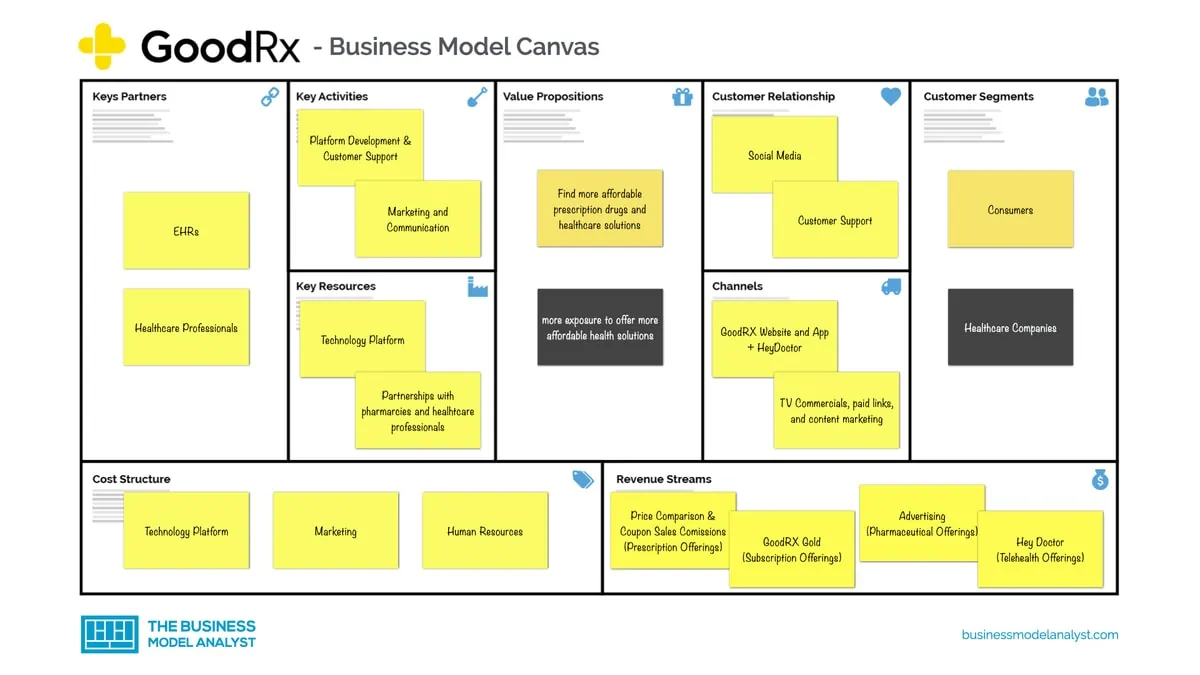
GoodRx’s vast user base—millions of Americans actively searching for prescription savings—represents a highly targeted audience for pharmaceutical manufacturers and other health-related companies. GoodRx leverages this audience through various advertising and “manufacturer solutions.” This includes displaying targeted advertisements for specific drugs, disease states, or related health products on its platform. Pharmaceutical companies may also partner with GoodRx to promote their brand-name medications through co-pay programs or direct-to-consumer campaigns, ensuring patients are aware of affordability options beyond generics. This revenue stream is essentially a media play, monetizing the high-intent traffic GoodRx attracts, allowing drug makers to reach patients who are actively engaged in managing their health costs.
Strategic Growth and Market Positioning
GoodRx’s success is not just about its immediate revenue channels but also its long-term strategic positioning within the healthcare market. Its ability to aggregate, analyze, and leverage data, combined with a focus on user acquisition and retention, forms the bedrock of its sustained growth and profitability.
Leveraging Data for Market Insights (Anonymized)
GoodRx collects a massive amount of anonymized and aggregated data on prescription pricing trends, drug utilization patterns, and consumer behavior. This data, stripped of any personally identifiable information, is immensely valuable. It allows GoodRx to refine its own offerings, identify new market opportunities, and negotiate more effectively with PBMs and pharmacies. Furthermore, these aggregated market insights can be valuable to third parties, such as pharmaceutical companies or research institutions, potentially creating another avenue for revenue through data licensing or specialized reports. GoodRx’s ability to see where patients are filling prescriptions, what prices they’re paying, and for what drugs, provides an unparalleled macro-level view of the out-of-pocket prescription market.
Building an Ecosystem of Healthcare Savings
GoodRx is actively transforming from a single-service discount provider into a holistic ecosystem for healthcare savings. By integrating prescription discounts, telehealth services, and potentially future offerings like diagnostic testing or provider search, it aims to become the go-to platform for affordable healthcare access. This strategy creates a sticky user experience, encouraging customers to rely on GoodRx for multiple needs, thereby increasing customer lifetime value and reducing churn. Each new service or partnership strengthens the overall platform, making it more indispensable to consumers and more valuable to partners.
The Importance of User Acquisition and Retention
A core driver of GoodRx’s financial success is its robust focus on user acquisition and retention. The more users who utilize GoodRx, the more commissions it earns, and the more valuable its platform becomes for advertisers and partners. GoodRx invests heavily in marketing, public relations, and maintaining a user-friendly interface to attract new users. Its strong brand recognition and positive word-of-mouth are crucial. Retention is driven by consistent savings, ease of use, and the expanding suite of services that keep users coming back. A loyal user base directly translates into recurring revenue and strengthens GoodRx’s negotiating power within the industry.
The Financial Ingenuity Behind GoodRx’s Success
GoodRx’s innovative approach to making money in a complex industry stems from its ability to identify and exploit market inefficiencies, operating with a lean model that contrasts sharply with traditional healthcare behemoths.
Operating Lean in a High-Cost Industry
Unlike traditional healthcare companies burdened by physical infrastructure, extensive administrative staff, and complex billing systems, GoodRx operates predominantly as a digital platform. Its lean operational model minimizes overhead costs, allowing it to maintain healthy profit margins even on relatively small commission fees. By leveraging technology to aggregate data and connect users with existing providers, GoodRx avoids the massive capital expenditures associated with drug manufacturing, pharmacy ownership, or insurance underwriting. This agility allows it to quickly adapt to market changes and allocate resources efficiently towards growth and innovation.
The Power of Price Transparency in a Fragmented Market
GoodRx’s fundamental genius lies in its ability to bring price transparency to a notoriously opaque market. By revealing the often-hidden negotiated prices, it empowers consumers and forces a degree of competition among pharmacies and PBMs. This act of transparency, while seemingly simple, addresses a critical pain point for millions of Americans and, in doing so, creates immense value. GoodRx has monetized this value by becoming the conduit through which these price advantages are accessed, proving that solving a pervasive consumer problem can be a highly lucrative business strategy.

Future Growth Vectors and Challenges
Looking ahead, GoodRx has opportunities to expand further into areas like chronic disease management, specialized medication savings, and potentially even integrating with traditional insurance plans to provide out-of-pocket maximization strategies. However, it also faces challenges, including increased competition from similar platforms, potential regulatory changes in the PBM landscape, and the ongoing need to maintain trust and relevance in a rapidly evolving healthcare environment. Its continued success will hinge on its ability to innovate, diversify, and consistently deliver tangible financial value to consumers.
In conclusion, GoodRx’s financial model is a sophisticated blend of digital brokerage, subscription services, and direct-to-consumer healthcare. It thrives by strategically positioning itself as an indispensable intermediary in the prescription drug supply chain, empowering consumers with price transparency while simultaneously generating revenue through commissions, subscriptions, and diversified services. By creating a multi-faceted platform that benefits patients, pharmacies, and PBMs, GoodRx has successfully built a robust and profitable business by making prescription savings accessible to all.
aViewFromTheCave is a participant in the Amazon Services LLC Associates Program, an affiliate advertising program designed to provide a means for sites to earn advertising fees by advertising and linking to Amazon.com. Amazon, the Amazon logo, AmazonSupply, and the AmazonSupply logo are trademarks of Amazon.com, Inc. or its affiliates. As an Amazon Associate we earn affiliate commissions from qualifying purchases.