
Navigating the landscape of modern healthcare often requires more than just a reliable insurance policy. As out-of-pocket costs, deductibles, and elective procedure prices continue to rise, many consumers find themselves seeking flexible financial solutions to bridge the gap between their medical needs and their current liquidity. CareCredit has emerged as one of the most prominent financial tools in this space.
Owned by Synchrony Bank, CareCredit is not a general-purpose credit card but a specialized healthcare financing instrument designed specifically for health and wellness expenses. Whether you are facing an emergency veterinary bill, a necessary dental procedure, or an elective cosmetic surgery, understanding how this credit line functions is essential for maintaining both your physical and financial health.
Understanding the CareCredit Mechanism
At its core, CareCredit operates as a revolving line of credit. However, unlike a traditional Visa or Mastercard that you might use to buy groceries or gas, CareCredit is restricted to a specific network of healthcare providers and health-related retailers.
What is CareCredit?
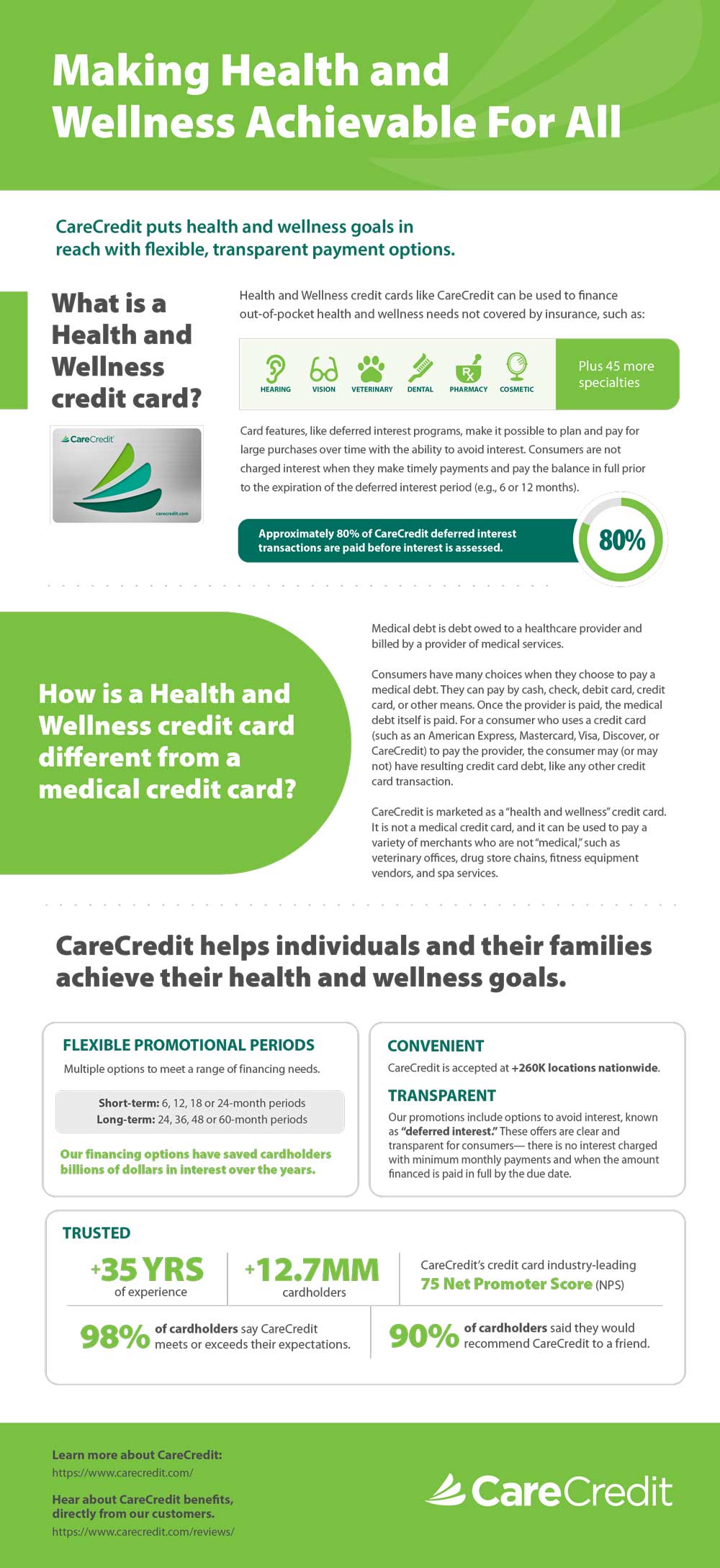
CareCredit is a healthcare credit card designed to help consumers pay for costs not covered by medical insurance. It serves as a dedicated financial resource for health, beauty, and wellness expenses. With a network of over 250,000 enrolled providers across the United States, it has become a staple in offices ranging from dentistry and optometry to veterinary medicine and hearing care. Because it is a revolving line of credit, once you are approved and pay down your balance, you can use it again for future needs without reapplying.
How It Differs from Traditional Credit Cards
While a standard credit card carries a balance that you can pay off over time with a variable interest rate, CareCredit is built around “promotional financing” windows. The primary allure of CareCredit is the ability to avoid interest charges entirely for a set period. However, the structure of this “no interest” period is fundamentally different from a 0% APR introductory offer on a standard credit card. On a standard card, interest usually begins accruing only after the promo ends; with CareCredit, interest is often “deferred,” a distinction that has significant implications for your personal balance sheet.
Where Can You Use CareCredit?
The utility of CareCredit is confined to its provider network. While this includes a vast array of medical professionals, it also extends to select retail pharmacies like Rite Aid and Walgreens, as well as certain health-focused retailers. Common categories include:
- Dental: Cleanings, root canals, braces, and implants.
- Vision: LASIK, cataract surgery, and designer frames.
- Veterinary: Emergency care, routine checkups, and surgical procedures for pets.
- Cosmetic: Skin treatments, hair restoration, and plastic surgery.
- Hearing: Hearing aids and diagnostic screenings.
The Promotional Financing Landscape
The most critical aspect of the CareCredit “Money” niche is the interest structure. Understanding the math behind these loans is the difference between a helpful financial tool and an expensive debt trap. CareCredit offers two primary types of promotional paths: Deferred Interest and Reduced APR.
No Interest If Paid In Full (Deferred Interest)
CareCredit’s most popular option offers 6, 12, 18, or 24-month promotional periods on purchases of $200 or more. Under this plan, no interest is charged if you pay the full balance by the end of the promotional period. This is a powerful tool for cash-flow management, allowing you to break a large $2,400 surgery into twelve manageable $200 payments.
The Hidden Traps of Deferred Interest
The term “Deferred Interest” is a technical financial designation that requires careful attention. If you fail to pay the entire balance by the end of the promotional period—even if you have only $1 remaining—CareCredit will charge you interest on the entire original purchase amount from the date of purchase. With standard APRs often hovering around 26.99% to 29.99%, this can result in a massive, sudden spike in your debt. From a financial planning perspective, it is vital to set your internal repayment schedule to finish at least one month before the official promotion expires.
Reduced APR and Fixed Monthly Payments
For larger expenses (typically $1,000 to $2,500 or more), CareCredit offers longer-term financing for 24, 36, 48, or 60 months. Unlike the deferred interest plans, these carry a fixed, reduced APR (such as 14.90% or 17.90%) until the balance is paid in full. These plans function more like a traditional installment loan. While you are paying interest, the rate is often significantly lower than the standard penalty APR, making it a more predictable option for major reconstructive surgeries or extensive orthodontic work.
The Application and Approval Process
From a financial tool perspective, applying for CareCredit is similar to applying for a retail store card, but the stakes are higher due to the medical necessity often involved.
Eligibility Requirements and Credit Scores
CareCredit is accessible to a wide range of consumers, but it does require a credit check. Generally, a “good” credit score (typically 640 or higher) increases the likelihood of approval and a higher credit limit. Because Synchrony Bank issues the card, they look at your debt-to-income ratio and payment history. For those with lower scores, a co-signer may be required to secure the line of credit.
How to Apply
Applications can be processed online, via a mobile device, or directly in a provider’s office. The decision is usually instantaneous. This immediacy is a double-edged sword: it provides relief during a medical or veterinary emergency, but it can also lead to “impulse financing” for elective procedures without a proper long-term repayment plan in place.
Managing Your Credit Limit
Upon approval, you are granted a specific credit limit. In the context of personal finance, this limit affects your “Credit Utilization Ratio”—the amount of debt you owe vs. your total available credit. If you are granted a $5,000 limit and immediately charge a $4,500 procedure, your utilization is 90%, which can temporarily lower your credit score. Managing this limit requires a strategic view of your overall credit profile.
Strategic Financial Management with CareCredit
Using CareCredit successfully requires a proactive approach to personal finance. It is not a “set it and forget it” tool; it requires active monitoring to ensure you remain on the right side of the interest equation.
Budgeting for Repayment
The minimum monthly payment calculated by CareCredit is often not enough to pay off the balance before the deferred interest period ends. To use CareCredit as a “free” loan, you must ignore the minimum payment on your statement. Instead, take your total balance and divide it by the number of months in your promotional period, minus one. For example, if you have a $1,200 balance on a 12-month promo, aim to pay $110 or $120 a month rather than the minimum $35.
Impact on Your Credit Score
CareCredit reports to all three major credit bureaus (Equifax, Experian, and TransUnion). Consistent, on-time payments will help build your credit history. Conversely, because this is a revolving line of credit, a single late payment can not only damage your score but may also void your promotional interest rate, immediately triggering the high standard APR on your remaining balance.
Alternatives to Healthcare Financing
Before committing to CareCredit, a savvy consumer should evaluate other financial avenues. Some medical providers offer in-house, interest-free payment plans that do not involve a hard credit pull. Additionally, if you have a high credit score, a traditional credit card with a 0% introductory APR for 18 months might offer more flexibility, as it doesn’t carry the “deferred interest” penalty where interest is backdated to day one. Furthermore, using a Health Savings Account (HSA) or Flexible Spending Account (FSA) allows you to pay for these services using pre-tax dollars, which is almost always the most cost-effective financial move.
Is CareCredit Right for Your Financial Health?
The decision to use CareCredit should be based on a cold analysis of your ability to repay the debt within the promotional window. It is a specialized tool that offers significant leverage but carries high risks for the undisciplined borrower.
Pros of Using CareCredit
- Liquidity Management: Keeps your emergency fund intact while you pay off medical bills over time.
- Accessibility: Widely accepted across various medical niches, including those often not covered by insurance.
- Credit Building: Provides an opportunity to improve credit through a dedicated trade line.
- Promotional Interest: Offers 0% interest if managed strictly according to the terms.
Cons and Potential Risks
- High Standard APR: The interest rates after the promo period or on non-promo purchases are significantly higher than average credit cards.
- The Deferred Interest “Cliff”: One missed day or one cent left on the balance can result in hundreds or thousands of dollars in back-dated interest.
- Limited Use: You cannot use the card for general expenses, limiting its utility compared to a standard cash-back card.
Final Verdict
CareCredit is an excellent financial tool for those who are disciplined with their budgeting. If you have a clear plan to pay off your medical expenses within the 6-to-24-month window, it serves as an interest-free loan that preserves your cash flow. However, for those with unpredictable income or a history of missing payments, the deferred interest structure makes it an incredibly risky proposition. In the realm of personal finance, CareCredit should be treated like a scalpel: a precise, effective instrument when used correctly, but one that can cause significant damage if handled without care.
aViewFromTheCave is a participant in the Amazon Services LLC Associates Program, an affiliate advertising program designed to provide a means for sites to earn advertising fees by advertising and linking to Amazon.com. Amazon, the Amazon logo, AmazonSupply, and the AmazonSupply logo are trademarks of Amazon.com, Inc. or its affiliates. As an Amazon Associate we earn affiliate commissions from qualifying purchases.