
Bitcoin, since its enigmatic inception in 2009, has transcended its origins as a niche technological curiosity to become a global financial phenomenon. It represents a paradigm shift in how we perceive and manage value, often sparking intense debate and fascination. For many, the ultimate question revolves not just around what Bitcoin is, but fundamentally, “how does Bitcoin make money?” This isn’t merely about the speculative rise and fall of its price; it encompasses a complex interplay of economic principles, technological innovation, and individual financial strategies. Understanding how individuals and entities derive monetary value from Bitcoin requires delving into its core mechanics, diverse investment avenues, and the evolving landscape of digital finance.

The Core Mechanism: Price Appreciation Driven by Scarcity and Demand
At its heart, Bitcoin’s ability to generate wealth is tied to its price appreciation, a dynamic shaped by its inherent design and market forces. Unlike traditional fiat currencies that can be printed endlessly by central banks, Bitcoin operates under a strict, predetermined supply cap.
Understanding Bitcoin’s Scarcity Model
The architect of Bitcoin, Satoshi Nakamoto, hardcoded a maximum supply limit of 21 million coins. This finite cap, coupled with a decreasing rate of new coin issuance (the “halving” event occurring approximately every four years), creates an artificial scarcity akin to precious metals like gold. As the supply of new bitcoins diminishes over time, and the existing supply is distributed across an ever-growing network of holders, the economic principle of supply and demand comes sharply into focus. If demand for Bitcoin increases while its supply remains fixed and deflationary in its issuance, its price tends to rise, generating profit for those who hold it. This scarcity is a cornerstone of its value proposition, distinguishing it from inflationary fiat currencies and providing a strong incentive for long-term holding.
Market Forces, Adoption, and Volatility
Bitcoin’s price is not static; it is a live reflection of market sentiment, technological advancements, macroeconomic trends, and regulatory developments. Factors influencing its value include:
- Growing Adoption: Increased mainstream acceptance by institutional investors, payment processors, and even nation-states legitimizes Bitcoin as a store of value and medium of exchange, driving demand.
- Macroeconomic Environment: Periods of high inflation or economic uncertainty often see investors seeking “safe haven” assets, and Bitcoin has increasingly been viewed in this light, particularly by younger generations.
- Technological Developments: Upgrades to the Bitcoin network (e.g., the Lightning Network for faster, cheaper transactions) enhance its utility, potentially increasing demand.
- Regulatory Clarity: Positive regulatory frameworks can reduce uncertainty and attract more traditional investors, while restrictive regulations can cause price dips.
- News and Sentiment: High-profile endorsements, security breaches, or major financial news can create rapid price swings.
This interplay of factors contributes to Bitcoin’s notable volatility, presenting both significant opportunities for profit and considerable risks for investors. Understanding these market dynamics is crucial for anyone looking to “make money” with Bitcoin.
Long-Term vs. Short-Term Investment Philosophies
Investors in Bitcoin generally fall into two broad categories based on their time horizon:
- Long-Term (HODLing): Derived from a misspelling of “hold,” HODLing refers to the strategy of buying Bitcoin and holding it for extended periods, often years, with the belief that its value will appreciate significantly over time. This strategy banks on Bitcoin’s long-term scarcity and increasing adoption.
- Short-Term (Trading): This involves actively buying and selling Bitcoin to profit from its day-to-day or week-to-week price fluctuations. Traders use technical analysis, market indicators, and news events to predict price movements, aiming to buy low and sell high.
Both strategies carry their own set of risks and rewards, requiring different levels of commitment, knowledge, and emotional discipline.
Direct Methods of Acquiring and Earning Bitcoin
Beyond simply buying Bitcoin and hoping its price goes up, there are several direct ways individuals and businesses can actively acquire and generate income from this digital asset.
Investing and Trading Strategies
For most individuals, direct financial engagement with Bitcoin begins with investing or trading.
- Buying and Holding (HODLing): This is the simplest and most common strategy. Investors purchase Bitcoin through exchanges (e.g., Coinbase, Binance, Kraken) and hold it in a secure wallet, anticipating future price appreciation. The “set it and forget it” approach aims to capitalize on Bitcoin’s long-term growth trajectory, enduring market corrections and volatility.
- Day Trading and Swing Trading: These are active trading strategies designed to profit from short-term price movements. Day traders open and close positions within a single trading day, while swing traders hold positions for a few days to several weeks. Both require deep market analysis, technical charting skills, and strict risk management to navigate Bitcoin’s significant volatility. They are high-risk, high-reward endeavors not suitable for novice investors.
- Arbitrage: This strategy involves simultaneously buying Bitcoin on one exchange where its price is lower and selling it on another exchange where its price is higher. Due to varying liquidity and market depth, minor price discrepancies can exist across global exchanges. Arbitrageurs aim to exploit these fleeting differences for profit, often requiring sophisticated automated trading systems to execute trades quickly.
Bitcoin Mining: The Original Income Stream
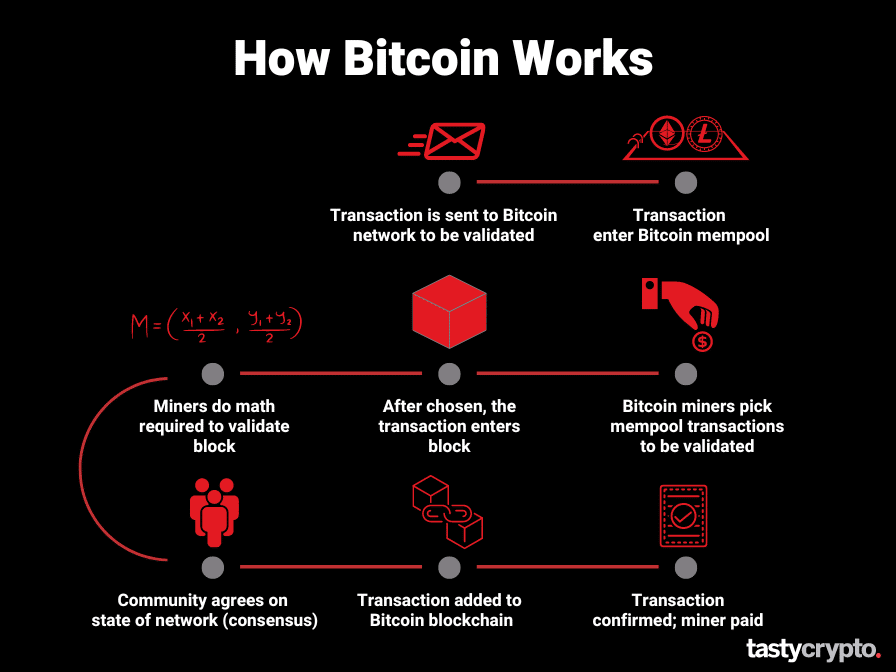
Bitcoin mining is the process by which new bitcoins are introduced into circulation and new transactions are added to the blockchain. Miners use powerful computers to solve complex cryptographic puzzles.
- The Mining Process Explained: When a miner successfully solves the puzzle, they get to add a new “block” of verified transactions to the blockchain and are rewarded with newly minted bitcoins (the “block reward”) plus transaction fees. This “Proof-of-Work” mechanism secures the network.
- Profitability and Challenges: Historically, individual miners could be profitable. Today, the immense computing power required, coupled with high electricity costs and increasing network difficulty, means solo mining is rarely profitable for individuals. Most mining is now done by large-scale operations or through “mining pools,” where individuals contribute their computing power and share in the rewards proportionately. For many, the initial investment in specialized hardware (ASICs) and ongoing operational costs make it a challenging path to consistent profit without significant capital.
Earning Bitcoin Through Services and Goods
As Bitcoin gains wider acceptance, opportunities to earn it directly as payment or compensation are expanding.
- Accepting Bitcoin as Payment: Businesses, freelancers, and service providers can accept Bitcoin for their products or services. This not only broadens their customer base to include the crypto-native population but can also offer advantages like lower transaction fees compared to traditional payment processors and faster settlement times. The value received can then be held, spent, or converted to fiat currency.
- Bitcoin-Related Services: The burgeoning crypto industry has created new job markets. Individuals with expertise in blockchain development, crypto education, trading analysis, content creation (blogging, videos), or consulting can be paid in Bitcoin for their specialized skills, effectively converting their intellectual capital into digital assets.
Indirect and Advanced Strategies for Bitcoin-Related Income
For those willing to explore more sophisticated avenues, the Bitcoin ecosystem offers indirect ways to generate income, often leveraging Decentralized Finance (DeFi) and financial derivatives.
Yield Generation and Lending
One increasingly popular way to “make money” with Bitcoin without selling it is through yield-generating activities, essentially lending out your Bitcoin to earn interest.
- Interest-Bearing Accounts: Various centralized cryptocurrency platforms (e.g., BlockFi, Nexo, Celsius, although recent regulatory scrutiny has impacted some) offer interest on Bitcoin deposits. Users deposit their Bitcoin, and the platform lends it out to institutional borrowers or uses it for other yield-generating activities, paying a portion of the returns back to the depositor as interest, often in Bitcoin itself.
- Decentralized Finance (DeFi) Lending: For more tech-savvy users, DeFi protocols on other blockchains (e.g., Aave or Compound on Ethereum) allow for lending Bitcoin in a decentralized manner. However, since Bitcoin itself isn’t natively compatible with these Ethereum-based protocols, it usually requires using “wrapped Bitcoin” (wBTC), an ERC-20 token pegged 1:1 to Bitcoin. Users deposit wBTC into smart contracts and earn interest paid by borrowers. This method offers greater transparency and often higher yields but comes with smart contract risk and requires a deeper understanding of DeFi mechanics.
Options, Futures, and Derivatives Trading
Sophisticated investors and traders use financial derivatives to speculate on Bitcoin’s future price without actually owning the underlying asset, or to hedge existing positions.
- Futures Contracts: These are agreements to buy or sell Bitcoin at a predetermined price on a specific future date. Traders can speculate on whether Bitcoin’s price will rise (going long) or fall (going short). Futures markets allow for leverage, amplifying potential gains but also potential losses.
- Options Contracts: These give the holder the right, but not the obligation, to buy (call option) or sell (put option) Bitcoin at a specified price (strike price) on or before a certain date. Options are used for speculation, hedging, or generating income by selling options.
- Perpetual Swaps: A type of futures contract without an expiry date, very popular in crypto markets. They allow traders to speculate with high leverage, closely tracking the spot price.
These instruments are highly complex and carry significant risks, primarily suitable for experienced traders with a robust understanding of financial markets and risk management.
Risk Management and Long-Term Wealth Building with Bitcoin
While the allure of “making money” with Bitcoin is strong, it’s paramount to approach it with a clear understanding of the risks and a strategic mindset for long-term wealth building.
Volatility, Risk Assessment, and Due Diligence
Bitcoin’s price history is characterized by extreme volatility, with dramatic rallies followed by steep corrections. This means capital is always at risk. Thorough due diligence is essential before any investment. Understand the technology, the market, the specific strategy you employ, and never invest more than you can afford to lose. Research any platform or service thoroughly before committing funds.
Diversification and Portfolio Management
Prudent financial advice suggests that Bitcoin should be part of a diversified investment portfolio, not the entirety of it. Allocating a reasonable percentage of your capital to Bitcoin, alongside traditional assets like stocks, bonds, and real estate, can help mitigate overall portfolio risk. Bitcoin’s role in a portfolio is often considered a high-growth, high-risk asset that can potentially enhance returns while balancing it with more stable investments.
Security Best Practices
The decentralized nature of Bitcoin means users are their own banks, which comes with the responsibility of securing their assets.
- Wallet Security: Utilize hardware wallets (cold storage) for significant holdings to protect private keys offline. For smaller amounts or active trading, secure software wallets or reputable exchange wallets can be used.
- Private Key Management: Your private keys are the only way to access your Bitcoin. Never share them, and ensure multiple, secure backups are stored in different physical locations.
- Beware of Scams: The crypto space is rife with scams. Be vigilant against phishing attempts, fake investment schemes, and unsolicited offers.
Tax Implications
Making money with Bitcoin often comes with tax obligations. Capital gains from selling Bitcoin for a profit, income from mining, or interest earned from lending are typically taxable events in most jurisdictions. It is crucial to understand and comply with local tax laws, keeping meticulous records of all transactions to accurately report earnings. Consulting with a financial advisor specializing in cryptocurrency taxation is highly recommended.

Conclusion
The question “how does Bitcoin make money?” reveals a multi-faceted landscape of financial opportunities, ranging from simple long-term holding to complex trading and yield-generating strategies. At its core, Bitcoin’s value proposition is driven by its inherent scarcity, global demand, and a growing ecosystem of financial services built around it. Whether through direct investment, contributing to network security via mining, earning it for services, or leveraging advanced financial instruments, Bitcoin offers numerous avenues for wealth creation. However, each path demands a clear understanding of market dynamics, meticulous risk management, stringent security practices, and an awareness of regulatory and tax obligations. For those who approach it with diligence and a long-term perspective, Bitcoin continues to offer a compelling, albeit volatile, opportunity in the evolving world of digital finance.
aViewFromTheCave is a participant in the Amazon Services LLC Associates Program, an affiliate advertising program designed to provide a means for sites to earn advertising fees by advertising and linking to Amazon.com. Amazon, the Amazon logo, AmazonSupply, and the AmazonSupply logo are trademarks of Amazon.com, Inc. or its affiliates. As an Amazon Associate we earn affiliate commissions from qualifying purchases.