
The stock market, often perceived as a complex and intimidating realm, is fundamentally driven by a set of discernible principles. For many, the movement of stock prices can seem arbitrary or even mystical, yet beneath the surface, a confluence of factors dictates whether a company’s share value climbs, stagnates, or falls. Understanding these mechanisms is crucial for anyone looking to invest wisely, comprehend financial news, or even build a business with an eye toward public markets. At its core, a stock price appreciates when the demand for its shares outweighs the available supply, but the forces that create this demand are multifaceted, ranging from a company’s intrinsic performance to broader market sentiment and economic conditions.

The Fundamental Pillars of Corporate Value
At the heart of any stock’s valuation lies the underlying financial health and future prospects of the company it represents. Investors buy stocks because they believe in the company’s ability to generate profits, innovate, and grow over time, ultimately increasing the intrinsic value of their ownership stake.
Corporate Performance and Earnings Growth
The most direct and impactful driver of a stock price is a company’s financial performance, particularly its earnings. Strong, consistent, and growing earnings per share (EPS) signal to investors that the business is healthy, profitable, and executing effectively. When a company reports earnings that exceed market expectations, or provides an optimistic outlook for future quarters, its stock typically reacts positively. Conversely, missed earnings targets or a gloomy forecast often lead to a decline. Investors are constantly scrutinizing income statements, balance sheets, and cash flow statements for indicators of profitability, revenue growth, and operational efficiency. A company that consistently demonstrates its ability to expand its top line (revenue) and improve its bottom line (profit) is seen as a more attractive investment, driving up demand for its shares.
Growth Prospects and Future Potential
While current performance is vital, the stock market is also a forward-looking mechanism. A significant portion of a stock’s value is derived from the market’s perception of a company’s future growth potential. This includes factors such as expansion into new markets, development of innovative products or services, strategic acquisitions, and the ability to capture a larger market share. Companies operating in high-growth industries, or those demonstrating a clear competitive advantage and a robust pipeline of future opportunities, often command higher valuations even if their current earnings are modest. Investors are willing to pay a premium today for the promise of substantial future profits. This is particularly evident in sectors like technology or biotechnology, where breakthrough innovations can entirely reshape a company’s trajectory and valuation. The vision of management, the strength of their business model, and their ability to execute on long-term strategies are critical in shaping this future narrative.
Asset Value and Balance Sheet Strength
Beyond earnings and growth, the underlying assets and financial stability of a company provide a foundational element to its stock price. A strong balance sheet, characterized by ample cash reserves, low debt, and valuable tangible or intangible assets (like patents, real estate, or brand equity), instills confidence in investors. Such a company is better positioned to weather economic downturns, fund future growth without excessive borrowing, and potentially return capital to shareholders through dividends or share buybacks. Conversely, a company with high debt, dwindling cash, or depreciating assets may face skepticism, limiting its stock’s upward potential. Asset plays, where a company’s market capitalization is less than its net tangible assets, can also attract investors looking for undervalued opportunities, betting that the market will eventually recognize the true worth of its underlying holdings.
Market Dynamics and Investor Psychology
While fundamental analysis focuses on a company’s intrinsic value, external market forces and the collective sentiment of investors play an equally critical role in the day-to-day and even long-term movement of stock prices. The stock market is not purely rational; human psychology, herd behavior, and macroeconomic currents frequently influence demand and supply.
Supply and Demand Principles
At the most basic level, stock prices are governed by the economic law of supply and demand. When more investors want to buy a particular stock than sell it, demand exceeds supply, pushing the price up. Conversely, if more investors want to sell than buy, supply outstrips demand, causing the price to fall. This dynamic is constantly at play in trading sessions, with bids (buy orders) and asks (sell orders) interacting to set the prevailing market price. Factors driving this imbalance can be anything from positive news about a company to sector-wide trends, or even a simple shift in investor sentiment. Liquidity, the ease with which a stock can be bought or sold without significantly affecting its price, also plays a role; highly liquid stocks tend to move more smoothly, while illiquid stocks can experience greater price swings on fewer trades.
Investor Sentiment and Perception
Investor sentiment, often referred to as “the mood of the market,” is a powerful, albeit often irrational, driver of stock prices. When investors are optimistic (bullish), they are more willing to take on risk, buy stocks, and push prices higher. During periods of pessimism (bearishness), fear and uncertainty dominate, leading to selling pressure and price declines. This sentiment can be influenced by a myriad of factors, including geopolitical events, election results, social trends, and even influential financial pundits. The “fear of missing out” (FOMO) can lead to speculative bubbles, where prices detach from fundamentals, while panic selling can exacerbate market downturns. Understanding that perception can sometimes temporarily override reality is key to grasping short-term stock movements, though in the long run, fundamentals tend to reassert themselves.
Macroeconomic Factors and Sector Trends
Beyond individual company performance, broader economic conditions significantly impact the stock market as a whole and specific sectors within it. Economic growth, inflation rates, interest rate policies set by central banks, unemployment figures, and consumer spending habits all affect corporate profitability and investor confidence. For instance, low interest rates can make borrowing cheaper for companies (stimulating growth) and make stocks more attractive compared to fixed-income investments, thus boosting demand. High inflation, on the other hand, can erode corporate profits and consumer purchasing power, dampening sentiment. Similarly, sector-specific trends, such as advancements in renewable energy, shifts in consumer preferences for e-commerce, or regulatory changes in healthcare, can lead to strong performance in certain industries while others lag, creating concentrated demand for stocks within those favored sectors.
Catalysts for Price Appreciation
While the fundamental pillars and market dynamics provide the underlying framework, specific events often act as catalysts, triggering significant movements in a stock’s price. These catalysts can range from planned corporate actions to unexpected news.
Positive News and Announcements
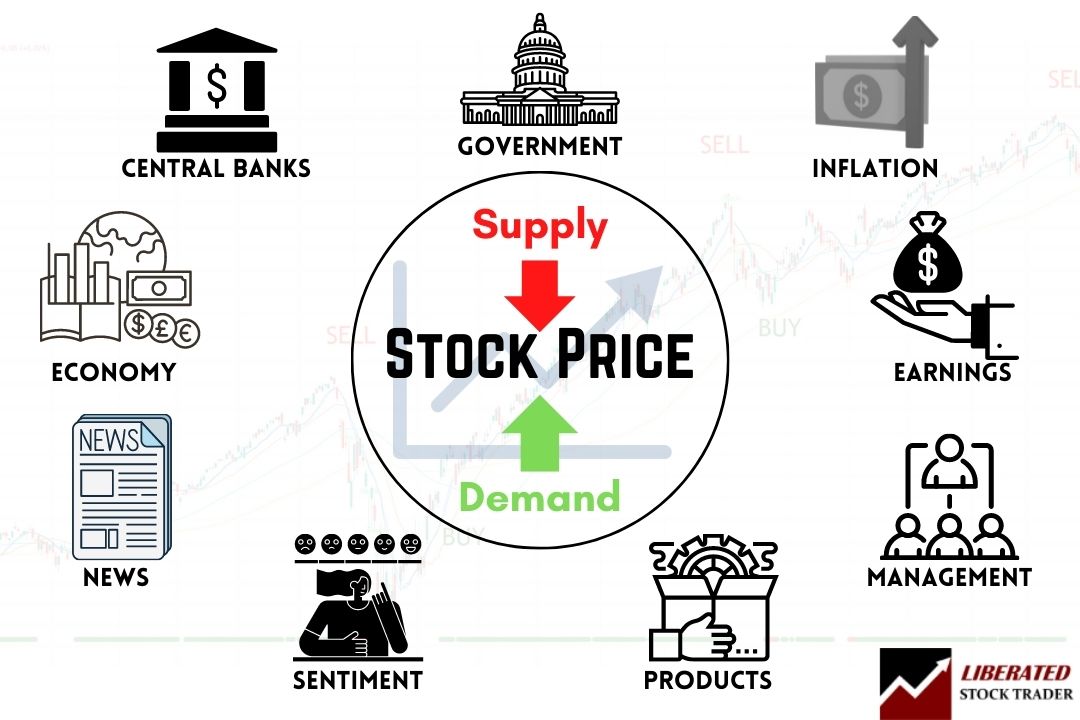
Positive news is a potent catalyst for stock appreciation. This can include a range of announcements: a new product launch that captures market imagination, a successful clinical trial result for a pharmaceutical company, a large contract win, strategic partnerships, or favorable legal rulings. Each of these events can signal improved prospects, increased revenue, or reduced risk, directly impacting investor perception and driving up demand for shares. Companies also actively manage their public relations and investor relations to ensure positive developments are communicated effectively to the market, aiming to positively influence their stock price.
Mergers, Acquisitions, and Share Buybacks
Corporate actions specifically designed to enhance shareholder value are powerful catalysts. A merger or acquisition can create synergies, expand market reach, and unlock new value, often leading to a price jump for the acquired company’s shares (due to a premium paid) and sometimes for the acquiring company if the deal is perceived as strategically sound. Share buybacks, where a company repurchases its own stock from the open market, reduce the number of outstanding shares, which can boost earnings per share and signal management’s confidence in the company’s undervaluation. This reduction in supply, coupled with a vote of confidence, often leads to an increase in the stock price. Furthermore, increased dividends can also make a stock more attractive to income-focused investors, increasing demand.
Technological Innovation and Disruptive Business Models
In today’s fast-evolving global economy, technological innovation and the emergence of disruptive business models are significant catalysts. Companies that introduce groundbreaking technologies, develop superior products, or revolutionize industries through innovative approaches (e.g., streaming services disrupting traditional media, e-commerce challenging brick-and-mortar retail) can experience exponential stock price growth. The market rewards first-movers and innovators who can capture significant market share and establish new paradigms. The promise of future profitability from these disruptions often fuels intense investor demand, sometimes even before significant earnings materialize, as investors bet on the company’s long-term transformative potential.
The Role of Valuation and Analysis
Sophisticated investors and institutions don’t merely react to news; they employ rigorous analysis to determine a stock’s true worth and anticipate future price movements. This analytical framework attempts to bridge the gap between market price and intrinsic value.
Intrinsic Value vs. Market Price
A core concept in investing is the distinction between a stock’s market price and its intrinsic value. The market price is simply what a stock is currently trading for, determined by immediate supply and demand. Intrinsic value, however, is an estimate of a company’s “true” worth, calculated through various financial models that project future cash flows, earnings, and asset values, discounted back to the present. When an investor believes a stock’s market price is significantly below its intrinsic value, they see an opportunity for appreciation as the market eventually corrects itself. Conversely, if the market price is above intrinsic value, the stock might be considered overvalued and due for a correction. Value investors specifically seek out companies trading below their intrinsic value, betting on a future price increase.
Analyst Ratings and Institutional Buying
Stock prices can also be influenced by the recommendations of financial analysts and the actions of large institutional investors. When reputable analysts upgrade a stock’s rating (e.g., from “hold” to “buy”) or increase their price targets, it can generate positive sentiment and encourage buying from both individual and institutional investors. Similarly, significant buying activity by large pension funds, hedge funds, or mutual funds can signal confidence and create substantial demand, driving prices higher. These institutions often conduct extensive research and due diligence, and their collective conviction can move markets, particularly for smaller or mid-cap stocks.
Technical Analysis and Chart Patterns
While fundamental analysis focuses on a company’s financial health, technical analysis examines historical price and volume data to predict future price movements. Technical analysts believe that all relevant information is already reflected in the stock price, and that patterns and trends in charts can signal future shifts in supply and demand. Indicators like moving averages, support and resistance levels, and volume trends are used to identify potential entry and exit points. While technical analysis does not directly affect a company’s intrinsic value, it can influence trading decisions for short-term investors, and collective action based on these signals can create self-fulfilling prophecies, contributing to price momentum both up and down.
Understanding Risk and Volatility
While the focus is on how stock prices go up, it’s equally important for investors to understand that this upward trajectory is never guaranteed and always accompanied by risk and volatility. Price appreciation is a journey, not a constant climb.
Market Risk and Systemic Factors
Even the strongest companies are not immune to broader market downturns. “Market risk” refers to the possibility that an investment’s value will decrease due to factors affecting the overall financial market, rather than specific to a particular company. This includes economic recessions, geopolitical crises, interest rate hikes, or widespread investor panic. During such times, even fundamentally sound stocks can see their prices decline, sometimes significantly, as investors pull back from risk assets. Diversification across different assets and sectors is a common strategy to mitigate, though not eliminate, market risk.
Company-Specific Risk
Beyond market-wide risks, each company carries its own unique set of “company-specific risks.” These can include poor management decisions, failure of a key product, increased competition, regulatory challenges, supply chain disruptions, or litigation. Any of these events can negatively impact a company’s earnings, growth prospects, or balance sheet, leading to a decline in its stock price. Thorough due diligence and continuous monitoring of a company’s operational environment are essential for investors to identify and assess these risks.

The Importance of Long-Term Perspective
Ultimately, while short-term stock movements can be influenced by news, sentiment, and technical factors, sustainable stock price appreciation is overwhelmingly driven by a company’s ability to consistently generate profits, grow its business, and increase its intrinsic value over the long haul. Investors with a long-term perspective tend to fare better by focusing on the fundamentals, weathering short-term volatility, and allowing compounding growth to work its magic. Understanding the multifaceted nature of how a stock price goes up—from the bedrock of corporate performance to the nuances of market psychology—empowers investors to make more informed decisions and navigate the dynamic world of financial markets with greater confidence.
aViewFromTheCave is a participant in the Amazon Services LLC Associates Program, an affiliate advertising program designed to provide a means for sites to earn advertising fees by advertising and linking to Amazon.com. Amazon, the Amazon logo, AmazonSupply, and the AmazonSupply logo are trademarks of Amazon.com, Inc. or its affiliates. As an Amazon Associate we earn affiliate commissions from qualifying purchases.