
In the vast and often complex world of finance, the concept of a “share” stands as a fundamental building block. For countless individuals and institutions, shares represent a gateway to wealth creation, a stake in economic growth, and a direct connection to the performance of businesses across the globe. Yet, despite their pervasive influence, the underlying mechanics of how a share truly works can remain a mystery to many aspiring investors or even seasoned professionals outside specialized fields. This article aims to demystify shares, delving into their intrinsic nature, lifecycle, value drivers, and the essential role they play in both corporate finance and personal investment strategies. Understanding shares is not merely about grasping a financial instrument; it’s about comprehending the engine that powers much of the modern capitalist economy and unlocking the potential for informed financial decisions.
The Core Concept: What Exactly is a Share?
At its most fundamental level, a share (also known as a stock or equity) represents a single unit of ownership in a company. When you purchase a share, you are essentially buying a tiny fraction of that company’s assets, earnings, and future potential. This makes you a part-owner, or shareholder, and it grants you certain rights and responsibilities. Shares are distinct from bonds, which represent a loan to a company or government, or other financial instruments like derivatives, which derive their value from an underlying asset.
Equity Ownership in Miniature
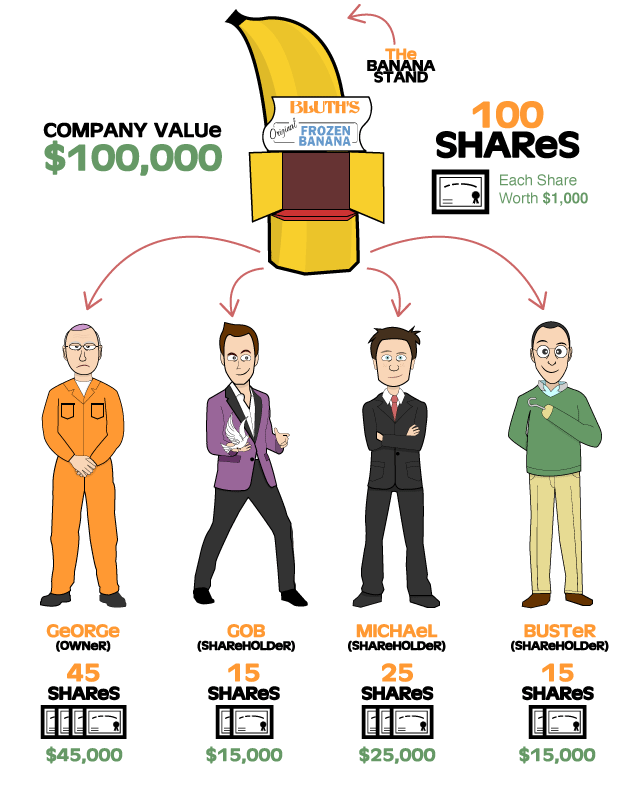
Think of a company as a pie. When a company decides to go public or simply needs to raise capital, it divides this “pie” into many small, equal slices—these are the shares. Each share signifies an equity stake. For instance, if a company issues 1 million shares and you own 100 shares, you own 0.01% of that company. This percentage, however small, carries with it the full weight of ownership, scaled to your investment. It means you have a claim on a proportionate amount of the company’s profits and assets should it ever be liquidated.
Why Companies Issue Shares
Companies primarily issue shares for one overarching reason: to raise capital. This capital is crucial for funding various corporate objectives without incurring debt.
-
Funding Growth and Expansion: Companies might need funds to invest in new projects, research and development, expand operations into new markets, or acquire other businesses. Selling shares provides the necessary cash infusion without the burden of interest payments associated with loans.
-
Paying Down Debt: Sometimes, companies issue new shares to raise money specifically to repay existing debt, thereby strengthening their balance sheet and reducing financial risk.
-
Increased Visibility and Credibility: Becoming a publicly traded company by issuing shares often brings increased public scrutiny, but also enhanced visibility, reputation, and easier access to future capital markets. It can attract top talent and create a liquid market for employee stock options.
-
Motivating Employees: Stock options and restricted stock units (RSUs) are common forms of compensation, aligning employee interests with those of the shareholders.
The Difference Between Public and Private Shares
It’s important to distinguish between shares in public companies and those in private companies.
-
Private Shares: These are shares in companies that are not traded on public stock exchanges. Ownership is typically limited to founders, employees, and a small number of private investors (like venture capitalists). Transferring ownership is often more complex and restricted.
-
Public Shares: These are shares in companies that have gone through an Initial Public Offering (IPO) and are listed on a stock exchange (e.g., NYSE, NASDAQ, LSE). They are readily bought and sold by the general public through brokerage firms, offering liquidity and transparency. When we discuss “how a share works,” we are primarily referring to public shares.
The Lifecycle of a Share: From IPO to Market Trading
The journey of a share begins even before it hits the trading floor. It involves a structured process that transforms private ownership into publicly tradable units, creating the vibrant secondary markets we know today.
The Primary Market: Initial Public Offerings (IPOs) and Direct Listings
The “primary market” is where new securities are sold for the first time. For shares, this often involves an Initial Public Offering (IPO).
-
Initial Public Offering (IPO): An IPO is the process by which a private company first offers its shares to the public. It marks the transition from private to public ownership. The company, often with the help of investment banks (underwriters), sets a price for the initial shares and sells them to institutional investors and sometimes directly to retail investors. The proceeds from this sale go directly to the company, providing the capital it sought. Underwriters play a crucial role in pricing, marketing, and distributing the shares, taking a commission in return.
-
Direct Listing: A less common but growing alternative to an IPO is a direct listing. In this method, a company lists its existing shares directly on an exchange without raising new capital or involving underwriters to the same extent. Existing shareholders (insiders, early investors) can sell their shares directly to the public. The company itself doesn’t issue new shares and thus doesn’t receive primary proceeds, but saves on underwriting fees.
The Secondary Market: Stock Exchanges and Brokerage Firms
Once shares have been issued in the primary market, they can then be traded among investors in the “secondary market.” This is what most people typically think of when they refer to the “stock market.”
-
Stock Exchanges: These are regulated marketplaces (like the New York Stock Exchange or NASDAQ) where buyers and sellers meet to trade existing shares. Exchanges provide a platform, ensure fair and orderly trading, and disseminate real-time pricing information. They are highly technological and operate under strict rules to protect investors and maintain market integrity.
-
Brokerage Firms: Individual investors cannot directly trade on stock exchanges. Instead, they must go through a licensed brokerage firm (e.g., Fidelity, Schwab, Interactive Brokers). These firms act as intermediaries, executing buy and sell orders on behalf of their clients and providing access to market data, research tools, and often educational resources.
How Shares Are Bought and Sold
The process of buying and selling shares is facilitated by orders placed through a brokerage firm.
-
Bid and Ask Prices: For any given share, there’s a “bid” price (the highest price a buyer is willing to pay) and an “ask” price (the lowest price a seller is willing to accept). The difference between these two is the “spread.”
-
Market Orders: An instruction to buy or sell a share immediately at the best available current market price. While quick, the execution price might vary slightly, especially for less liquid shares.
-
Limit Orders: An instruction to buy or sell a share only at a specified price or better. A buy limit order will only execute if the price falls to or below your limit, and a sell limit order will only execute if the price rises to or above your limit. This gives investors more control over the price, but there’s no guarantee the order will execute.
-
Electronic Trading: Today, most trading is electronic and incredibly fast. When you place an order, it’s sent to the exchange, matched with a corresponding opposite order, and executed, often within milliseconds.
What Influences a Share’s Value?
The price of a share is in constant flux, influenced by a myriad of factors. Understanding these drivers is crucial for making informed investment decisions and predicting potential movements.
Company Performance and Financial Health
This is arguably the most significant long-term driver of a share’s value.
-
Earnings and Revenue Growth: Strong, consistent growth in a company’s profits (earnings per share, EPS) and sales (revenue) typically correlates with a rising share price. Investors value companies that can expand their business and increase their profitability.
-
Profit Margins: Healthy profit margins indicate efficient operations and pricing power, which are attractive to investors.
-
Balance Sheet Strength: A strong balance sheet with manageable debt levels, ample cash reserves, and valuable assets signals financial stability and resilience.
-
Future Growth Prospects and Innovation: Beyond current performance, the market often prices in future expectations. Companies with compelling new products, expanding markets, or disruptive technologies can command higher valuations.
-
Management Quality: The competence, vision, and integrity of a company’s leadership team are critical. Effective management can steer a company through challenges and capitalize on opportunities.
Market Sentiment and Economic Factors
Broader economic and market conditions also play a crucial role.
-
Investor Confidence: General optimism or pessimism about the economy or a particular sector can significantly influence buying and selling behavior. High confidence typically leads to more investment.
-
Interest Rates: When interest rates rise, borrowing becomes more expensive for companies (affecting profits) and bonds become more attractive relative to stocks (offering fixed, higher returns), potentially putting downward pressure on share prices.
-
Inflation: High inflation can erode purchasing power and company profits, making investors wary. Central bank actions to combat inflation (like raising rates) can also impact the market.
-
Industry Trends and Regulations: Sector-specific trends (e.g., renewable energy growth, decline of fossil fuels) or new government regulations can profoundly impact the prospects of companies within those industries.
-
Geopolitical Events: Wars, trade disputes, and political instability can create uncertainty, leading to market volatility and affecting specific industries or global markets.
Supply and Demand Dynamics

Like any other commodity, the price of a share is ultimately determined by the forces of supply and demand.
-
Increased Demand: When more investors want to buy a particular share than sell it, the price tends to rise. This can be due to positive news, strong earnings, or a general bullish market.
-
Increased Supply: Conversely, if more investors want to sell a share than buy it, the price will fall. This could be triggered by negative news, weak earnings, or a broader market downturn.
-
Share Dilution: When a company issues new shares (e.g., through a secondary offering), it increases the total number of outstanding shares, which can dilute the ownership percentage of existing shareholders and potentially put downward pressure on the share price (unless the new capital is used for highly profitable ventures).
Dividends and Share Buybacks
These corporate actions directly affect shareholder value.
-
Dividends: Many profitable companies distribute a portion of their earnings to shareholders in the form of dividends. Companies that consistently pay and grow dividends are often favored by income-focused investors, which can support their share price.
-
Share Buybacks (Repurchases): A company can also use its cash to buy back its own shares from the open market. This reduces the number of outstanding shares, which increases the earnings per share (EPS) and can boost the share price, as each remaining share represents a larger slice of the company’s profits.
The Rights and Returns of a Shareholder
Owning a share is not just about a fluctuating price; it confers specific rights and offers various avenues for returns.
Voting Rights and Corporate Governance
One of the most fundamental rights of a common shareholder is the right to vote on significant corporate matters.
-
Annual General Meetings (AGMs): Shareholders are typically invited to AGMs, either in person or by proxy, to vote on issues such as the election of the board of directors, executive compensation, mergers and acquisitions, and other critical corporate policies.
-
Influence on Management: While individual small shareholders may have limited direct influence, collectively, shareholders can exert pressure on management and hold them accountable. Institutional investors (mutual funds, pension funds) often play a significant role due to their large holdings.
-
Proxy Voting: Most individual shareholders vote by proxy, allowing them to cast their votes remotely, often through their brokerage firm.
Dividends: A Share of the Profits
As mentioned, many companies share their profits with shareholders through dividends.
-
Cash Dividends: The most common form, where a company pays a certain amount of cash per share (e.g., $0.50 per share) to its shareholders. These are typically paid quarterly.
-
Dividend Yield: This is the annual dividend per share divided by the share’s current price, expressed as a percentage. It indicates the return on investment from dividends alone.
-
Reinvestment: Many investors choose to reinvest their dividends, using the payout to buy more shares of the same company, thus compounding their returns over time. Not all companies pay dividends; growth companies often choose to reinvest all their earnings back into the business to fuel further expansion.
Capital Appreciation: The Potential for Growth
The primary way most investors seek to make money from shares is through capital appreciation.
-
Buying Low, Selling High: If you buy a share at $50 and later sell it at $70, you’ve realized a $20 profit per share due to capital appreciation. This is the difference between the purchase price and the selling price.
-
Growth Stocks: Companies with high growth potential, often in emerging industries, are typically sought for their capital appreciation potential rather than immediate dividend income.
-
Long-Term Strategy: Capital appreciation is often best realized over the long term, allowing companies to grow and compound their earnings, and for market fluctuations to smooth out.
Liquidation Rights
While less common and usually undesirable, shareholders also have rights in the event a company goes bankrupt or liquidates its assets.
-
Order of Claims: In a liquidation scenario, creditors (bondholders, banks) are paid first, followed by preferred shareholders, and then common shareholders.
-
Residual Claim: Common shareholders have a residual claim on the company’s assets, meaning they receive what’s left over after all other obligations are met. In many bankruptcies, common shareholders receive little to nothing. This highlights the risk inherent in equity ownership.
Navigating the Share Market: Getting Started with Investing
For those looking to enter the share market, a strategic approach is essential to harness its potential while mitigating risks.
Defining Your Investment Goals and Risk Tolerance
Before buying your first share, it’s critical to understand your own financial landscape.
-
Goals: Are you saving for retirement, a down payment, or a child’s education? Your goals will dictate your investment horizon (short-term vs. long-term) and the level of risk you might be comfortable taking.
-
Risk Tolerance: How comfortable are you with the possibility of losing some or all of your invested capital? This is a personal assessment influenced by your financial situation, personality, and knowledge. A higher risk tolerance might lead to investing in more volatile growth stocks, while a lower tolerance might favor established, dividend-paying companies or diversified funds.
Diversification and Long-Term vs. Short-Term Investing
These are cornerstone principles of successful investing.
-
Diversification: “Don’t put all your eggs in one basket.” Spreading your investments across different companies, industries, and asset classes (e.g., stocks, bonds, real estate) helps reduce risk. If one investment performs poorly, others might perform well, cushioning the impact. Exchange-Traded Funds (ETFs) and mutual funds offer instant diversification.
-
Long-Term Investing: History shows that markets tend to trend upwards over the long term, despite short-term volatility. A long-term perspective allows investors to ride out market corrections and benefit from compounding returns.
-
Short-Term Investing/Trading: This involves frequently buying and selling shares to profit from short-term price movements. It’s highly speculative, requires significant time, research, and emotional discipline, and is generally not recommended for beginners.
Choosing a Brokerage Account
To invest in shares, you’ll need an investment account with a brokerage firm.
-
Types of Brokers:
-
Full-Service Brokers: Offer comprehensive financial advice, portfolio management, and a wide range of products, typically at higher fees.
-
Discount Brokers: Provide a platform for self-directed investing with lower fees, often zero-commission trades, and various research tools. These are popular for most individual investors.
-
-
Account Types: You can open a taxable brokerage account, or a tax-advantaged retirement account like an IRA (Individual Retirement Account) or 401(k), which offers tax benefits for long-term savings.
Fundamental vs. Technical Analysis
These are two primary approaches investors use to research and select shares.
-
Fundamental Analysis: Focuses on a company’s intrinsic value by examining its financial statements (balance sheet, income statement, cash flow statement), management, industry, and economic outlook. The goal is to determine if a share is undervalued or overvalued relative to its true worth.
-
Technical Analysis: Studies past share price movements and trading volumes to identify patterns and predict future price trends. Technical analysts use charts and various indicators to make trading decisions, often on a shorter-term horizon.

Conclusion
Understanding “how a share works” is not merely an academic exercise; it’s a fundamental step towards financial literacy and empowering yourself to participate intelligently in the economy. A share represents ownership, a claim on future profits, and a voice in corporate governance. Its value is a dynamic reflection of company performance, market sentiment, and economic realities. For the aspiring investor, grasping these mechanics paves the way for informed decision-making, strategic diversification, and the potential for long-term wealth creation. While investing in shares carries inherent risks, a disciplined approach, combined with continuous learning, can transform this complex financial instrument into a powerful tool for achieving your financial aspirations.
aViewFromTheCave is a participant in the Amazon Services LLC Associates Program, an affiliate advertising program designed to provide a means for sites to earn advertising fees by advertising and linking to Amazon.com. Amazon, the Amazon logo, AmazonSupply, and the AmazonSupply logo are trademarks of Amazon.com, Inc. or its affiliates. As an Amazon Associate we earn affiliate commissions from qualifying purchases.