
In the intricate world of finance, few mathematical concepts are as universally applied and critically important as percentages. From the mundane act of calculating a tip at a restaurant to the complex analysis of investment returns, understanding “how do you work out percentages” isn’t merely an academic exercise; it’s a fundamental pillar of financial literacy and a prerequisite for sound decision-making. Whether you’re a budding entrepreneur, a diligent saver, an astute investor, or simply navigating daily expenses, percentages are the language through which financial realities are often expressed and understood.
This comprehensive guide will demystify the art and science of percentage calculations, specifically tailoring our exploration to the myriad ways they impact personal finance, investing, business operations, and wealth management. We’ll move beyond the basic definitions, delving into the practical applications that empower individuals to make more informed choices, identify opportunities, and mitigate risks in their financial journey.
The Indispensable Role of Percentages in Financial Literacy
At its core, a percentage represents a portion of a whole, expressed as a fraction of 100. While seemingly simple, this concept underpins nearly every financial transaction, calculation, and projection. Financial literacy, the ability to understand and effectively use various financial skills, including personal financial management, budgeting, and investing, is incomplete without a solid grasp of percentages.
Beyond Basic Math: Why Financial Percentages Matter
In the realm of money, percentages provide context and comparability that raw numbers often cannot. Knowing that a company’s profit increased by $1 million might sound impressive, but understanding that this represents a 20% growth year-over-year offers a far richer insight into its performance relative to previous periods or industry benchmarks. Similarly, recognizing that an annual interest rate of 5% on a loan translates to a specific monthly cost allows for budgeting and planning, rather than just knowing a lump sum due.
Percentages standardize comparisons, making it easier to evaluate different financial products, assess relative performance, and gauge the magnitude of change. They are the universal translators of financial data, allowing us to compare apples to oranges by converting them into comparable “parts of a hundred.”
Everyday Financial Scenarios Reliant on Percentages
Consider the sheer volume of daily financial interactions that involve percentages:
-
Discounts and Sales: “Get 30% off!”
-
Taxes: “Sales tax is 8.5%.” “My income tax bracket is 22%.”
-
Interest Rates: “Your savings account earns 0.5% interest.” “The mortgage rate is 6.2%.”
-
Credit Cards: “Annual Percentage Rate (APR) is 19.99%.”
-
Budgeting: “I allocate 50% of my income to needs.”
-
Investment Performance: “The stock market gained 15% this quarter.”
-
Inflation: “Inflation is currently at 3.5%.”
Without a foundational understanding of how these percentages are calculated and what they signify, individuals are essentially navigating their financial lives blindfolded, unable to fully comprehend the implications of their choices or external economic factors.
Mastering the Core Mechanics of Percentage Calculations
Before we apply percentages to complex financial scenarios, let’s revisit the fundamental methods for calculating them. These core mechanics are the building blocks for all subsequent financial analyses.
Understanding the Basic Formula: Part/Whole x 100
The most fundamental way to calculate a percentage is to divide the ‘part’ you’re interested in by the ‘whole’ (or total amount) and then multiply the result by 100.
- Formula:
Percentage = (Part / Whole) * 100
Example: If you spent $300 on groceries from a total monthly budget of $2,000, what percentage of your budget went to groceries?
($300 / $2,000) * 100 = 0.15 * 100 = 15%
Calculating Percentage Increase and Decrease
Financial analysis frequently requires understanding how values change over time. Percentage increase and decrease calculations are vital for tracking growth, losses, and price fluctuations.
-
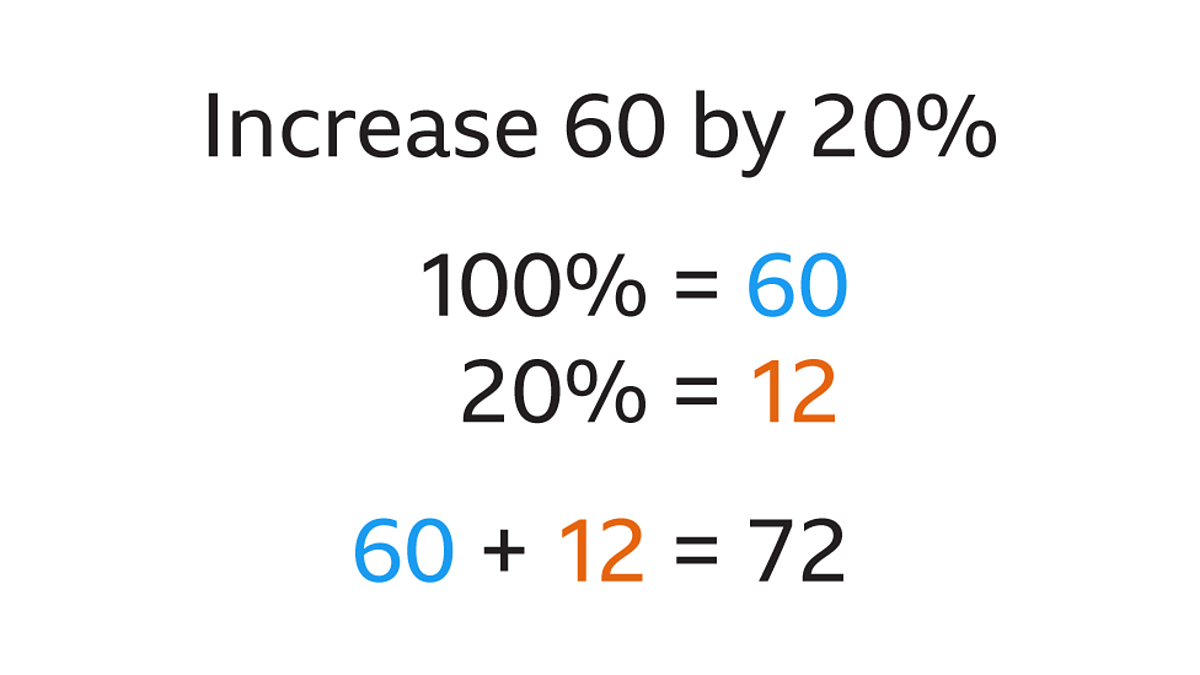
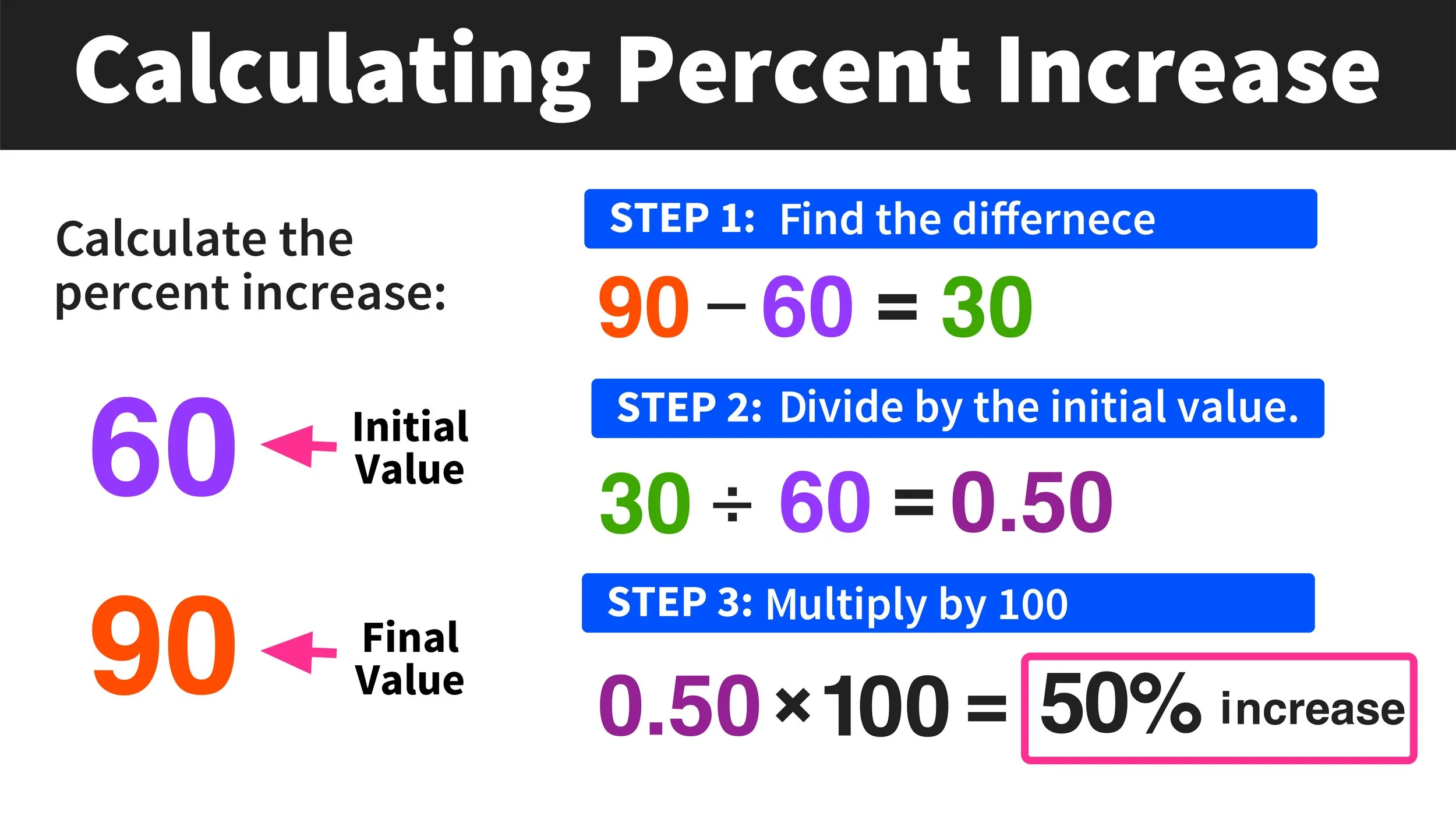
Percentage Increase:
((New Value - Original Value) / Original Value) * 100 -
Percentage Decrease:
((Original Value - New Value) / Original Value) * 100
Example (Increase): Your investment grew from $10,000 to $12,500. What’s the percentage increase?
((12,500 - 10,000) / 10,000) * 100 = (2,500 / 10,000) * 100 = 0.25 * 100 = 25%
Example (Decrease): A stock you own dropped from $50 per share to $40 per share. What’s the percentage decrease?
((50 - 40) / 50) * 100 = (10 / 50) * 100 = 0.20 * 100 = 20%
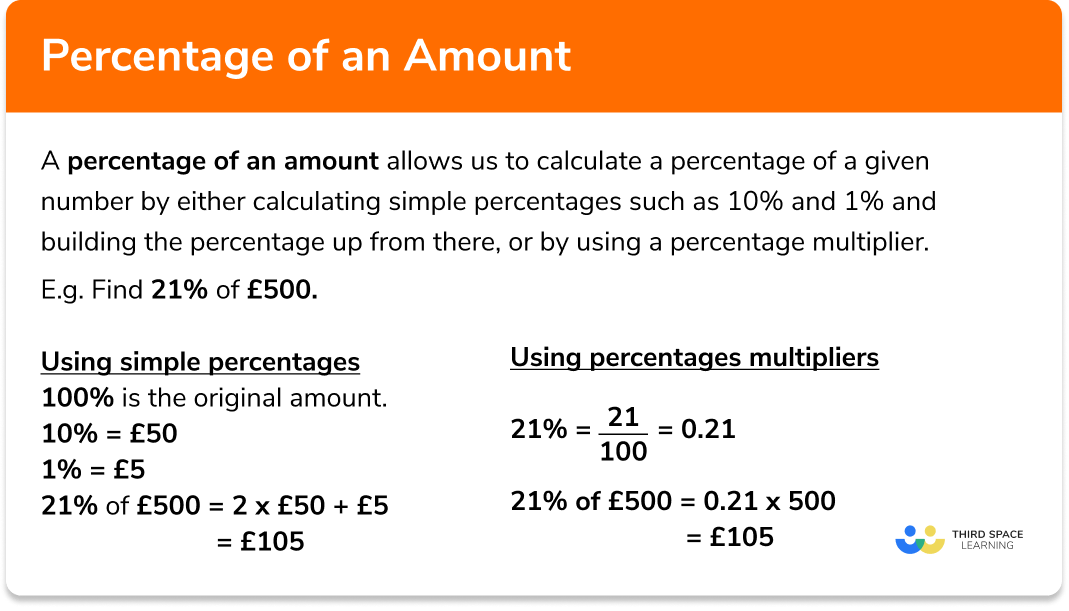
Finding a Percentage of a Number
Often, you know the percentage and the whole, and you need to find the specific part. This is crucial for calculating discounts, taxes, or interest payments.
- Formula:
Part = (Percentage / 100) * WholeorPart = Percentage (as decimal) * Whole
Example: You have a 20% off coupon for an item that costs $150. How much is the discount?
(20 / 100) * $150 = 0.20 * $150 = $30
Reversing the Calculation: Finding the Original Whole
Sometimes you know the ‘part’ and the percentage it represents, and you need to find the original ‘whole’. This is common when trying to determine the original price before a discount or the total sales needed to hit a commission target.
- Formula:
Whole = Part / (Percentage / 100)orWhole = Part / Percentage (as decimal)
Example: You paid $75 for an item after a 25% discount. What was the original price?
(Note: If it was 25% off, you paid 75% of the original price)
Original Price = $75 / (75 / 100) = $75 / 0.75 = $100
Practical Applications: Percentages in Personal Finance and Investing
With a solid grasp of the core mechanics, let’s explore how percentages are dynamically applied in real-world financial scenarios, directly impacting your personal wealth and investment strategy.
Budgeting and Expense Tracking: Allocating Your Income
Percentages are the bedrock of effective budgeting. Many popular budgeting methodologies, like the 50/30/20 rule (50% for Needs, 30% for Wants, 20% for Savings/Debt Repayment), are entirely percentage-based.
-
Calculation: To apply these rules, you’d calculate:
(0.50 * Net Income),(0.30 * Net Income), and(0.20 * Net Income)to determine the dollar amounts for each category. -
Insight: Tracking expenses as percentages of your income helps you quickly identify overspending in certain categories, allowing for adjustments to maintain financial health. If housing costs represent 45% of your income, you know you’re likely outside the recommended healthy range, regardless of the absolute dollar amount.
Decoding Discounts, Sales Tax, and Tips
These are daily percentage calculations:
-
Discounts: If an item is $200 with a 15% discount, the discount is
$200 * 0.15 = $30, so the final price is$200 - $30 = $170. -
Sales Tax: If an item costs $100 and sales tax is 8%, the tax is
$100 * 0.08 = $8, making the total$108. -
Tips: A 15% tip on a $60 bill is
$60 * 0.15 = $9.
Accurate calculation prevents overpaying or underpaying, ensuring you budget correctly for these common expenditures.
Understanding Loan Interest Rates and Credit Card APRs
Interest rates, expressed as percentages, are arguably one of the most significant financial concepts to master. They dictate the cost of borrowing and the earnings from saving.
-
Annual Percentage Rate (APR): This is the annual cost of borrowing. A credit card with a 20% APR means that, over a year, you’ll pay 20% of your outstanding balance in interest, often compounded monthly or daily. Understanding this helps you calculate the true cost of carrying a balance.
-
Mortgages & Loans: A 30-year mortgage at 7% interest means a substantial portion of your monthly payment goes towards interest, especially in the early years. Knowing how to use loan calculators (which are built on percentage formulas) helps you understand the total cost over the loan’s life.
Analyzing Investment Returns and Portfolio Allocation
For investors, percentages are indispensable:
-
Return on Investment (ROI): Calculated as
((Current Value - Original Investment) / Original Investment) * 100. This metric tells you how profitable your investments have been. -
Portfolio Allocation: Investors often diversify their holdings by allocating percentages to different asset classes (e.g., 60% stocks, 30% bonds, 10% cash). Rebalancing your portfolio involves adjusting these percentages to maintain your desired risk profile.
-
Yields: Dividend yield (annual dividends per share / share price) or bond yield (annual interest payment / bond price) are expressed as percentages and help assess income-generating potential.
Percentages in Business, Income, and Wealth Building
Beyond personal finance, percentages are critical tools in the business world for measuring performance, setting prices, and understanding economic trends. They directly influence your income potential and long-term wealth accumulation strategies.
Profit Margins and Markups: Gauging Business Health
For anyone running a business or even a side hustle, understanding profit margins is non-negotiable.
-
Gross Profit Margin:
((Revenue - Cost of Goods Sold) / Revenue) * 100. This shows the percentage of revenue left after accounting for direct costs. -
Net Profit Margin:
((Net Income / Revenue) * 100. This is the ultimate measure of a company’s profitability, showing the percentage of revenue remaining after all expenses, including taxes and interest, have been deducted. -
Markups: Businesses use markups to set selling prices. If an item costs $50 to produce and you want a 50% markup, you add
($50 * 0.50) = $25to the cost, selling it for $75.
These percentages help businesses benchmark against competitors, make pricing decisions, and assess operational efficiency.
Commissions, Royalties, and Performance Bonuses
Many income streams are percentage-based:
-
Sales Commissions: A salesperson might earn a 10% commission on every sale. If they sell $10,000 worth of products, their commission is
$10,000 * 0.10 = $1,000. -
Royalties: Authors, musicians, and inventors often earn a percentage of sales. An author receiving a 15% royalty on a book sold for $20 earns
$20 * 0.15 = $3per copy. -
Performance Bonuses: Employees might receive a bonus equivalent to a percentage of their annual salary based on performance metrics.
Understanding these calculations is vital for estimating income and negotiating compensation.
Inflation and Purchasing Power: The Hidden Impact
Inflation, often expressed as a percentage, is the rate at which the general level of prices for goods and services is rising, and subsequently, the purchasing power of currency is falling.
-
Calculation: If the inflation rate is 3% per year, an item that costs $100 today will likely cost $103 next year.
-
Impact on Wealth: Understanding inflation helps you assess the real return on your investments. If your savings account earns 1% interest, but inflation is 3%, your money is actually losing 2% of its purchasing power annually. This insight guides decisions on where to invest to outpace inflation and preserve wealth.
Tax Implications and Deductions
Taxes are a significant percentage-based financial consideration:
-
Income Tax Brackets: Your income is taxed at different percentage rates depending on which bracket it falls into. Understanding these marginal rates helps in tax planning.
-
Deductions and Credits: These reduce your taxable income or your tax liability by a certain amount or percentage. Maximizing eligible deductions can significantly reduce the percentage of your income paid in taxes.
-
Capital Gains Tax: Profits from the sale of investments are often taxed at specific percentage rates, which vary based on holding period (short-term vs. long-term).
Navigating tax obligations effectively requires a firm grasp of these percentage calculations.
Tools and Strategies for Efficient Percentage Calculations
While the underlying math is crucial, modern tools can simplify percentage calculations, allowing you to focus on the financial insights rather than the arithmetic.
Leveraging Calculators and Spreadsheets
-
Standard Calculators: Essential for quick, simple calculations. Most scientific and even basic calculators have a ‘%’ button, though understanding its function is important.
-
Spreadsheets (Excel, Google Sheets): Invaluable for complex financial modeling, budgeting, and investment tracking. They automate calculations, allowing you to quickly change variables and see the impact.
-
To calculate 15% of 200 in Excel:
=0.15*200or=15%*200 -
To find the percentage of a part (30) in a whole (200):
=(30/200)*100or simply=(30/200)and format the cell as a percentage.
-
Financial Apps and Online Tools
Numerous smartphone apps and websites are dedicated to financial calculations:
-
Budgeting Apps: Many integrate automatic percentage breakdowns of spending.
-
Loan & Mortgage Calculators: Instantly show monthly payments, total interest paid, and amortization schedules, all derived from percentage rates.
-
Investment Portfolio Trackers: Display returns, allocations, and performance metrics as percentages.
These tools reduce the chance of manual error and provide instant financial insights.
Building Mental Math Agility for Quick Estimates
While tools are great, developing the ability to quickly estimate percentages mentally is a powerful financial skill.
-
Rule of 10%: To find 10% of a number, just move the decimal one place to the left (e.g., 10% of $150 is $15).
-
Combining 10%: To find 20%, double the 10%. To find 15%, find 10% and add half of that (5%).
-
Rounding: For quick estimates, round numbers to make mental math easier (e.g., estimating a 15% tip on a $68 bill, round to $70, then 10% is $7, 5% is $3.50, so total is $10.50).
This agility allows for on-the-spot decision-making, such as quickly checking a discount or estimating a tax without needing a calculator.
Conclusion
Understanding “how do you work out percentages” is far more than just performing a mathematical operation; it’s about equipping yourself with a vital lens through which to view and navigate the financial world. From managing your daily budget and decoding sales promotions to making informed investment decisions and understanding the broader economic landscape, percentages are omnipresent and instrumental.
By mastering the core calculations and understanding their diverse applications in personal finance, investing, and business, you empower yourself to make more insightful, strategic, and ultimately, more successful financial choices. Embracing this fundamental financial concept is not just about avoiding errors; it’s about unlocking opportunities and building a robust foundation for lasting financial well-being. Start calculating, start understanding, and watch your financial acumen grow.
aViewFromTheCave is a participant in the Amazon Services LLC Associates Program, an affiliate advertising program designed to provide a means for sites to earn advertising fees by advertising and linking to Amazon.com. Amazon, the Amazon logo, AmazonSupply, and the AmazonSupply logo are trademarks of Amazon.com, Inc. or its affiliates. As an Amazon Associate we earn affiliate commissions from qualifying purchases.