
In the intricate world of finance, where every decision hinges on numerical precision, understanding percentages is not just a useful skill—it’s an absolute necessity. From calculating investment returns and determining sale prices to managing taxes and deciphering complex commission structures, percentages are the universal language. But what happens when you need to calculate a “percentage of a percentage”? This seemingly complex mathematical operation is far more common in financial scenarios than you might think, and mastering it is a cornerstone of robust financial literacy, both personally and professionally.
Whether you’re trying to figure out the true cost of an item with multiple discounts, project the growth of an investment over several periods, or assess the net impact of sequential fees, understanding how to correctly apply percentages of percentages can save you money, help you make smarter investments, and give you a clearer picture of your financial reality. This article will break down this vital concept, explore its myriad applications in the financial realm, and equip you with the knowledge to tackle these calculations with confidence.
The Fundamentals: Understanding Percentages in Finance
Before diving into the specifics of a percentage of a percentage, it’s crucial to solidify our understanding of what a percentage truly represents and why it holds such prominence in the financial landscape.
What is a Percentage?
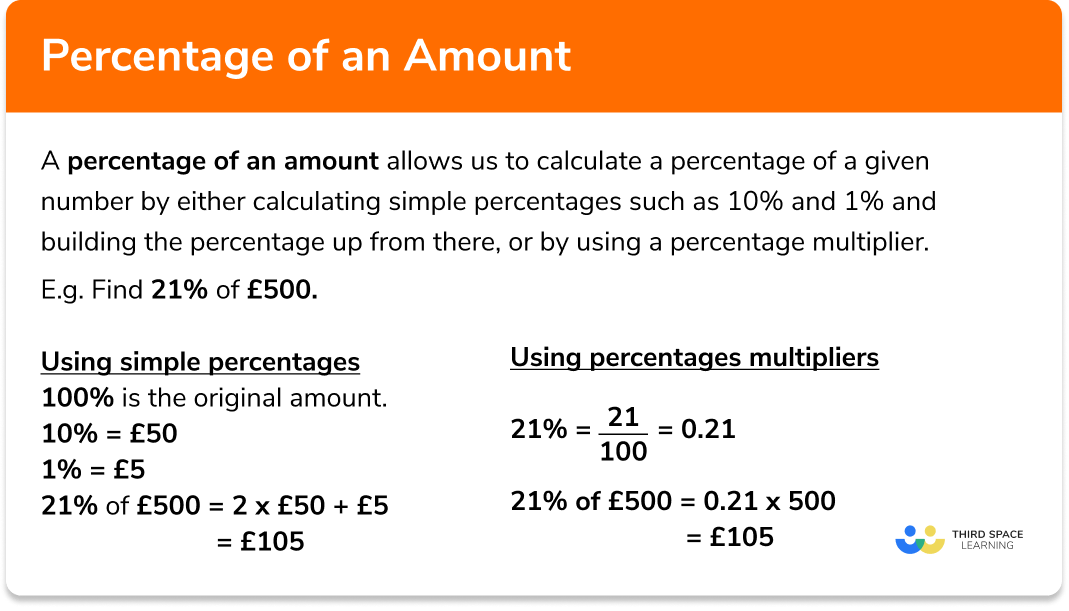
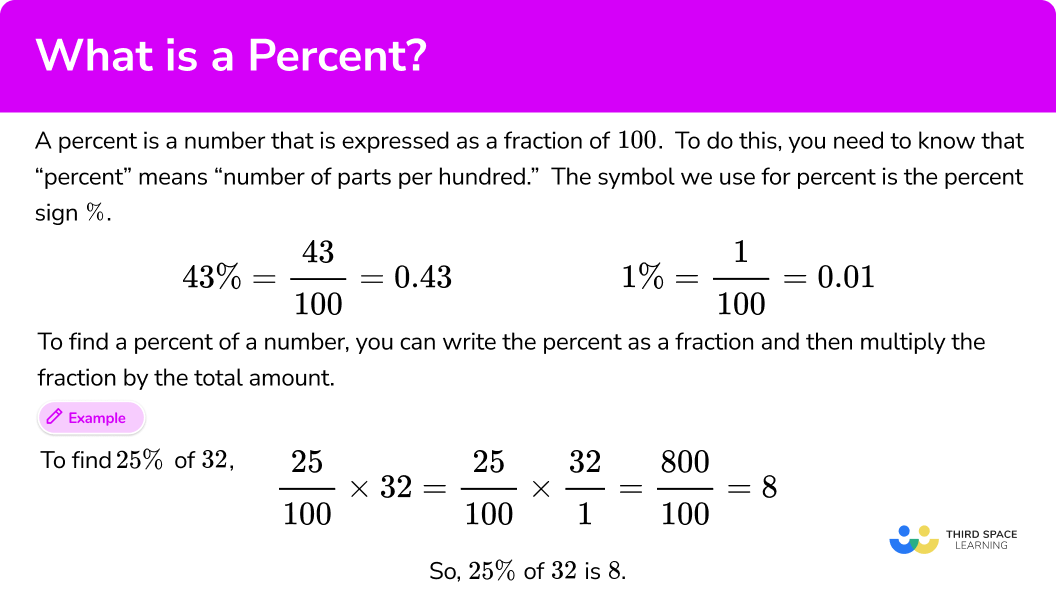
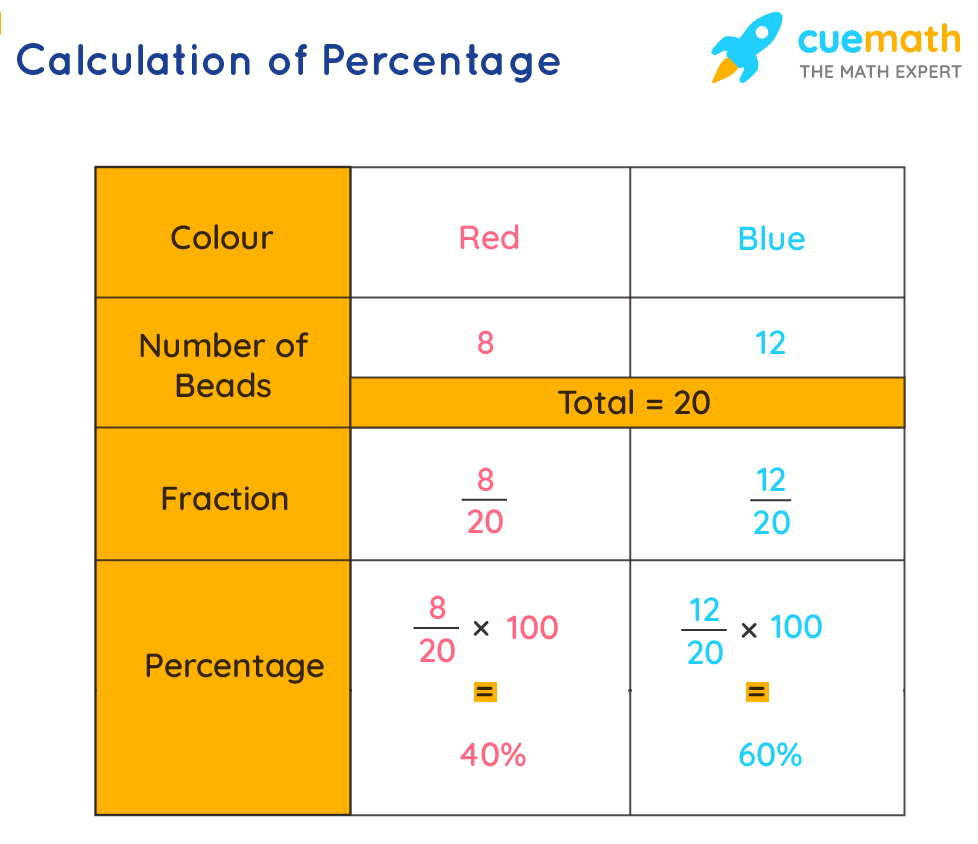
At its core, a percentage simply means “per hundred.” It’s a way of expressing a number as a fraction of 100. For instance, 25% means 25 out of 100, which can also be written as the fraction 25/100 or the decimal 0.25. Converting percentages to decimals is a critical first step for almost any financial calculation, as it allows us to easily multiply and divide. To convert a percentage to a decimal, you simply divide by 100 (or move the decimal point two places to the left). So, 15% becomes 0.15, and 3.5% becomes 0.035.
When you calculate a percentage of a base amount, you’re essentially finding a fractional part of that amount. For example, to find 10% of $500, you would multiply $500 by 0.10, resulting in $50. This simple operation forms the bedrock for all more complex percentage calculations.
Why Are Percentages Ubiquitous in Finance?
Percentages are the preferred method for expressing proportions, changes, and rates in finance for several compelling reasons:
-
Standardization: They provide a universal standard for comparison. Whether you’re comparing the return on investment (ROI) from a small startup or a multinational corporation, expressing it as a percentage allows for an apples-to-apples comparison, irrespective of the absolute dollar amounts involved. A 10% return is a 10% return, whether it’s on $1,000 or $1,000,000.
-
Clarity and Simplicity: They simplify complex financial relationships into easily digestible figures. Rather than saying “you earned $50 on your $500 investment,” it’s often more impactful and informative to state “you earned a 10% return.”
-
Expressing Change: Percentages are ideal for showing growth, decline, inflation, or discount rates. A 2% increase in inflation or a 15% drop in stock value immediately conveys the magnitude of change relative to the initial value.
-
Relative Impact: They help understand the relative impact of various financial factors. For example, a 7% interest rate on a loan or a 3% sales tax rate clearly indicates the proportion of the principal or purchase price that will be added or subtracted.
Given their widespread application, a solid grasp of how percentages operate is indispensable for anyone navigating the financial world.
Deconstructing “Percentage of a Percentage”
The phrase “percentage of a percentage” might sound like a tongue-twister, but in financial terms, it typically refers to a sequential calculation where a percentage is applied to an amount that has already been adjusted by another percentage. It’s not about adding percentages, but rather multiplying factors derived from those percentages.
The Core Concept: Sequential Calculation
The fundamental principle behind working out a percentage of a percentage is that the operation is sequential. You perform the first percentage calculation, and then you apply the second percentage to the result of the first calculation, not to the original base amount.
Let’s consider a general scenario: you want to find P2% of (P1% of a Base Amount).
The steps are:
-
Calculate P1% of the Base Amount: Convert P1 to a decimal (P1/100) and multiply it by the Base Amount. This gives you an Intermediate Amount.
- *Intermediate Amount = (P1/100) * Base Amount*
-
Calculate P2% of the Intermediate Amount: Convert P2 to a decimal (P2/100) and multiply it by the Intermediate Amount.
- *Final Result = (P2/100) * Intermediate Amount*
Alternatively, and often more efficiently, you can combine these steps by first determining the percentage factor for each step.
-
If you’re taking a percentage (e.g., finding 10% of something), the factor is the decimal equivalent (0.10).
-
If you’re discounting by a percentage (e.g., 10% off), the remaining factor is (1 – decimal_percentage) (e.g., 1 – 0.10 = 0.90).
-
If you’re adding a percentage (e.g., 10% increase), the factor is (1 + decimal_percentage) (e.g., 1 + 0.10 = 1.10).
Then, you multiply these factors sequentially by the base amount.
Illustrative Financial Examples
Let’s explore some common financial scenarios where this calculation is essential:
-
Discount on a Discount (or Chained Discounts):
Imagine a shirt originally priced at $100. It’s on sale for 20% off, and you have an additional coupon for 10% off the sale price.
-
Step 1 (20% off): $100 * (1 – 0.20) = $100 * 0.80 = $80.
-
Step 2 (10% off the new price): $80 * (1 – 0.10) = $80 * 0.90 = $72.
-
The final price is $72.
-
Common Trap: If you incorrectly added the discounts (20% + 10% = 30% off), you’d get $100 * (1 – 0.30) = $70, which is wrong. The base for the second discount changed.
-
-
Tax on a Discounted Price:
You purchase an item for $50. There’s a 10% discount, and then a 5% sales tax is applied to the discounted price.
-
Step 1 (10% discount): $50 * (1 – 0.10) = $50 * 0.90 = $45.
-
Step 2 (5% sales tax on discounted price): $45 * (1 + 0.05) = $45 * 1.05 = $47.25.
-
The total cost is $47.25.
-
-
Multi-Stage Investment Growth (Compound Returns):
You invest $1,000. In Year 1, it grows by 10%. In Year 2, it grows by 8% (on the new amount).
-
Step 1 (Year 1 growth): $1,000 * (1 + 0.10) = $1,000 * 1.10 = $1,100.
-
Step 2 (Year 2 growth): $1,100 * (1 + 0.08) = $1,100 * 1.08 = $1,188.
-
Your investment is now worth $1,188. This illustrates the power of compounding.
-
-
Complex Commission Structures:
A salesperson earns a 15% commission on their gross sales. Their manager then earns 5% of the salesperson’s commission as an override bonus. If the salesperson makes $10,000 in sales:
-
Step 1 (Salesperson’s commission): $10,000 * 0.15 = $1,500.
-
Step 2 (Manager’s override): $1,500 * 0.05 = $75.
-
The manager earns $75.
-
Practical Applications in Personal and Business Finance
The ability to calculate a percentage of a percentage extends beyond simple examples, playing a crucial role in various real-world financial contexts.
Personal Finance Scenarios
-
Budgeting with Variable Expenses and Savings Goals:
You might decide to save 20% of your net income. Then, from that saved amount, you allocate 30% to a specific long-term goal (e.g., a down payment on a house).
-
If your net income is $4,000:
-
Savings: $4,000 * 0.20 = $800.
-
Allocation to house down payment: $800 * 0.30 = $240.
-
This helps you understand the true proportion of your initial income going towards specific objectives.
-
-
Understanding Effective Interest Rates and Charges:
When taking out a loan, you might have an advertised interest rate, but then certain fees (expressed as a percentage) are added to the principal before interest is calculated, or applied to the interest itself. Analyzing these layered charges often requires sequential percentage calculations to determine the true cost.
-
Analyzing Investment Performance with Inflation:
While your investment might show a nominal gain, you might want to understand its real growth after accounting for inflation. If your portfolio grows 8% but inflation is 3%, the effective purchasing power increase needs careful calculation, not just simple subtraction (though a rough estimate can be made). For a more accurate real return calculation, one method is (1+nominal return)/(1+inflation rate) – 1, which inherently handles the sequential impact.
Business Finance Scenarios
-
Profit Margins and Incentives:
A common business application involves calculating incentives based on profitability. For example, a department’s year-end bonus pool might be set at 10% of the company’s net profit. Net profit itself is a percentage (often fluctuating) of gross revenue.
-
If gross revenue is $1,000,000 and net profit is 15% of gross revenue, then net profit = $1,000,000 * 0.15 = $150,000.
-
The bonus pool would then be $150,000 * 0.10 = $15,000.
Understanding these multi-tiered calculations is vital for financial planning and performance management.
-
-
Supply Chain Costing and Pricing:
Businesses often encounter layered costs in their supply chains. A raw material might cost $X, then a 2% handling fee is added to that cost, followed by a 5% import duty on the new total, and finally a 1% freight charge on the fully loaded cost. Each step adjusts the base for the next percentage, impacting the final cost of goods sold.
-
Revenue Sharing and Royalty Agreements:
In partnership agreements or content creation, revenue sharing can be complex. Partner A might receive 60% of gross revenue. Partner B might then receive 25% of Partner A’s share. Understanding these nested percentages is critical for accurate distribution and financial reporting.
-
If gross revenue is $50,000:
-
Partner A’s share: $50,000 * 0.60 = $30,000.
-
Partner B’s share: $30,000 * 0.25 = $7,500.
-
-
Common Pitfalls and How to Avoid Them
While the core concept is straightforward, mistakes are common when dealing with percentages of percentages, particularly due to misinterpretation or incorrect order of operations.
The “Adding Percentages” Trap
The most frequent error is incorrectly adding percentages together. As demonstrated with the “discount on a discount” example, a 20% discount followed by a 10% discount is not equivalent to a single 30% discount. Why? Because the second discount is applied to a smaller base amount.
-
Example (Discount):
-
Original Price: $100
-
20% off: $100 * 0.80 = $80
-
Then 10% off: $80 * 0.90 = $72 (Total reduction is $28 or 28%)
-
Incorrectly adding (30% off): $100 * 0.70 = $70.
-
The difference might seem small in a simple example, but it can be substantial with larger amounts or more layers of percentages.
-
Example (Increase):
-
Original Value: $100
-
10% increase: $100 * 1.10 = $110
-
Then 5% increase: $110 * 1.05 = $115.50 (Total increase is $15.50 or 15.5%)
-
Incorrectly adding (15% increase): $100 * 1.15 = $115.
-
Again, the compounding effect makes the direct addition of percentages incorrect.
Order of Operations Matters (Sometimes)
For certain sequential percentage calculations, the order of application can yield the same final result, even if the intermediate steps differ. For instance, with multiple discounts (e.g., 20% off then 10% off vs. 10% off then 20% off), the final price will be the same. This is because multiplication is commutative (A * B = B * A). So, $100 * 0.80 * 0.90 = $72, and $100 * 0.90 * 0.80 = $72.
However, when you have a mix of operations, such as a discount followed by a tax, the order is critical. As shown in the “Tax on a Discounted Price” example, you first apply the discount to arrive at a new base, and then apply the tax to that new base. Reversing this order (applying tax first, then discount) would lead to an incorrect result. Always follow the logical flow of the financial event.
Misinterpreting the Base
Always be meticulously clear about what amount each percentage is being applied to. Is it the original starting value? Is it the amount remaining after the previous calculation? Or is it a portion of a previously calculated percentage (like in the commission example)? This clarity prevents errors and ensures your financial calculations reflect reality.
Tools and Techniques for Accuracy
Even with a strong conceptual understanding, complex calculations benefit from the right tools and techniques.
Calculators and Spreadsheets
For simple, two-step percentage of percentage calculations, a basic calculator is sufficient. Just remember to perform the operations sequentially.
For more complex scenarios involving multiple layers of percentages, or when you need to perform the same calculation for many different initial values, spreadsheets like Microsoft Excel or Google Sheets are invaluable. They allow you to:
-
Automate calculations: Enter formulas once and apply them across rows or columns.
-
Ensure accuracy: Reduce human error from manual calculation.
-
Perform scenario analysis: Easily change initial values or percentages to see the impact.
A simple spreadsheet formula for a base amount (A1) with a 20% discount (B1) and then a 10% discount (C1) would look like: =A1*(1-B1)*(1-C1). For a 10% increase then a 5% increase: =A1*(1+B1)*(1+C1).
Mental Math and Estimation
While not precise for critical decisions, developing the ability to quickly estimate percentages of percentages can be incredibly useful for on-the-spot financial checks. Round numbers, approximate percentages, and practice working through the sequence in your head. For instance, if you see an item with two discounts, you know the total discount will be less than the sum of the individual discounts. This skill helps you quickly gauge if a deal is good or if a calculation presented to you seems reasonable.
Conclusion
Understanding how to work out a percentage of a percentage is more than just a mathematical exercise; it’s a fundamental financial skill that empowers you to navigate the complexities of personal and business finance with greater insight and confidence. From deciphering tiered discounts and calculating compound investment returns to understanding intricate commission structures and layered costs, this sequential approach to percentage calculation is ubiquitous.
By internalizing the principle of applying each percentage to the newly adjusted base rather than the original amount, and by actively avoiding common pitfalls like simply adding percentages, you can ensure accuracy in your financial decisions. Leverage the power of calculators and spreadsheets for precision, and hone your mental math for quick estimations. Mastering this concept is not just about crunching numbers; it’s about gaining a clearer, more informed perspective on your financial world, leading to smarter investments, more effective budgeting, and ultimately, greater financial control.
aViewFromTheCave is a participant in the Amazon Services LLC Associates Program, an affiliate advertising program designed to provide a means for sites to earn advertising fees by advertising and linking to Amazon.com. Amazon, the Amazon logo, AmazonSupply, and the AmazonSupply logo are trademarks of Amazon.com, Inc. or its affiliates. As an Amazon Associate we earn affiliate commissions from qualifying purchases.