
The allure of starting an online business has never been stronger, fueled by stories of digital nomads and entrepreneurs achieving remarkable financial freedom. In an age where geographical boundaries and traditional 9-to-5 constraints are increasingly dissolving, the internet offers an unparalleled platform for individuals to build lucrative ventures from the ground up. But for many, the path to establishing a thriving online business can seem daunting, a maze of technical jargon and strategic decisions.
This comprehensive guide aims to demystify the process, focusing specifically on the financial dimensions of launching and scaling an online enterprise. From initial ideation and market validation to meticulous financial planning and sustainable growth strategies, we will explore the critical steps to transform a nascent idea into a robust, profit-generating online business. Our emphasis will be on practical, money-centric approaches, ensuring that every decision you make is geared towards building a financially sound and resilient venture.
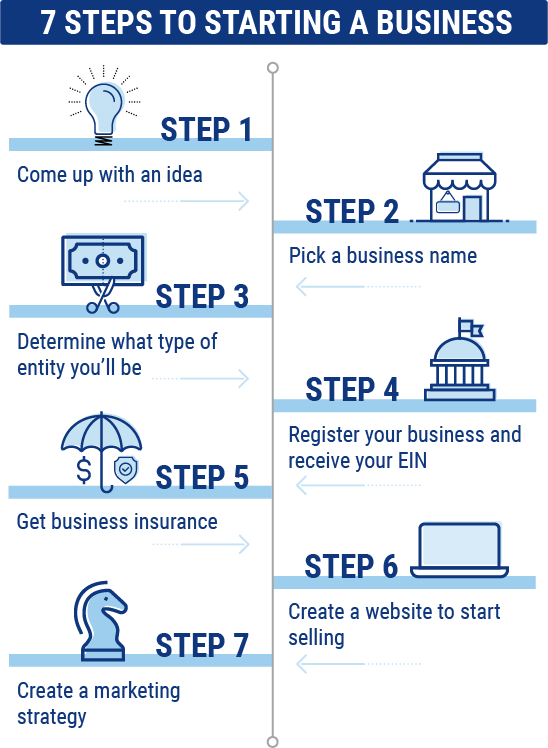
I. Laying the Financial Foundation: Idea, Niche, and Viability
The genesis of any successful online business lies not just in a great idea, but in an idea with robust financial potential. Before diving into website building or product development, it’s imperative to thoroughly research and validate your concept from a monetary perspective. This initial phase is about identifying where money can be made and ensuring your proposed solution aligns with genuine market demand and a willingness to pay.
A. Identifying Profitable Market Gaps
The first step in building a financially viable online business is to pinpoint a problem that a significant number of people are willing to pay to solve. This often involves looking beyond personal passions to areas where there’s a clear economic need.
- Focus on Pain Points with Monetary Value: What frustrations do potential customers experience regularly? What tasks do they find tedious, expensive, or complex? The more acute the pain, the higher the likelihood they will invest in a solution. For instance, if small businesses struggle with affordable, high-quality social media content, a service offering ready-made templates or a budget-friendly content creation tool addresses a clear financial hurdle.
- Market Research for Demand and Competition: Don’t assume demand; prove it. Utilize tools like Google Trends, keyword research (e.g., Ahrefs, SEMrush), and competitor analysis to gauge the existing market size and the purchasing power within your niche. High search volume for a problem, coupled with existing successful competitors (who aren’t completely dominating the market), can signal a healthy financial opportunity. A crowded market might seem intimidating, but it often indicates a proven demand where differentiation can carve out your space. Conversely, a complete lack of competition might suggest an unviable market or a niche that’s too small to sustain a business.
- Passion vs. Profit: Finding the Intersection: While passion can fuel perseverance, an online business must be rooted in financial reality. The ideal scenario is to find an area where your interests align with market needs and economic opportunity. If your passion doesn’t have a clear path to profitability, consider how it could be adapted or combined with other skills to create a product or service people will pay for.
B. Crafting a Monetization Model
Once you have a promising idea, the next critical step is to define how money will flow into your business. Your monetization model dictates your revenue streams and significantly impacts your financial projections and operational strategy.
- Understanding Different Revenue Streams:
- E-commerce: Selling physical or digital products (e.g., dropshipping, print-on-demand, digital downloads, courses). This model relies on transactional sales and inventory management (even if virtual).
- Services: Offering professional skills (e.g., consulting, coaching, freelance writing, web design). Income is tied to hours, projects, or retainers.
- Subscriptions/Memberships: Providing ongoing access to content, software (SaaS), or exclusive communities for a recurring fee. This offers predictable recurring revenue (MRR/ARR).
- Advertising/Affiliate Marketing: Generating income through ads on your content or earning commissions by promoting other companies’ products/services. This often requires significant traffic and audience engagement.
- Calculating Potential Average Revenue Per User (ARPU) or Sale: For each potential model, estimate how much revenue you expect to generate per customer or transaction. This metric is crucial for projecting overall income and understanding the financial implications of different pricing strategies. For a subscription service, ARPU might be the monthly fee; for e-commerce, it’s the average order value.
C. Validating Your Idea’s Financial Potential
Before investing heavily, validate your idea to ensure people are genuinely willing to pay for your solution. This reduces financial risk and helps refine your offering.
- Minimum Viable Product (MVP) Approach: Instead of building a full-featured product, create the simplest version that solves the core problem for your target audience. This allows you to test market acceptance and gather feedback with minimal upfront financial investment. For instance, a course creator might launch with a beta version of their first module before developing the entire curriculum.
- Pre-sales and Pilot Programs: Offer your product or service at a discounted rate to an initial group of customers. This generates early revenue, provides crucial validation that people will open their wallets, and allows you to refine your offering based on real-world feedback.
- Basic Financial Projections: Startup Costs vs. Potential Income: Even at this early stage, outline your anticipated startup costs (e.g., domain, hosting, initial software, basic marketing) and estimate your potential income based on your monetization model and projected customer acquisition. This preliminary analysis helps you determine if the financial risk is justifiable and if the venture has a realistic path to profitability.
II. Business Structure & Financial Planning: Building for Profitability
With a validated idea and a clear monetization strategy, the next phase involves establishing the formal and financial frameworks that will support your online business. This isn’t just about legalities; it’s about creating a robust financial backbone that ensures compliance, maximizes profit, and protects your assets.
A. Choosing the Right Legal & Financial Structure
The legal structure of your online business has significant implications for taxation, liability, and administrative overhead. Selecting wisely is a crucial financial decision.
- Sole Proprietorship, LLC, Corporation:
- Sole Proprietorship: Simple to set up, low cost, but offers no personal liability protection. Your personal and business finances are intertwined for tax purposes. Ideal for very low-risk ventures or initial testing.
- Limited Liability Company (LLC): Provides personal liability protection, separating your business assets from personal ones. Offers flexibility in taxation (can be taxed as a sole prop, partnership, or corporation). A popular choice for many online businesses due to its balance of protection and simplicity.
- Corporation (S-Corp, C-Corp): Offers the strongest liability protection and potential tax advantages for growth, but involves more complex setup and ongoing administrative requirements. Suitable for businesses planning to raise external capital or with significant revenue.
- Setting Up Separate Business Bank Accounts: Regardless of your legal structure, immediately open a dedicated business bank account. This is non-negotiable for financial clarity, simplifies tax preparation, and protects your personal finances. Commingling funds can lead to legal issues and make it impossible to accurately track your business’s financial health.
- Understanding Local Business Registration Requirements and Associated Costs: Research and comply with all local, state, and federal registration requirements. This could include business licenses, permits, and employer identification numbers (EINs). Factor in any associated fees into your initial startup budget.
B. Developing a Robust Business Plan with a Financial Focus
A business plan isn’t just for investors; it’s a living document that guides your financial decisions and outlines your path to profitability.
- Detailed Startup Cost Analysis: Itemize every initial expense: website development, domain and hosting, software subscriptions, initial marketing campaigns, product development costs, legal fees, and any necessary inventory. Being precise here helps in securing initial funding and managing cash flow.
- Operating Expense Forecasts: Project your recurring monthly or annual expenses. This includes SaaS tools, payment processing fees, advertising budgets, virtual assistant salaries, content creation costs, and any ongoing professional services. Accurate operating expense forecasts are vital for determining your break-even point and assessing profitability.
- Sales Forecasts and Break-Even Analysis: Estimate your projected sales volume and revenue over specific periods (e.g., first 12 months, first 3 years). Critically, conduct a break-even analysis: calculate how many units you need to sell or how much revenue you need to generate to cover all your fixed and variable costs. This tells you when your business will become profitable.
- Funding Strategies: Consider how you will finance your initial operations and growth.
- Bootstrapping: Using personal savings or reinvesting early profits. This maintains full ownership but can limit growth speed.
- Loans: Small business loans, lines of credit.
- Investors: Angel investors, venture capitalists (for high-growth potential businesses willing to give up equity). Each has different financial implications and expectations.

C. Pricing Strategies for Maximum Revenue & Value
Pricing is a delicate balance between covering costs, achieving profitability, and offering perceived value to customers. It’s one of the most direct levers for financial success.
- Cost-Plus Pricing, Value-Based Pricing, Competitive Pricing:
- Cost-Plus: Calculate your total cost to produce a product or service, then add a desired profit margin. Simple, but might ignore market demand or perceived value.
- Value-Based: Price your offering based on the perceived value it delivers to the customer, rather than just your costs. This often allows for higher prices if your solution offers significant benefits.
- Competitive: Set prices relative to your competitors. Useful in crowded markets, but requires careful differentiation to avoid a race to the bottom.
- Understanding Profit Margins and Optimization: Continuously analyze your gross profit margin (revenue minus cost of goods sold) and net profit margin (revenue minus all expenses). Look for ways to optimize these—can you reduce production costs, negotiate better supplier deals, or increase your average order value without significantly increasing costs?
- Psychological Pricing Tactics: Employ strategies like charm pricing (e.g., $9.99 instead of $10), tiered pricing (offering multiple packages), or bundling products/services to increase perceived value and drive higher conversion rates and average transaction values.
III. Generating & Scaling Income: From Launch to Sustainable Growth
Once your foundation is solid, the focus shifts to actively generating revenue and strategically scaling those income streams. This involves smart marketing investments, conversion optimization, and continuous growth strategies, all viewed through a financial lens.
A. Strategic Marketing & Sales Funnels (Money-Driven)
Marketing isn’t just about visibility; it’s about acquiring customers profitably. Every marketing dollar spent should be an investment with an expected return.
- Budgeting for Marketing: Allocate specific funds for various marketing channels (e.g., Google Ads, social media ads, content marketing, email marketing, SEO). Treat your marketing budget as an investment, not an expense, and tie it to specific financial goals.
- Tracking ROI on Marketing Spend: Implement robust tracking mechanisms (e.g., Google Analytics, CRM, ad platform analytics) to monitor the return on investment (ROI) for each marketing initiative. Which channels are delivering the most customers for the lowest cost? Which campaigns are generating the highest revenue? Continuously optimize your spend towards channels with proven profitability.
- Building Sales Funnels Designed to Convert: A well-designed sales funnel guides potential customers through awareness, interest, desire, and action. Each stage should be optimized to move prospects towards a purchase. This includes landing pages with clear calls to action, compelling email sequences, and seamless checkout processes. The goal is to maximize the conversion rate – the percentage of visitors who become paying customers.
- Understanding Customer Acquisition Cost (CAC) and Customer Lifetime Value (CLTV):
- CAC: How much does it cost to acquire one new customer? (Total marketing and sales expenses / Number of new customers).
- CLTV: The total revenue a business can reasonably expect from a single customer account throughout the duration of their relationship.
- A healthy business ensures that CLTV significantly exceeds CAC. This ratio is a primary indicator of your business’s financial viability and potential for scalable growth.
B. Optimizing for Conversions and Revenue
Getting traffic to your online store or service is only half the battle; converting that traffic into paying customers is where revenue is generated.
- Website Optimization for Sales: Your online presence must be designed to sell. Ensure clear navigation, compelling product descriptions, high-quality visuals, social proof (reviews, testimonials), a frictionless checkout process, and clear calls to action. A slow loading website or confusing layout directly impacts your bottom line.
- Upselling, Cross-selling, and Bundling Strategies: Increase your average order value (AOV) by encouraging customers to purchase more.
- Upselling: Offering a more expensive or premium version of the product/service they are considering.
- Cross-selling: Suggesting complementary products/services alongside their primary purchase.
- Bundling: Offering several products/services together at a slightly reduced price compared to buying them individually. These strategies directly boost revenue without significantly increasing customer acquisition costs.
- Leveraging Analytics to Identify Revenue Leakage and Opportunities: Utilize tools like Google Analytics, heatmaps, and session recordings to understand user behavior on your site. Where are people dropping off? What pages aren’t converting? These insights can reveal bottlenecks in your sales funnel and opportunities to optimize pages or processes to improve conversion rates and revenue.
C. Scaling Your Online Income Stream
Sustainable growth requires strategic scaling. This means increasing revenue without a proportional increase in costs, ultimately leading to higher profit margins.
- Automating Processes to Reduce Operational Costs: Identify repetitive tasks that can be automated through software or tools (e.g., email marketing, customer service chatbots, inventory management). Automation reduces manual labor costs, frees up time for strategic activities, and minimizes errors.
- Expanding Product Lines or Services Based on Customer Demand: As your business grows, leverage customer feedback and market trends to introduce new products or services that align with your existing offerings and cater to your established audience. This organic expansion can significantly boost revenue by tapping into existing customer loyalty.
- Exploring New Markets or Customer Segments: Once established in one niche, consider expanding into adjacent markets or targeting new customer demographics. This diversifies your revenue streams and reduces reliance on a single market.
- Strategies for Reinvesting Profits for Growth: Don’t just take all profits out of the business. Strategically reinvest a portion into growth initiatives:
- Enhanced marketing campaigns.
- Development of new products or features.
- Hiring key personnel to scale operations.
- Investing in more advanced technology or infrastructure. Reinvestment is crucial for compounding growth and long-term financial stability.
IV. Mastering Online Business Finance: Sustaining Long-Term Wealth
An online business that generates income is good; one that sustains and grows wealth is exceptional. This final phase focuses on the ongoing financial management practices that ensure long-term profitability, compliance, and personal wealth building.
A. Essential Financial Management Practices
Sound financial management is the bedrock of a sustainable business. It provides clarity, control, and foresight.
- Setting Up Robust Bookkeeping Systems: Implement a reliable bookkeeping system from day one. Software like QuickBooks Online, Xero, or Wave Accounting automate many tasks, categorize transactions, and provide clear financial reports. Accurate bookkeeping is essential for tracking income and expenses, making informed decisions, and simplifying tax preparation.
- Regularly Reviewing Financial Statements: Don’t just set up the system and forget it. Regularly review your:
- Profit & Loss (P&L) Statement: Shows your revenues, costs, and profits over a period.
- Balance Sheet: A snapshot of your assets, liabilities, and equity at a specific point in time.
- Cash Flow Statement: Tracks the cash coming into and going out of your business. Understanding these statements is critical for assessing financial health, identifying trends, and forecasting future performance.
- Budgeting and Expense Tracking: Create a detailed budget and diligently track all expenses. Identify areas where costs can be reduced without compromising quality or growth. Effective expense management directly impacts your profit margins.
B. Tax Planning and Compliance for Online Businesses
Tax obligations for online businesses can be complex, especially with varying regulations across different jurisdictions. Proactive tax planning is crucial to avoid penalties and optimize your tax burden.
- Understanding Sales Tax, Income Tax, and Self-Employment Taxes:
- Sales Tax: If you sell physical products, you may need to collect and remit sales tax in states where you have nexus (a significant presence). Digital products and services also have varying sales tax implications.
- Income Tax: Your business income will be subject to federal and state income taxes, depending on your legal structure.
- Self-Employment Tax: If you’re a sole proprietor or partner, you’ll pay self-employment taxes (for Social Security and Medicare) on your net earnings.
- Setting Aside Funds for Taxes Proactively: Since taxes aren’t usually withheld from online business income, it’s vital to set aside a percentage of your earnings regularly (e.g., in a separate savings account) to cover quarterly estimated taxes. This prevents a large, unexpected tax bill.
- Seeking Professional Advice for Tax Optimization: The tax landscape is constantly changing. Consulting with a qualified accountant or tax professional specializing in online businesses can help you structure your business for tax efficiency, identify eligible deductions, and ensure compliance.

C. Profit Reinvestment and Wealth Building
The ultimate goal of an online business is often to create not just income, but sustainable wealth. This requires strategic decisions about how you manage your profits.
- Strategic Allocation of Profits Back into the Business: Reinvesting profits intelligently fuels further growth. This could mean upgrading technology, expanding marketing efforts, hiring talent, or developing new products. A common strategy is to follow the “Profit First” methodology, allocating specific percentages of income to profit, owner’s pay, operating expenses, and taxes.
- Paying Yourself: Determining a Sustainable Salary or Draw: While reinvestment is key, it’s equally important to compensate yourself fairly and consistently. Determine a sustainable salary or owner’s draw that allows you to meet personal financial goals without starving the business of necessary capital for growth.
- Long-Term Financial Planning for Business Owners: An online business can be a significant asset for long-term wealth building. Consider strategies like:
- Retirement Planning: Contribute to self-employed retirement accounts (e.g., SEP IRA, Solo 401(k)).
- Investment Portfolios: Diversify personal investments outside of your business.
- Succession Planning: Think about the long-term future of your business – will you sell it, pass it on, or transition out? Planning for these eventualities impacts your personal wealth strategy.
Starting an online business is a journey that demands strategic foresight, disciplined execution, and a keen understanding of financial principles. By meticulously laying the groundwork, building for profitability, actively generating and scaling income, and diligently managing your finances, you can transform your entrepreneurial vision into a source of enduring financial independence and wealth. The digital economy offers immense opportunities, but true success comes to those who master not just the ‘how’ of building online, but the ‘how’ of building it profitably and sustainably.
aViewFromTheCave is a participant in the Amazon Services LLC Associates Program, an affiliate advertising program designed to provide a means for sites to earn advertising fees by advertising and linking to Amazon.com. Amazon, the Amazon logo, AmazonSupply, and the AmazonSupply logo are trademarks of Amazon.com, Inc. or its affiliates. As an Amazon Associate we earn affiliate commissions from qualifying purchases.