
Simplifying fractions is a fundamental skill in mathematics, crucial for understanding more complex mathematical concepts and for everyday applications involving ratios and proportions. While the concept itself is straightforward, the process can sometimes feel like a puzzle, especially for those who aren’t mathematically inclined. This guide aims to demystify fraction simplification, breaking down the process into clear, actionable steps. We’ll explore the underlying principles, practical techniques, and the importance of this skill, particularly within the realm of technology and digital tools.
Understanding the Building Blocks of Fractions
Before we dive into simplification, it’s essential to have a solid grasp of what a fraction represents and its constituent parts.
Numerator and Denominator: The Core Components
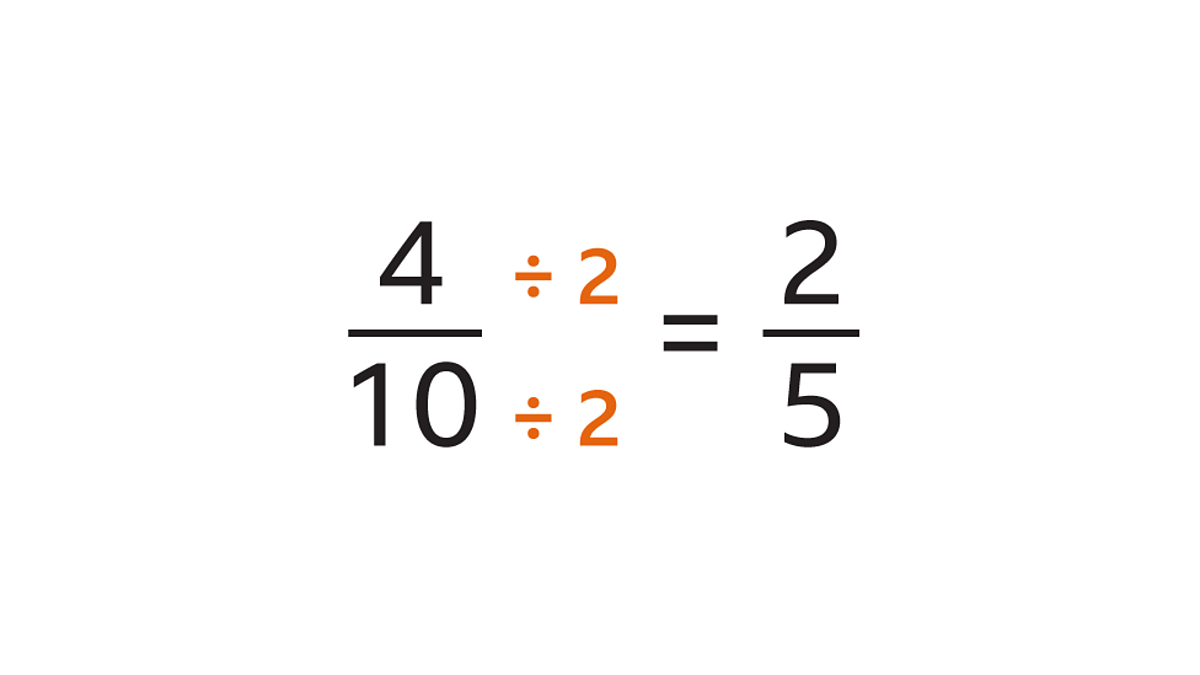
A fraction is essentially a way of representing a part of a whole. It’s composed of two key numbers:
- Numerator: The top number in a fraction, indicating how many parts of the whole we have. For example, in the fraction 3/4, the numerator is 3.
- Denominator: The bottom number in a fraction, indicating the total number of equal parts the whole is divided into. In 3/4, the denominator is 4.
The line separating the numerator and denominator signifies division. So, 3/4 can be read as “3 divided by 4.”
Equivalent Fractions: Different Forms, Same Value
Understanding equivalent fractions is key to simplification. Equivalent fractions are different fractions that represent the same value or proportion. For instance, 1/2, 2/4, and 3/6 are all equivalent fractions. They all represent half of a whole. This concept is vital because simplification involves finding an equivalent fraction that is in its simplest form.
The Concept of Simplest Form
A fraction is considered to be in its simplest form (or lowest terms) when its numerator and denominator have no common factors other than 1. In other words, you cannot divide both the numerator and the denominator by the same whole number (other than 1) to get smaller whole numbers. For example, 1/2 is in simplest form because the only common factor between 1 and 2 is 1. However, 2/4 is not in simplest form because both 2 and 4 can be divided by 2.
The Art of Simplification: Finding the Greatest Common Divisor (GCD)
The primary method for simplifying fractions involves finding the greatest common divisor (GCD) of the numerator and the denominator.
What is a Divisor?
A divisor of a number is any number that divides into it evenly, leaving no remainder. For example, the divisors of 12 are 1, 2, 3, 4, 6, and 12.
Identifying Common Divisors
To simplify a fraction, we need to find numbers that are divisors of both the numerator and the denominator. These are called common divisors. Let’s take the fraction 12/18 as an example:
- Divisors of 12: 1, 2, 3, 4, 6, 12
- Divisors of 18: 1, 2, 3, 6, 9, 18
The common divisors of 12 and 18 are 1, 2, 3, and 6.
The Power of the Greatest Common Divisor (GCD)
The GCD is the largest of these common divisors. In our example of 12/18, the GCD is 6. Using the GCD is the most efficient way to simplify a fraction in a single step.
Method 1: Finding the GCD by Listing Factors
This method, as demonstrated above, involves listing all the factors of both the numerator and the denominator and then identifying the largest common factor. While effective for smaller numbers, it can become tedious for larger ones.
Method 2: Prime Factorization for GCD
Prime factorization is a more systematic approach, especially for larger numbers. This involves breaking down each number into its prime factors (numbers only divisible by 1 and themselves).
Let’s simplify 12/18 again using prime factorization:
-
Prime factorization of 12:
- 12 = 2 x 6
- 6 = 2 x 3
- So, 12 = 2 x 2 x 3
-
Prime factorization of 18:
- 18 = 2 x 9
- 9 = 3 x 3
- So, 18 = 2 x 3 x 3
Now, identify the common prime factors: both 12 and 18 have a ‘2’ and a ‘3’ in their prime factorization.
- Common factors: 2 and 3
- GCD = 2 x 3 = 6
Method 3: The Euclidean Algorithm (Advanced)
For very large numbers, the Euclidean Algorithm is a highly efficient method for finding the GCD. It’s an iterative process based on the principle that the GCD of two numbers does not change if the larger number is replaced by its difference with the smaller number. While powerful, it’s generally beyond the scope of basic fraction simplification tutorials but is a cornerstone of computational number theory.
Step-by-Step Guide to Simplifying Fractions
Now that we understand the tools, let’s walk through the actual process of simplifying a fraction.
Step 1: Identify the Numerator and Denominator
Clearly note down the two numbers involved in your fraction. For example, if you have 24/36, your numerator is 24 and your denominator is 36.
Step 2: Find the Greatest Common Divisor (GCD)
Choose a method to find the GCD of the numerator and denominator. For most common scenarios, listing factors or prime factorization will suffice. Let’s find the GCD of 24 and 36.
-
Listing Factors:
- Factors of 24: 1, 2, 3, 4, 6, 8, 12, 24
- Factors of 36: 1, 2, 3, 4, 6, 9, 12, 18, 36
- Common factors: 1, 2, 3, 4, 6, 12
- GCD: 12
-
Prime Factorization:
- 24 = 2 x 2 x 2 x 3
- 36 = 2 x 2 x 3 x 3
- Common prime factors: 2, 2, 3
- GCD = 2 x 2 x 3 = 12
Step 3: Divide Both Numerator and Denominator by the GCD
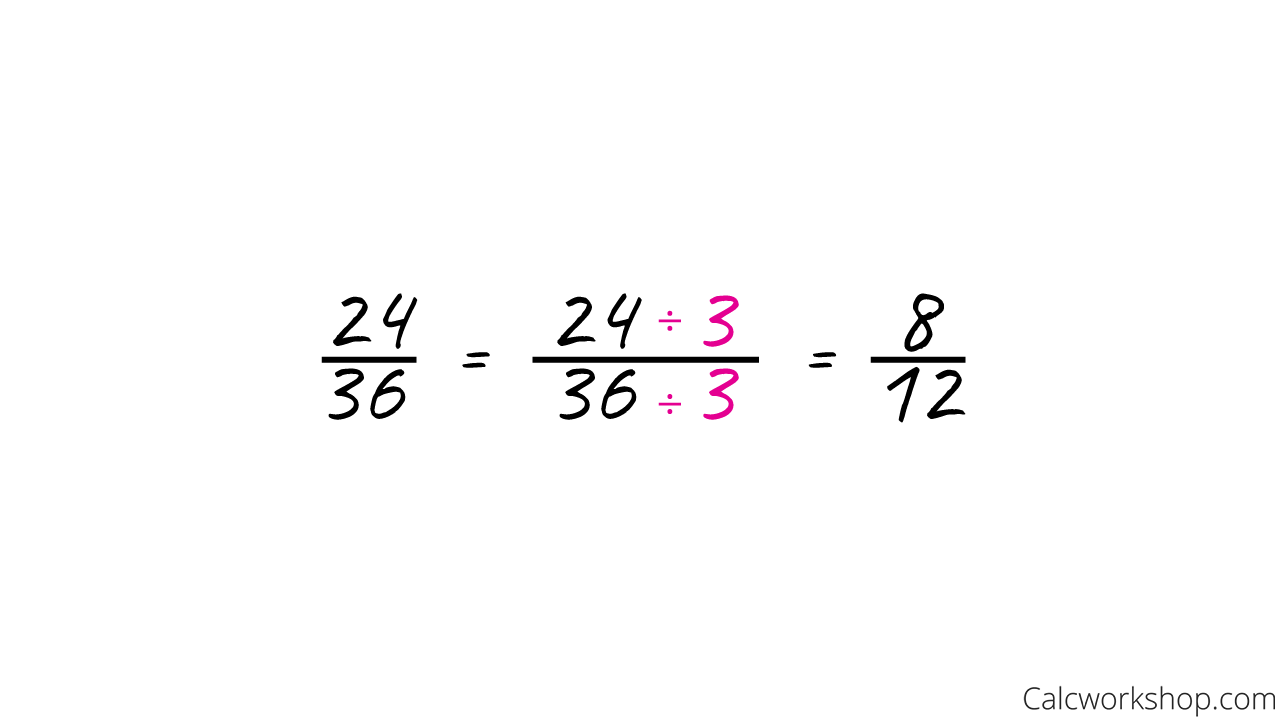
Once you have the GCD, divide both the numerator and the denominator by this number.
- For 24/36, with GCD of 12:
- 24 ÷ 12 = 2
- 36 ÷ 12 = 3
Step 4: Write the Simplified Fraction
The result of the division gives you the simplified fraction.
- The simplified form of 24/36 is 2/3.
What if you can’t find a common factor (other than 1)?
If, after attempting to find common factors, you discover that the only common factor between the numerator and denominator is 1, then the fraction is already in its simplest form. For example, 7/10. The factors of 7 are 1 and 7. The factors of 10 are 1, 2, 5, and 10. The only common factor is 1. Therefore, 7/10 is already simplified.
The Role of Technology in Simplifying Fractions
While the mathematical principles of fraction simplification are timeless, technology offers powerful tools that can assist in this process, making it faster and more accessible.
Digital Calculators and Online Tools
Modern digital calculators, both physical and software-based, have built-in functions to simplify fractions automatically. When you input a fraction, the calculator can often display its simplified equivalent in an instant.
- Scientific Calculators: Most scientific calculators allow direct input of fractions and have a dedicated simplification button (often labeled “simp” or similar).
- Online Fraction Simplifiers: Numerous websites offer free fraction simplification tools. You simply input your fraction, and the website performs the calculation and provides the simplified answer, often showing the steps involved. These are invaluable for students and anyone needing quick verification.
- Spreadsheet Software: Programs like Microsoft Excel or Google Sheets can also be used to simplify fractions, though it might require using specific formulas or a combination of functions to extract prime factors or calculate the GCD.
Educational Apps and Software
For learners, educational apps and software dedicated to mathematics often incorporate interactive fraction simplification modules. These tools not only simplify fractions but also provide visual aids, step-by-step explanations, and practice exercises, reinforcing the learning process. They can be particularly helpful for identifying common mistakes and building confidence.
Programming and Algorithmic Approaches
For those involved in software development or data analysis, understanding the algorithms behind fraction simplification (like the Euclidean algorithm for GCD) is crucial. Programming languages allow for the creation of custom functions to simplify fractions, which can be integrated into larger applications or used for batch processing. This is particularly relevant in fields like computational geometry or number theory where fractions are manipulated programmatically.

Benefits of Using Technology
- Speed and Efficiency: Technology drastically reduces the time spent on manual calculations, especially with complex fractions.
- Accuracy: Automated tools minimize the risk of human error in calculation.
- Learning Aid: Many technological tools offer explanations and visualizations that enhance understanding.
- Accessibility: Online tools and apps make fraction simplification accessible to anyone with an internet connection or a smartphone.
In conclusion, simplifying fractions is a fundamental mathematical skill. By understanding the roles of the numerator and denominator, the concept of equivalent fractions, and the importance of the GCD, anyone can master this process. Furthermore, the advent of technology has provided powerful and accessible tools that not only streamline the simplification process but also serve as excellent aids for learning and understanding. Whether you’re a student grappling with homework, a professional needing quick calculations, or a hobbyist exploring mathematical concepts, leveraging these technological resources can significantly enhance your experience and proficiency with fractions.
aViewFromTheCave is a participant in the Amazon Services LLC Associates Program, an affiliate advertising program designed to provide a means for sites to earn advertising fees by advertising and linking to Amazon.com. Amazon, the Amazon logo, AmazonSupply, and the AmazonSupply logo are trademarks of Amazon.com, Inc. or its affiliates. As an Amazon Associate we earn affiliate commissions from qualifying purchases.