
In an era of rising inflation, volatile markets, and the constant lure of consumerism, the question “how do you save?” has evolved from a simple inquiry about spare change into a complex strategic challenge. Saving is no longer just about the act of not spending; it is a sophisticated discipline that sits at the intersection of psychology, structural planning, and long-term vision. To save effectively in the modern economy requires more than a piggy bank; it requires a blueprint for financial sovereignty.
The Psychology of Saving: Shifting from Scarcity to Strategy
Before looking at bank accounts or investment vehicles, the foundation of saving is built within the mind. Most individuals struggle to save not because of a lack of income, but because of a fundamental misalignment in how they perceive value and time.
The Power of “Pay Yourself First”
The most significant psychological shift a person can make is adopting the “pay yourself first” mentality. Traditionally, people view saving as the process of spending what they want and keeping whatever remains at the end of the month. This is a “scarcity” mindset that often results in zero savings. By treating your savings as your most important monthly “bill”—due the moment your paycheck hits your account—you move saving from a secondary priority to a primary obligation. This ensures that your future self is compensated before the landlord, the utility company, or the local coffee shop.
Defining Your Financial “Why”
Willpower is a finite resource. Attempting to save money simply for the sake of “being responsible” often fails when faced with the immediate gratification of a new purchase. To save effectively, you must attach your capital to specific, emotive goals. Whether it is the security of a six-month emergency fund, the freedom of early retirement, or the down payment on a home, having a clearly defined “why” transforms saving from an act of deprivation into an act of empowerment.
Structural Saving: Leveraging High-Yield Strategies and Automation
Once the mindset is established, the next step in answering “how do you save” involves the technical infrastructure of your finances. Where you put your money is just as important as how much you put away.
Maximizing High-Yield Savings Accounts (HYSA)
In a low-interest environment, traditional “big bank” savings accounts often offer negligible returns, sometimes as low as 0.01%. This means your money is effectively losing value against inflation. Professional savers utilize High-Yield Savings Accounts (HYSAs), often found through online-only banks. These institutions have lower overhead costs and can offer interest rates significantly higher than the national average. By housing your liquid cash in an HYSA, your money works for you, generating passive interest while remaining accessible.
The Magic of Automation
The greatest enemy of a consistent savings plan is human decision-making. Every time you have to manually move money into a savings account, you create an opportunity for hesitation. Automation eliminates this friction. By setting up automatic transfers that coincide with your payroll, you remove the “choice” from the equation. This creates a frictionless financial ecosystem where your wealth grows in the background of your life, requiring no monthly effort or discipline once the initial system is established.
Utilizing Sinking Funds for Known Expenses
A common reason savings accounts are drained is the “unexpected” expense that was actually predictable—such as car maintenance, annual insurance premiums, or holiday gifts. A sinking fund is a sub-savings account dedicated to a specific future expense. By breaking these large annual costs into monthly contributions, you prevent the “emergency” that would otherwise derail your long-term savings goals.
Optimizing Your Cash Flow: The Art of Expense Management
Saving is a game of margins. To increase what you save, you must either increase what you earn or decrease what you spend. While income growth is vital, expense management is the lever you have the most immediate control over.
The 50/30/20 Rule as a Benchmark
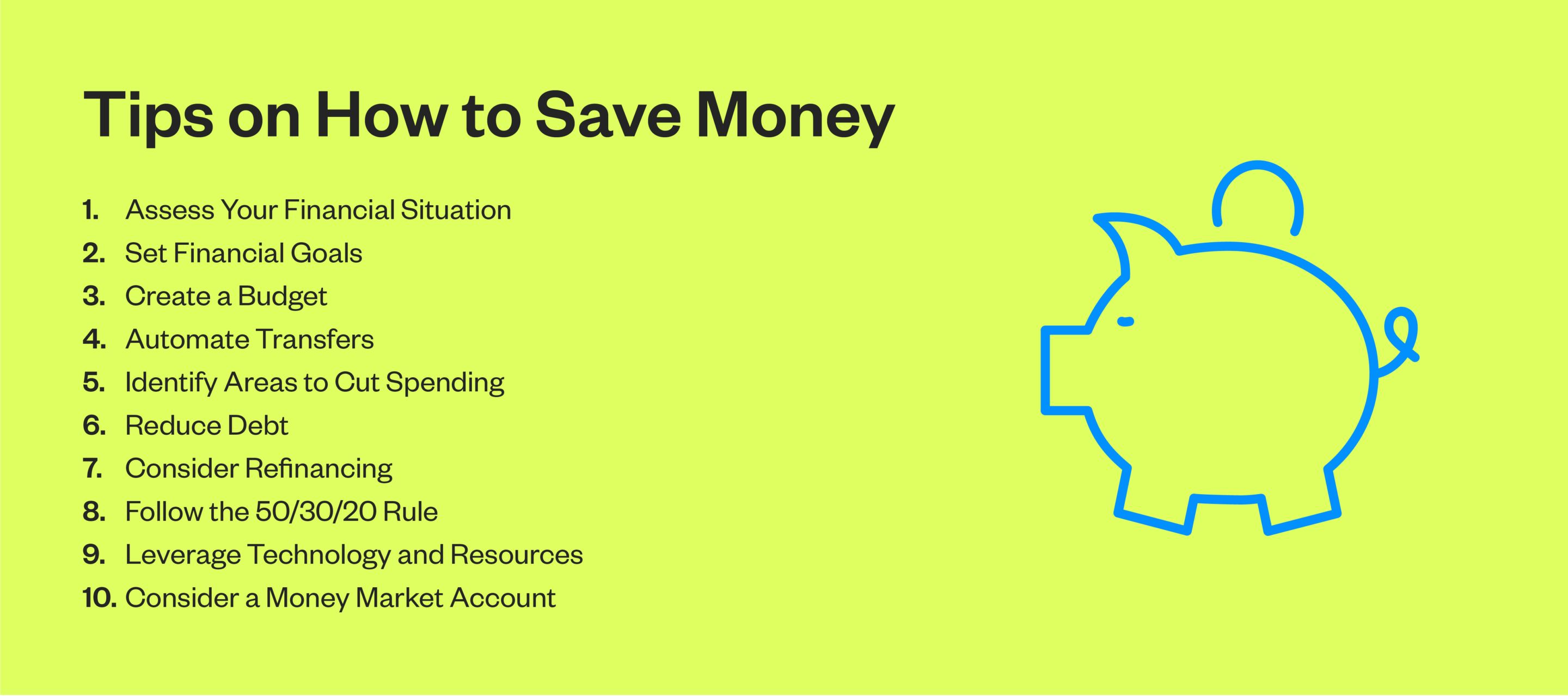
A professional approach to budgeting often begins with the 50/30/20 rule. This framework suggests allocating 50% of your income to “Needs” (housing, food, utilities), 30% to “Wants” (entertainment, dining out), and 20% to “Savings and Debt Repayment.” This provides a balanced lifestyle while ensuring that a fifth of every dollar earned is channeled toward building net worth. If your “Needs” exceed 50%, it is a signal to either downsize your lifestyle or find ways to scale your income.

Identifying and Cutting “Ghost” Subscriptions
In the digital economy, many people suffer from “subscription creep.” Small monthly fees for streaming services, software, and gym memberships can quietly erode hundreds of dollars from a budget. A rigorous audit of bank statements often reveals “ghost” subscriptions—services you no longer use but continue to pay for. Aggressively pruning these non-essential outflows is one of the fastest ways to boost your monthly savings rate without significantly impacting your quality of life.
The Value of “Wait-Period” Purchasing
To combat impulsive spending, seasoned savers often implement a “72-hour rule.” For any non-essential purchase over a certain dollar amount, they commit to waiting three days before pulling the trigger. More often than not, the initial dopamine hit of the potential purchase fades, and the realization sets in that the item is not a necessity. This simple pause can save thousands of dollars annually.
Beyond the Piggy Bank: Saving for Growth and Investment
While a savings account is essential for liquidity, holding too much cash can be a financial mistake. To truly save for the future, one must understand the transition from a “saver” to an “investor.”
Inflation: The Silent Thief
If you save $10,000 today and hide it under a mattress, in ten years, that money will buy significantly less than it does now. Inflation is the steady rise in prices that devalues stagnant cash. Therefore, “how you save” must eventually involve putting your money into assets that appreciate faster than the rate of inflation. This is where the distinction between “cash savings” and “invested savings” becomes critical.
Transitioning to Index Funds and Equities
Once you have established a comfortable cash cushion, additional savings should be channeled into the market. Low-cost index funds and Exchange-Traded Funds (ETFs) are the preferred vehicles for many successful savers. These tools allow you to own a small piece of hundreds of companies, providing diversification and capturing the long-term growth of the economy. By reinvesting dividends, you harness the power of compound interest—what Albert Einstein famously called the eighth wonder of the world.
The Role of Diversification
A robust savings strategy does not put all its eggs in one basket. Diversification involves spreading your savings across different asset classes—such as stocks, bonds, real estate, and perhaps even alternative assets like precious metals or digital assets. This protects your total savings from a catastrophic failure in any single sector, ensuring that your wealth accumulation remains steady even during market volatility.
Building a Resilient Future: Protection and Tax Advantages
The final layer of a comprehensive savings strategy is protection. It is not just about how much you save, but how much you keep after taxes and unforeseen life events.
The Essential Emergency Fund
Before investing a single dollar in the stock market, you must build an emergency fund. Most financial experts recommend keeping three to six months of essential living expenses in a highly liquid account (like the HYSA mentioned earlier). This fund acts as your personal insurance policy against job loss, medical emergencies, or major home repairs. It ensures that when life happens, you don’t have to go into debt or liquidate your long-term investments at a loss.
Utilizing Tax-Advantaged Vehicles
Smart saving involves minimizing the amount of money lost to the government. In many jurisdictions, governments provide tax-advantaged accounts to encourage long-term saving, such as 401(k)s, IRAs, or ISAs. Contributions to these accounts often reduce your taxable income today or allow your investments to grow tax-free for the future. Failing to utilize these vehicles is essentially leaving free money on the table.
Employer Matching: The 100% Return
If your employer offers a retirement plan match, contributing enough to get the full match should be your absolute priority. An employer match is a guaranteed 100% return on your investment. There is no other financial instrument in the world that offers such a high, risk-free return. It is the cornerstone of any professional savings plan.
Conclusion: Saving as a Continuous Journey
So, how do you save? You save by viewing your finances as an integrated system rather than a series of sporadic choices. It begins with a psychological commitment to prioritize your future self, continues through the intelligent use of modern financial tools and automation, and matures into a sophisticated investment strategy that protects you against inflation and taxes.
True saving is not about deprivation; it is about intentionality. It is the process of trading small, temporary pleasures today for substantial, lasting freedom tomorrow. By following these structural and psychological principles, you can transform your relationship with money and build a resilient financial foundation that will serve you for decades to come.
aViewFromTheCave is a participant in the Amazon Services LLC Associates Program, an affiliate advertising program designed to provide a means for sites to earn advertising fees by advertising and linking to Amazon.com. Amazon, the Amazon logo, AmazonSupply, and the AmazonSupply logo are trademarks of Amazon.com, Inc. or its affiliates. As an Amazon Associate we earn affiliate commissions from qualifying purchases.