
Facing an unexpected tax bill can be a significant source of financial stress. Whether it is due to a change in employment status, a successful side hustle that lacked proper withholding, or complex investment gains, many taxpayers find themselves owing the Internal Revenue Service (IRS) more than they can afford to pay in a single lump sum. The most critical step in managing this situation is recognizing that the IRS offers several pathways to resolve debt through structured payment plans, officially known as installment agreements.

Requesting a payment plan is a proactive measure that can stop aggressive collection actions, such as wage garnishments or bank levies, and may even reduce certain penalties. Understanding the nuances of these plans—from eligibility requirements to application methods—is essential for any taxpayer looking to regain their financial footing.
Evaluating Your Options: The Different Types of IRS Payment Plans
Before initiating a request, it is vital to identify which category of payment plan fits your financial situation. The IRS classifies these plans primarily based on the amount owed and the duration of the repayment period.
Short-Term Payment Plans
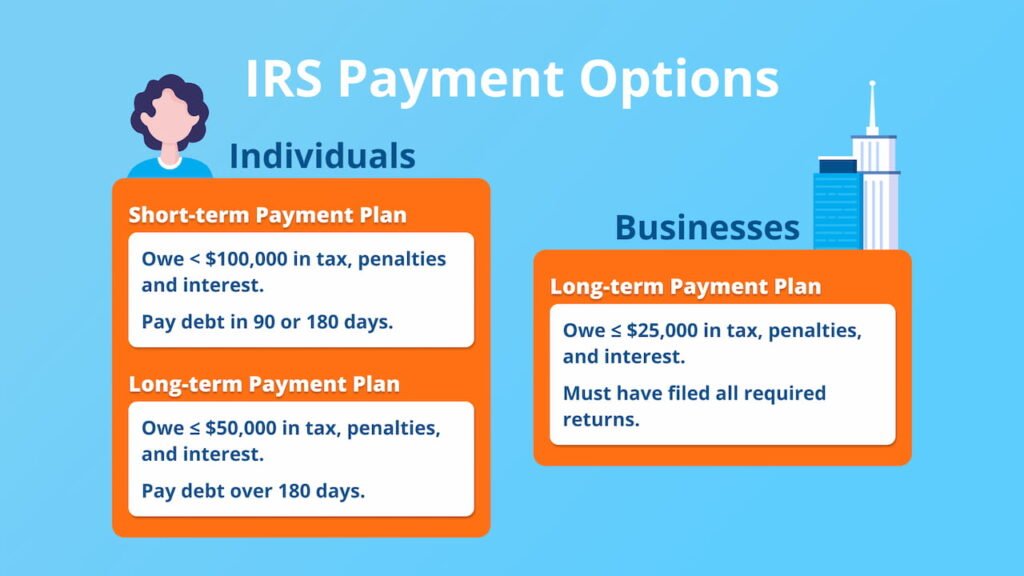
A short-term payment plan is designed for individuals who can pay their tax liability in full within 180 days. This is often the most cost-effective option because it does not carry a setup fee. While interest and late-payment penalties still accrue during the 180-day window, the total cost of the debt is lower than it would be under a multi-year agreement. This option is typically available to taxpayers who owe less than $100,000 in combined tax, penalties, and interest.
Long-Term Payment Plans (Installment Agreements)
If you require more than six months to settle your debt, a long-term payment plan is necessary. These agreements allow for monthly payments over a period of up to 72 months (six years).
-
Streamlined Installment Agreements: These are the most common for individual taxpayers. If you owe $50,000 or less (including tax, interest, and penalties), you can generally qualify for a streamlined agreement without having to provide a detailed financial statement. This avoids the intrusive process of disclosing all assets, income, and monthly expenses.
-
Non-Streamlined Agreements: If your debt exceeds $50,000, or if you cannot pay the full amount within the 72-month window, the IRS requires a more rigorous application process. This involves filing Form 433-F (Collection Information Statement), which the IRS uses to determine your ability to pay based on your equity in assets and monthly disposable income.
Offer in Compromise (OIC)
While not a “payment plan” in the traditional sense, an Offer in Compromise is a specialized program for those in extreme financial hardship. It allows a taxpayer to settle their debt for less than the full amount owed. The IRS only grants these in cases where it is unlikely the debt could ever be collected in full. The application process is lengthy and requires a non-refundable application fee and a deep dive into the taxpayer’s financial life.
The Application Process: From Online Portals to Paper Forms
The IRS has modernized its systems, making it significantly easier to request a payment plan than in previous decades. There are three primary ways to initiate the process: online, by phone, or via mail.
Utilizing the Online Payment Agreement (OPA) Tool
The most efficient way to request a plan is through the IRS.gov website. The Online Payment Agreement tool is available to individuals who owe $50,000 or less and businesses that owe $25,000 or less in payroll taxes.
To use this tool, you must first set up an IRS Online Account, which requires identity verification through a third-party service (such as ID.me). Once logged in, the system will show your balance and allow you to select your preferred payment amount and monthly due date. The primary advantage of the OPA tool is that you often receive immediate notification of approval, bypassing the weeks or months of waiting associated with paper applications.
Submitting Form 9465
For those who prefer a traditional approach or do not qualify for the online tool, Form 9465 (Installment Agreement Request) is the standard document. This form asks for basic identification information, the total amount owed, and your proposed monthly payment. If you owe more than $50,000, you must also attach Form 433-F to provide the necessary financial disclosures.
Mailing Form 9465 is a slower process, but it is necessary if you are responding to a specific notice or if you have a complex situation that requires a written explanation. It is highly recommended to send this via certified mail to ensure you have a record of the submission.
Requesting by Phone or In-Person
Taxpayers can also call the number listed on their most recent tax notice to speak with a representative. While hold times can be significant, speaking with an agent allows you to ask questions and clarify specific concerns regarding your account. In-person assistance is also available at Taxpayer Assistance Centers (TACs), though these usually require an appointment.
Financial Implications: Fees, Interest, and Penalty Abatement
While a payment plan provides a structured path to debt resolution, it is not free. Taxpayers should be aware of the various costs associated with these agreements.
Setup Fees and Waivers
The IRS charges a user fee to establish a long-term installment agreement. As of current regulations, these fees vary based on how you apply and how you pay:
-
Direct Debit (Online): Approximately $31. This is the cheapest option and is highly recommended.
-
Direct Debit (Phone/Mail): Approximately $107.
-
Non-Direct Debit (Online): Approximately $130.
-
Non-Direct Debit (Phone/Mail): Approximately $225.
Low-income taxpayers may be eligible for a fee waiver or a reimbursement of the fee upon completion of the plan. If your adjusted gross income is at or below 250% of the federal poverty level, you should ensure you indicate this status on your application.
Accruing Interest and the Failure-to-Pay Penalty
It is a common misconception that an installment agreement freezes the debt. In reality, interest and penalties continue to accrue until the balance is zero. The interest rate is set quarterly and is based on the federal short-term rate plus 3%.
However, there is a significant benefit to entering an agreement: the failure-to-pay penalty is reduced. Typically, this penalty is 0.5% per month. Once an installment agreement is approved, this rate is cut in half to 0.25% per month for as long as the agreement remains in effect. Over several years, this reduction can save a taxpayer thousands of dollars.
Understanding First-Time Abatement (FTA)
If this is the first time you have owed the IRS in the last three years and you have a history of filing on time, you may qualify for First-Time Abatement. This allows the IRS to remove certain penalties (such as the failure-to-file or failure-to-pay penalties). While it does not remove the interest, it significantly lowers the principal balance you need to pay off through your plan. You generally must request this over the phone after your payment plan has been established.
Maintaining Your Agreement and Future Compliance
Securing the payment plan is only the first half of the journey; maintaining it is the second. A “defaulted” installment agreement can lead to the immediate resumption of collection activities and the loss of the reduced penalty rate.
The Importance of Future Compliance
The most critical rule of an IRS payment plan is that you must remain compliant with all future tax obligations. This means you must file all future tax returns on time and pay any new tax liabilities in full. If you file a return in a subsequent year and owe money that you cannot pay, your existing installment agreement will go into default. To avoid this, many taxpayers choose to increase their tax withholding or estimated tax payments for the current year to ensure they do not end up with a new balance.
Direct Debit: The Safest Path
Setting up a Direct Debit Installment Agreement (DDIA) is the most effective way to prevent a default. By authorizing the IRS to automatically withdraw funds from your checking account on a specific day each month, you eliminate the risk of forgetting a payment or a check getting lost in the mail. Furthermore, the IRS requires a DDIA for certain streamlined agreements when the balance is between $25,000 and $50,000.
What to Do If You Can No Longer Pay
Financial circumstances can change due to job loss, illness, or other emergencies. If you find yourself unable to make your scheduled monthly payment, do not simply stop paying. Contact the IRS immediately. They may be able to adjust your monthly payment amount or grant a temporary “Currently Not Collectible” status. While interest still accrues in this status, it prevents the IRS from seizing assets until your financial situation improves.

Tax Liens and Credit Impact
For debts over $10,000, the IRS may file a Notice of Federal Tax Lien. This is a public document that notifies creditors that the government has a legal right to your property. While the IRS no longer reports tax liens to the three major credit bureaus, a lien can still make it difficult to sell real estate or secure certain types of business loans. By staying on a payment plan and reducing your balance below specific thresholds, you can eventually apply for a lien withdrawal.
Managing tax debt through an IRS payment plan is a strategic financial decision that requires diligence and transparency. By selecting the right plan, utilizing online tools for efficiency, and maintaining strict compliance with future filings, taxpayers can systematically eliminate their debt while protecting their assets and long-term financial health.
aViewFromTheCave is a participant in the Amazon Services LLC Associates Program, an affiliate advertising program designed to provide a means for sites to earn advertising fees by advertising and linking to Amazon.com. Amazon, the Amazon logo, AmazonSupply, and the AmazonSupply logo are trademarks of Amazon.com, Inc. or its affiliates. As an Amazon Associate we earn affiliate commissions from qualifying purchases.