
Navigating the landscape of federal taxes is often viewed as one of the most daunting financial responsibilities for individuals and business owners alike. However, understanding the mechanics of how to pay the IRS is not just a matter of compliance; it is a critical component of sound personal and business financial management. In an era where the Internal Revenue Service has modernized its infrastructure, taxpayers have more options than ever before, ranging from traditional paper checks to sophisticated digital platforms.
Choosing the right payment method depends on your liquidity, your need for speed, and your desire to minimize processing fees. This guide provides an exhaustive look at the various channels available for fulfilling your tax obligations, ensuring you remain in good standing with the federal government while optimizing your financial workflow.
Digital First: Leveraging Online Payment Platforms
The IRS has made significant strides in moving away from a paper-based system toward a digital-first approach. For the vast majority of taxpayers, online payment methods offer the highest level of security and the most immediate confirmation of receipt.
IRS Direct Pay: The Gold Standard for Individuals
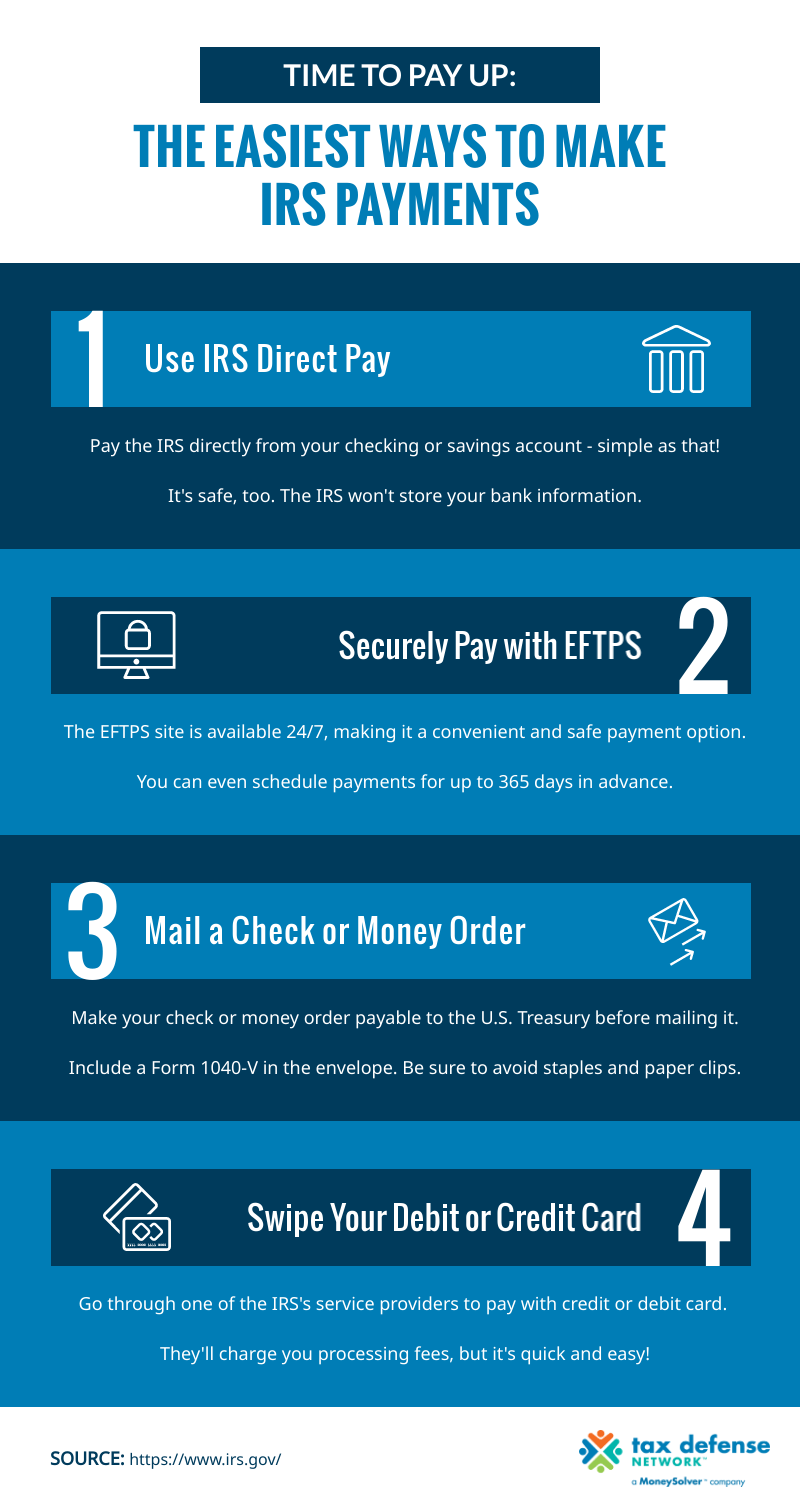
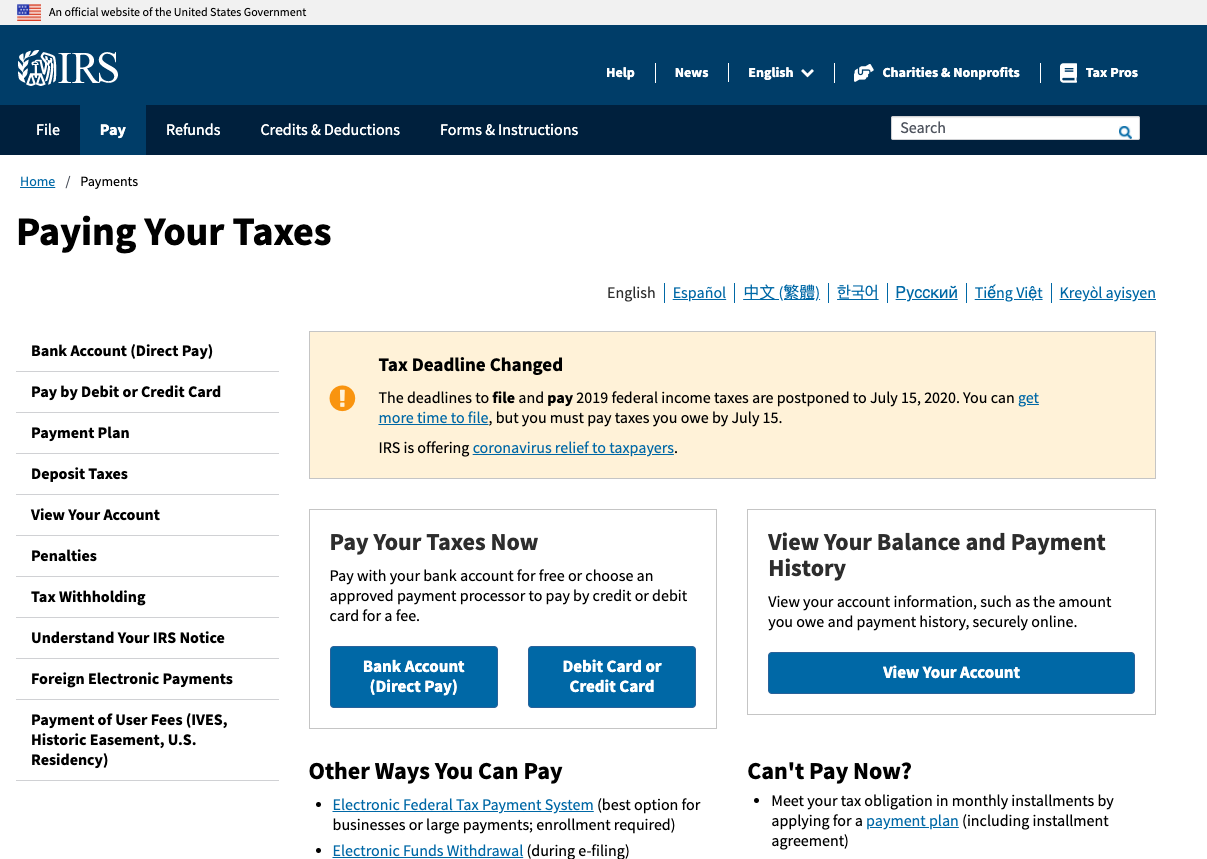
IRS Direct Pay is the most popular method for individuals to pay their 1040 series taxes, estimated taxes, and other individual tax obligations directly from a checking or savings account. The primary advantage of Direct Pay is that it is free. There are no processing fees, and the system allows you to schedule payments up to 365 days in advance.
When using Direct Pay, you receive an instant confirmation number, which is vital for your financial records. It is important to note that this service is specifically for individuals; businesses cannot use Direct Pay for corporate tax liabilities.
The Electronic Federal Tax Payment System (EFTPS)
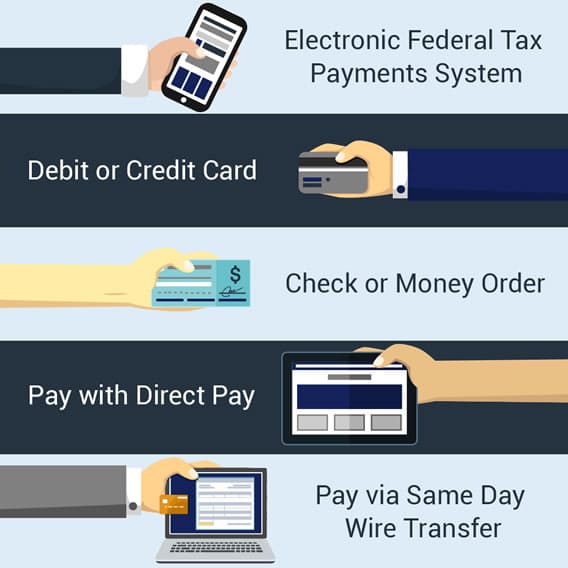
For businesses, high-net-worth individuals, and those who need to make frequent federal tax deposits, the Electronic Federal Tax Payment System (EFTPS) is the professional standard. Unlike Direct Pay, EFTPS requires a pre-registration process that involves receiving a PIN via mail, which can take five to seven business days.
Once enrolled, EFTPS offers a robust dashboard where users can track their payment history for up to 16 months. This is an essential tool for business finance management, allowing for precise tracking of payroll taxes, corporate income taxes, and excise taxes. It is widely considered the most secure way to handle large-scale federal transactions.
Credit and Debit Card Payments: Convenience vs. Cost
The IRS does not collect fees for credit or debit card payments, but the third-party processors they use certainly do. Paying via card is a viable option if you are looking to earn reward points or if you need to bridge a short-term liquidity gap. However, the convenience comes at a price: processing fees typically range from 1.87% to nearly 2% for credit cards, and a flat fee (usually around $2.00 to $4.00) for debit cards.
From a personal finance perspective, this method is only recommended if the value of your card’s “cash back” or travel rewards exceeds the processing fee, or if the card’s interest rate is lower than the IRS’s late-payment penalties.
Mobile and Alternative Digital Solutions
As financial technology evolves, the IRS has integrated more flexible payment solutions to meet taxpayers where they are—specifically on their mobile devices and through popular digital wallets.
The IRS2Go Mobile App
For taxpayers who prefer managing their finances via smartphone, the IRS2Go app provides a streamlined interface for making payments. Available on both iOS and Android, the app acts as a portal to Direct Pay and credit card processors. It is a particularly useful tool for gig economy workers and freelancers who may need to make estimated tax payments while on the go. The app also allows users to check their refund status, adding another layer of utility to the mobile tax experience.
Digital Wallets: PayPal and Venmo
In a relatively recent move to modernize, the IRS now allows taxpayers to settle their balances using digital wallets like PayPal and Venmo through authorized third-party processors. This integration is a significant benefit for small business owners who keep a portion of their working capital in these ecosystems. While the same processing fees applicable to credit cards usually apply here, the ease of transferring funds from a digital balance directly to the IRS simplifies the accounting process for many digital entrepreneurs.
Strategic Planning: Options When You Cannot Pay in Full
Financial volatility is a reality for many. If you find yourself in a position where you cannot pay your tax bill in full by the deadline, the IRS offers several “payment plan” or “installment agreement” options. Addressing a shortfall proactively is a cornerstone of responsible financial planning, as it helps mitigate the accumulation of high-interest penalties.
Short-Term Payment Plans
If you can pay your full tax liability within 180 days, you may qualify for a short-term payment plan. While interest and late-payment penalties still apply, the setup fee is typically zero if you apply online. This is an excellent bridge for individuals expecting a liquidity event, such as a bonus or the sale of an asset, shortly after the tax deadline.
Long-Term Installment Agreements
For liabilities that require more than six months to settle, the IRS offers long-term installment agreements (monthly payment plans). These agreements can last for up to 72 months. There is a setup fee involved, which is significantly reduced if you agree to have the payments deducted automatically via Direct Debit. From a business finance standpoint, an installment agreement allows for predictable cash flow forecasting while slowly chipping away at the tax debt.
Offer in Compromise (OIC)
The Offer in Compromise is a more complex financial tool intended for taxpayers experiencing severe financial distress. An OIC allows you to settle your tax debt for less than the full amount you owe. The IRS only grants this if they determine that the full amount is uncollectible or would create an “unfair economic hardship.” The application process is rigorous, requiring full disclosure of assets, income, and expenses, but it remains a vital “safety valve” for those in dire financial straits.
Physical and Traditional Payment Channels
While digital methods are encouraged, the IRS continues to support traditional payment channels for those who prefer physical documentation or do not have access to online banking.
Paper Checks and Money Orders
The traditional method of mailing a check or money order remains valid. If you choose this route, the payment must be made out to the “U.S. Treasury” (not “IRS”). It is critical to include a payment voucher (Form 1040-V) and write your Social Security number or Employer Identification Number (EIN) on the memo line, along with the tax year and the form number. To ensure security, it is highly recommended to send these payments via USPS Certified Mail with a return receipt requested to provide proof of timely filing.
In-Person Payments at Retail Partners
Through a partnership with services like ACI Payments and Pay1040, taxpayers can pay their taxes in cash at thousands of participating retail locations, including some pharmacies and convenience stores. There is a daily limit (usually around $1,000) and a small convenience fee. This method is particularly useful for the “underbanked” population or those who operate primarily in a cash economy and need to ensure their federal obligations are met without a traditional bank account.
Best Practices for Financial Compliance and Record-Keeping
Paying the IRS is only half the battle; the other half is maintaining the records to prove it. Proper documentation is the bedrock of financial security and is essential in the event of an audit or a system error.
Tracking Your Transaction History
Regardless of the method you choose, always save your confirmation numbers, digital receipts, or canceled checks. If you use EFTPS or an IRS Online Account, you can view your payment history digitally. Regularly checking these portals ensures that your payments have been applied to the correct tax year and type of tax.
Avoiding Common Payment Penalties
The IRS charges penalties for both late filing and late payment. The failure-to-file penalty is generally much higher than the failure-to-pay penalty. Therefore, from a strategic financial perspective, it is always better to file your return on time—even if you cannot pay a dime—and then set up a payment plan afterward. This single move can save you thousands of dollars in avoidable fees.
Integrating Tax Payments into Your Budget
For those with variable income, such as freelancers or small business owners, the “pay-as-you-go” method is the best way to manage IRS obligations. By setting aside a fixed percentage of every paycheck into a high-yield savings account specifically for taxes, you ensure that the funds are available when quarterly estimated payments are due. This disciplined approach prevents the “tax season shock” and ensures that your capital is working for you in the form of interest until it is time to pay the government.
In conclusion, paying the IRS does not have to be a source of financial friction. By selecting the tool that best fits your financial profile—whether it is the efficiency of Direct Pay, the structure of an installment agreement, or the rewards-potential of a credit card—you can manage your tax liabilities with professional precision. Staying informed and proactive is the most effective way to protect your financial health and maintain a positive relationship with the nation’s revenue service.
aViewFromTheCave is a participant in the Amazon Services LLC Associates Program, an affiliate advertising program designed to provide a means for sites to earn advertising fees by advertising and linking to Amazon.com. Amazon, the Amazon logo, AmazonSupply, and the AmazonSupply logo are trademarks of Amazon.com, Inc. or its affiliates. As an Amazon Associate we earn affiliate commissions from qualifying purchases.