
Navigating tax season is often a period of significant financial stress for both individuals and business owners. When faced with a substantial tax bill, the immediate concern is liquidity. While the Internal Revenue Service (IRS) offers various payment methods, using a credit card has emerged as a popular, albeit complex, strategy. While the IRS itself does not directly process credit card transactions, it authorizes several third-party payment processors to handle these payments. Understanding the nuances of this process—ranging from the logistical steps to the underlying financial implications—is essential for any taxpayer looking to optimize their cash flow and leverage financial tools effectively.
The Mechanics of Paying Federal Taxes via Credit Card
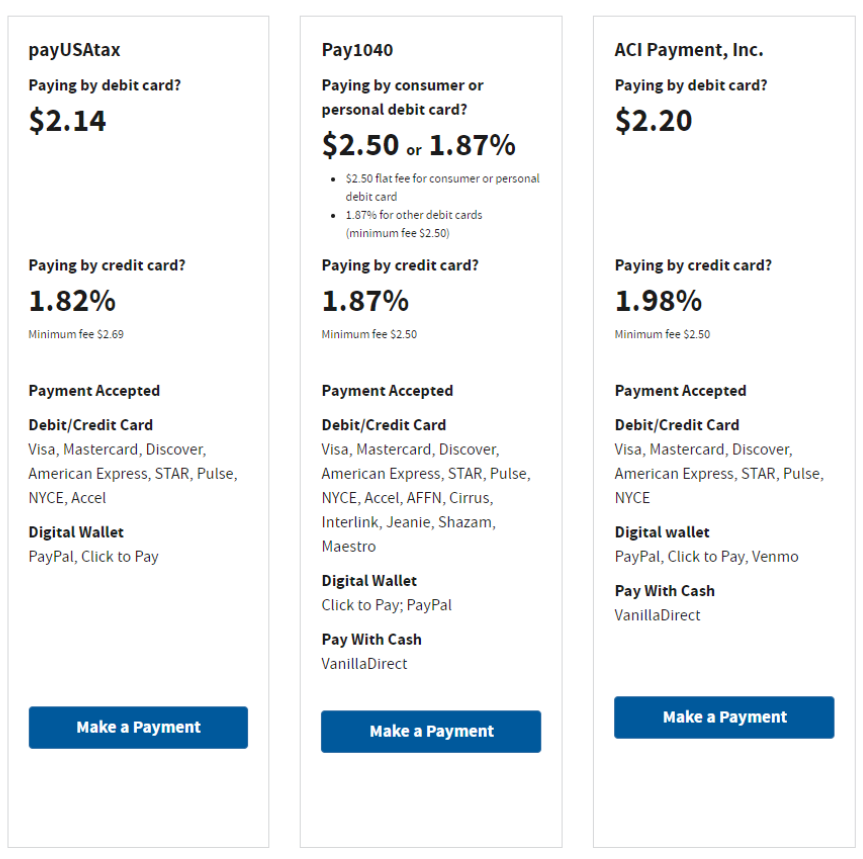
The IRS does not accept credit card payments over the phone or at local field offices. Instead, the agency utilizes a handful of vetted, third-party payment service providers. As of the current fiscal year, these providers include ACI Payments, Inc., Click2Pay, and Pay1040. Each of these platforms acts as a bridge between your financial institution and the Department of the Treasury.
The Step-by-Step Process
To initiate a payment, a taxpayer must first determine which tax form they are paying against. Common categories include Form 1040 (individual income tax), Form 1040-ES (estimated taxes), and various business-related filings. Once the form type is identified, the process follows a standard trajectory:
-
Select a Processor: Taxpayers should visit the IRS website to find the list of authorized processors. Each processor charges a different “convenience fee,” typically a percentage of the total tax amount.
-
Provide Identifying Information: You will need your Social Security Number (SSN) or Employer Identification Number (EIN), along with the tax year and the specific form type.
-
Enter Payment Details: Input the credit card information. Most major networks, including Visa, Mastercard, American Express, and Discover, are universally accepted.
-
Confirm and Record: After the transaction is authorized, the processor provides a confirmation number. It is vital to retain this for your records, as the IRS may take several days to reflect the payment in their internal systems.
Limits and Restrictions
It is important to note that the IRS imposes limits on the frequency of credit card payments. For most individual income tax returns, you are generally limited to two payments per tax period. For estimated tax payments, the limit is typically two payments per quarter. These restrictions prevent taxpayers from excessively fragmenting payments to manipulate credit card billing cycles or reward structures.
Evaluating the Cost-Benefit Ratio: Fees vs. Rewards
The decision to pay taxes with a credit card is rarely about simple convenience; it is a mathematical calculation. Because the IRS does not pay the processing fees associated with credit card transactions, those costs are passed directly to the taxpayer.
Understanding Convenience Fees
Convenience fees currently hover between 1.82% and 1.98% of the total transaction. For a $10,000 tax bill, a 1.87% fee results in an additional $187 charge. For the transaction to make financial sense, the value derived from the payment must exceed this “sunk cost.”
The Rewards Arbitrage Strategy
For enthusiasts of “credit card rewards,” paying taxes can be a highly effective way to meet “minimum spend” requirements for lucrative sign-up bonuses. Many premium travel or cash-back cards offer bonuses worth $500 to $1,000 after spending a specific amount (often $3,000 to $6,000) within the first three months of account opening.
In this scenario, paying a $187 fee to unlock a $750 travel credit represents a significant net gain. However, if you are using a standard 1% or 1.5% cash-back card, you will likely lose money on the transaction, as the processing fee exceeds the reward value. To break even or profit, a taxpayer generally needs a card that offers a baseline reward of at least 2% or carries a high-value sign-up bonus.
Tax Deductibility of Fees
For business owners and self-employed individuals, there is a silver lining. The convenience fees paid for business-related tax payments (such as payroll taxes or corporate income tax) are generally considered a deductible business expense. This deduction can lower the “effective” cost of the fee, making the use of credit cards even more attractive for entrepreneurs looking to manage business liquidity.
Strategic Advantages of Using Credit for Tax Liability

Beyond the pursuit of rewards, using a credit card to settle a tax debt offers several strategic financial advantages, particularly regarding cash flow management and institutional leverage.
Preserving Liquid Capital
In an environment where cash is king, maintaining a liquid emergency fund or operating capital is often more important than avoiding a small processing fee. By putting a tax bill on a credit card, a taxpayer can preserve their cash for high-yield investments, business inventory, or unexpected emergencies. Effectively, the credit card acts as a short-term bridge loan.
The “Float” Period
When you pay the IRS with a credit card, you are essentially utilizing a 21-to-30-day interest-free period, often referred to as the “float.” If you time the payment at the beginning of your credit card’s billing cycle, you have several weeks before the statement closes and another three weeks before the payment is actually due. For a taxpayer waiting on a year-end bonus or a large business invoice to be paid, this extra 50 days of liquidity can be invaluable.
Leveraging 0% APR Offers
One of the most potent financial moves is utilizing a credit card with a 0% introductory APR on purchases. If a taxpayer has a $20,000 tax bill and lacks the immediate cash to pay it in full, the IRS would normally charge interest and penalties on an installment plan. By opening a 0% APR card and paying the tax bill, the taxpayer can pay off the debt over 12 to 18 months interest-free, paying only the initial ~1.9% convenience fee. Compared to the IRS’s failure-to-pay penalties and market-based interest rates, the 0% APR strategy is often the most cost-effective way to finance a tax debt.
Risks and Best Practices for Taxpayers
While the benefits can be substantial, paying the IRS with credit is not without significant risk. Irresponsible use of this method can lead to a debt spiral and a damaged credit profile.
The Interest Trap
The most critical rule of paying taxes with credit is that the balance must be paid in full before the interest kicks in. Average credit card APRs currently exceed 20%. If you carry a tax balance on a card with a high interest rate, the compounding interest will quickly eclipse any rewards earned and far exceed the cost of an IRS installment plan.
Credit Utilization and Scoring
A large tax payment can significantly increase your credit utilization ratio—the amount of credit you are using compared to your total limits. High utilization is a major factor in credit scoring models. If you put a $15,000 tax bill on a card with a $20,000 limit, your score may drop temporarily due to the 75% utilization on that specific line of credit. This is an important consideration if you plan to apply for a mortgage or an auto loan in the months following tax season.
Record Keeping and Audits
In the event of an IRS audit, proof of payment is essential. When paying by card, the “receipt” is the confirmation number provided by the processor and the line item on your credit card statement. It is a best practice to print a PDF of the confirmation page and store it with your tax return for that year. Ensure the payment is credited to the correct tax year; errors here can lead to “missing” payments and unnecessary correspondence with the IRS.
Alternatives and Long-Term Financial Planning
Before committing to a credit card payment, taxpayers should weigh this option against official IRS programs. For many, the IRS’s own internal systems offer more stability for long-term debt.
IRS Installment Agreements
The IRS offers “Payment Plans” (Installment Agreements) for those who cannot pay in full. For individuals, these plans can last up to 72 months. While the IRS charges a setup fee and interest (which is adjusted quarterly), the interest rates are often lower than a standard credit card’s non-introductory APR. Furthermore, the IRS does not report these plans to credit bureaus unless a tax lien is filed, meaning an installment agreement won’t negatively impact your credit score in the same way a maxed-out credit card might.
IRS Direct Pay
If the goal is simply to pay the bill without any frills, IRS Direct Pay is the most efficient method. It allows for direct transfer from a checking or savings account with zero fees. For taxpayers who do not care about credit card rewards and have the cash on hand, this is the gold standard for security and cost-efficiency.
Integrating Tax Payments into a Holistic Wealth Strategy
Ultimately, how you pay the IRS should be a reflection of your broader financial health. High-net-worth individuals often use credit cards for taxes to maintain their investment positions, avoiding the need to liquidate stocks and trigger even more capital gains taxes. On the other hand, a freelancer might use a card to manage the ebbs and flows of seasonal income.
The decision to use a credit card for IRS payments should be viewed as a tool in a financial toolbox. When used with precision—taking advantage of sign-up bonuses, 0% APR windows, or cash flow timing—it is a sophisticated way to manage one of life’s most significant recurring expenses. When used without a clear repayment plan, however, it is a high-cost shortcut that can lead to long-term financial instability. Comprehensive planning and a clear-eyed look at the math remain the best defenses against the burdens of tax season.
aViewFromTheCave is a participant in the Amazon Services LLC Associates Program, an affiliate advertising program designed to provide a means for sites to earn advertising fees by advertising and linking to Amazon.com. Amazon, the Amazon logo, AmazonSupply, and the AmazonSupply logo are trademarks of Amazon.com, Inc. or its affiliates. As an Amazon Associate we earn affiliate commissions from qualifying purchases.