
Amazon Prime has become an ubiquitous presence in the digital age, transforming how millions shop, stream, and access a plethora of services. For many, it’s more than just a subscription; it’s an integral part of their online ecosystem. However, beneath the convenience and extensive benefits lies a fundamental financial question: how do you pay for Amazon Prime, and what are the best financial strategies to manage this recurring expense? Understanding the payment mechanisms, pricing structures, and financial implications is crucial for any savvy consumer looking to maximize value while maintaining fiscal responsibility. This guide delves into the various ways to financially manage your Amazon Prime membership, ensuring you make informed decisions that align with your personal finance goals.
Understanding Amazon Prime Membership Costs
Before diving into payment methods, it’s essential to grasp the underlying cost structure of an Amazon Prime membership. Prime is a premium service, and its cost is a significant factor in any personal budget. Recognizing the various tiers and payment frequencies can lead to substantial savings and better financial planning.
Annual vs. Monthly Payment Structures: A Financial Comparison
Amazon offers its Prime membership in two primary billing frequencies: monthly and annually. While the monthly option provides flexibility, allowing you to cancel at any time without a long-term commitment, it generally comes at a higher cumulative cost over 12 months. Opting for an annual subscription typically translates to a notable discount compared to paying month-to-month. From a financial perspective, if you anticipate using Prime for a full year or more, the annual plan is almost always the more cost-effective choice. This upfront investment locks in a lower rate and simplifies budgeting by consolidating a recurring expense into a single annual payment. For those on a tight budget or experimenting with Prime, the monthly plan might seem attractive, but it’s important to factor in the premium you pay for that flexibility.
Current Pricing Tiers and Discounted Memberships
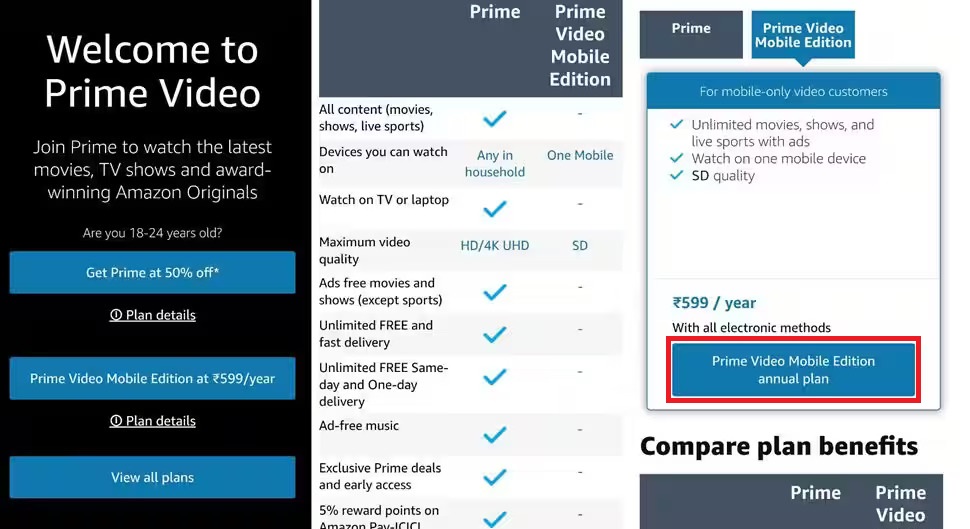
Amazon’s standard Prime membership often has a set annual and monthly price. However, the company also offers various discounts for specific demographics, making Prime more accessible and budget-friendly for certain groups.
-
Student Prime: Eligible college students can often subscribe to Prime at a significantly reduced rate, typically half the standard price, and often include an extended free trial period. This discount acknowledges the financial constraints students often face and aims to integrate them into the Amazon ecosystem early. Verification of student status, usually through an academic email address, is required.
-
EBT/Medicaid Recipients: Individuals receiving qualifying government assistance, such as EBT or Medicaid benefits, can also qualify for a reduced Prime membership fee. This initiative aims to make the benefits of Prime, including free shipping and access to digital content, more equitable for lower-income households.
-
Promotional Offers: Amazon periodically runs promotional campaigns, offering temporary discounts or extended free trials, especially during major shopping events like Prime Day or the holiday season. Staying alert to these offers can be a smart financial move, allowing you to secure a Prime membership at a lower entry cost.
Leveraging these discounted tiers can result in substantial savings over the lifetime of your membership, making Prime a more financially viable option for many.
The Free Trial: A Financial Planning Opportunity
Amazon Prime typically offers a 30-day free trial for new members. This isn’t just a perk; it’s a crucial financial planning opportunity. During this trial period, you gain full access to all Prime benefits without any immediate financial commitment. Use this time wisely to:
-
Evaluate Usage: Assess how frequently you utilize Prime benefits like expedited shipping, Prime Video, Amazon Music, Prime Reading, and exclusive discounts.
-
Calculate Value: Determine if the perceived value of these services outweighs the eventual cost of a paid membership.
-
Test Compatibility: See how Prime integrates into your lifestyle and spending habits.
Crucially, remember to mark your calendar for the trial’s end date. If you decide Prime isn’t worth the investment, you can cancel before being charged, incurring no cost. If you wish to continue, the trial seamlessly transitions into a paid membership using your selected payment method.
Primary Payment Methods for Amazon Prime
Once you decide to commit to an Amazon Prime membership, understanding the accepted payment methods is the next step. Amazon offers several convenient and secure ways to pay for your subscription, catering to a wide range of financial preferences.
Debit and Credit Cards: The Standard Approach
The most common and widely accepted payment methods for Amazon Prime are debit and credit cards. Amazon supports all major card networks, including Visa, Mastercard, American Express, and Discover.
-
Credit Cards: Paying with a credit card offers several advantages from a financial perspective. Many credit cards provide cashback rewards, travel points, or other incentives on purchases, effectively reducing the net cost of your Prime membership. Additionally, credit cards offer a layer of fraud protection that can be beneficial. However, it’s vital to use credit responsibly and ensure you can pay off your balance to avoid interest charges, which would negate any rewards.
-
Debit Cards: Debit cards link directly to your checking account. This method ensures that funds are available at the time of purchase, preventing debt accumulation. For those who prefer to avoid credit or manage their spending directly from their available funds, a debit card is a straightforward option. Ensure your account has sufficient funds to avoid overdraft fees when the Prime membership renews.
Regardless of whether you use a debit or credit card, Amazon employs robust security measures, including encryption and tokenization, to protect your financial information.
Amazon Gift Cards: Budgeting and Rewards Redemption
Amazon gift cards provide a unique and flexible way to pay for Prime. If you have an Amazon gift card balance, you can use it to cover the cost of your membership. This method is particularly useful for:
-
Budgeting: You can allocate specific funds for Prime by purchasing gift cards with cash or from a specific budget category.
-
Using Rewards: Many credit card rewards programs or loyalty points can be redeemed for Amazon gift cards. This allows you to effectively pay for Prime using accumulated rewards, turning loyalty points into tangible savings.
-
Gifting Prime: Someone can gift you the equivalent value of a Prime membership via an Amazon gift card, allowing you to apply it directly.
To pay with a gift card balance, simply ensure you have enough funds loaded into your Amazon account before the renewal date. Amazon will automatically draw from your gift card balance first before attempting to charge other linked payment methods.
Amazon Store Card and Credit Builder: Leveraging Amazon’s Financial Tools
Amazon offers its own suite of financial products, which can also be used to pay for Prime:
-
Amazon Store Card: This credit card is primarily used for purchases on Amazon.com and often offers special financing options or cashback rewards specifically for Amazon purchases. If you frequently shop on Amazon, using the store card for your Prime membership can earn you rewards or take advantage of specific promotional offers. However, like any store-specific credit card, be mindful of potentially higher interest rates if balances are carried over.
-
Amazon Secured Card (Credit Builder): For individuals looking to build or rebuild their credit, the Amazon Secured Card operates similarly to a traditional secured credit card, requiring a security deposit. Regular, on-time payments for your Prime membership and other Amazon purchases can help improve your credit score. This offers a dual benefit: access to Prime and a tool for financial growth, provided you manage it responsibly.
These options demonstrate how Amazon integrates its financial services directly into its ecosystem, offering tailored solutions for its customers.
Managing Your Amazon Prime Payments and Subscriptions
Effective management of your Amazon Prime membership goes beyond just the initial payment. It involves staying informed about your billing cycles, updating payment information, and understanding your subscription status to maintain financial control.
Locating and Updating Payment Information
Life happens, and payment methods can change – cards expire, bank accounts shift, or you might simply want to switch to a different card for better rewards. Amazon makes it relatively straightforward to manage your Prime payment details:
-
Access Your Account: Log in to your Amazon account.
-
Navigate to Prime Membership: Go to “Account & Lists” > “Your Prime Membership.”
-
Manage Membership: On this page, you’ll find options to manage your membership, including “Manage Prime Membership” or “Update Payment.”
-
Change Payment Method: Here, you can select an existing card, add a new debit or credit card, or choose to use your Amazon gift card balance.
Regularly reviewing and updating your payment information ensures uninterrupted service and prevents potential billing issues, such as failed payments, which could lead to a temporary suspension of your Prime benefits.
Understanding Billing Cycles and Renewal Dates

A fundamental aspect of managing any subscription is knowing when you will be charged. For Amazon Prime, your billing cycle depends on whether you opted for a monthly or annual plan.
-
Monthly Plan: You will be charged on the same date each month, starting from the day your free trial ends or your paid membership begins.
-
Annual Plan: You will be charged once a year on the anniversary of your membership start date.
You can find your specific renewal date on your “Your Prime Membership” page within your Amazon account. Keeping track of this date is vital for financial planning, especially if you need to ensure sufficient funds are available or wish to change your payment method before the charge occurs. Unexpected charges can lead to overdraft fees or budget disruptions, so proactive monitoring is key.
Reviewing Payment History and Receipts
For meticulous financial tracking, Amazon provides access to your payment history for Prime. This allows you to:
-
Verify Charges: Confirm that you’ve been charged the correct amount and on the expected date.
-
Budgeting: Track your spending on subscriptions as part of your overall personal finance management.
-
Record Keeping: Maintain records for personal finance auditing or tax purposes if applicable (e.g., if Prime is partially for business use).
You can typically view your past charges on the “Your Prime Membership” page or by checking your order history for digital orders, where Prime membership charges are usually listed.
Financial Strategies for Optimizing Your Prime Membership
Beyond merely paying for Prime, strategic financial planning can ensure you get the most value for your money. Optimizing your membership means not just minimizing costs but maximizing the utility derived from your investment.
Budgeting for Your Prime Subscription
Integrating your Prime membership fee into your personal budget is a cornerstone of responsible financial management. Whether it’s a monthly or annual expense, ensure it’s accounted for within your entertainment, shopping, or subscription budget categories.
-
Categorization: Assign Prime to a relevant budget category (e.g., “Subscriptions & Services”).
-
Allocation: Set aside the necessary funds each month or year. If you opt for the annual plan, consider setting up a sinking fund where you save a portion of the annual fee each month so the lump sum payment isn’t a shock to your finances.
-
Review: Periodically review your budget to ensure Prime’s cost still fits comfortably within your financial parameters. If your financial situation changes, you might need to reconsider the membership.
Maximizing Benefits to Justify the Cost
The true financial value of Prime isn’t just its price tag; it’s the sum of the benefits you actively use. To justify the cost:
-
Utilize Free Shipping: Make the most of unlimited free two-day (or faster) shipping. Factor in how much you save on shipping fees compared to ordering without Prime.
-
Stream Media: Actively use Prime Video for movies and TV shows, Prime Music for ad-free listening, and Prime Reading for e-books. If these replace other paid streaming or music services, the financial value increases significantly.
-
Exclusive Deals: Take advantage of Prime-exclusive discounts, especially during events like Prime Day.
-
Other Perks: Explore other less-used benefits like Prime Gaming, Amazon Photos unlimited storage, or early access to Lightning Deals.
If you find yourself only using one or two benefits sparingly, the financial justification for the full membership fee diminishes.
Utilizing Payment Rewards and Cashback
As mentioned, using credit cards with generous rewards programs can effectively reduce the net cost of your Prime membership.
-
Cashback Cards: A credit card offering 1-2% cashback on all purchases means you get a small percentage back on your Prime fee.
-
Travel Rewards Cards: If you collect travel points, your Prime payment contributes to your next trip.
-
Amazon-Specific Cards: The Amazon Prime Rewards Visa Signature Card, for example, often offers higher cashback rates on Amazon purchases, which could apply to your Prime membership or other purchases, indirectly offsetting the cost.
Always ensure you pay off your credit card balance in full each month to avoid interest charges, which would easily outweigh any rewards earned.
Sharing Prime Benefits (Household Program)
Amazon allows two adults and up to four children within the same household to share many Prime benefits through Amazon Household, all under one paid membership. This is a powerful financial tool:
-
Cost Sharing: If you split the annual cost with another adult, each person effectively pays half for the core benefits.
-
Extended Value: One membership serves multiple individuals, amplifying the overall value derived from the single financial outlay.
This feature is particularly beneficial for families or roommates who can jointly leverage the benefits without incurring additional subscription costs.
Cancelling or Pausing Your Prime Membership
Sometimes, personal financial circumstances change, or the perceived value of Prime no longer justifies the cost. Understanding the process and financial implications of cancelling or pausing your membership is crucial.
The Financial Implications of Cancellation
Amazon’s cancellation policy is generally fair. If you cancel during a free trial, you won’t be charged. If you cancel a paid membership, the refund you receive (if any) depends on how much you’ve used the benefits since your last renewal date.
-
Full Refund: If you haven’t used any Prime benefits (like free shipping or Prime Video) since your last charge, you might be eligible for a full refund of the membership fee.
-
Partial Refund: If you’ve used some benefits, Amazon might issue a partial refund based on the remaining unused portion of your membership period.
-
No Refund (at end of period): If you cancel close to the end of your billing cycle and have used benefits extensively, you might simply complete your current membership period without renewal and without a refund.
It’s important to review Amazon’s specific refund policy at the time of cancellation, which is typically outlined during the cancellation process. The financial impact is minimizing wasted money on unused services.
Pausing vs. Cancelling: Future Financial Decisions
While Amazon doesn’t offer a direct “pause” option in the traditional sense, you can choose not to renew your membership at the end of your current term. This is akin to a pause, as you retain benefits until the paid period expires, and then the service simply doesn’t renew. Rejoining Prime in the future is always an option, though you’ll be subject to the prevailing membership fees at that time.
Rejoining Prime – Future Financial Decisions
Should you decide to cancel and then wish to rejoin later, the process is straightforward. You can sign up again for a new membership. However, it’s worth noting that any promotional rates or specific payment methods tied to your previous membership might not apply to a new subscription. Always check the current pricing and any available discounts when making a decision to rejoin, ensuring it aligns with your updated financial situation.

Conclusion
Paying for Amazon Prime is more than just inputting your credit card details; it’s a financial decision that requires careful consideration of costs, benefits, and personal budgeting. By understanding the various payment methods, leveraging discounted tiers, actively managing your subscription, and strategically utilizing Prime’s extensive benefits, you can ensure your membership remains a valuable investment rather than an overlooked expense. Whether you’re a student, a family, or an individual shopper, informed financial choices regarding your Amazon Prime subscription are key to maximizing its value and maintaining a healthy personal financial outlook.
aViewFromTheCave is a participant in the Amazon Services LLC Associates Program, an affiliate advertising program designed to provide a means for sites to earn advertising fees by advertising and linking to Amazon.com. Amazon, the Amazon logo, AmazonSupply, and the AmazonSupply logo are trademarks of Amazon.com, Inc. or its affiliates. As an Amazon Associate we earn affiliate commissions from qualifying purchases.