
For many, the idea of paying taxes is an annual springtime ritual. You gather your documents, perhaps visit a tax preparer, and file your return by April 15th. However, for a significant portion of the workforce, particularly the self-employed, freelancers, small business owners, and those with substantial income not subject to withholding, tax obligations don’t wait for April. Instead, they operate on a quarterly schedule, requiring proactive estimation and payment throughout the year. Failing to understand and adhere to these requirements can lead to unwelcome penalties and financial stress.
Navigating quarterly estimated taxes can seem daunting at first, but with a clear understanding of who needs to pay, how to calculate your obligations, and the available payment methods, it becomes a manageable component of your financial planning. This guide will demystify the process, offering insights and practical strategies to ensure you stay compliant and confident in your tax management.
Understanding Quarterly Estimated Taxes: Who Needs to Pay?
The U.S. tax system operates on a “pay-as-you-go” principle. This means that taxpayers are expected to pay taxes on their income as they earn it, rather than in one lump sum at the end of the year. For most employees, this is handled automatically through payroll withholding by their employer. However, when income isn’t subject to withholding, or if withholding isn’t sufficient, the IRS requires individuals and certain businesses to make estimated tax payments throughout the year.
The Self-Employed and Freelancers
This group forms the largest cohort required to make quarterly payments. If you work for yourself, whether as a sole proprietor, independent contractor, or gig worker, you are responsible for both the employee and employer portions of Social Security and Medicare taxes (known as self-employment tax), in addition to income tax. Since no employer is withholding these funds, the onus is entirely on you to estimate and pay them quarterly. This applies even if self-employment is a side hustle, provided your net earnings exceed a certain threshold ($400 for self-employment tax).
Individuals with Unwithheld Income
Beyond self-employment, many other income sources are not subject to standard payroll withholding, making quarterly payments a necessity. This can include:
- Interest and Dividends: Significant income from investments.
- Rental Income: Earnings from properties you lease out.
- Alimony: (For divorce agreements executed before January 1, 2019).
- Capital Gains: From the sale of stocks, real estate, or other assets.
- Pension or Annuity Income: If you’ve elected not to have tax withheld, or if the withholding is insufficient.
- Gambling Winnings: Substantial winnings that aren’t subject to immediate withholding.
If you expect to owe at least $1,000 in tax for the year (after subtracting any withholding and credits), you will generally need to make estimated payments. For corporations, the threshold is typically $500.
Corporations and Certain Business Structures
While this article primarily focuses on individual quarterly payments, it’s crucial to note that most corporations are also required to pay estimated income tax if they expect to owe $500 or more in tax for the year. S-corporations and partnerships generally pass their income through to their owners, who then report it on their personal returns and may need to make individual estimated payments. However, C-corporations directly pay corporate income tax and must adhere to a similar quarterly payment schedule. Understanding your business structure’s specific tax obligations is paramount for compliance.
Estimating Your Quarterly Tax Liability
Accurately estimating your quarterly tax payments is arguably the most challenging part of the process. The goal is to pay enough throughout the year to avoid underpayment penalties, but not so much that you tie up excessive capital. The IRS provides tools and guidelines, but ultimately, it requires careful planning and periodic review.
Calculating Your Expected Income and Deductions
The first step is to project your adjusted gross income (AGI) for the entire tax year. This means estimating all your income sources – self-employment earnings, investment income, rental income, and any wages subject to withholding – and then subtracting any eligible deductions. Think about standard deductions versus itemized deductions, health savings account (HSA) contributions, traditional IRA contributions, and any business expenses you anticipate. Don’t forget to factor in tax credits you might qualify for, such as the child tax credit, education credits, or credits for energy-efficient home improvements.
A common approach is to look at your previous year’s tax return as a baseline, assuming your income and expenses will be similar. However, if you expect significant changes – a new business venture, a substantial increase in freelance work, or a major life event – you’ll need to adjust your projections accordingly.
Utilizing Form 1040-ES and Tax Software
The IRS provides Form 1040-ES, “Estimated Tax for Individuals,” which includes a worksheet to help you calculate your estimated tax. This worksheet guides you through projecting your income, deductions, and credits, ultimately determining your total estimated tax for the year. You then divide this total by four to arrive at your quarterly payment amount.
Many reputable tax software programs (like TurboTax, H&R Block, or TaxAct) also offer features to help calculate estimated taxes. They can often port over data from your previous year’s return and help you project current year income and expenses, simplifying the calculation process significantly. For those with complex financial situations, a professional tax advisor can provide invaluable assistance in making accurate estimates.
Adjusting Estimates Throughout the Year
Life and business are dynamic, and your initial estimate might not hold true as the year progresses. It’s crucial to revisit your income and expense projections periodically – ideally before each quarterly payment deadline. If your income significantly increases or decreases, or if you incur unexpected large expenses, you may need to adjust your subsequent payments.
For instance, if you have a particularly profitable first quarter, you might need to increase your payments for the remaining quarters. Conversely, if a business venture slows down, you could reduce future payments. The IRS allows for adjustments, and proactively modifying your payments can prevent large underpayment penalties or overpaying and waiting for a refund.
The Quarterly Payment Schedule and Methods
Once you’ve calculated your estimated tax, the next step is to ensure timely submission. The IRS has specific due dates for each quarter, and understanding the various payment methods can simplify the process.
Key Due Dates for Each Quarter
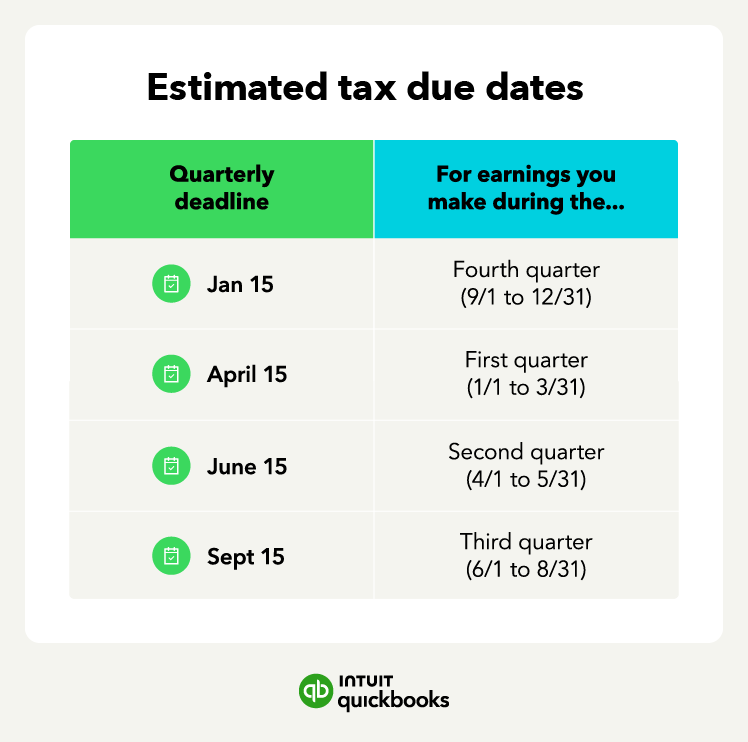
The calendar year is divided into four payment periods for estimated taxes, each with a specific deadline. It’s important to note that these periods don’t perfectly align with calendar quarters. If a due date falls on a weekend or holiday, the deadline is typically pushed to the next business day.

- Payment 1 (January 1 to March 31 income): Due April 15
- Payment 2 (April 1 to May 31 income): Due June 15
- Payment 3 (June 1 to August 31 income): Due September 15
- Payment 4 (September 1 to December 31 income): Due January 15 of the next year
If you’re a farmer or a fisherman, you have special rules and may only need to make one payment by January 15th of the next year, provided you file your return and pay any tax due by March 1st.
Convenient Ways to Submit Your Payments
The IRS offers several convenient and secure methods to make your estimated tax payments:
- IRS Direct Pay: This free service allows you to pay directly from your checking or savings account. It’s straightforward, requires no registration, and you get immediate confirmation. This is generally the fastest and easiest way to pay electronically.
- Electronic Federal Tax Payment System (EFTPS): This is a free service provided by the U.S. Department of the Treasury. It’s more geared towards businesses but individuals can also use it. It requires enrollment and a few days to set up, but once active, it allows scheduling payments up to 365 days in advance.
- Tax Software or Tax Professional: Many tax preparation software programs allow you to make estimated payments directly through their platform when you calculate your tax. Your tax preparer can also submit payments on your behalf.
- Debit Card, Credit Card, or Digital Wallet: You can pay through third-party payment processors, though these typically involve a processing fee.
- Mail: You can print out a Form 1040-ES payment voucher and mail it along with a check or money order to the IRS. While reliable, this is the slowest method and doesn’t offer instant confirmation.
For businesses, EFTPS is often the preferred method, offering robust tracking and scheduling features. For individuals, IRS Direct Pay is typically the simplest electronic option.
State Estimated Tax Requirements
It’s vital to remember that federal estimated taxes are only half the battle. Most states with an income tax also require estimated tax payments if you expect to owe a certain amount (often $500 or $1,000, depending on the state). The rules, thresholds, and due dates for state estimated taxes can differ from federal requirements. Some states may follow the federal schedule, while others have their own unique calendar. Be sure to check your specific state’s tax agency website or consult with a tax professional to understand and comply with your state obligations. Failing to do so can result in state-level penalties.
Avoiding Penalties: Common Pitfalls and Best Practices
Underpaying your estimated taxes can lead to penalties from the IRS, even if you eventually pay all the tax you owe when you file your annual return. The IRS calculates penalties based on the amount of underpayment and the duration it remained unpaid. However, there are “safe harbor” rules designed to help taxpayers avoid these penalties.
Underpayment Penalties and Safe Harbors
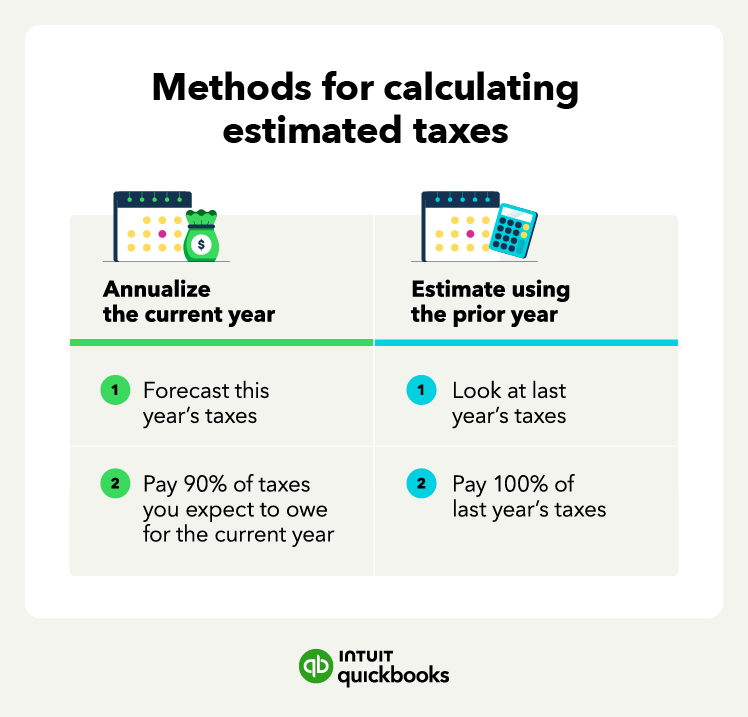
Generally, you can avoid an underpayment penalty if you pay at least 90% of your current year’s tax liability or 100% of your previous year’s tax liability (110% if your previous year’s AGI was over $150,000), whichever is smaller. This is known as the “safe harbor” rule. As long as you meet one of these thresholds, you typically won’t face an underpayment penalty, even if you still owe tax when you file.
It’s generally recommended to aim for the 100% (or 110%) of previous year’s tax safe harbor if your income is expected to be stable or increase, as it’s easier to calculate and provides certainty. If your income is expected to drop significantly, paying 90% of the current year’s tax might be a better strategy.
Maintaining Meticulous Records
Accurate record-keeping is the cornerstone of effective quarterly tax management. Keep a detailed log of all your income and expenses throughout the year. For self-employment income, track invoices, payments received, and business expenses (receipts, mileage logs, home office expenses). For investment income, maintain statements. Good records not only help you estimate your taxes more accurately but also provide crucial documentation if the IRS ever questions your return. Digital tools, spreadsheets, and accounting software can greatly assist in this process.
Leveraging Professional Tax Assistance
For many, especially those with complex income streams, a tax professional can be an invaluable asset. A Certified Public Accountant (CPA) or Enrolled Agent (EA) can:
- Help you accurately estimate your annual income, deductions, and credits.
- Calculate your quarterly payment amounts.
- Advise on strategies to minimize your tax liability legally.
- Help you understand and comply with both federal and state estimated tax rules.
- Represent you before the IRS if there are any issues.
While there’s an upfront cost, the peace of mind and potential savings from avoiding penalties or overpayment can easily justify the expense, especially if your financial situation is not straightforward.
Strategies for Seamless Quarterly Tax Management
Taking a proactive and organized approach to quarterly taxes can transform a potential source of anxiety into a routine financial task. Integrating tax planning into your regular financial habits is key.
Setting Aside Funds Proactively
One of the most effective strategies is to mentally (and physically) separate a portion of every payment you receive for taxes. Many self-employed individuals open a dedicated savings account specifically for taxes and transfer 25-35% (or more, depending on their income level and state taxes) of their gross earnings into it as soon as they get paid. This ensures that when quarterly tax deadlines roll around, the money is already there and ready to be paid, preventing a scramble or the temptation to use those funds for other purposes.
Regular Financial Review and Adjustment
Don’t treat your quarterly tax estimate as a one-and-done calculation. Make it a habit to review your income and expenses at least once a quarter, before each payment deadline. Use this opportunity to update your projections, reconcile your financial records, and make any necessary adjustments to your upcoming payments. This iterative process helps keep your estimates as accurate as possible and ensures you’re on track to meet your annual tax obligations without surprises.
Automating the Payment Process
Leverage technology to simplify your payments. Once you’ve determined your quarterly amount, use IRS Direct Pay or EFTPS to schedule your payments in advance. You can set reminders or even schedule all four payments at the beginning of the year, provided you’re confident in your estimates. Automation reduces the risk of forgetting a deadline and incurring penalties, allowing you to focus on your core work without constant worry about tax due dates.
In conclusion, making quarterly tax payments is a fundamental responsibility for many individuals and businesses in a pay-as-you-go tax system. While it requires diligent estimation and timely action, understanding the “who, what, when, and how” of estimated taxes empowers you to manage your financial responsibilities effectively. By embracing proactive planning, meticulous record-keeping, and leveraging available tools and professional advice, you can navigate the world of quarterly taxes with confidence and avoid unnecessary stress or penalties.
aViewFromTheCave is a participant in the Amazon Services LLC Associates Program, an affiliate advertising program designed to provide a means for sites to earn advertising fees by advertising and linking to Amazon.com. Amazon, the Amazon logo, AmazonSupply, and the AmazonSupply logo are trademarks of Amazon.com, Inc. or its affiliates. As an Amazon Associate we earn affiliate commissions from qualifying purchases.