
Investing in the S&P 500 is a strategy that has captivated both seasoned investors and newcomers to the financial markets. Widely regarded as one of the most reliable indicators of the U.S. stock market’s performance and, by extension, the American economy, the S&P 500 offers a compelling opportunity for diversified growth. For many, the idea of investing in this iconic index evokes a sense of both aspiration and apprehension. How exactly does one gain exposure to 500 of the largest and most influential U.S. companies? Is it complex, or are there straightforward pathways available to everyday investors?
This comprehensive guide will demystify the process, breaking down the S&P 500, exploring the most effective investment vehicles, outlining a practical step-by-step approach, and shedding light on crucial considerations to ensure your investment journey is informed, strategic, and ultimately successful. By the end, you’ll have a clear understanding of how to confidently integrate the S&P 500 into your investment portfolio, aligning with your financial goals and risk tolerance.
Understanding the S&P 500: A Benchmark of American Economic Health
Before diving into the “how-to,” it’s essential to grasp what the S&P 500 truly represents and why it holds such significance in the investment world. Its reputation isn’t merely about its constituent companies but its broader implications for economic health and long-term wealth creation.
What is the S&P 500?
The S&P 500, short for the Standard & Poor’s 500, is a stock market index that represents 500 of the largest publicly traded companies in the United States, selected by S&P Dow Jones Indices. Unlike the Dow Jones Industrial Average, which is price-weighted and composed of just 30 stocks, the S&P 500 is market-capitalization-weighted. This means that companies with larger market values have a greater impact on the index’s performance. The index’s selection criteria consider factors like market size, liquidity, and sector representation, ensuring it accurately reflects the overall U.S. equity market across various industries. From tech giants like Apple and Microsoft to financial powerhouses like JPMorgan Chase and consumer staples like Procter & Gamble, the S&P 500 offers broad exposure to the engines of American commerce.
Why Invest in the S&P 500?
The appeal of the S&P 500 is multifaceted:
- Broad Diversification: By investing in the S&P 500, you are inherently investing in 500 different companies across various sectors. This inherent diversification significantly reduces the risk associated with investing in individual stocks, as the poor performance of one or a few companies is offset by the success of others.
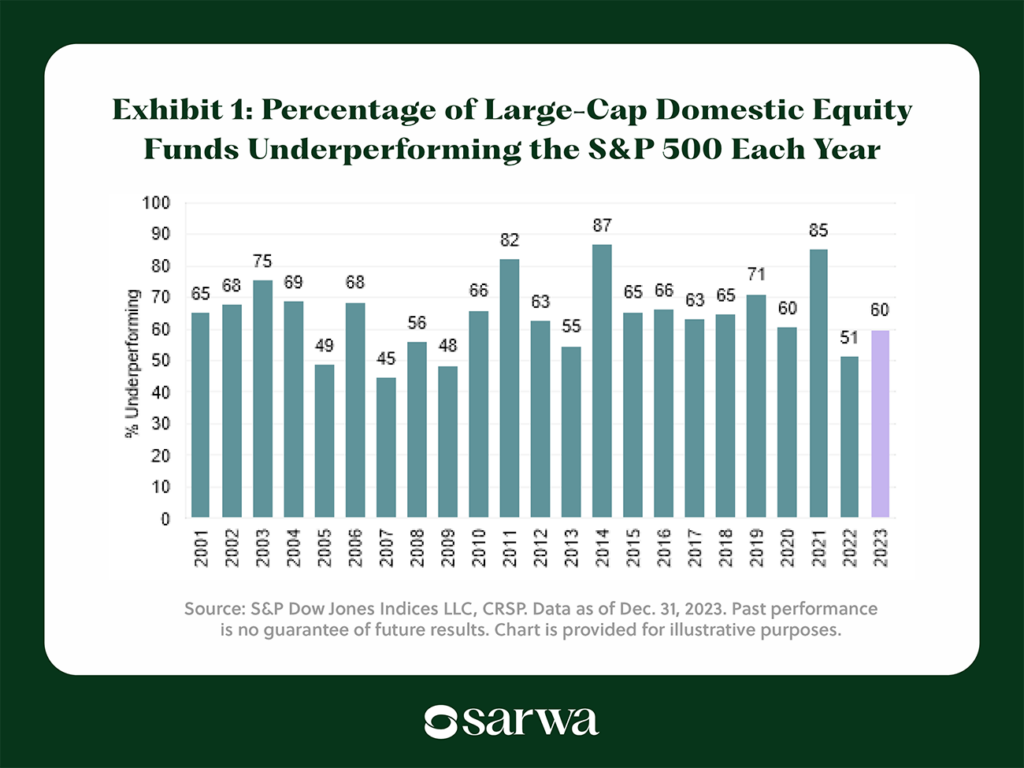
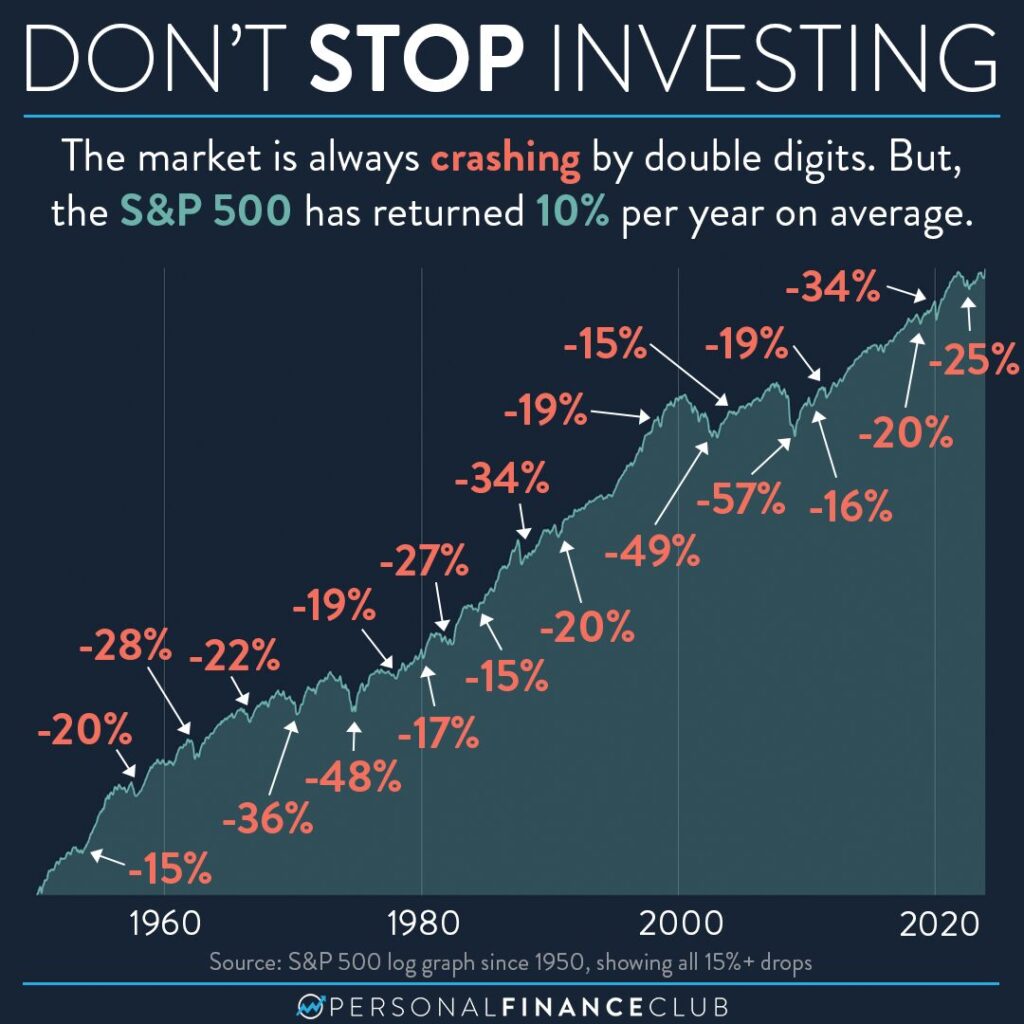
- Historical Performance: Over the long term, the S&P 500 has demonstrated robust historical returns, averaging around 10-12% annually, though past performance is not indicative of future results. It has consistently recovered from downturns, proving its resilience and ability to generate wealth over decades.
- Ease of Management: Unlike actively managed funds that require constant monitoring and decision-making, S&P 500 index investments are passively managed. They aim to replicate the index’s performance, requiring minimal intervention from the investor.
- Liquidity: The underlying companies are highly liquid, meaning it’s generally easy to buy and sell S&P 500-tracking investments without significantly impacting their price.
- Low Costs: Due to their passive nature, S&P 500 index funds and ETFs typically have very low expense ratios compared to actively managed funds.
Primary Avenues for S&P 500 Investment
While you can’t directly “buy” the S&P 500 index itself, there are several highly efficient and accessible financial products designed to mimic its performance. These are the primary ways individual investors gain exposure to the index.
S&P 500 Exchange-Traded Funds (ETFs)
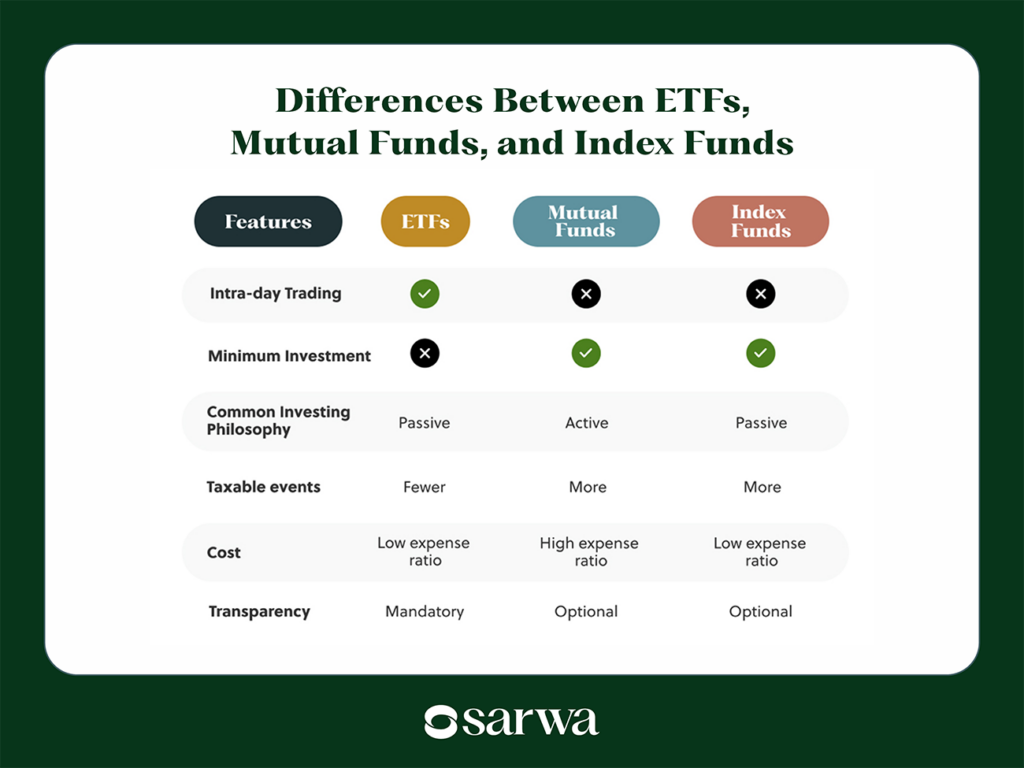
ETFs are one of the most popular and flexible ways to invest in the S&P 500. An S&P 500 ETF is an investment fund that holds a portfolio of stocks designed to mirror the composition and performance of the S&P 500 index.
- How they work: ETFs trade like individual stocks on major exchanges throughout the trading day. This means you can buy or sell shares of an S&P 500 ETF at any point during market hours, just like you would with shares of Apple or Microsoft.
- Key advantages: High liquidity, low expense ratios (often 0.03% to 0.09%), and tax efficiency due to their structure. They are also highly transparent, with their holdings publicly disclosed daily.
- Examples: Popular S&P 500 ETFs include SPDR S&P 500 ETF Trust (SPY), iShares Core S&P 500 ETF (IVV), and Vanguard S&P 500 ETF (VOO).
S&P 500 Index Mutual Funds
S&P 500 index mutual funds also aim to replicate the performance of the S&P 500 but operate slightly differently from ETFs.
- How they work: Mutual funds are bought and sold directly from the fund company (or through a brokerage) at the end of the trading day, based on their Net Asset Value (NAV) per share. You cannot trade them throughout the day.
- Key advantages: Often have low expense ratios (though sometimes slightly higher than comparable ETFs, especially with smaller fund companies), and some investors prefer the simplicity of buying directly from a fund provider. They are also excellent for dollar-cost averaging through automated investments.
- Considerations: Some index mutual funds may have minimum investment requirements, which can be a barrier for new investors with limited capital.
- Examples: Vanguard 500 Index Fund Admiral Shares (VFIAX) and Fidelity 500 Index Fund (FXAIX).
Robo-Advisors and Brokerage Platforms
For investors seeking a more hands-off approach or comprehensive portfolio management, robo-advisors offer an automated solution that often includes S&P 500 exposure.
- Robo-Advisors: These digital platforms use algorithms to build and manage diversified portfolios based on your financial goals, risk tolerance, and time horizon. Many robo-advisors will include S&P 500 ETFs or index funds as core components of their equity allocations, providing broad market exposure without you having to select individual funds. They typically rebalance your portfolio automatically and offer tax-loss harvesting.
- Brokerage Platforms: Opening an account with a traditional online brokerage (e.g., Charles Schwab, Fidelity, Vanguard, E*TRADE) gives you direct access to buy S&P 500 ETFs and index mutual funds. This option provides the most control and flexibility for those who prefer to manage their own investments. Many offer commission-free trading on ETFs, making it cost-effective.
Getting Started: A Step-by-Step Guide
Investing in the S&P 500 is straightforward once you understand the mechanics. Follow these steps to begin your journey.
Determine Your Investment Goals and Risk Tolerance
Before putting any money into the market, clarify why you are investing and what level of risk you are comfortable with.
- Goals: Are you saving for retirement, a down payment on a house, or a child’s education? Your time horizon will influence your strategy. Longer horizons often allow for greater equity exposure.
- Risk Tolerance: While S&P 500 investing is diversified, it still involves equity market risk. Be honest about how you would react to market downturns. A higher tolerance for volatility typically allows for a higher percentage of your portfolio in stocks.
Choose Your Investment Vehicle
Based on your preferences for active trading, hands-on management, and cost, decide whether S&P 500 ETFs, index mutual funds, or a robo-advisor best suits you.
- ETFs: Best for those who want intra-day trading flexibility and extremely low costs.
- Index Mutual Funds: Good for long-term investors who prefer setting up automated investments and don’t need intra-day trading.
- Robo-Advisors: Ideal for hands-off investors who want professional portfolio management and rebalancing at a lower cost than human advisors.
Open a Brokerage Account
To purchase S&P 500-tracking investments, you’ll need a brokerage account. You can open:
- Taxable Brokerage Account: For general investment purposes, offering flexibility but subject to capital gains taxes.
- Retirement Accounts: Such as an Individual Retirement Account (IRA – Traditional or Roth) or a 401(k) if offered by your employer. These offer significant tax advantages but have contribution limits and withdrawal restrictions. Many 401(k) plans offer S&P 500 index funds as an investment option.
Choose a reputable online brokerage platform that aligns with your chosen investment vehicle and offers competitive fees.
Fund Your Account and Make Your First Investment
Once your account is open and verified, you’ll need to transfer funds into it. This can typically be done via:
- Electronic Fund Transfer (ACH): Linking your bank account for transfers.
- Wire Transfer: For larger, faster transfers.
- Check Deposit.
After funding, navigate to the investment section of your brokerage platform, search for your chosen S&P 500 ETF or index fund (using its ticker symbol for ETFs), and place your buy order.
Automate and Rebalance Regularly
For long-term success, consistent investing is key.
- Automate Investments: Set up recurring deposits and investments (e.g., weekly or monthly) to take advantage of dollar-cost averaging. This strategy involves investing a fixed amount regularly, regardless of market fluctuations, which helps average out your purchase price over time.
- Rebalance: Periodically review your portfolio (e.g., once a year) to ensure it still aligns with your target asset allocation. If your S&P 500 holdings have grown significantly, you might need to sell some to rebalance into other asset classes, or vice-versa. Robo-advisors typically handle this automatically.
Key Considerations Before Investing
While S&P 500 investing is generally considered a sound long-term strategy, several factors deserve your careful attention.
Fees and Expense Ratios
Even seemingly small fees can significantly erode your returns over decades. Always check the expense ratio of any S&P 500 ETF or index fund you consider. Aim for funds with expense ratios well under 0.10%. For example, a 0.50% expense ratio on a $100,000 portfolio costs you $500 per year, which adds up considerably over a 30-year investment horizon.
Diversification Beyond the S&P 500
While the S&P 500 offers excellent intra-equity diversification, it is still entirely focused on large-cap U.S. equities. For true portfolio diversification, consider adding other asset classes:
- International Stocks: To gain exposure to global economic growth and reduce concentration risk in a single country.
- Bonds: To introduce stability and reduce overall portfolio volatility, especially as you approach retirement.
- Real Estate (via REITs) or Commodities: For further diversification, depending on your strategy.
A well-rounded portfolio rarely consists solely of an S&P 500 index fund.
Tax Implications
Understand the tax implications of your investments.
- Taxable Accounts: Dividends and capital gains from selling appreciated assets are subject to taxation.
- Tax-Advantaged Accounts: IRAs and 401(k)s offer tax deferral or tax-free growth, making them ideal for long-term S&P 500 investments.
- Tax-Loss Harvesting: ETFs often allow for tax-loss harvesting, where you sell an investment at a loss to offset capital gains and potentially ordinary income, then repurchase a similar (but not “substantially identical”) investment.
Consult with a tax professional to optimize your investment strategy for tax efficiency.
The Importance of a Long-Term Outlook
The S&P 500’s historical performance is based on long-term trends, often spanning decades. Short-term market fluctuations, corrections, and even bear markets are normal. Attempting to time the market or reacting emotionally to daily news events is a common pitfall. Successful S&P 500 investors maintain a long-term perspective, ride out the volatility, and continue to invest consistently. Patience and discipline are paramount.
Common Misconceptions and Advanced Strategies
Beyond the basic mechanics, a deeper understanding of S&P 500 investing can refine your approach.
Is Direct Stock Picking an S&P 500 Investment?
A common misconception is that buying individual stocks within the S&P 500 is the same as investing in the S&P 500 index. While you might hold several companies that are part of the index, you do not achieve the broad diversification and automatic rebalancing benefits of an index fund or ETF. To truly invest in the S&P 500, your aim should be to own a fractional share of all 500 companies in their correct market-cap weighting, which only index funds or ETFs can provide.
Dollar-Cost Averaging for Consistent Growth
As mentioned, dollar-cost averaging (DCA) is a powerful strategy, particularly for S&P 500 investments. By investing a fixed amount regularly (e.g., $200 every month), you buy more shares when prices are low and fewer when prices are high. Over time, this averages out your purchase price, reduces the impact of market timing risk, and fosters disciplined investing habits, allowing you to steadily build wealth.
Using the S&P 500 as a Core Portfolio Holding
For many investors, an S&P 500 index fund or ETF serves as the bedrock of their equity portfolio. It provides core exposure to large-cap U.S. companies and can be complemented by satellite investments in small-cap stocks, international equities, sector-specific funds, or alternative assets to further enhance diversification and potentially boost returns (or reduce risk) according to individual preferences. This “core-satellite” approach allows for both broad market exposure and tactical investing.
Investing in the S&P 500 is a proven and accessible strategy for long-term wealth accumulation. By understanding its components, utilizing appropriate investment vehicles, and adhering to sound financial principles, you can confidently participate in the growth of America’s leading companies. Remember to align your investments with your personal financial plan, maintain a long-term outlook, and periodically review your strategy to stay on track towards your financial aspirations.
aViewFromTheCave is a participant in the Amazon Services LLC Associates Program, an affiliate advertising program designed to provide a means for sites to earn advertising fees by advertising and linking to Amazon.com. Amazon, the Amazon logo, AmazonSupply, and the AmazonSupply logo are trademarks of Amazon.com, Inc. or its affiliates. As an Amazon Associate we earn affiliate commissions from qualifying purchases.