
In the modern economy, the question of how to acquire airline tickets has evolved from a simple transactional query into a complex exercise in financial management. For the savvy professional or the disciplined investor, an airline ticket is rarely just a receipt for transportation; it is the culmination of strategic spending, asset allocation, and market timing. Transitioning from a passive consumer to a strategic traveler requires a deep understanding of the financial ecosystems that govern the aviation industry.
To master the acquisition of airfare, one must look beyond the “buy” button on a carrier’s website and instead view the process through the lens of personal finance and resource optimization. This involves navigating dynamic pricing models, leveraging credit card arbitrage, and treating loyalty points as a high-yield currency.

The Economics of Airline Ticketing and Dynamic Pricing
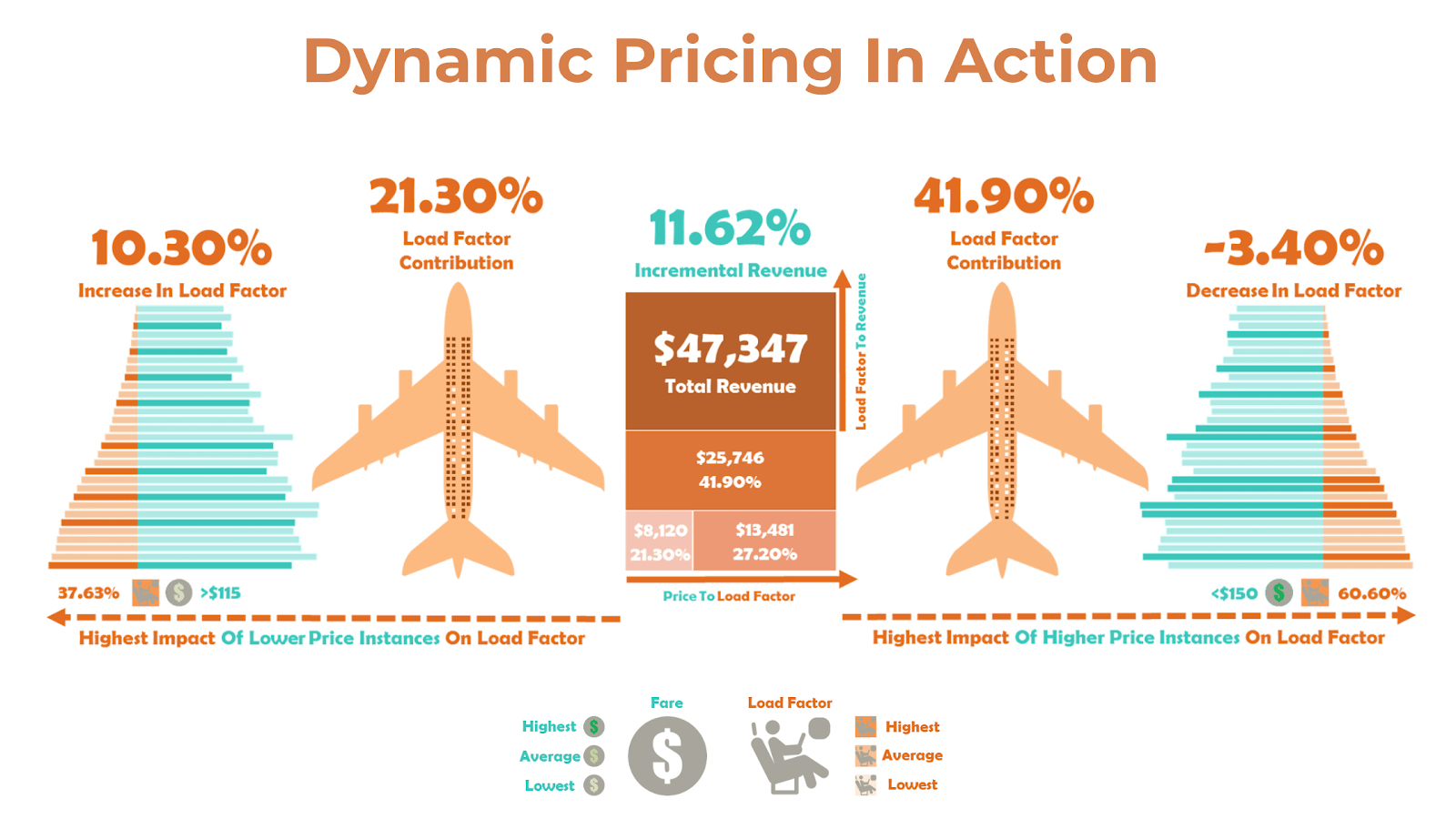
The first step in strategically acquiring airline tickets is understanding the sophisticated financial algorithms used by carriers. Airlines utilize yield management systems—complex AI-driven platforms that adjust prices in real-time based on demand, supply, and competitor behavior. From a financial perspective, an airline seat is a “perishing asset.” If the plane takes off with an empty seat, the potential revenue from that seat drops to zero instantly.
Understanding the Yield Management System
To get the best financial outcome, a traveler must understand that they are participating in a live auction. Airlines segment their inventory into “fare buckets.” Each bucket represents a different price point for the same physical space. As cheaper buckets sell out, the price automatically jumps to the next tier. To optimize your capital, you must aim to purchase within the lowest possible bucket, which typically requires a lead time of 21 to 60 days for domestic flights and even longer for international long-haul routes.
Timing the Market: The Arbitrage of Opportunity
Much like stock market volatility, airfare prices fluctuate based on external economic factors, including fuel hedges and seasonal demand. Financial experts often suggest “monitoring” rather than “speculating.” By using tracking tools that analyze historical price data, you can identify when a ticket is trading below its fair market value. Acquiring a ticket during these dips is essentially a form of consumer arbitrage, where you secure the same utility as your fellow passengers while deploying significantly less capital.
Leveraging Credit Card Ecosystems as Financial Tools
In the realm of personal finance, one of the most effective ways to acquire airline tickets is not through cash, but through the strategic use of credit card rewards. This is often referred to as “travel hacking,” but from a professional standpoint, it is better described as maximizing the Return on Investment (ROI) of your daily expenses.
Transferable Points vs. Fixed-Value Rewards
There are two primary financial models for points-based ticketing. Fixed-value rewards act like a cashback system where points are worth a set amount (usually one cent per point). While stable, this rarely offers a high ROI. Conversely, transferable points ecosystems—such as those managed by major financial institutions like Chase, American Express, or Capital One—allow you to move points into various airline loyalty programs.
The financial advantage of transferable points lies in the “outsized value” proposition. For example, a business-class ticket to Europe might cost $5,000 in cash but only 60,000 miles. If you earned those miles through a sign-up bonus or regular category spending, the “cents per point” (CPP) value can exceed five or six cents. This represents a massive discount compared to the cash price, effectively allowing you to acquire premium travel for the cost of a standard economy ticket.
Sign-Up Bonuses: The Highest ROI in Personal Finance
For those looking to secure high-cost international tickets quickly, the sign-up bonus (SUB) is the most efficient financial lever. By opening a new credit line and meeting a minimum spending requirement, a consumer can often earn enough points for a round-trip international flight. When calculated as a percentage of spend, a SUB can offer a return of 20% to 50%, far outperforming traditional investment vehicles in the short term. However, this strategy requires a disciplined approach to debt management, ensuring that all balances are paid in full to avoid interest charges that would negate the financial gains.
Business Spending and the Path to Institutional Travel
For business owners and corporate executives, the acquisition of airline tickets takes on an even more significant financial dimension. By funneling corporate expenses through specific business credit cards, the cost of travel can be decoupled from personal income.
Business Spending for Personal Travel
One of the most effective “side hustles” for a small business owner is the optimization of their accounts payable. By paying vendors, utilities, and tax obligations with a rewards-earning business card, the company generates a massive volume of points. These points can then be used to acquire airline tickets for personal use or for employee travel, effectively reducing the company’s “travel and entertainment” (T&E) budget. This is a legitimate way to extract additional value from existing business operations without increasing overhead.
The Tax Implications of Travel Rewards
From a financial planning perspective, it is important to note that the IRS currently views credit card rewards earned through spending as a discount on the purchase rather than taxable income. This makes points a tax-free “currency” that can be used to acquire airline tickets. For high-income earners, this tax-free status increases the “real” value of the rewards, as a $1,000 ticket purchased with points is equivalent to earning roughly $1,500 in pre-tax income for those in the highest tax brackets.
Advanced Redemption Strategies: Maximizing Cents-Per-Point
Acquiring the points is only half of the financial equation; the other half is the “redemption” or the actual acquisition of the ticket. To ensure you are getting the best “buy” for your points, you must perform a basic cost-benefit analysis for every booking.
Strategic Redemption for Maximum CPP
The formula for calculating the value of your ticket acquisition is:
(Cash Price of Ticket – Taxes & Fees) / Number of Points = Value per Point.
If the resulting value is less than 1.5 cents per point, it is often financially wiser to pay in cash and save your points for a higher-value redemption. Premium cabins (Business and First Class) consistently offer the highest CPP. Thus, a sophisticated financial strategy often involves paying cash for short-haul, low-cost flights while using points exclusively for long-haul, high-cost international travel where the point value is maximized.
The Secondary Market and Points Brokerage
While often against the terms of service of airline programs, a secondary market exists for the acquisition of airline tickets through points brokers. However, from a risk-management perspective, this is a dangerous path. A more secure “money-focused” approach is the use of “Pay with Points” features offered by some premium cards, which allow you to book any available seat and receive a fixed value (often 1.5 cents per point) while still earning airline miles on the flight. This creates a “double dip” of value that is both safe and financially sound.
Building a Long-Term Travel Finance Portfolio
Finally, the most successful travelers treat their ability to acquire airline tickets like a diversified investment portfolio. They do not rely on a single airline or a single credit card.
Diversification of Loyalty Assets
Economic conditions can lead to the devaluation of airline miles—a process known as “inflation” in the loyalty world. When an airline increases the number of miles required for a flight, your “miles balance” loses purchasing power. To mitigate this risk, it is essential to keep your “currency” in transferable bank points rather than specific airline programs until the moment you are ready to book. This provides the liquidity needed to pivot to whichever airline offers the best current value.
Annual Fee Auditing
Maintaining the tools necessary to acquire airline tickets often involves paying annual fees for premium credit cards. A rigorous financial audit should be conducted annually to ensure that the benefits—such as lounge access, checked bag fee waivers, and travel credits—outweigh the cost of the fee. If the “net cost” of holding the card is higher than the value of the tickets it helps you acquire, it is time to rebalance your portfolio by downgrading or canceling the account.
By viewing the acquisition of airline tickets as a financial discipline rather than a simple purchase, you can unlock a world of travel that is both luxurious and economically efficient. Whether through the strategic timing of cash purchases or the sophisticated management of rewards points, the goal remains the same: maximizing the utility of every dollar spent on the journey.
aViewFromTheCave is a participant in the Amazon Services LLC Associates Program, an affiliate advertising program designed to provide a means for sites to earn advertising fees by advertising and linking to Amazon.com. Amazon, the Amazon logo, AmazonSupply, and the AmazonSupply logo are trademarks of Amazon.com, Inc. or its affiliates. As an Amazon Associate we earn affiliate commissions from qualifying purchases.