
Accessing Multiple Listing Service (MLS) listings is a pivotal step for anyone deeply involved in real estate, from aspiring homeowners and investors to seasoned agents and developers. Far from being a single, unified database, the MLS is a complex ecosystem of regional, privately operated databases, each governed by local real estate associations. The “how” of gaining access is fundamentally a question of navigating this technological landscape, understanding the various digital gateways, software integrations, and data distribution mechanisms that bring property information to light.
Understanding the MLS Ecosystem: The Digital Gateway to Real Estate Data
The Multiple Listing Service (MLS) serves as the backbone of real estate information sharing in North America, facilitating cooperation among brokers and standardizing property data. At its core, the MLS is a digital database where real estate brokers list properties for sale and view listings from other brokers. This cooperative system ensures broad exposure for properties and streamlines transactions, underpinned by a robust technological infrastructure. Without this system, the real estate market would be fragmented, making property discovery and comparative analysis significantly more challenging.
From a technological perspective, the MLS is a sophisticated data management system. Each regional MLS maintains its own proprietary database, complete with structured data fields for property characteristics, pricing, images, and agent contact information. The technological challenge and opportunity lie in how this vast, distributed network of data is collected, updated, secured, and ultimately, disseminated to various users. Accessing this data isn’t merely about viewing a webpage; it involves interacting with advanced software, understanding data feeds, and adhering to strict digital governance protocols. The sheer volume and granularity of data within the MLS make it an invaluable resource for market analysis, property valuation, and identifying investment opportunities, all of which are enabled by specific technological interfaces and integrations.
What is the MLS and Why is Access Crucial?
The MLS is a private database, or more accurately, a collection of hundreds of regional databases, operated by real estate brokers and their associations. Its primary purpose is to provide a platform for brokers to share information on properties they have listed for sale. This cooperation allows agents to present a wider range of properties to their clients and increases the likelihood of finding a buyer for listed properties. From a technological standpoint, the MLS ensures data standardization, meaning that regardless of the originating broker, property information is presented in a consistent format across different platforms and tools.
Access to the MLS is crucial because it provides the most comprehensive, up-to-date, and accurate real estate data available. Public sites typically receive delayed or filtered data, but direct MLS access offers real-time updates on new listings, price changes, and sale statuses. For professionals, this means competitive advantage, enabling quicker responses to market shifts. For advanced consumers, it offers unparalleled insight into market dynamics, informing critical financial decisions. The digital infrastructure supporting the MLS ensures this data integrity and timeliness, making it the definitive source for property information.
The Role of Technology in MLS Data Distribution
The distribution of MLS data is entirely dependent on advanced technology. At the backend, each MLS system uses sophisticated database management software to store and organize millions of property records. This data is constantly updated, with new listings added, statuses changed, and price adjustments recorded in real-time. The primary method of data distribution to authorized platforms and applications is through Application Programming Interfaces (APIs) and standardized data feeds, such as RETS (Real Estate Transaction Standard) or, more recently, RESO Web API.
These digital interfaces allow third-party software—like real estate CRMs, public-facing portals, and specialized analytics tools—to programmatically request, receive, and display MLS data. The technology ensures that data is transmitted securely and efficiently, adhering to specific formatting rules to maintain consistency across various platforms. Without these underlying technological frameworks for data exchange and synchronization, the seamless flow of real estate information that users have come to expect would be impossible.
Direct Professional Access: For Licensed Agents and Brokers
The most direct and comprehensive access to MLS listings is exclusively reserved for licensed real estate agents and brokers who are members of a local real estate association and its corresponding MLS. This privileged access is a cornerstone of their professional practice, enabling them to serve clients effectively and operate within the cooperative brokerage system. The mechanisms for this access are heavily reliant on specialized software and digital platforms designed for the real estate industry.
Proprietary MLS Portals and Member Systems
Licensed real estate agents and brokers gain primary access through proprietary web portals and software systems provided by their local MLS. Upon joining an MLS, members receive login credentials for a dedicated online platform. This platform acts as their central hub for all MLS activities: searching properties with advanced filters, creating custom saved searches for clients, managing their own listings, scheduling showings, and accessing a wealth of market data and analytics.
These portals are complex software applications, often featuring sophisticated mapping tools, comparative market analysis (CMA) generators, and communication tools. They are designed for high performance and security, ensuring that sensitive property and client data remains protected. User interfaces are tailored to streamline agent workflows, allowing for efficient data entry and retrieval. Access to these systems typically requires an annual or monthly subscription fee paid to the local real estate board, in addition to licensing and association dues.
Real Estate CRMs and Integrated Platforms
Beyond the native MLS portals, many real estate professionals leverage Customer Relationship Management (CRM) systems and integrated platforms that pull data directly from the MLS via API connections. These CRMs, such as Salesforce, Top Producer, Chime, kvCORE, and Wise Agent, serve as an agent’s operational command center, combining client management, marketing automation, transaction tracking, and property search functionalities.
The integration with MLS data is crucial. Agents can set up automated property alerts for clients directly within their CRM, feeding new listings that match client criteria. They can also track market trends and generate reports, all utilizing the real-time data streamed from the MLS. This seamless integration allows agents to manage their entire business workflow from a single digital platform, significantly enhancing efficiency and client service by centralizing data and automating tasks. These tech tools are invaluable for maintaining a competitive edge in a fast-paced market.
The Backend: APIs and Data Feeds for Developers and Large Brokerages
For large brokerages, real estate technology companies, and developers, direct access to MLS data often involves working with APIs (Application Programming Interfaces) and standardized data feeds like RESO Web API. Instead of relying solely on a web portal, these entities programmatically access vast quantities of raw MLS data to power their own custom applications, websites, and analytical tools.
This backend access allows for highly customized data utilization. For instance, a brokerage might develop a proprietary internal system that analyzes market trends using MLS data combined with their own transaction history, or a real estate tech startup might build an AI-powered property valuation tool that consumes MLS data feeds. This level of access requires technical expertise to interpret data formats, manage data synchronization, and ensure compliance with MLS data usage agreements, which are stringent about how data can be stored, displayed, and redistributed.
Indirect Consumer Access: Navigating Public and Semi-Public Gateways
While direct MLS access is primarily for licensed professionals, consumers have several indirect avenues to view a significant portion of MLS listings. These methods rely on technology that aggregates, filters, and presents MLS data through public-facing platforms, ensuring broad visibility while respecting data licensing agreements.
Public Real Estate Portals
The most common way for consumers to view MLS listings is through popular public real estate portals like Zillow, Realtor.com, Trulia, and Redfin. These platforms do not have direct MLS membership but obtain their listing data through formal agreements with hundreds of individual MLS organizations across the country. They receive data feeds (often via IDX, explained below, or direct agreements) and then aggregate, format, and display this information to the public.
These portals are sophisticated web and mobile applications, employing advanced search algorithms, mapping technologies, and user-friendly interfaces. They often enrich the basic MLS data with additional features such as satellite views, neighborhood demographics, user reviews, and proprietary valuation estimates (like Zillow’s Zestimate). While generally comprehensive, it’s important to note that the data on these sites can sometimes have a slight delay compared to real-time MLS feeds, and not all properties or all data fields from every MLS may be displayed due to various licensing agreements and technical limitations.
Brokerage Websites (IDX Feeds: Internet Data Exchange Technology)
Many individual brokerage and agent websites also offer extensive property search capabilities that directly leverage MLS data. This is made possible through Internet Data Exchange (IDX) technology. IDX is a system that allows MLS participants (brokers) to display each other’s listings on their own websites. When you search for homes on a local real estate agent’s site, you’re often interacting with an IDX feed that pulls live data from the local MLS.
Technologically, an IDX feed involves an authorized connection where the MLS sends listing data to a broker’s website. The broker’s website then uses specialized plugins or custom development to parse and display this data in a searchable format. This provides consumers with a powerful and often real-time view of properties directly from the source, presented within the branding and additional services offered by a specific agent or brokerage. The data quality and timeliness on IDX-powered sites are generally very high, often mirroring the primary MLS feed more closely than larger public portals.
Working with a Real Estate Agent
Perhaps the most effective and often overlooked method for consumers to gain comprehensive access to MLS listings is by working directly with a licensed real estate agent. Agents possess direct access to the full MLS system and its advanced features. They can set up highly customized searches based on specific criteria that might not be available on public sites, providing clients with immediate email alerts for new listings that perfectly match their needs.
Beyond mere access, an agent leverages their professional software to provide in-depth market analysis, showing historical data, comparable sales, and properties that may not be publicly advertised. They can interpret complex data, schedule showings, and offer expert guidance throughout the buying or selling process. In essence, hiring an agent is akin to gaining expert navigation of the complex MLS technological landscape, ensuring you receive the most relevant and up-to-the-minute information tailored to your specific goals.
Advanced and Alternative Access Methods (Focus on Tech Tools)
Beyond standard agent access and public portals, a burgeoning ecosystem of real estate technology tools offers advanced ways to tap into and analyze MLS data. These tools are often geared towards serious investors, analysts, or developers seeking deeper insights and enhanced functionality.
Specialized Real Estate Investment Software
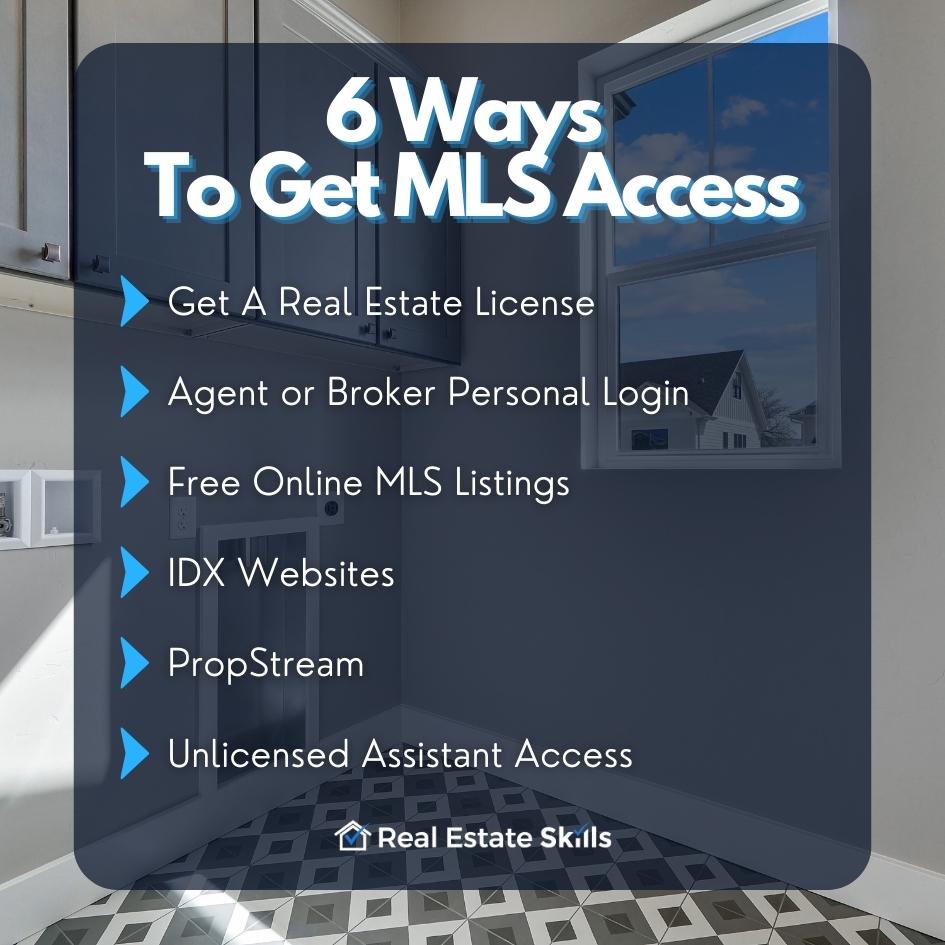
For real estate investors, specialized software platforms provide consolidated access to property data, often drawing from MLS feeds alongside other public records and proprietary datasets. Platforms like PropStream, DealMachine, and Reonomy are designed to streamline property research, lead generation, and due diligence. These tools typically offer advanced search filters, mapping functionalities, and robust data analytics, allowing investors to quickly identify potential deals, assess property values, and analyze market trends.
Technologically, these platforms integrate multiple data sources, process vast amounts of information, and present it through intuitive dashboards. They often employ sophisticated algorithms to highlight distressed properties, pre-foreclosures, or properties with high rental yield potential. While some of these platforms might have their own direct data agreements with individual MLS systems, others aggregate data from public records and other licensed sources, then augment it with proprietary analytics to provide a comprehensive view that goes beyond a standard MLS search.
Data Aggregators and Analytics Platforms
For professional analysts, data scientists, and large investment firms, specialized data aggregators and analytics platforms offer unparalleled access to raw or processed MLS data for advanced statistical analysis and predictive modeling. Companies like CoreLogic, ATTOM Data Solutions, and Black Knight Financial Services license vast datasets, including MLS records, and make them available to clients via APIs or large data downloads.
These platforms are not designed for direct property searching but for extracting insights from macro-level real estate data. They allow users to identify geographic trends, track property value fluctuations over time, forecast market shifts, and perform sophisticated risk assessments. The technology behind these services involves massive data warehouses, advanced ETL (Extract, Transform, Load) processes, and powerful analytical engines capable of crunching billions of data points to inform high-level strategic decisions.
Emerging Technologies: AI and Machine Learning in MLS Data Analysis
The future of MLS access and utilization is increasingly shaped by artificial intelligence (AI) and machine learning (ML). These technologies are being deployed to extract deeper insights, automate repetitive tasks, and predict market behaviors from the rich dataset of MLS listings. AI-powered tools can analyze vast quantities of listing data, including textual descriptions and image metadata, to identify subtle trends or potential mispricings that human analysts might miss.
For instance, AI algorithms can predict which listings are likely to sell quickly or which areas are poised for significant appreciation based on historical MLS data and external factors. Machine learning models are also enhancing property valuation, moving beyond simple comparables to incorporate a myriad of features for more accurate automated valuation models (AVMs). As MLS data becomes even more structured and accessible through advanced APIs, the integration of AI and ML will continue to revolutionize how real estate professionals and investors interact with, and derive value from, these crucial property databases.
Navigating Data Licensing and Security
Gaining access to MLS listings, especially direct or bulk data, is not merely a technical exercise; it’s also a legal and ethical one. The real estate industry places a high premium on data integrity, privacy, and fair usage, necessitating strict protocols around licensing and security.
Understanding Data Usage Agreements and Compliance
MLS data is proprietary, and its use is governed by intricate data licensing agreements. Whether an agent accesses data through a portal, a brokerage uses an IDX feed, or a tech company consumes an API, all parties must adhere to specific terms dictating how the data can be stored, displayed, shared, and utilized. These agreements often specify rules about data freshness, branding requirements (e.g., displaying the listing broker’s name), and restrictions on redistribution.
Compliance is rigorously enforced, often with technical safeguards built into the data feeds themselves. Non-compliance can lead to severe penalties, including revocation of access and legal action. This regulatory framework, enforced through technology, ensures that the integrity of the MLS system is maintained and that the value of the data remains protected for the brokers who contribute it.
The Importance of Data Security and Privacy in Real Estate
With the vast amount of personal and financial information flowing through real estate transactions, data security and privacy are paramount concerns for MLS systems. MLS platforms are built with robust security measures to protect sensitive listing information, agent data, and client details from unauthorized access, breaches, or misuse.
Technologically, this involves encryption protocols for data in transit and at rest, multi-factor authentication for user access, regular security audits, and adherence to industry best practices for cybersecurity. Furthermore, privacy policies dictated by MLS organizations often align with broader data protection regulations, ensuring that personal information related to properties and transactions is handled responsibly. For any entity accessing MLS data, maintaining stringent security protocols is not just a technical requirement but a fundamental ethical obligation to protect all stakeholders in the real estate ecosystem.
aViewFromTheCave is a participant in the Amazon Services LLC Associates Program, an affiliate advertising program designed to provide a means for sites to earn advertising fees by advertising and linking to Amazon.com. Amazon, the Amazon logo, AmazonSupply, and the AmazonSupply logo are trademarks of Amazon.com, Inc. or its affiliates. As an Amazon Associate we earn affiliate commissions from qualifying purchases.