
In an increasingly data-driven world, the ability to interpret numbers and understand their implications is paramount, especially when it comes to managing your money. Whether you’re tracking your investment portfolio, analyzing business growth, understanding inflation’s bite, or negotiating a salary increase, the concept of percentage increase is a fundamental tool in your financial arsenal. It provides a standardized way to compare change over time, offering insights that raw numbers alone cannot. A raw increase of $100 might seem significant, but if it’s from $10 to $110, that’s a monumental 1000% jump. If it’s from $100,000 to $100,100, it’s a barely noticeable 0.1% rise. This distinction underscores why mastering percentage increase is not just a mathematical exercise, but a critical component of informed financial decision-making.
This article will demystify the process of calculating percentage increase, guiding you through the formula, practical examples, and its diverse applications within the realm of money. We’ll explore why this simple calculation offers profound insights into financial performance and growth, highlighting common pitfalls and effective strategies for leveraging this skill to your advantage. By the end, you’ll not only know how to find the percentage increase but also why it’s indispensable for anyone serious about understanding and optimizing their financial landscape.
The Core Concept: Understanding Percentage Increase
At its heart, percentage increase measures the proportional change between an older value and a newer, larger value. It quantifies how much a particular metric has grown relative to its starting point, expressing this growth as a fraction of 100. This standardization allows for meaningful comparisons across different scales and timeframes, making it an invaluable metric in finance where context and proportionality are key.
Why Percentage Increase Matters in Finance
For financial professionals, investors, and individuals alike, understanding percentage increase is non-negotiable. It allows you to:
- Evaluate Performance: Assess the growth of investments, savings accounts, or business revenue year-over-year.
- Identify Trends: Spot patterns in economic data, market shifts, or personal spending habits.
- Make Informed Decisions: Compare different investment opportunities, negotiate better terms, or plan for future expenses by understanding historical growth rates.
- Contextualize Data: Understand if a raw numerical change is significant or negligible in proportion to its original value. For instance, a $100 profit increase is far more impressive for a startup generating $1,000 in revenue than for a multinational corporation making billions.
- Understand Economic Indicators: Grasp concepts like inflation rates, GDP growth, or interest rate hikes, all of which are frequently expressed as percentage increases.
Without this skill, much of financial news and analysis can seem abstract, making it difficult to engage meaningfully with your financial health or the broader economy.
The Fundamental Formula Unpacked
The beauty of calculating percentage increase lies in its elegant simplicity. The formula is universally applicable and easy to remember:
Percentage Increase = ((New Value – Old Value) / Old Value) × 100
Let’s break down each component:
- New Value: This is the current, higher figure you are comparing.
- Old Value: This is the original, baseline figure from which the growth occurred.
- (New Value – Old Value): This calculates the absolute increase or the raw numerical difference between the two values. It tells you “how much” the value has gone up.
- (/ Old Value): Dividing the absolute increase by the Old Value converts this raw increase into a decimal representation of the proportional change. This is crucial because it contextualizes the increase relative to its starting point.
- (* 100): Multiplying by 100 converts the decimal ratio into a percentage, making it more intuitive and easier to compare.
This formula serves as the bedrock for all percentage increase calculations, whether you’re dealing with a few dollars or several billion.
A Step-by-Step Guide to Calculating Percentage Increase
Applying the formula effectively requires a systematic approach. By following these steps, you can confidently calculate percentage increase for any financial scenario, ensuring accuracy and clarity in your analysis.
Identifying Your Baseline and Current Figures
The first and most critical step is to correctly identify the “Old Value” and the “New Value.” This might sound straightforward, but mislabeling these can lead to inverse or incorrect results.
- Old Value (or Original Value): This is your starting point, the figure from which the change began. It could be last year’s revenue, the initial cost of an investment, or your previous salary.
- New Value (or Current Value): This is the end point, the figure after the change has occurred. It could be this year’s revenue, the current market value of your investment, or your updated salary.
Ensure both values are expressed in the same units (e.g., both in dollars, both in thousands of dollars, etc.) to maintain consistency and avoid errors. For example, if you’re tracking your savings, the amount at the beginning of the year would be the Old Value, and the amount at the end of the year would be the New Value.
Executing the Calculation: From Difference to Percentage
Once your values are identified, follow these mathematical steps:
-
Calculate the Absolute Increase: Subtract the Old Value from the New Value.
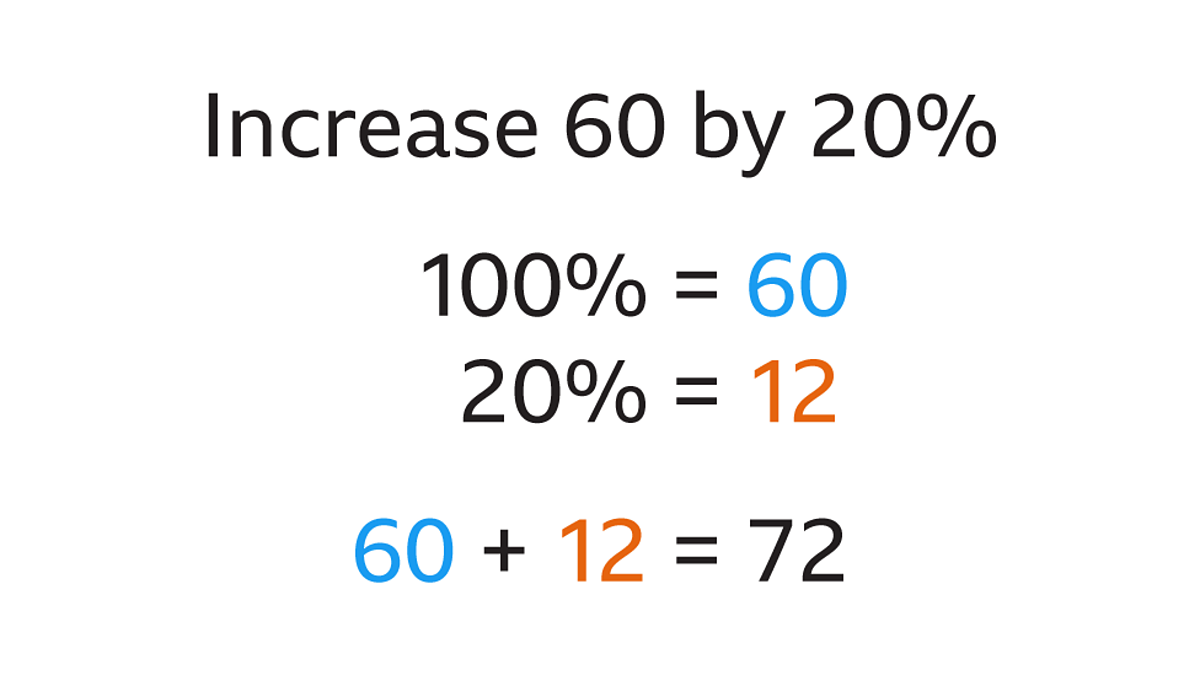
Absolute Increase = New Value - Old Value- Example: If your investment grew from $10,000 (Old Value) to $12,500 (New Value), the absolute increase is $12,500 – $10,000 = $2,500.
-
Calculate the Proportional Change: Divide the Absolute Increase by the Old Value.
Proportional Change = Absolute Increase / Old Value- Example: Using our investment example, $2,500 / $10,000 = 0.25. This decimal represents the fraction of the original value that the investment increased by.
-
Convert to Percentage: Multiply the Proportional Change by 100.
Percentage Increase = Proportional Change × 100- Example: Continuing, 0.25 × 100 = 25%. Therefore, your investment had a 25% increase.
This three-step process is robust and can be applied to any scenario where you need to quantify positive change.
Interpreting Your Results: Beyond the Number
A percentage increase figure is just a number until it’s interpreted within its proper context.
- Is it “Good” or “Bad”? A 10% increase in revenue might be excellent for a mature company but disappointing for a startup seeking rapid growth. Conversely, a 5% increase in your savings account might feel small, but a 5% increase in your mortgage interest rate would be alarming.
- Consider the Timeframe: A 20% increase over one month is far more impactful than a 20% increase over five years. Always note the period over which the increase occurred (e.g., “annual growth,” “quarterly increase”).
- Compare to Benchmarks: How does your percentage increase compare to industry averages, inflation rates, or the performance of similar assets? A 7% investment return might seem good, but if the market average was 10%, you underperformed.
- Impact of Base Value: A large percentage increase from a very small base value can still represent a small absolute change, and vice versa. A 100% increase from $1 to $2 is mathematically correct but hardly revolutionary.

Understanding these nuances transforms a raw percentage into actionable financial intelligence.
Real-World Financial Applications of Percentage Increase
The utility of percentage increase extends across virtually every facet of personal and business finance. Here are some key applications:
Tracking Investment Growth and Portfolio Performance
For investors, calculating percentage increase is fundamental to assessing returns.
- Individual Stock Returns: If you bought a stock at $50 and it’s now $65, that’s a ((65-50)/50) * 100 = 30% increase.
- Portfolio Growth: Tracking the overall percentage increase of your entire investment portfolio allows you to gauge its health and compare it against market indices or your financial goals. For example, if your portfolio started at $100,000 and grew to $115,000, that’s a 15% return.
- Compound Annual Growth Rate (CAGR): For investments over multiple periods, percentage increase helps calculate CAGR, a more sophisticated metric that smooths out volatility and provides an annualized growth rate.
Analyzing Business Revenue and Profitability
Businesses heavily rely on percentage increase to measure operational success and identify areas for improvement.
- Sales Growth: Tracking the percentage increase in sales from quarter to quarter or year to year helps businesses understand market demand and the effectiveness of their strategies.
- Profit Margin Improvement: An increase in profit margins (profit as a percentage of revenue) indicates greater efficiency or pricing power.
- Cost Control: A negative percentage change in expenses (a decrease) is often a positive indicator, but understanding how individual cost categories are increasing is vital for budgeting and cost control. For example, if raw material costs increased by 8% over the last year, it directly impacts profit.
Understanding Inflation and Your Purchasing Power
Inflation, the rate at which the general level of prices for goods and services is rising, is almost always expressed as a percentage increase.
- Impact on Savings: If inflation is 3% and your savings account yields 1%, your purchasing power is actually decreasing by 2% each year.
- Cost of Living: Understanding the percentage increase in the cost of housing, food, and transportation helps individuals budget more effectively and evaluate the adequacy of their income.
- Investment Strategy: Investors use inflation data (percentage increase in CPI) to determine if their investments are generating real returns (returns above inflation).
Evaluating Salary Hikes and Cost of Living Adjustments
For individuals, percentage increase is crucial for evaluating compensation.
- Salary Negotiations: If you’re offered a new salary, calculating the percentage increase from your current one gives you a clear picture of the raise’s magnitude. A $5,000 raise on a $50,000 salary is a 10% increase; on a $100,000 salary, it’s 5%.
- Cost of Living Adjustments (COLAs): Many employers and social security programs use percentage increase (often tied to inflation) to adjust wages or benefits, ensuring they keep pace with rising costs. Knowing how to calculate this helps you understand if your income is truly growing in real terms.
Common Pitfalls and Advanced Considerations
While the basic calculation is straightforward, several factors can lead to misinterpretations or require more nuanced application.
The Importance of the Correct Base Value
One of the most frequent errors is using the wrong base value (Old Value).
- “Percentage Points” vs. “Percentage Increase”: If a stock market index goes from 10,000 to 11,000, that’s a 10% increase. If it later goes from 11,000 to 12,000, that’s a 9.09% increase, not another 10%. Always use the immediately preceding value as your base for a sequential change.
- Avoiding Multiple Base Shifts: When comparing changes over multiple periods, ensure you’re consistent. For example, comparing sales this year to two years ago requires using the sales figure from two years ago as the Old Value.
Navigating Timeframes and Compound Growth
Percentage increase needs to be understood in the context of time.
- Annualized Returns: Financial data often expresses returns on an annualized basis to allow for fair comparisons, even if the actual period was shorter or longer.
- Compound Interest: When dealing with investments that generate returns on previous returns (compound interest), the total percentage increase over many years will be significantly higher than a simple sum of annual increases. For example, an investment growing by 10% for two consecutive years doesn’t yield a 20% increase; it yields (1.10 * 1.10 – 1) * 100 = 21% increase.
Avoiding Misinterpretation and Contextual Blind Spots
Numbers rarely tell the whole story in isolation.
- Small Base, Large Percentage: As mentioned, a 100% increase on $1 to $2 looks impressive but is financially trivial. Always consider the absolute numbers alongside the percentages.
- Negative to Positive: If a business goes from a loss of -$100,000 to a profit of $50,000, you cannot directly calculate a percentage increase using the standard formula because the Old Value is negative. In such cases, it’s better to describe the absolute change and the shift from loss to profit.
- Averages of Percentages: You generally cannot simply average percentage increases over different categories or time periods. If one product line saw a 20% increase and another a 10% increase, the overall company increase depends on their relative sizes. Weighted averages or direct calculation from total new and old values are necessary.
Leveraging Tools for Efficient Calculation
While manual calculation is possible, modern financial tools can automate and simplify the process, reducing errors and saving time.
Spreadsheet Software: Your Financial Command Center
Programs like Microsoft Excel and Google Sheets are indispensable for financial analysis.
- Formulas: You can easily set up columns for Old Value, New Value, and then apply the percentage increase formula
=((B2-A2)/A2)*100(assuming Old Value is in A2 and New Value in B2). - Data Visualization: Once calculated, percentages can be used to create charts and graphs that visually represent growth trends, making complex data digestible at a glance.
- Scenario Planning: Spreadsheets allow you to quickly change values and see the instantaneous impact on percentage increases, useful for planning and forecasting.

Online Calculators and Specialized Financial Apps
Numerous online tools and mobile applications are designed specifically for financial calculations.
- Quick Checks: For a one-off calculation, a simple “percentage increase calculator” found via a search engine can provide quick results.
- Investment Trackers: Many brokerage platforms and investment apps automatically display percentage gains/losses for your holdings and overall portfolio.
- Budgeting Apps: Some personal finance apps can track your spending categories and show percentage changes month-to-month, helping you identify areas of increasing expenditure.
These tools enhance efficiency and accuracy, allowing you to focus on interpreting the data rather than crunching numbers.
Mastering the calculation and interpretation of percentage increase is more than just a mathematical trick; it’s a foundational skill for financial literacy and success. From understanding the growth of your investments and the trajectory of business profits to discerning the true impact of inflation on your wallet, this single metric provides profound insights. By diligently applying the formula, considering the context, and leveraging available tools, you equip yourself with the ability to make more informed decisions, navigate the complexities of the financial world with greater confidence, and ultimately achieve your monetary goals. In finance, knowing “how much” something has changed is important, but understanding “how much relative to its starting point” through percentage increase is truly powerful.
aViewFromTheCave is a participant in the Amazon Services LLC Associates Program, an affiliate advertising program designed to provide a means for sites to earn advertising fees by advertising and linking to Amazon.com. Amazon, the Amazon logo, AmazonSupply, and the AmazonSupply logo are trademarks of Amazon.com, Inc. or its affiliates. As an Amazon Associate we earn affiliate commissions from qualifying purchases.