
In the intricate world of personal and business finance, understanding how to calculate and interpret percentages is not merely a mathematical exercise; it’s a fundamental skill that underpins virtually every financial decision. From dissecting a discount at your favorite store to evaluating complex investment returns or understanding your budget allocation, percentages provide a universal language for comparison, proportionality, and change. Mastering this skill empowers individuals and businesses alike to make informed choices, identify opportunities, and mitigate risks. This article delves into the core mechanics of finding the percentage of two numbers, specifically contextualizing its vital role within the “Money” domain, offering practical applications, strategic insights, and essential tools for financial fluency.
The Core Concept: Understanding Percentages in a Financial Context
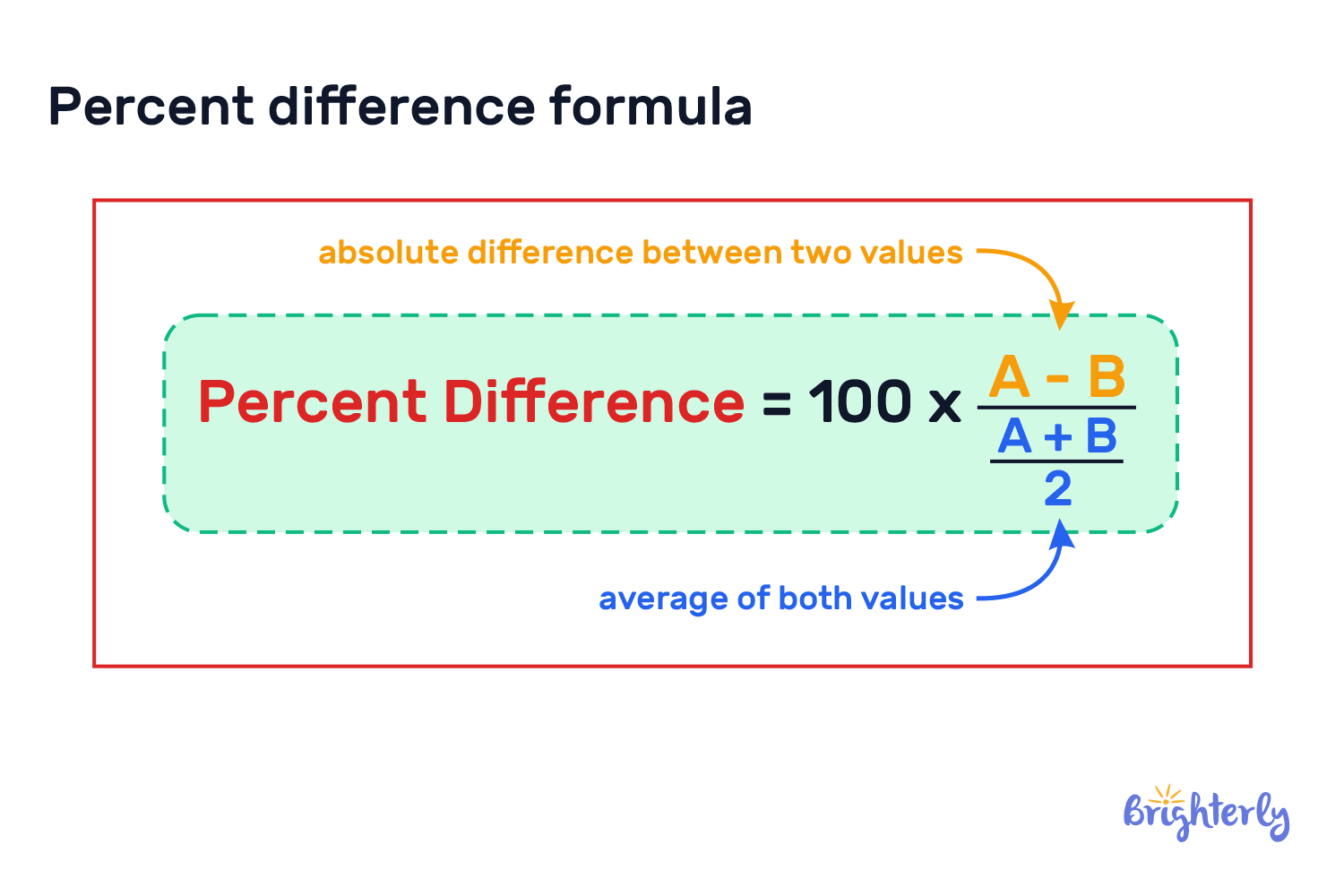
At its heart, a percentage is a way of expressing a number as a fraction of 100. The word “percent” literally means “per hundred.” This simple concept allows us to standardize comparisons and understand proportions in a universally accessible manner, which is crucial when dealing with varying financial figures.
Deconstructing the Basic Percentage Formula
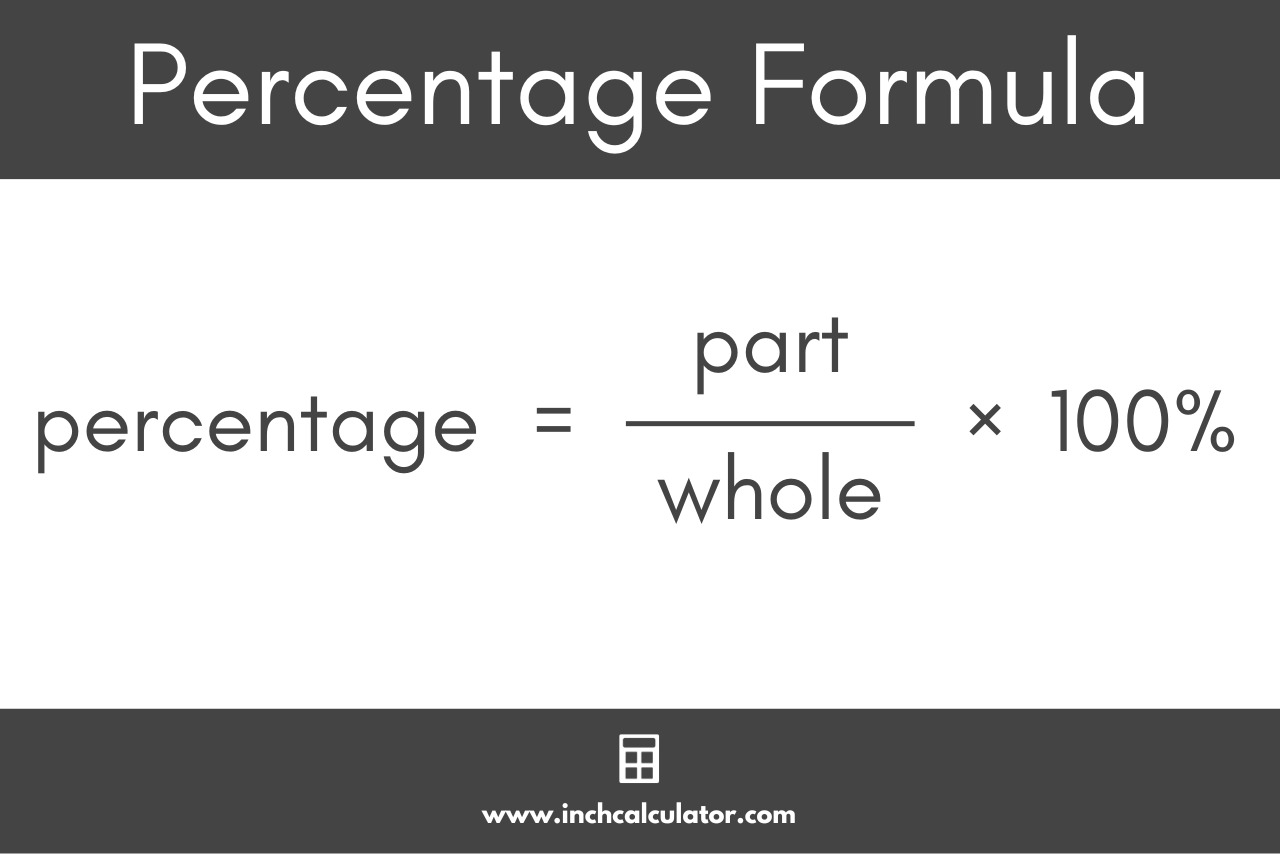
To find what percentage one number (the part) is of another number (the whole), you use a straightforward formula:
Percentage = (Part / Whole) × 100
Let’s break this down:
- Part: This is the specific amount or value you want to express as a percentage.
- Whole: This is the total amount, the base, or the reference value against which the part is being compared.
- Divide (Part / Whole): This step calculates the decimal representation of the proportion.
- Multiply by 100: This converts the decimal proportion into a percentage, making it easier to read and understand.
For example, if you earned $500 from a side hustle and your total monthly income is $2,000, you can find what percentage the side hustle contributes:
(500 / 2,000) × 100 = 0.25 × 100 = 25%.
Conversely, if you need to find a certain percentage of a number (e.g., what is 15% of $300?), the formula is slightly rearranged:
Amount = (Percentage / 100) × Whole
So, 15% of $300 would be (15 / 100) × 300 = 0.15 × 300 = $45.
Why Percentages are Indispensable for Financial Literacy
Percentages offer a standardized way to evaluate financial data, regardless of the absolute figures involved. They enable:
- Comparison: Easily compare the performance of different investments, even if their starting capital differed.
- Proportionality: Understand the weight of a particular expense within a budget or a specific revenue stream within total sales.
- Change Over Time: Quantify growth or decline in income, expenses, or asset values.
- Risk Assessment: Gauge the likelihood of certain financial outcomes based on historical data.
Without percentages, making sense of financial reports, investment portfolios, or even your personal spending habits would be significantly more challenging and prone to misinterpretation.
The Difference Between “Percent Of” and “Percentage Change”
It’s crucial in finance to distinguish between finding a percentage of a number and calculating a percentage change.
- “Percent Of” refers to a part of a whole at a specific point in time (as shown above).
- “Percentage Change” measures the relative difference between an old value and a new value.
Percentage Change = [(New Value – Old Value) / Old Value] × 100
For instance, if a stock price increased from $100 to $120, the percentage change is:
[(120 – 100) / 100] × 100 = (20 / 100) × 100 = 20% increase.
If it dropped from $120 to $100, the percentage change is:
[(100 – 120) / 120] × 100 = (-20 / 120) × 100 = -16.67% decrease.
Understanding this distinction is vital for accurate financial analysis.
Practical Applications: Calculating Percentages for Everyday Finance
The financial relevance of percentages is pervasive, touching almost every aspect of our daily monetary interactions.
Navigating Discounts, Sales, and Markups
When shopping, discounts are often advertised as percentages. To find the actual savings, you calculate the percentage of the original price. A 20% discount on a $150 item means you save (20/100) * 150 = $30. Conversely, businesses use markups (percentage increase) to determine selling prices from their cost. Understanding these calculations helps consumers save money and businesses price effectively.
Understanding Interest Rates: Loans, Savings, and Credit Cards
Interest rates, whether on savings accounts, mortgages, car loans, or credit cards, are almost universally expressed as percentages. An annual percentage rate (APR) tells you the cost of borrowing or the return on saving over a year. Knowing how to calculate the interest paid or earned over time, even roughly, is fundamental for financial planning. For example, a $10,000 loan at 5% interest per year will accrue (5/100) * 10,000 = $500 in interest annually (simple interest).

Budgeting and Expense Allocation: Making Your Money Work
Effective personal finance relies on smart budgeting. Percentages are invaluable here for allocating income and tracking expenses. You might decide to allocate 50% of your income to needs, 30% to wants, and 20% to savings. By calculating what percentage each expense category consumes of your total income, you gain a clear picture of where your money is going and where adjustments can be made to achieve financial goals. If your rent is $1,000 and your take-home pay is $4,000, rent consumes ($1,000 / $4,000) * 100 = 25% of your income.
Calculating Tips and Service Charges
In many service industries, tips and service charges are calculated as a percentage of the bill. Whether you’re dining out or receiving a delivery, quickly calculating a 15% or 20% tip ensures you acknowledge good service appropriately without overspending or underspending.
Strategic Financial Analysis: Leveraging Percentages for Growth and Decision-Making
Beyond daily transactions, percentages are critical tools for strategic financial planning and investment analysis, allowing for deeper insights into performance and potential.
Assessing Investment Returns and Portfolio Performance
Investors constantly evaluate returns, which are almost always expressed as percentages. A 7% annual return on an investment fund means your capital grew by that proportion. Percentage returns allow for easy comparison across different asset classes, funds, or timeframes, regardless of the initial investment amount. Calculating compound annual growth rate (CAGR) also heavily relies on percentages to smooth out irregular returns over multiple years, providing a more accurate picture of sustained growth.
Analyzing Profit Margins and Business Viability
For businesses, percentages are vital for understanding profitability. Gross profit margin (Gross Profit / Revenue × 100) and net profit margin (Net Income / Revenue × 100) are key performance indicators that show how much profit a company makes for every dollar of sales. These percentages allow businesses to compare their performance against industry benchmarks, identify areas for cost reduction, and make strategic pricing decisions. A declining profit margin percentage, even if absolute profits are stable, can signal underlying issues.
Interpreting Key Financial Ratios
Financial analysis of companies relies heavily on ratios, which are essentially percentage relationships. Debt-to-equity ratio, current ratio, return on equity (ROE), and price-to-earnings (P/E) ratio are just a few examples. These ratios, when compared over time or against competitors, provide a comprehensive snapshot of a company’s financial health, efficiency, and market value. For instance, ROE tells investors how much profit a company generates for each dollar of shareholders’ equity, expressed as a percentage.
Understanding Inflation and Purchasing Power
Inflation, the rate at which the general level of prices for goods and services is rising, and subsequently, purchasing power is falling, is expressed as a percentage. Understanding the inflation rate helps individuals and businesses account for the erosion of money’s value over time, impacting savings, investment strategies, and long-term financial planning. A 3% inflation rate means that something costing $100 today will likely cost $103 next year.
Essential Tools and Best Practices for Accurate Financial Percentage Calculations
While the underlying math is simple, accuracy is paramount in financial calculations. Leveraging the right tools and avoiding common mistakes can save you from costly errors.
Manual Calculations vs. Digital Financial Tools (Calculators, Spreadsheets)
For simple, one-off calculations, mental math or a basic calculator suffices. However, for more complex financial scenarios, such as budgeting, investment analysis, or business accounting, digital tools become indispensable:
- Scientific/Financial Calculators: Many calculators have a dedicated ‘%’ button that simplifies percentage calculations.
- Spreadsheets (e.g., Excel, Google Sheets): These are perhaps the most powerful tools for financial percentage calculations. They allow you to set up complex models, apply formulas to large datasets, and automatically update calculations as numbers change. For instance, calculating percentage change across a year’s worth of monthly sales figures is effortless with a spreadsheet. You can also easily create pivot tables and charts to visualize percentage breakdowns.
- Online Converters/Calculators: Numerous websites offer free percentage calculators that handle various scenarios (e.g., percentage of, percentage change, reverse percentage).
- Financial Software/Apps: Budgeting apps, investment platforms, and accounting software often integrate percentage calculations to display insights like spending categories, portfolio growth, or profit margins automatically.
Common Errors and How to Avoid Them (e.g., Base Value Confusion)
Even seasoned financial professionals can trip up on percentages. Common errors include:
- Wrong Base Value: Always ensure you’re dividing by the correct “whole” or “original value.” For example, when calculating profit margin, ensure you divide by revenue, not cost. For percentage change, it’s always the original value in the denominator.
- Confusing Percentage Points with Percentage Change: If an interest rate increases from 5% to 6%, that’s a 1 percentage point increase, but a (1/5)*100 = 20% *percentage increase* in the rate itself. This distinction is critical in financial reporting.
- Rounding Errors: Rounding too early in multi-step calculations can lead to significant inaccuracies, especially with large sums. Maintain precision until the final step.
- Negative Values: Be mindful of negative numbers when calculating percentage change (e.g., a loss or decline). The formula still applies, but the interpretation of the negative result is crucial.
The Importance of Context in Percentage Interpretation
A percentage alone rarely tells the full story. A 100% return on a $10 investment is $10, while a 1% return on a $1 million investment is $10,000. Always consider the absolute numbers behind the percentages, the timeframe involved, and the prevailing market conditions for a holistic understanding. For instance, a 5% increase in revenue might sound good, but if the market grew by 15%, your business is losing market share.
Mastering Percentages: Your Path to Financial Empowerment
Understanding how to find the percentage of two numbers is far more than a basic arithmetic skill; it is a gateway to financial literacy and empowerment. From managing your daily budget and making savvy purchasing decisions to strategically planning investments and evaluating business performance, percentages are the numerical language that translates raw data into actionable insights. By embracing the formulas, utilizing available tools, and paying attention to context, you can unlock a deeper understanding of your financial landscape, enabling you to make more informed decisions and confidently navigate the path to financial well-being and growth.
aViewFromTheCave is a participant in the Amazon Services LLC Associates Program, an affiliate advertising program designed to provide a means for sites to earn advertising fees by advertising and linking to Amazon.com. Amazon, the Amazon logo, AmazonSupply, and the AmazonSupply logo are trademarks of Amazon.com, Inc. or its affiliates. As an Amazon Associate we earn affiliate commissions from qualifying purchases.