
Navigating the landscape of personal finance often involves understanding a series of numbers and codes that, while seemingly arcane, are absolutely crucial for managing your money effectively. Among these, the bank routing number stands out as a fundamental identifier, playing a silent yet indispensable role in countless financial transactions daily. Whether you’re setting up direct deposit for your paycheck, automating bill payments, or sending money via wire transfer, knowing how to locate this nine-digit code is a key aspect of modern financial literacy. This guide delves into what a routing number is, why it’s so vital, and the various reliable methods you can employ to find yours, ensuring your financial dealings proceed smoothly and securely.

Understanding the Routing Number: A Foundation of Financial Transactions
At its core, a bank routing number is more than just a sequence of digits; it’s a unique identifier for your financial institution, meticulously designed to ensure that funds reach the correct bank during electronic transfers. Without this critical piece of information, the seamless flow of money that underpins our economy would grind to a halt.
What Exactly is a Bank Routing Number?
A bank routing number, often referred to as an ABA (American Bankers Association) routing transit number, is a nine-digit code that identifies the specific financial institution participating in a transaction. It does not identify your individual bank account; rather, it directs the funds to the correct bank where your account is held. This system was established in 1910 by the ABA to facilitate the processing of paper checks and has since evolved to become the backbone of electronic funds transfers (EFTs). Each bank, and sometimes different branches or regions of a large bank, may have one or more unique routing numbers, ensuring precise identification within the vast network of the U.S. banking system. When you initiate a financial transfer, this number acts like a digital address, guiding the funds to the right financial institution before your personal account number then directs it to your specific account within that institution.
Why Your Routing Number is Crucial for Financial Management
The importance of your routing number cannot be overstated, as it enables a wide array of essential financial activities that are integral to managing personal and business finances. Its correct usage ensures efficiency, accuracy, and security in money movement.
- Direct Deposit: Perhaps the most common use, your routing number is essential for employers to directly deposit your paycheck into your bank account. It’s also required for government benefits like Social Security or tax refunds. Providing incorrect information here can lead to significant delays in receiving your funds.
- Automated Payments: Setting up recurring payments for bills, loan installments, or subscriptions frequently requires your routing number. This allows companies to withdraw funds directly from your account, ensuring timely payments and helping you avoid late fees.
- Wire Transfers: For larger or time-sensitive transactions, wire transfers rely heavily on accurate routing numbers (and sometimes Swift codes for international transfers). Incorrect routing information can cause transfers to be delayed, rejected, or even sent to the wrong institution, leading to complex recovery processes.
- Electronic Bill Pay: Many online banking platforms offer electronic bill pay services, which leverage your routing number to facilitate payments to various merchants and service providers. This centralized approach simplifies managing multiple bills.
- Checks and Checking Services: Every personalized check issued by your bank prominently features your routing number, making it a critical component for processing paper checks when they are cashed or deposited.
Understanding and correctly using your routing number is therefore not just a convenience, but a fundamental requirement for seamless financial operations in the digital age.
Reliable Methods for Locating Your Routing Number
Fortunately, finding your bank routing number is a straightforward process, with several readily available and secure methods at your disposal. Knowing these different avenues ensures you can access this critical information whenever it’s needed, regardless of your current situation.
Checking Your Checkbook
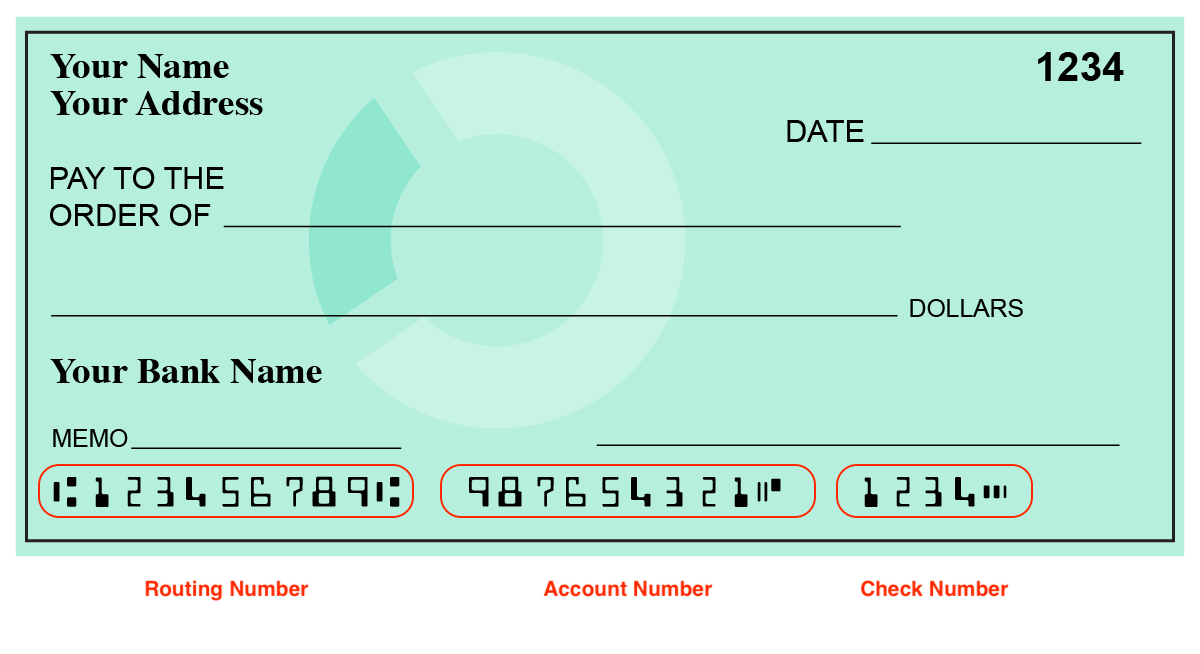
For many, the quickest and most traditional way to locate their routing number is by looking at a physical check. The bottom of your checks contains a series of numbers printed in magnetic ink, known as the MICR (Magnetic Ink Character Recognition) line.
Typically, you’ll find three sets of numbers from left to right:
- The Routing Number: This is almost always the first nine-digit number on the far left.
- Your Account Number: This is the middle set of numbers, identifying your specific account.
- The Check Number: This is usually the last set of numbers on the far right.
Always use a personalized check from your specific account, as temporary checks or deposit slips might sometimes feature a generic routing number or a routing number specific to a different branch or region. The physical check acts as a tangible and reliable source for this information.
Utilizing Online Banking Platforms
In today’s digital age, online banking portals have become a primary resource for managing finances, and they conveniently house your routing number information. This method is often the most accessible and secure.
To find your routing number through online banking:
- Log In: Access your bank’s official website or mobile app using your secure credentials.
- Navigate to Account Details: Look for a section like “Account Summary,” “Account Details,” “Statements,” or “Direct Deposit Information.” The exact wording may vary by bank.
- Locate the Number: Your routing number will typically be displayed prominently alongside your account number. Some banks might require you to click on a specific account to view its details.
Many banks also provide printable direct deposit forms within their online portals, which will clearly list both your routing and account numbers. This method is particularly useful for those who no longer use physical checks or prefer digital access.
Reviewing Your Bank Statements
Both physical and electronic bank statements are another dependable source for your routing number. These documents provide a comprehensive overview of your account activity and essential bank information.
- Physical Statements: If you receive paper statements in the mail, your routing number is usually printed at the top or bottom of the statement, often near your account number and bank’s address.
- Electronic Statements: For those who opt for paperless statements, you can access past statements through your online banking portal. Download a PDF version of a recent statement, and you’ll find the routing number in a similar location as on a physical statement. This method is particularly useful if you need to reference historical financial information alongside your routing details.
Contacting Your Financial Institution Directly
If you’re unable to find your routing number using the methods above, or if you simply prefer direct assistance, contacting your bank’s customer service or visiting a branch are excellent options.
- Customer Service: Call your bank’s customer service line. Be prepared to verify your identity through security questions, account numbers, or other personal details to ensure you are the legitimate account holder. A representative will then be able to provide you with the correct routing number for your account.
- Branch Visit: If you have a local branch, visiting in person allows you to speak directly with a teller or customer service representative. Bring a valid form of identification, and they will be able to assist you in retrieving your routing number. This method can be particularly helpful for complex inquiries or if you are uncomfortable sharing sensitive information over the phone.
Leveraging the Federal Reserve’s E-Payments Routing Directory
While primarily a resource for financial institutions, the Federal Reserve’s E-Payments Routing Directory is a public tool that lists routing numbers for all U.S. financial institutions. This can be useful if you need to verify a routing number you already have or look up a general routing number for a bank.
You can access this directory on the Federal Reserve’s website. You can typically search by institution name, city, or existing routing number. Keep in mind that larger banks may have different routing numbers for different regions or types of transactions, so always cross-reference with your specific bank if possible, or use your bank’s online resources or customer service to ensure accuracy for your specific account.
Differentiating Your Routing Number from Your Account Number
A common point of confusion for many individuals is distinguishing between a routing number and an account number. While both are essential for financial transactions, they serve distinct purposes and are equally important for ensuring your money goes to the right place.
Understanding the Unique Roles
- Routing Number: As established, this nine-digit code identifies your financial institution. Think of it as the address of the specific bank branch or processing center where your funds need to arrive. It’s a general identifier for the bank itself.
- Account Number: This is a longer, typically 10-12 digit number that uniquely identifies your specific account within that financial institution. Once funds reach the correct bank via the routing number, the account number directs them to your checking, savings, or other specific account.
To use an analogy, if your money were a letter, the routing number is like the city and state it’s being sent to, while the account number is the specific street address and apartment number within that city. Both are necessary to ensure the letter (or money) reaches the intended recipient.
Why the Distinction Matters for Security and Accuracy
Mistaking your routing number for your account number, or vice versa, can lead to significant financial disruptions.
- Incorrect Transfers: Providing the wrong account number means your funds could be sent to another customer’s account within the same bank, or the transaction could be rejected. Providing an incorrect routing number means your funds might be sent to an entirely different financial institution, potentially causing substantial delays and requiring complex reversal procedures.
- Security Implications: While your routing number is less sensitive than your account number, both should be protected. Scammers often attempt to trick individuals into revealing both to gain unauthorized access to funds or create fraudulent transactions. Always double-check both numbers when setting up new payments or direct deposits to prevent costly errors and safeguard your finances.
Best Practices for Safeguarding Your Routing Number and Financial Information
While a routing number isn’t as sensitive as a Social Security number, it’s still a critical piece of your financial identity. Practicing vigilance and adopting secure habits are paramount to protecting your assets.
When and With Whom to Share Your Routing Number
It’s natural to wonder when it’s safe to share this information. Generally, you will need to provide your routing number for legitimate purposes such as:
- Setting up direct deposit with your employer.
- Automating bill payments with utility companies, landlords, or service providers.
- Receiving tax refunds or government benefits.
- Initiating wire transfers (in conjunction with your account number).
Always ensure you are providing this information to trusted entities through secure channels. Legitimate organizations will typically have secure online forms or dedicated processes for handling such sensitive data. Be wary of unsolicited requests for your routing number via email, text, or unverified phone calls.
Recognizing and Avoiding Common Scams
Unfortunately, financial scams are prevalent, and fraudsters often target banking information. Be alert to the following:
- Phishing Attempts: Emails or texts purporting to be from your bank or a familiar company, asking you to “verify” your account details, including your routing and account numbers. Always verify the sender and, if in doubt, contact the organization directly using a known official number, not one provided in the suspicious message.
- “Overpayment” Scams: A common scam where someone “accidentally” sends you too much money and asks you to return the difference, often requiring you to provide your banking details for the initial “transfer.” This is almost always fraudulent.
- Unsolicited Requests: Never provide your routing number to someone who calls you out of the blue, claiming to be from a government agency or a tech support company, and demands your banking details.
Remember that your bank will never ask you for your full account number, PIN, or online banking password via email or unsolicited phone calls.

General Security Measures
Beyond specific scam awareness, maintaining robust general security practices is essential for protecting all your financial information:
- Strong, Unique Passwords: Use complex passwords for all your online banking accounts and enable two-factor authentication (2FA) wherever possible.
- Monitor Account Statements: Regularly review your bank statements and transaction history for any unauthorized activity. Report discrepancies immediately.
- Shred Sensitive Documents: Properly shred old checks, bank statements, and any other documents containing your routing or account numbers before discarding them.
- Secure Network Use: Avoid accessing online banking or sensitive financial sites over unsecured public Wi-Fi networks.
By understanding what your routing number is, knowing how to find it, and diligently protecting it, you empower yourself to manage your finances with confidence and security in an increasingly digital world.
aViewFromTheCave is a participant in the Amazon Services LLC Associates Program, an affiliate advertising program designed to provide a means for sites to earn advertising fees by advertising and linking to Amazon.com. Amazon, the Amazon logo, AmazonSupply, and the AmazonSupply logo are trademarks of Amazon.com, Inc. or its affiliates. As an Amazon Associate we earn affiliate commissions from qualifying purchases.