
Understanding how to find the percentage of a number is more than just a lingering memory from middle school mathematics; it is the fundamental language of financial literacy. Whether you are calculating the return on a recent stock market investment, determining the impact of a high-interest credit card, or simply trying to figure out a 20% tip at a business dinner, percentages govern the flow of capital.
In the world of money, those who master the “why” and “how” of percentage calculations gain a distinct advantage in wealth accumulation and debt management. This guide will move beyond the basic equation and explore how to apply percentage calculations across the most critical sectors of your financial life.

1. The Core Mechanics: Calculating Percentages in Daily Finance
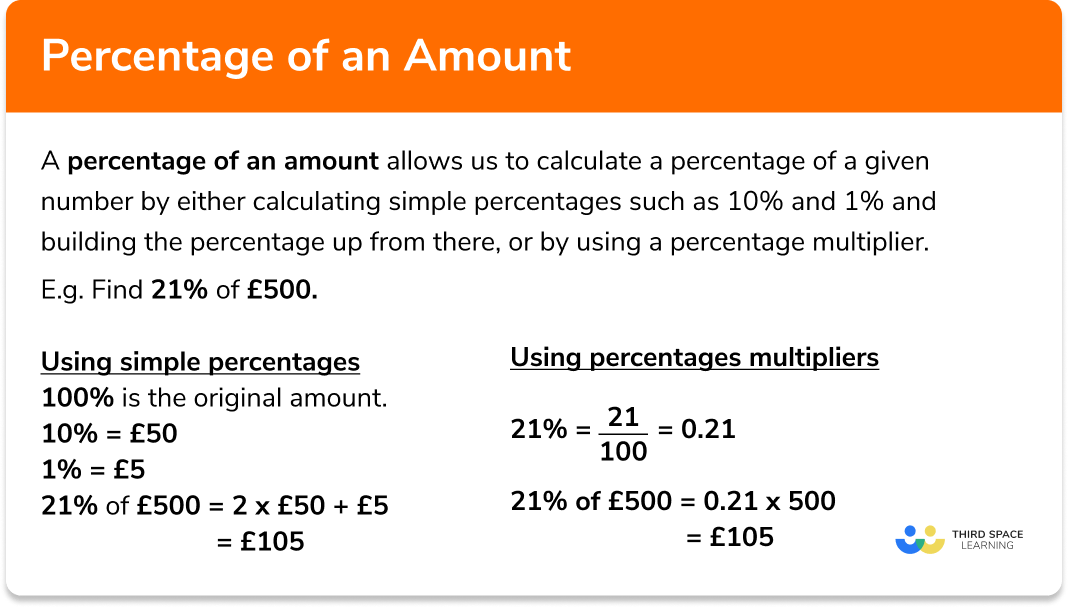
At its simplest level, a percentage is a way to express a number as a fraction of 100. In financial terms, this represents a ratio that allows for the comparison of disparate values. If you want to find the percentage of a number—for instance, how much you are actually saving when a store offers a 15% discount—the formula is straightforward:
(Percentage / 100) × Total Amount = Value.
However, in personal finance, we often need to work backward or compare two values to find the rate of change.
The Basic Percentage Formula
To find what percentage one number is of another (for example, finding what percentage of your $5,000 monthly income goes toward a $1,500 mortgage), you use the “Part over Whole” method:
(Part / Whole) × 100 = Percentage.
In this case, ($1,500 / $5,000) = 0.3, which multiplied by 100 equals 30%. Knowing this number is the first step in determining if your housing costs are within a healthy financial range.
Calculating Discounts and Sales Tax
When navigating the consumer side of money, you frequently encounter “percentage off” scenarios. To quickly calculate a discount, subtract the percentage from 100 and multiply by the price. If a laptop is $1,200 with a 20% discount, you are paying 80% of the price ($1,200 × 0.80 = $960). Conversely, to calculate sales tax, you multiply the base price by the tax rate (expressed as a decimal) and add it to the original. Understanding these quick shifts between decimals and percentages ensures you are never surprised at the cash register.
The Importance of the “Base” Number
A common financial pitfall is ignoring the base number. A 10% increase followed by a 10% decrease does not bring you back to your starting point. For example, if $100 grows by 10%, you have $110. If that $110 then drops by 10%, you lose $11, leaving you with $99. This mathematical reality is why protecting your principal investment is often more important than chasing high-percentage gains.
2. Evaluating Investment Performance and ROI
In the realm of investing, percentages are the ultimate metric of efficiency. While “total profit” tells you how much money you made, the “Return on Investment” (ROI) percentage tells you how hard your money worked for you.
Calculating Capital Gains Percentages
When you sell an asset, whether it is a stock, a piece of real estate, or a cryptocurrency, you need to know your percentage gain or loss. The formula for this is:
((Current Value – Original Cost) / Original Cost) × 100.
If you bought a share of a tech company at $150 and sold it at $200, your gain is $50. Dividing $50 by the original $150 gives you 0.33, or a 33.3% return. This percentage allows you to compare the performance of that stock against other benchmarks, such as the S&P 500 or a high-yield savings account.
Understanding Dividend Yield
For income-focused investors, the dividend yield is a crucial percentage. It represents how much a company pays out in dividends each year relative to its stock price. It is calculated by dividing the annual dividend per share by the price per share. A 4% dividend yield on a stable utility stock might be more attractive than a 1% yield on a volatile tech stock, even if the tech stock’s price is increasing. Calculating this percentage helps you determine the “cash flow” efficiency of your portfolio.
Real vs. Nominal Returns: Factoring in Inflation
Professional investors always look at the “real” percentage return, which accounts for inflation. If your portfolio grew by 7% this year, but inflation was 3%, your real purchasing power only increased by 4%. Knowing how to subtract the inflation percentage from your nominal returns is vital for long-term retirement planning, ensuring that your future “millions” actually buy what you expect them to.
3. Strategic Budgeting and the 50/30/20 Rule
Percentages are the most effective tool for structuring a budget because they scale with your income. While a fixed dollar amount for groceries might work one year, it may become obsolete as your career progresses or inflation rises. Using percentages ensures your financial plan remains “evergreen.”
Allocating Income by Percentage
One of the most popular financial frameworks is the 50/30/20 rule. This suggests allocating your after-tax income into three percentage-based buckets:
- 50% for Needs: Housing, utilities, groceries, and minimum debt payments.
- 30% for Wants: Dining out, travel, and hobbies.
- 20% for Savings and Debt Repayment: Building an emergency fund, 401(k) contributions, and aggressive debt pay-down.
By calculating the percentage of your income that goes to each category, you can quickly identify “lifestyle creep.” If your “wants” have crept up to 45%, you know exactly where to trim.
Tracking Savings Rates for Retirement
The single most important percentage in your financial life is your savings rate. This is the percentage of your gross income that you set aside for the future. Financial independence experts often suggest that a 15% to 25% savings rate is necessary for a comfortable retirement. To find your savings rate, divide your total monthly savings (including employer matches) by your total monthly gross income. If you earn $6,000 and save $1,200, your savings rate is 20%.
Debt-to-Income Ratio (DTI)
Lenders use percentages to determine your creditworthiness. Your Debt-to-Income (DTI) ratio is calculated by dividing your total monthly debt payments by your gross monthly income. Most mortgage lenders prefer a DTI of 36% or lower. If you know how to calculate this percentage yourself, you can determine how much house you can afford long before you ever step into a bank.
4. The Impact of Interest Rates and Debt
Interest is essentially the “price” of money, and that price is almost always expressed as a percentage. Understanding how these percentages compound can mean the difference between building wealth and falling into a debt spiral.
APR vs. APY: Knowing the Difference
When looking at credit cards or savings accounts, you will see two different percentage acronyms: Annual Percentage Rate (APR) and Annual Percentage Yield (APY).
- APR is the simple interest rate over a year.
- APY takes into account the effect of compounding interest within that year.
If a savings account compounds monthly, the APY will be slightly higher than the APR. When you are the one earning interest, you want a higher APY. When you are the one paying debt, you want a lower APR.
The True Cost of Minimum Payments
Credit card companies often require a “minimum payment” which is usually a small percentage of your balance (often 2% or 3%). By calculating the interest percentage on your remaining balance, you can see why the minimum payment is a trap. If you have a $5,000 balance at 20% APR, you are being charged roughly $83 in interest every month. If your minimum payment is only $100, you are only reducing your actual debt by $17. Calculating these percentages helps you realize that paying “only the minimum” is a recipe for lifelong debt.
Percentage-Based Debt Reduction: The Avalanche Method
When managing multiple debts, the “Debt Avalanche” method focuses on the interest rate percentage. You list all your debts and their interest rates, then put all your extra cash toward the debt with the highest percentage. Mathematically, this is the most efficient way to save money, as it minimizes the total interest paid over time.
5. Advanced Financial Tools and Automation
While mental math is a great skill, the modern financial landscape offers digital tools that handle complex percentage calculations with precision. Using these tools allows you to focus on strategy rather than arithmetic.
Leveraging Excel and Spreadsheets for Percentage Tracking
For anyone serious about their money, a spreadsheet is the ultimate financial tool. In Google Sheets or Microsoft Excel, finding a percentage is as simple as a formula. If your income is in cell A1 and your expenses are in cell B1, the formula =B1/A1 will give you your expense ratio. You can then click the “Percent” button to format it. Spreadsheets allow you to track percentage changes in your net worth over months and years, providing a visual representation of your financial trajectory.
Using Digital Calculators for Compound Interest
Compound interest is often called the eighth wonder of the world, but calculating it manually is difficult. Online compound interest calculators use the formula A = P(1 + r/n)^nt, where ‘r’ is the annual interest rate as a decimal. By plugging in your current savings, your monthly contribution, and your expected percentage of return, you can project your wealth 20 or 30 years into the future.

The Role of Financial Apps in Real-Time Analysis
Today, apps like Mint, YNAB (You Need A Budget), or Personal Capital automatically calculate your spending percentages. They categorize your transactions and show you a pie chart of your expenses. This visual representation of percentages makes it easy to see if your “Dining Out” slice is taking up too much of the “Income” pie. By reviewing these percentages weekly, you can make real-time adjustments to your financial behavior.
In conclusion, finding the percentage of a number is the gateway to sophisticated financial management. From the simple act of calculating a tip to the complex analysis of a diversified investment portfolio, percentages provide the clarity needed to make informed decisions. By mastering these calculations, you shift from being a passive observer of your finances to an active, strategic architect of your wealth.
aViewFromTheCave is a participant in the Amazon Services LLC Associates Program, an affiliate advertising program designed to provide a means for sites to earn advertising fees by advertising and linking to Amazon.com. Amazon, the Amazon logo, AmazonSupply, and the AmazonSupply logo are trademarks of Amazon.com, Inc. or its affiliates. As an Amazon Associate we earn affiliate commissions from qualifying purchases.