
In the world of personal finance, investing, and business, percentages are the universal language. From calculating the interest on a loan to understanding your investment returns, deciphering discounts, or tracking your profit margins, a solid grasp of percentages is not merely a mathematical exercise; it’s a critical life skill that empowers informed financial decisions. This comprehensive guide will demystify the art of finding a percentage, grounding each concept in real-world financial applications to help you navigate your monetary landscape with confidence.
Far too often, individuals shy away from numbers, viewing them as complex or intimidating. However, understanding percentages is foundational to financial literacy. It’s about more than just arithmetic; it’s about translating raw data into actionable insights, allowing you to compare quantities proportionally, assess growth or decline, and evaluate risks and opportunities. Whether you’re a budding investor, a meticulous budgeter, a small business owner, or simply someone looking to make smarter spending choices, mastering percentage calculations is an indispensable tool in your financial toolkit.

The Fundamentals of Percentage Calculation in Finance
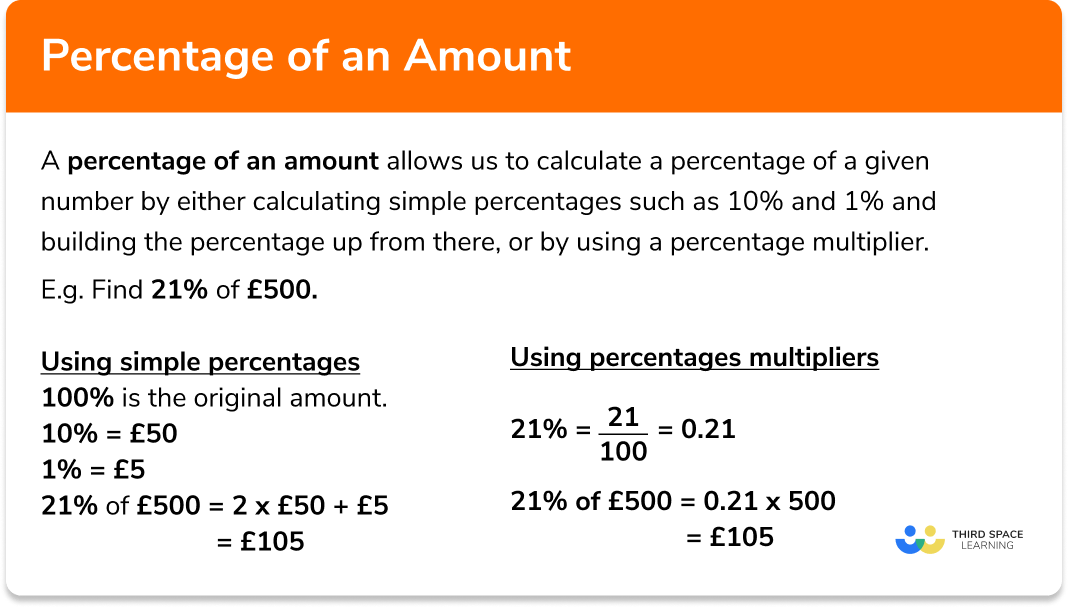
At its core, a percentage is a way of expressing a number as a fraction of 100. It’s a standardized ratio that allows for easy comparison between different values, even if their original “wholes” are vastly different. In finance, this standardization is incredibly powerful.
What Exactly is a Percentage? A Financial Perspective
Imagine you’re reviewing your monthly budget. You spend $500 on groceries out of a total monthly income of $3000. Expressing this as a percentage immediately tells you the proportion of your income dedicated to groceries, allowing for easy comparison with other categories or with recommended budgeting guidelines. It’s not just a raw number; it’s a relative figure that provides context. A percentage quantifies a part in relation to a whole, always as if that whole were divided into 100 equal parts.
The Core Formula: Part/Whole * 100
The fundamental formula for calculating any percentage is straightforward:
Percentage = (Part / Whole) * 100
Let’s break this down with financial examples:
-
Example 1: Budget Allocation
If your monthly income (the “Whole”) is $4,000, and you allocate $600 to savings (the “Part”), what percentage of your income goes into savings?
Percentage = ($600 / $4,000) * 100 = 0.15 * 100 = 15%
This tells you 15% of your income is saved, a clear metric for your financial health. -
Example 2: Profit Margin for a Side Hustle
Suppose you sell a handmade product for $50 (the “Whole” revenue), and the cost to produce it (the “Part” of expenses) was $20. Your profit is $30. What is your gross profit margin percentage relative to revenue?
(Profit / Revenue) * 100 = ($30 / $50) * 100 = 0.60 * 100 = 60%
This 60% gross profit margin is a crucial indicator of your side hustle’s profitability.
Understanding this basic formula unlocks a multitude of financial insights, allowing you to quantify various aspects of your money management, from debt ratios to investment performance.
Practical Applications of Percentages in Personal Finance
Percentages are ubiquitous in personal finance, helping you manage your daily spending, save for the future, and understand your financial obligations.
Budgeting and Expense Tracking
One of the most immediate applications of percentages is in creating and sticking to a budget. Methods like the 50/30/20 rule (50% needs, 30% wants, 20% savings/debt repayment) are entirely percentage-based.
- Identifying Spending Percentages: By calculating what percentage of your income goes to housing, transportation, food, and entertainment, you gain a clear picture of where your money is actually going. If your housing expenses are 40% of your take-home pay, you know you’re potentially exceeding common recommendations, prompting a review.
- Tracking Progress Towards Goals: If you aim to save 15% of your income each month, percentages provide a direct way to measure your success and adjust if necessary.
Discounts, Sales, and Tips
These are everyday scenarios where percentages save you money or ensure fair compensation.
- Calculating Discounts: A jacket originally priced at $120 is on sale for 25% off. To find the discount amount:
Discount Amount = 25% of $120 = 0.25 * $120 = $30
New Price = $120 – $30 = $90 - Calculating Tips: You owe a 15% tip on a $60 dinner bill.
Tip Amount = 15% of $60 = 0.15 * $60 = $9
Total Bill = $60 + $9 = $69
Understanding these calculations ensures you get the best deals and tip appropriately.
Interest Rates
Interest rates are perhaps the most financially impactful application of percentages. They dictate the cost of borrowing and the growth of savings.
- Loan Interest: A $10,000 car loan at 5% annual interest. In the first year, you would owe $500 in interest ($10,000 * 0.05). Understanding this helps you compare loan offers and estimate total repayment costs.
- Savings Account Interest: A $1,000 savings account with a 0.5% annual interest rate will earn you $5 in interest over a year ($1,000 * 0.005). While seemingly small, compound interest over time can make a significant difference.
Taxes and Deductions
Taxes are inherently percentage-based, from income tax brackets to sales tax and property tax.
- Income Tax: If you fall into a 22% tax bracket, it means a certain portion of your taxable income is taxed at that rate. Understanding these percentages is crucial for financial planning and accurate tax filing.
- Payroll Deductions: Your paycheck often shows deductions for retirement contributions or health insurance, expressed as a percentage of your gross pay. Knowing these percentages helps you understand your net income and plan your budget effectively.
Percentages in Investing and Wealth Building

For investors, percentages are the bedrock of performance evaluation, risk assessment, and strategic asset allocation.
Investment Returns
Measuring the performance of your investments relies heavily on percentages.
- Return on Investment (ROI): If you invested $1,000 in a stock and sold it for $1,200, your profit is $200.
ROI = (Profit / Initial Investment) * 100 = ($200 / $1,000) * 100 = 20%
This 20% return allows you to compare the profitability of different investments over similar periods. - Annualized Returns: This standardizes returns over a year, making it easier to compare investments that have been held for different durations.
- Compound Interest: The magic of compound interest, where your earnings also earn interest, is best understood through percentages. A higher annual percentage yield (APY) means your money grows faster over time.
Portfolio Allocation
A diversified investment portfolio is key to managing risk, and diversification is often expressed in percentages.
- Asset Distribution: An investor might aim for a portfolio composed of 60% stocks and 40% bonds. This percentage allocation is a strategic decision based on risk tolerance and financial goals. If your stock holdings grow significantly, their percentage of your total portfolio might increase, prompting you to rebalance back to your target percentages.
Inflation and Purchasing Power
Inflation, measured as a percentage increase in the general price level of goods and services, erodes the purchasing power of money over time.
- Real Returns: When evaluating investment returns, it’s crucial to consider inflation. If your investment earns 7% but inflation is 3%, your “real return” (what you actually gained in purchasing power) is only 4%. Understanding this difference is vital for preserving and growing wealth.
Leveraging Percentages for Business and Online Income
For entrepreneurs, small business owners, and those pursuing online income, percentages are indispensable for tracking profitability, optimizing sales, and making strategic business decisions.
Profit Margins and Markups
These are fundamental metrics for any business, indicating how much profit is made per sale.
- Gross Profit Margin: (Revenue – Cost of Goods Sold) / Revenue * 100. This percentage tells you the profitability of your products or services before operating expenses. A product selling for $100 with a cost of $40 has a gross profit margin of ($60/$100) * 100 = 60%.
- Net Profit Margin: (Net Profit / Revenue) * 100. This is the ultimate profitability measure, showing what percentage of revenue is left after all expenses, including taxes.
- Markups: If you buy an item for $50 and want to sell it for a 30% markup, you’d add $15 (0.30 * $50) to the cost, selling it for $65.
Commission Structures
Many sales and online income models are based on commissions, which are always expressed as percentages.
- Sales Commissions: A salesperson earning 10% commission on a $5,000 sale earns $500 (0.10 * $5,000).
- Affiliate Marketing: Earning a 5% commission on a product sale means you receive $5 for every $100 sale you generate through your unique link. Understanding these percentages directly impacts your income potential.
Financial Ratios and Growth Rates
Businesses use various financial ratios, often expressed as percentages, to assess performance, health, and growth.
- Revenue Growth Rate: If your business generated $100,000 in revenue last year and $120,000 this year, your growth rate is (($120,000 – $100,000) / $100,000) * 100 = 20%. This percentage is a key indicator of business expansion.
- Operating Expense Ratio: Operating Expenses / Revenue * 100. This helps gauge the efficiency of your business operations.
Tools and Tips for Accurate Percentage Calculations
While the basic formula is simple, complex financial scenarios or large datasets benefit from specific tools and a clear understanding of common pitfalls.
Calculators and Spreadsheets
For everyday calculations, a basic calculator suffices. However, for more intricate financial planning or tracking multiple percentages, spreadsheets like Microsoft Excel or Google Sheets are invaluable.
- Excel/Google Sheets: These programs allow you to set up formulas once and apply them across numerous data points. For instance, you can calculate the percentage of each budget category against your total income, or automatically track ROI for multiple investments. They also offer built-in functions for various financial calculations.
Online Financial Tools and Apps
Many budgeting apps, investment platforms, and financial calculators online automate percentage calculations, making it easier to visualize your financial situation.
- Budgeting Apps: Apps like Mint or YNAB automatically categorize your spending and show you what percentage of your income goes to different areas.
- Investment Trackers: These tools often display your portfolio allocation in percentages and calculate your percentage gains or losses in real-time.
Common Pitfalls to Avoid
Even with simple concepts, misunderstandings can lead to significant financial errors.
- Percentage Point vs. Percentage Change: Be careful when discussing changes. If an interest rate goes from 4% to 5%, that’s a 1 percentage point increase, but a 25% percentage change ((5-4)/4 * 100). The distinction is crucial in financial discussions.
- The “Whole” Matters: Always be clear about what constitutes the “whole” in your calculation. Is it gross income or net income? Original price or discounted price? Misidentifying the base can lead to incorrect percentages.
- Compounding Effects: When dealing with multiple percentage changes (e.g., a discount followed by a further discount, or annual investment returns), remember that percentages apply to the current value, not always the original. A 20% discount followed by another 10% discount is not a 30% total discount.
Conclusion
Understanding how to find the percent of something is more than just an academic exercise; it’s a fundamental skill that underpins sound financial management in every aspect of life. From managing your personal budget and maximizing savings to making informed investment decisions and running a profitable business, percentages provide the clarity and context needed to translate raw numbers into meaningful insights. By mastering the core formula and recognizing its diverse applications across personal finance, investing, and entrepreneurship, you empower yourself to make smarter, more confident financial choices. Embrace percentages as your ally, and watch your financial literacy—and success—soar.
aViewFromTheCave is a participant in the Amazon Services LLC Associates Program, an affiliate advertising program designed to provide a means for sites to earn advertising fees by advertising and linking to Amazon.com. Amazon, the Amazon logo, AmazonSupply, and the AmazonSupply logo are trademarks of Amazon.com, Inc. or its affiliates. As an Amazon Associate we earn affiliate commissions from qualifying purchases.