
In an era increasingly dominated by contactless payments, mobile wallets, and instantaneous peer-to-peer transfers, the humble paper check remains a surprisingly resilient fixture of the modern financial landscape. Whether you are setting up a direct deposit for a new job, authorizing an automated clearing house (ACH) payment for your mortgage, or simply trying to move money between different financial institutions, the information printed on a check is the “DNA” of your bank account.
Understanding how to navigate the layout of a check is a fundamental skill in personal finance. While it may appear as a confusing string of digits at first glance, the numbers at the bottom of a check follow a standardized logic regulated by the American Bankers Association (ABA). This guide provides a deep dive into how to identify your account number, distinguish it from other identifiers, and ensure your financial data remains secure.

The Anatomy of a Personal Check: Decoding the MICR Line
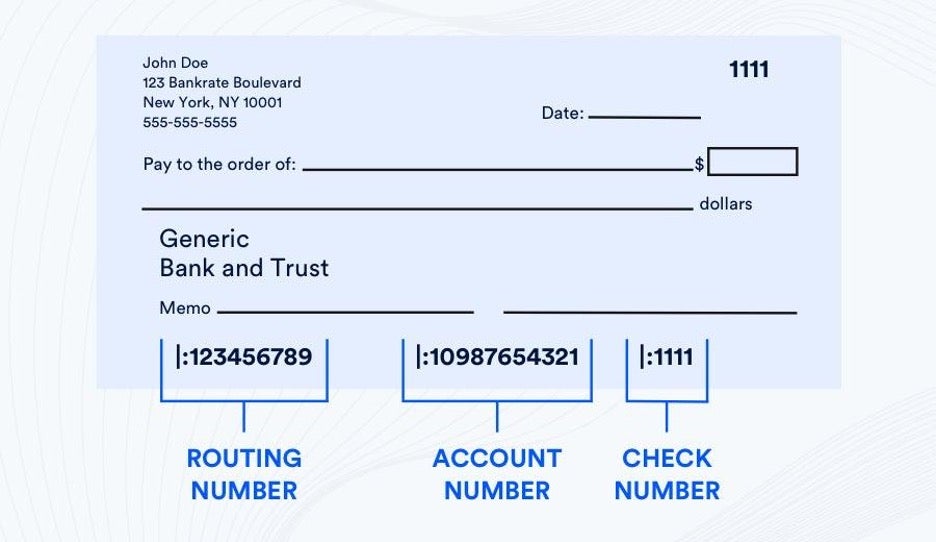
The most critical information on a check is located at the very bottom, printed in a unique, blocky font. This is known as the MICR (Magnetic Ink Character Recognition) line. This technology allows bank sorting machines to read the data even if it has been written over or lightly damaged. To find your account number, you must first understand the three distinct components of this line.
The Routing Number (The First Set of Digits)
Starting from the far left, the first nine digits you encounter are the routing transit number (RTN). This number acts as an “address” for your financial institution. It tells the federal reserve and other banks exactly where the money is coming from. The routing number is always nine digits long and is flanked by a specific MICR symbol that looks like a vertical line and a colon. This number identifies the bank itself, not your specific individual account.
The Account Number (The Second Set of Digits)
The account number is typically the second set of digits found at the bottom of the check, located to the right of the routing number. Unlike the routing number, account numbers do not have a fixed length; they can range anywhere from 8 to 12 digits or more, depending on the internal systems of your bank. The account number is your unique identifier within that institution. On a standard personal check, the account number is usually followed by a symbol that resembles a small square or a “dash” character.
The Check Number (The Final Sequence)
The final set of digits on the right side of the MICR line is the check number. This number is used for record-keeping and corresponds to the number printed in the top right-hand corner of the check. Identifying the check number is essential for reconciliation—matching your bank statement to your checkbook—and for placing “stop payment” orders if a check is lost or stolen.
Why Locating Your Account Number is Essential for Financial Management
While you might not write many physical checks, the information found on them is vital for several administrative financial tasks. Knowing where to find your account and routing numbers allows you to interface with the broader financial system without needing to visit a physical bank branch.
Setting Up Direct Deposits and Payroll
Most employers require a “voided check” to set up payroll. This is because the MICR line contains the exact routing and account numbers needed to push funds into your account. If you do not have a physical checkbook, you can still provide these numbers manually on an enrollment form. In this context, providing the correct account number is the difference between getting paid on time and having your funds bounce back to the company’s treasury department.
Automating Bill Payments via ACH
ACH (Automated Clearing House) transfers are the standard for paying recurring bills like utilities, insurance, and rent. When you “pay by check” online, the website will ask for your routing and account numbers. This method is often preferred over credit card payments because it avoids the 2-3% processing fees that merchants often pass on to consumers. Understanding which number is the account number ensures that your payments are pulled from the correct source, preventing late fees and service interruptions.
Facilitating Wire Transfers and Large Purchases
For high-value transactions, such as the down payment on a home or the purchase of a vehicle, a standard ACH transfer or debit card payment may not suffice. In these cases, a wire transfer is required. A wire transfer requires the same information found on your check, though you must be careful: some banks use a different “Wire Routing Number” than the “Paper/ACH Routing Number” found on your check. However, your account number almost always remains the same.
Distinguishing Between Business and Personal Check Layouts
While the logic of the MICR line remains constant, the physical placement of the numbers can vary slightly between a personal check and a business or commercial check. If you are a business owner or an employee handling corporate finances, being able to spot these differences is crucial for accurate bookkeeping.
Placement Variations in Commercial Documents
In many business check formats—particularly those printed on “three-to-a-page” ledger paper—the sequence of the numbers may be rearranged. It is not uncommon for a business check to list the check number before the routing and account numbers. If you see a short 3- or 4-digit number at the beginning of the line, followed by the 9-digit routing number, you are looking at a commercial layout. In these instances, the account number remains the middle or final segment of the MICR line.
Security Features to Watch Out For
Business checks often include advanced security features that personal checks lack. These might include “Void” pantographs (where the word VOID appears when photocopied), micro-printing, and heat-sensitive ink. When identifying the account number on a business check, ensure you are reading the numbers from an original document, as high-security checks are designed to distort the account information when reproduced via scanning or photography to prevent fraud.
Safeguarding Your Financial Information and MICR Line Data
Your account number and routing number are the keys to your financial “house.” If a malicious actor gains access to these numbers, they can potentially initiate unauthorized ACH withdrawals or create counterfeit checks. Protecting this information is a cornerstone of modern financial security.
Protecting Your MICR Line Data
Treat your checkbook with the same level of security as your social security card or passport. Never leave a signed, blank check unattended. If you are mailing a check, ensure it is placed in a secure mailbox or handed directly to a postal worker. “Check washing”—a process where criminals use chemicals to erase the payee and amount while leaving the account information intact—remains a prevalent form of fraud. Using pens with permanent, gel-based ink that sinks into the paper fibers can help mitigate this risk.
Best Practices for Discarding Old Checks
When you close a bank account or receive a new box of checks due to a name or address change, do not simply throw the old checks in the trash. The account numbers are still visible and can be harvested by identity thieves. Use a cross-cut shredder to destroy old checks, deposit slips, and even the “starting” checks provided by banks. If you don’t have a shredder, soaking the checks in water until the ink runs and the paper pulps is a low-tech but effective alternative.
What to Do If You Don’t Have a Physical Check
We are moving toward a “checkless” society, and many digital-only banks (Neobanks) do not issue physical checkbooks at all. If you find yourself in a situation where you need to provide an account number but do not have a check to look at, there are several reliable digital alternatives.
Finding Account Details via Online Banking
Almost every modern banking portal allows you to view your full account and routing numbers securely. Usually, this is found under “Account Details” or “Settings.” For security reasons, the numbers are often partially masked (e.g., ****1234). You will typically need to click an “eye” icon or provide biometric authentication (like a fingerprint or FaceID) to reveal the full string of digits.

Using Mobile Apps and Electronic Statements
If you have a banking app, your account information is likely accessible in the “Manage Account” section. Furthermore, your monthly bank statement (usually available as a PDF) will list your account number, though it rarely lists the routing number. If you are using a statement to find your account number, ensure it is a “periodic statement” rather than a simple transaction receipt, as receipts generally only show the last four digits for privacy reasons.
By mastering the layout of a check and understanding the significance of the MICR line, you empower yourself to navigate the complexities of the financial system with confidence. Whether you are managing personal wealth or overseeing business finances, the ability to quickly and accurately identify your account number is an indispensable tool in your financial toolkit.
aViewFromTheCave is a participant in the Amazon Services LLC Associates Program, an affiliate advertising program designed to provide a means for sites to earn advertising fees by advertising and linking to Amazon.com. Amazon, the Amazon logo, AmazonSupply, and the AmazonSupply logo are trademarks of Amazon.com, Inc. or its affiliates. As an Amazon Associate we earn affiliate commissions from qualifying purchases.