
In the intricate world of finance, where every decision can have far-reaching implications, understanding percentages isn’t just a useful skill—it’s an absolute necessity. From calculating discounts on your groceries to assessing the returns on your investment portfolio, percentages are the universal language that translates raw numbers into actionable insights. They provide context, facilitate comparisons, and empower you to make informed decisions about your money, whether personal or business-related. This comprehensive guide will demystify percentages, breaking down their fundamental concepts, practical applications, and the tools you can leverage to master them, all within the critical realm of financial literacy.

The Fundamental Concept of Percentages in Finance
At its core, a percentage is a way to express a number as a fraction of 100. The word “percent” literally means “per hundred.” In finance, this simple concept unlocks a powerful way to standardize comparisons, measure change, and understand proportions without being overwhelmed by large, absolute figures.
What is a Percentage and Why Does it Matter for Your Money?
Imagine you’re told a company’s profit increased by $10,000. Is that good? It depends. If their original profit was $100,000, a $10,000 increase is a substantial 10%. If their original profit was $10 million, a $10,000 increase is a negligible 0.1%. Percentages provide that crucial context. They allow us to compare relative values, making sense of financial data across different scales. For personal finance, percentages help you visualize how much of your income goes to housing versus savings, or the true cost of borrowing money. For business, they’re vital for understanding market share, profit margins, and growth rates, enabling strategic planning and performance evaluation.
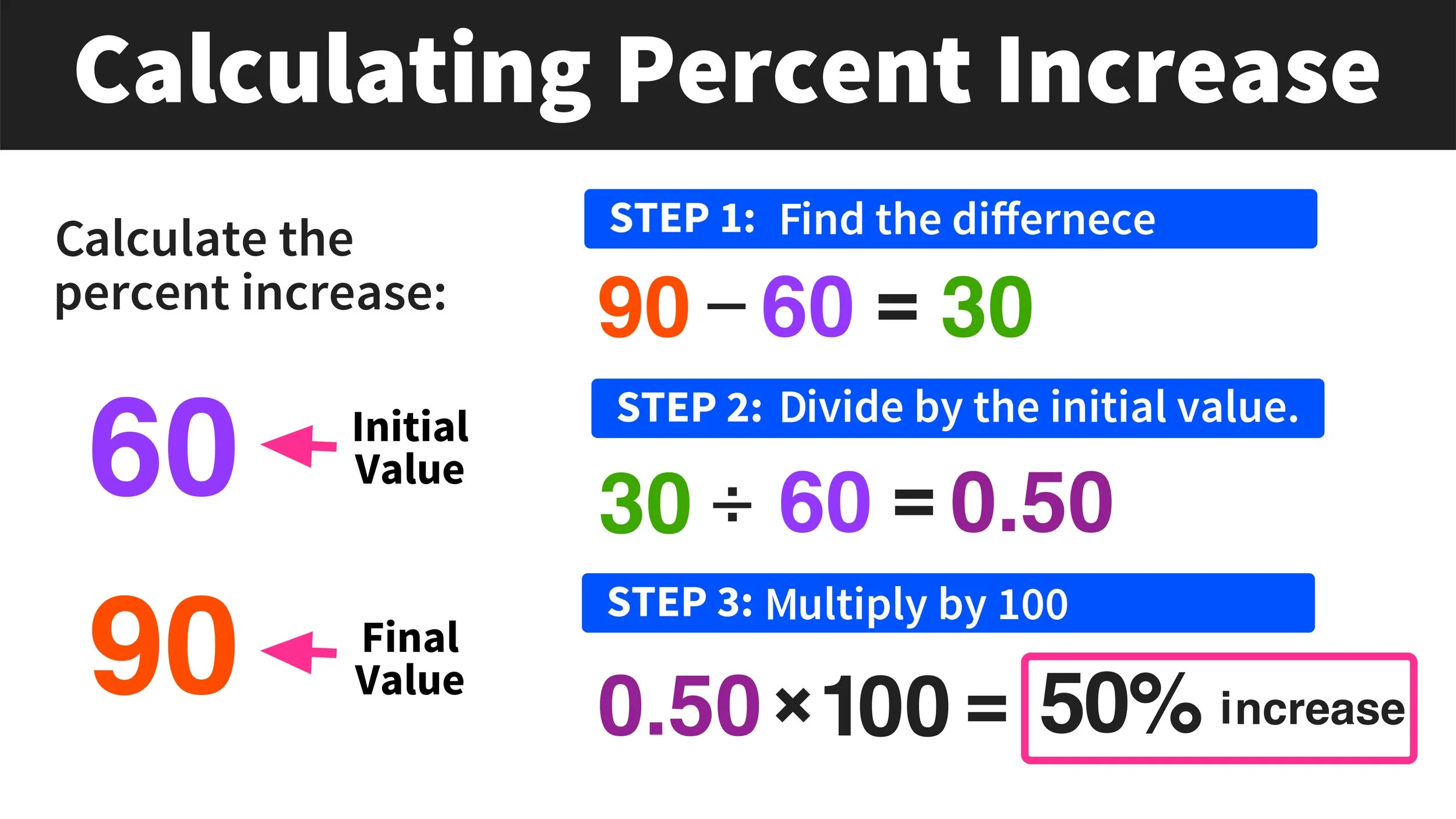
The Basic Formula: Part/Whole x 100
The calculation of a percentage is elegantly simple:
Percentage = (Part / Whole) × 100
Let’s break this down with a financial example:
- Part: The specific amount or value you want to express as a percentage. For instance, the interest you paid on a loan, or the profit from a single product sale.
- Whole: The total amount or base against which the “part” is being compared. This could be the original loan amount, your total monthly income, or the total revenue.
Example: If you spent $300 on groceries this month from a total monthly income of $3,000:
(300 / 3,000) × 100 = 0.1 × 100 = 10%. This means 10% of your income went to groceries.
Example 2: If an item originally cost $200 and is now on sale for $150, what’s the discount percentage?
First, find the “part,” which is the discount amount: $200 – $150 = $50.
Then, apply the formula: ($50 / $200) × 100 = 0.25 × 100 = 25%. You received a 25% discount.
Common Misconceptions and Pitfalls
While the formula is straightforward, misinterpreting or miscalculating percentages can lead to significant financial errors. One common mistake is confusing a percentage point change with a percentage change. If an interest rate goes from 5% to 7%, that’s a 2 percentage point increase, but it’s a (2/5)*100 = 40% *increase* in the rate itself. Another pitfall is forgetting the “whole” or comparing a part to an incorrect base, leading to skewed results. Always ensure your “part” and “whole” are relevant to the comparison you’re trying to make. Understanding the correct base is paramount for accurate financial analysis.
Practical Applications: Percentages in Personal Finance
For individuals, percentages are not abstract mathematical concepts but vital tools for managing daily finances, planning for the future, and making savvy purchasing decisions. They help quantify habits, measure progress, and expose hidden costs or benefits.
Budgeting and Expense Allocation
Effective budgeting relies heavily on percentages. Models like the popular 50/30/20 rule (50% for needs, 30% for wants, 20% for savings/debt repayment) are entirely percentage-based. By converting your actual expenses into percentages of your income, you gain a clear, visual understanding of where your money is going. If your housing costs are 40% of your income, and the recommended maximum is 30%, you immediately identify an area for potential adjustment. This percentage-based insight allows for proactive financial control, ensuring your spending aligns with your financial goals.
Discounts, Sales, and Savings Calculations
Every time you encounter a sale—be it 20% off, buy one get one 50% off, or an additional 15% discount—you’re dealing with percentages. Knowing how to quickly calculate these savings helps you determine the true cost of an item and identify the best deals. For example, if a $100 item has a 20% discount, you save $20 ($100 * 0.20 = $20). If another store offers 15% off, but the item’s original price is $120, your savings are $18 ($120 * 0.15 = $18). Comparing these absolute savings (or final prices) is essential for smart shopping. Understanding chained discounts (e.g., “20% off then an additional 10% off”) also requires careful percentage calculation, as they don’t simply add up.
Interest Rates: Loans, Savings, and Credit Cards
Interest rates are perhaps the most pervasive application of percentages in personal finance. Whether you’re paying interest on a mortgage, car loan, or credit card, or earning interest on a savings account or certificate of deposit (CD), these rates are expressed as annual percentages. A 6% interest rate on a $20,000 car loan means you’ll pay $1,200 in interest per year ($20,000 * 0.06). For credit cards, understanding the Annual Percentage Rate (APR) and how it compounds monthly is critical to avoid accumulating significant debt. Conversely, a high-yield savings account with a competitive interest rate uses percentages to show you how your money can grow over time.
Taxes and Deductions
Tax calculations are inherently percentage-based. Income tax rates, sales tax, property tax—all are expressed as percentages of a base value. Knowing your tax bracket, which indicates the percentage of income you pay in taxes, is crucial for financial planning. Understanding deductions, often a percentage of specific expenses or income, can significantly reduce your taxable income, thereby lowering your overall tax liability. For example, a deduction of 10% on charitable contributions means you can subtract 10% of that contribution amount from your gross income before calculating taxes.
Percentages in Investing and Business Finance
Moving beyond personal budgets, percentages form the backbone of investment analysis and business financial reporting. They enable investors to evaluate opportunities and help businesses measure performance, strategize growth, and communicate financial health.
Return on Investment (ROI) and Portfolio Performance
For investors, ROI is a cornerstone metric, almost always expressed as a percentage. It measures the profitability of an investment relative to its cost. If you invest $10,000 and it grows to $12,000, your profit is $2,000. Your ROI is ($2,000 / $10,000) × 100 = 20%. Similarly, the performance of an entire investment portfolio is typically reported as a percentage gain or loss over a period. This allows investors to compare different assets, fund managers, and market benchmarks, making informed decisions about where to allocate their capital. Understanding the percentage gains and losses helps manage expectations and assess risk versus reward.
Profit Margins and Business Growth Rates
Businesses live and breathe by percentages. Gross Profit Margin (Gross Profit / Revenue × 100) indicates the percentage of revenue left after deducting the cost of goods sold. Net Profit Margin (Net Profit / Revenue × 100) shows the percentage of revenue remaining after all expenses, including taxes, are accounted for. These percentages are vital for assessing operational efficiency and pricing strategies. Growth rates, such as year-over-year revenue growth or customer acquisition growth, are also expressed as percentages, offering a clear picture of a company’s expansion or contraction. A 15% year-over-year revenue growth often signals a healthy, expanding business.
Market Share and Sales Analysis
In competitive markets, understanding market share (a company’s sales as a percentage of total industry sales) is paramount. If a company has 25% market share, it means one-quarter of all sales in that industry are attributed to them. This percentage-based metric informs strategic decisions about product development, marketing, and competitive positioning. Sales analysis also uses percentages extensively, such as analyzing the percentage contribution of each product line to total revenue or the conversion rate (percentage of leads that become customers). These insights help optimize sales efforts and resource allocation.
Understanding Financial Ratios
Financial ratios, which are essentially sophisticated percentage calculations, are indispensable tools for financial analysts and business leaders. Ratios like the Debt-to-Equity Ratio (Total Debt / Shareholder Equity × 100) indicate a company’s leverage and financial risk. The Current Ratio (Current Assets / Current Liabilities) and Quick Ratio measure liquidity. While not always expressed directly as a percentage, these ratios are interpreted in percentage terms or in relation to industry benchmarks, revealing critical aspects of a company’s financial health, efficiency, and solvency. A debt-to-equity ratio of 50% means the company has half as much debt as equity, generally indicating a more conservative financial structure than a company with a 200% ratio.
Tools and Strategies for Accurate Percentage Calculations
While the basic formula for percentages is simple, real-world financial scenarios often involve larger numbers or multiple calculations. Fortunately, a range of tools and strategies can ensure accuracy and efficiency.
The Power of Calculators and Spreadsheets (Excel/Google Sheets)
For everyday calculations, a basic calculator is sufficient. However, for more complex financial modeling, budgeting, or investment analysis, spreadsheet software like Microsoft Excel or Google Sheets is indispensable. These programs allow you to input large datasets, apply percentage formulas across multiple cells, and automatically update calculations as figures change. For example, you can set up a budget spreadsheet where each expense category automatically calculates its percentage of your total income, providing real-time insights as you track your spending. Functions like SUM, AVERAGE, and direct percentage calculations make financial analysis robust and dynamic.
Online Financial Calculators and Apps
The digital age offers a plethora of specialized online financial calculators and mobile apps. These tools are designed for specific percentage-based calculations:
- Loan Calculators: Determine monthly payments, total interest paid, and amortization schedules based on loan amount, interest rate, and term.
- Mortgage Calculators: Estimate mortgage payments, including principal and interest, property taxes, and insurance, all derived from percentage rates.
- ROI Calculators: Instantly compute the return on a potential investment.
- Budgeting Apps: Many personal finance apps categorize spending and display it as percentages of your income, making adherence to budget rules like the 50/30/20 rule much simpler.
These tools are user-friendly, providing quick answers to complex “what if” scenarios involving percentages.
Mental Math Shortcuts for Quick Estimates
While precision is key in finance, sometimes you need a quick estimate. Developing mental math shortcuts for percentages can be incredibly useful.
- Finding 10%: Simply move the decimal point one place to the left (e.g., 10% of $500 is $50).
- Finding 1%: Move the decimal point two places to the left (e.g., 1% of $500 is $5).
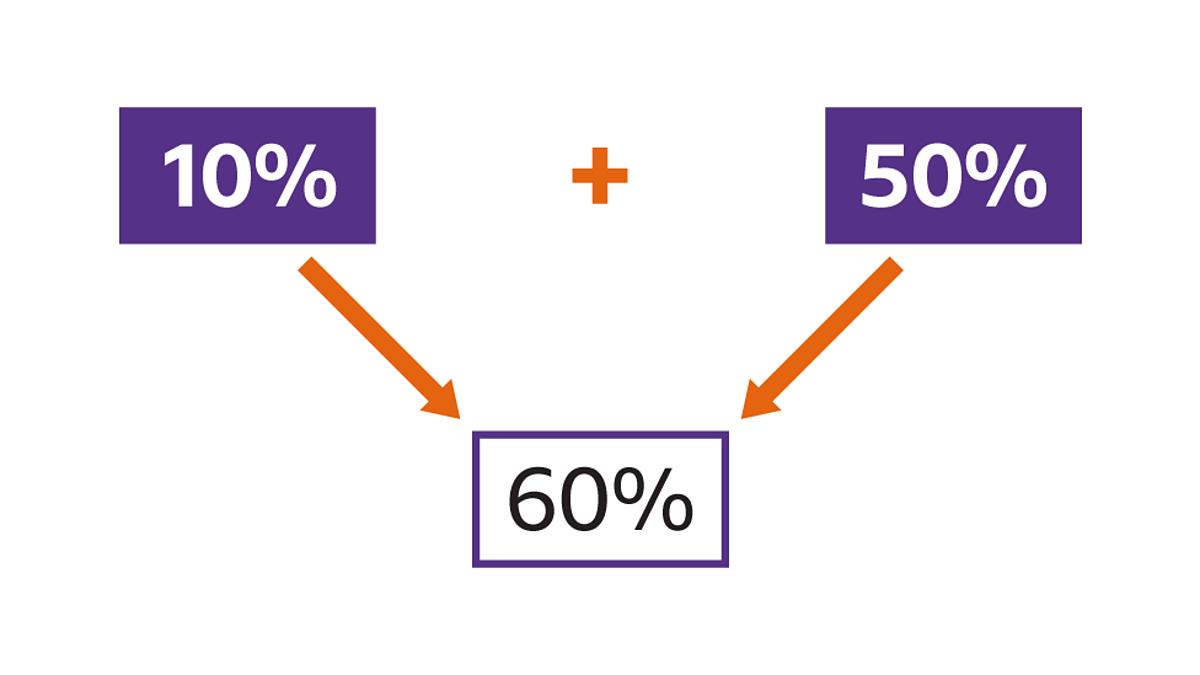
- Using 10% as a base: To find 20%, double the 10% value. To find 5%, halve the 10% value.
- Estimating discounts: For a 25% discount, think of it as dividing by 4. For a 33% discount, think of it as dividing by 3.
These quick estimations can help you rapidly assess deals, understand tip amounts, or perform preliminary budget checks without needing a calculator.
Mastering Percentage Interpretation for Better Financial Decisions
Calculating percentages is only half the battle; the true mastery lies in interpreting what those percentages mean within their specific financial context. A percentage, in isolation, tells only part of the story. Its power is unleashed when understood in relation to other figures, trends, and future implications.
Context is Key: What Does the Percentage Really Mean?
A 5% return on investment sounds modest, but if it was achieved during a bear market when most investments lost 10%, that 5% is exceptional. Conversely, a 15% profit margin might seem good, but if the industry average is 25%, it suggests inefficiencies. Always consider:
- The base value: Is 10% off a $1,000 item better than 50% off a $50 item?
- The timeframe: Is a 2% growth rate annual, quarterly, or monthly?
- Industry benchmarks: How does a company’s percentage metric compare to its competitors or industry averages?
- Economic conditions: How do broader economic factors (inflation, interest rates) impact the meaning of a percentage?
Interpreting percentages within their specific context transforms raw data into meaningful intelligence, guiding more astute financial decisions.
The Impact of Compounding Percentages
One of the most powerful and often misunderstood concepts in finance is compounding interest, which is entirely driven by percentages. When you earn interest on your initial principal plus the accumulated interest from previous periods, your money grows exponentially. This “interest on interest” effect, often called the “eighth wonder of the world,” means a small percentage gain over a long period can lead to substantial wealth accumulation. Conversely, compounding debt, like credit card interest, can spiral rapidly. Understanding the long-term impact of even small percentage differences in interest rates or investment returns is critical for retirement planning and debt management.
Avoiding Percentage Traps and Misrepresentations
Percentages can sometimes be used to mislead or obscure the true financial picture. Be wary of:
- Anchoring bias: Focusing too much on a single percentage (e.g., “50% off!”) without considering the original price or necessity of the item.
- Confusing absolute numbers with percentages: A 1% fee on a $1 million investment is $10,000—a significant absolute amount, even if the percentage seems small.
- Misleading growth figures: A company might boast a “100% growth in profits,” but if it grew from $100 to $200, the absolute increase is negligible compared to a company growing from $1 million to $1.1 million (a 10% growth).
Developing a critical eye for percentages and always seeking the underlying absolute numbers and context will protect you from common financial deceptions and empower you to make truly informed decisions.
In conclusion, finding a percentage is a fundamental mathematical operation, but understanding its profound implications within the realm of money is what truly empowers financial literacy. From balancing your household budget and navigating sales to evaluating complex investments and business performance, percentages provide the indispensable framework for clarity, comparison, and strategic action. By mastering the calculation, application, and interpretation of percentages, you equip yourself with an invaluable skill set to navigate the financial landscape with confidence and make choices that contribute to your financial well-being and success.
aViewFromTheCave is a participant in the Amazon Services LLC Associates Program, an affiliate advertising program designed to provide a means for sites to earn advertising fees by advertising and linking to Amazon.com. Amazon, the Amazon logo, AmazonSupply, and the AmazonSupply logo are trademarks of Amazon.com, Inc. or its affiliates. As an Amazon Associate we earn affiliate commissions from qualifying purchases.