
Tax season is often characterized by a frantic rush to gather documents, calculate liabilities, and meet the mid-April deadline. However, for many taxpayers—ranging from high-net-worth investors with complex portfolios to small business owners awaiting late-arriving K-1 forms—the standard deadline is simply not feasible. Filing an extension provides a necessary reprieve, offering an additional six months to ensure accuracy and compliance.
Understanding how to file an extension with the IRS is not merely a matter of administrative paperwork; it is a strategic financial move. It involves managing cash flow, avoiding punitive late-filing fees, and maintaining a professional relationship with the federal government. This guide explores the mechanics of the IRS extension process, the financial implications of delaying your filing, and the tools available to streamline the procedure.
The Fundamentals of Form 4868 and the Extension Process
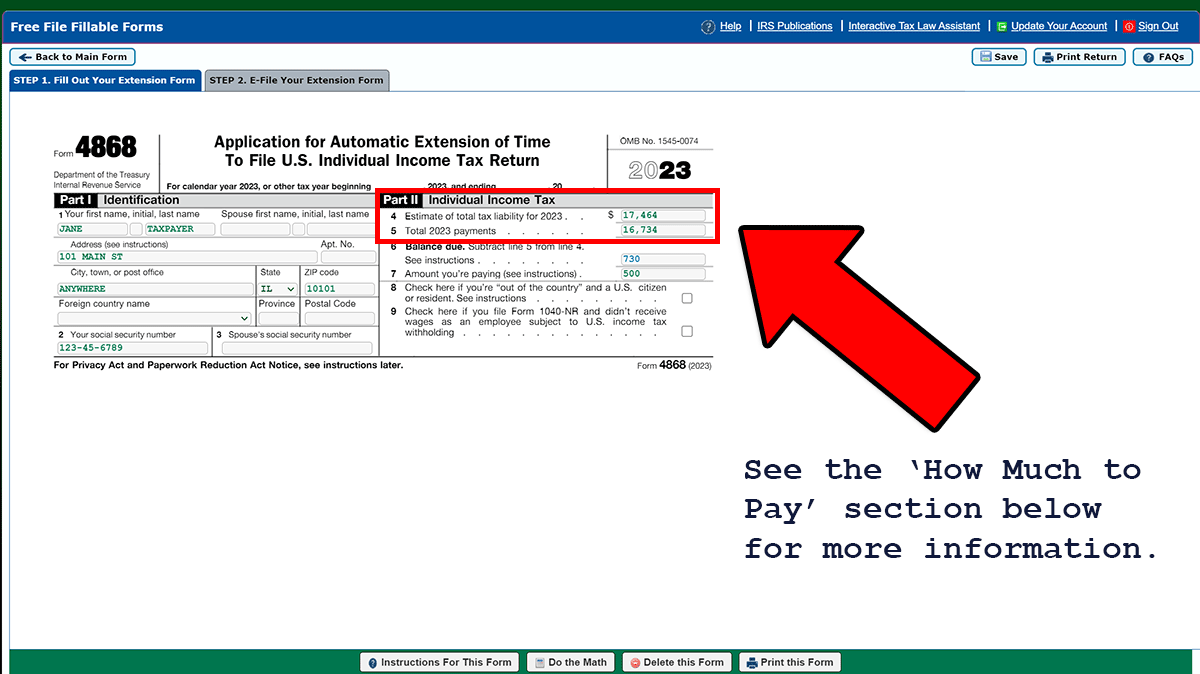
The primary vehicle for individual taxpayers seeking more time is IRS Form 4868, officially titled the “Application for Automatic Extension of Time To File U.S. Individual Income Tax Return.” The most critical word in that title is “Automatic.” Unlike many other government requests, you do not need to provide a reason or an excuse for needing more time. As long as the form is submitted correctly and on time, the extension is granted without question.
The Six-Month Window
For most taxpayers, the deadline to file a federal return is April 15. By successfully filing Form 4868, you move your filing deadline to October 15. This six-month window allows for a more meticulous review of financial records, consultation with tax professionals, and the inclusion of late-arriving documentation from brokerage firms or partnership interests. It is important to note that if October 15 falls on a weekend or a legal holiday, the deadline is typically pushed to the next business day.
Eligibility and Deadlines
To be eligible for the extension, you must submit your request by the original due date of your return. For the vast majority of Americans, this is the April deadline. If you miss this window, the opportunity for an automatic extension vanishes, and you may be subject to “failure-to-file” penalties, which are significantly higher than “failure-to-pay” penalties.
State-Level Extensions
While this guide focuses on federal requirements, taxpayers must remain cognizant of state obligations. Every state has its own rules regarding extensions. Some states, like California or Wisconsin, grant automatic extensions if you have a valid federal extension on file. Others require a separate state-specific form. Always verify the requirements of your specific jurisdiction to avoid state-level penalties.
The Crucial Distinction: Extension to File vs. Extension to Pay
Perhaps the most common misconception in personal finance is the belief that a tax extension provides more time to pay the taxes owed. This is a dangerous fallacy that can lead to unexpected debt and interest charges. An extension is exclusively an extension of time to file the paperwork; it is not an extension of time to remit payment to the Treasury.
Estimating Your Liability
When you file Form 4868, the IRS requires you to make a good-faith estimate of your total tax liability for the year. If you anticipate owing money, you are expected to pay that amount by the April deadline. If you do not pay at least 90% of your actual tax liability by the original deadline, you may be subject to a late-payment penalty.
The Cost of Delay: Penalties and Interest
The financial consequences of failing to distinguish between filing and paying are steep. The IRS charges interest on any unpaid balance starting from the original deadline, regardless of whether you have an extension. Furthermore, the failure-to-pay penalty is generally 0.5% of the unpaid amount for each month or part of a month the tax remains unpaid, up to a maximum of 25%.
Conversely, the failure-to-file penalty is much harsher: 5% of the unpaid taxes for each month or part of a month that a tax return is late. By filing an extension, even if you cannot pay the full balance, you eliminate the 5% monthly failure-to-file penalty, effectively reducing your penalty exposure by 90%.
Strategic Cash Flow Management
From a business finance perspective, the extension period can be used to manage liquidity. If a taxpayer is facing a temporary cash crunch, filing the extension avoids the high failure-to-file penalty while they liquidate assets or secure financing to cover the tax bill. While interest will still accrue, the total cost of the “IRS loan” (interest plus the 0.5% monthly penalty) is often lower than the cost of high-interest credit card debt or the massive 5% monthly penalty for not filing at all.
Digital Tools and Methods for Filing

The IRS has modernized the extension process, making it possible to secure more time in a matter of minutes. Taxpayers have several digital avenues to choose from, depending on their comfort level with technology and their existing financial tools.
IRS Free File
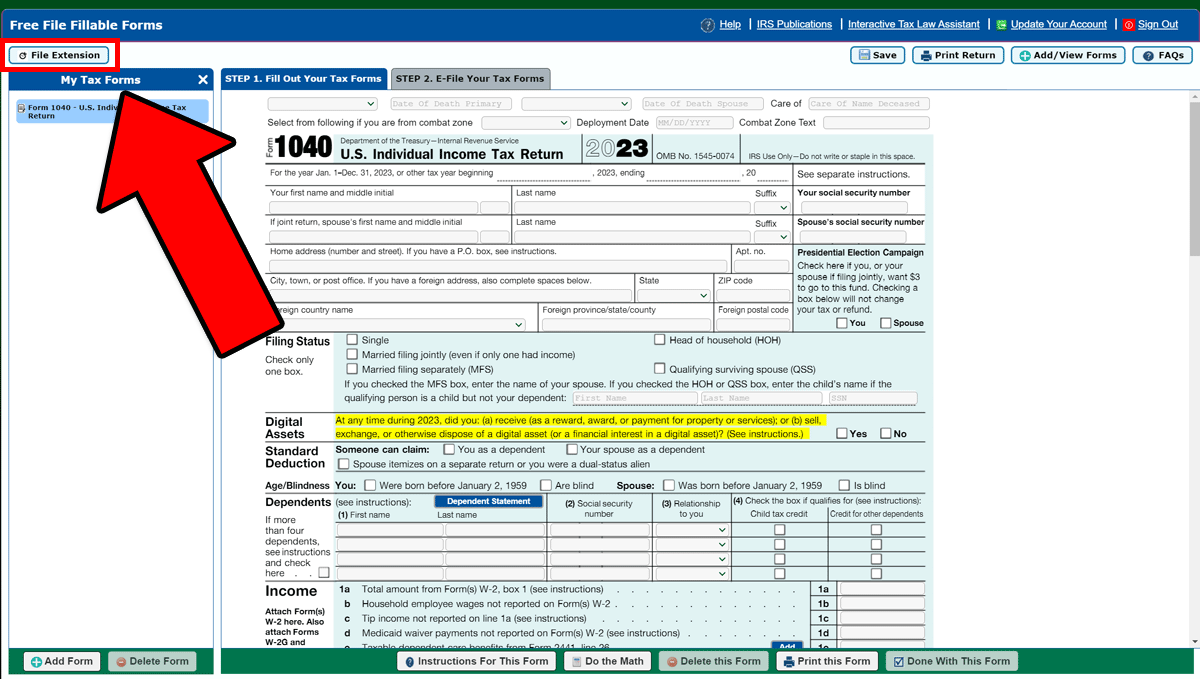
The most direct method for many is the IRS Free File program. Regardless of income level, any individual taxpayer can use Free File to electronically request an extension. This system provides a digital confirmation that the IRS has received the request, offering peace of mind that a paper form sent via standard mail cannot match.
Payment as an Extension
One of the most efficient “hacks” in tax administration is the payment-as-extension method. If you make a full or partial tax payment using IRS Direct Pay, the Electronic Federal Tax Payment System (EFTPS), or a credit/debit card, and designate the payment as being for an “extension,” the IRS automatically grants you the extension. In this scenario, you do not even need to file Form 4868. This method is highly recommended for those who know they owe money and want to settle their liability while simultaneously securing the filing reprieve.
Professional Software and Tax Pros
For those who use retail tax software or work with a Certified Public Accountant (CPA), filing an extension is usually a one-click process. Most software packages will prompt the user as the deadline approaches, offering to submit Form 4868 electronically. CPAs often prefer their clients to extend if the financial data is incomplete, as it allows the professional to perform a more thorough audit of the figures during the less-congested summer months.
Strategic Reasons to File an Extension
While some view a tax extension as a sign of procrastination, in the world of high-level personal finance and business management, it is often a sign of prudence. There are several legitimate, strategic reasons why a taxpayer would choose to delay their filing until October.
Dealing with Complex Securities and K-1s
Investors in hedge funds, private equity, or master limited partnerships (MLPs) frequently receive Schedule K-1 forms long after the April deadline. Because the information on these forms is essential for an accurate return, filing in April would necessitate an amended return later. Filing an extension is a more efficient and cost-effective strategy than filing an original return followed by an amendment.
Maximizing Retirement Contributions
For certain types of self-employed retirement accounts, such as a SEP IRA, filing an extension actually extends the deadline for making tax-deductible contributions. A business owner who files an extension has until October 15 to fund their SEP IRA and still claim the deduction for the prior tax year. This provides significant flexibility for managing business reinvestment versus retirement savings.
Accuracy and Audit Defense
A rushed tax return is a return prone to errors. Mathematical mistakes, mismatched 1099 data, or forgotten deductions can trigger IRS notices or, in worse cases, full audits. By taking the extra six months, taxpayers can ensure every line item is substantiated by documentation. In the eyes of a financial strategist, the cost of a small amount of interest on a late payment is often a price worth paying for the security of a bulletproof return.
Extensions for Business Entities and International Taxpayers
The rules for extensions change when moving from individual personal finance to corporate and international contexts. Business owners must be aware of different forms and timelines to remain in good standing.
Form 7004 for Corporations and Partnerships
Businesses that operate as C-corporations, S-corporations, or partnerships do not use Form 4868. Instead, they must file Form 7004. Unlike the individual extension, which is almost always six months, some business extensions have different durations depending on the entity type and the fiscal year-end. For example, a calendar-year S-corp must file its extension by March 15 to move the deadline to September 15.
Taxpayers Abroad
U.S. citizens and resident aliens living and working outside the United States and Puerto Rico are granted an automatic two-year extension to file (until June 15) and pay. However, if they need even more time, they can still file Form 4868 to push the filing deadline to October 15. Interest still accrues on any unpaid tax from the April deadline, but the automatic two-month window provides a buffer for the complexities of international mail and foreign income reporting.
Conclusion: Mastering the Tax Timeline
Filing an extension with the IRS is a powerful tool in the arsenal of any financially literate individual. It transforms the tax deadline from a source of anxiety into a manageable variable of financial planning. By understanding that Form 4868 provides time to file—but not time to pay—you can avoid the most common pitfalls associated with tax delays.
Whether you are waiting for a late K-1, managing a complex business transition, or simply seeking the peace of mind that comes with a non-rushed filing, the extension process is straightforward. Utilize digital payment tools to automate the request, estimate your liability conservatively to minimize interest, and use the additional six months to ensure your financial reporting is flawless. In the realm of personal and business finance, patience and accuracy are nearly always rewarded over haste.
aViewFromTheCave is a participant in the Amazon Services LLC Associates Program, an affiliate advertising program designed to provide a means for sites to earn advertising fees by advertising and linking to Amazon.com. Amazon, the Amazon logo, AmazonSupply, and the AmazonSupply logo are trademarks of Amazon.com, Inc. or its affiliates. As an Amazon Associate we earn affiliate commissions from qualifying purchases.