
In the world of finance, numbers tell a story, but raw data points rarely provide the full narrative. If you hear that a stock rose by $10, you lack the context to know if that is a monumental gain or a negligible fluctuation. However, if you learn that the stock saw a 25% increase, the significance becomes immediately clear. Understanding how to figure percentage increase is perhaps the most fundamental skill in financial literacy. Whether you are tracking the growth of a retirement account, evaluating a business’s quarterly revenue, or calculating the impact of inflation on your purchasing power, this mathematical tool is your primary compass for navigating the economic landscape.
Understanding the Core Formula for Financial Growth
Before diving into complex investment strategies or corporate balance sheets, one must master the basic arithmetic of growth. A percentage increase represents the difference between a final value and an initial value, expressed as a fraction of the initial value. It is the universal language of “how much better” or “how much more” a financial metric has become over a specific period.
The Fundamental Equation
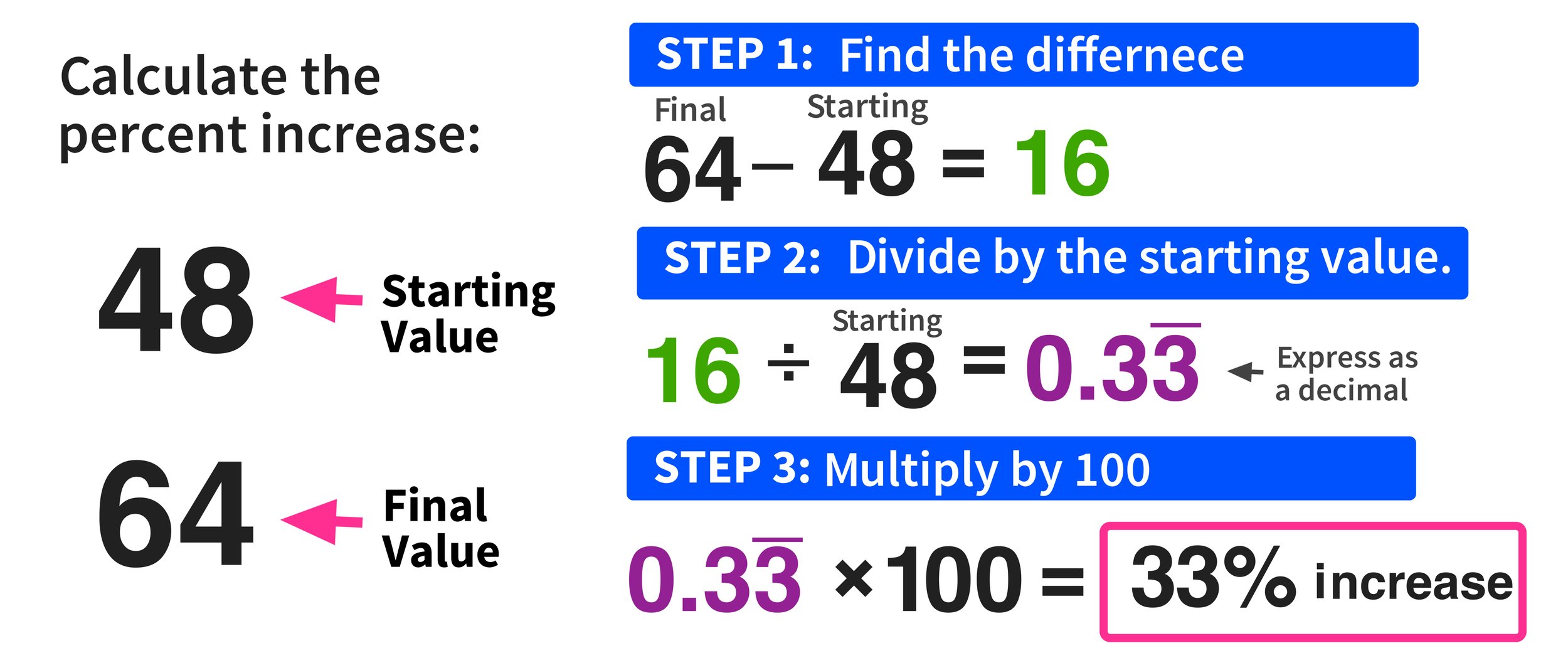
The formula to calculate percentage increase is straightforward, yet its applications are infinite. To find the percentage increase, follow these three steps:
- Subtract the original value (the old amount) from the new value (the current amount). This gives you the “absolute increase.”
- Divide that absolute increase by the original value.
- Multiply the resulting decimal by 100 to convert it into a percentage.
Mathematically, the formula looks like this:
[(New Value – Old Value) / Old Value] × 100 = Percentage Increase
For example, if you invested $1,000 in a mutual fund and its value grew to $1,250 over a year, your calculation would be: ($1,250 – $1,000) / $1,000 = 0.25. Multiplying by 100 gives you a 25% increase.
Real-World Example: Stock Price Appreciation
In equity markets, percentage increase is the primary metric used to compare the performance of different stocks regardless of their share price. Consider two companies: Company A has a share price of $10, and Company B has a share price of $200. If both stocks increase by $5, a novice investor might think the gain is identical.
However, using the percentage increase formula reveals a different reality. For Company A, the increase is 50% ($5 / $10). For Company B, the increase is a mere 2.5% ($5 / $200). By calculating the percentage, the investor realizes that Company A provided a much higher return on investment (ROI) relative to the capital deployed. This distinction is vital for portfolio management and asset allocation.
Percentage Increase in Personal Finance Management
On a personal level, tracking percentage increases allows individuals to measure their financial progress and stay ahead of economic shifts. It is not enough to simply earn more money; one must ensure that their wealth is growing at a rate that outpaces liabilities and external economic pressures.
Evaluating Salary Growth and Cost of Living
One of the most critical applications of this calculation is during annual performance reviews or when considering a new job offer. When you receive a raise, calculating the percentage increase helps you determine if your standard of living is actually improving.
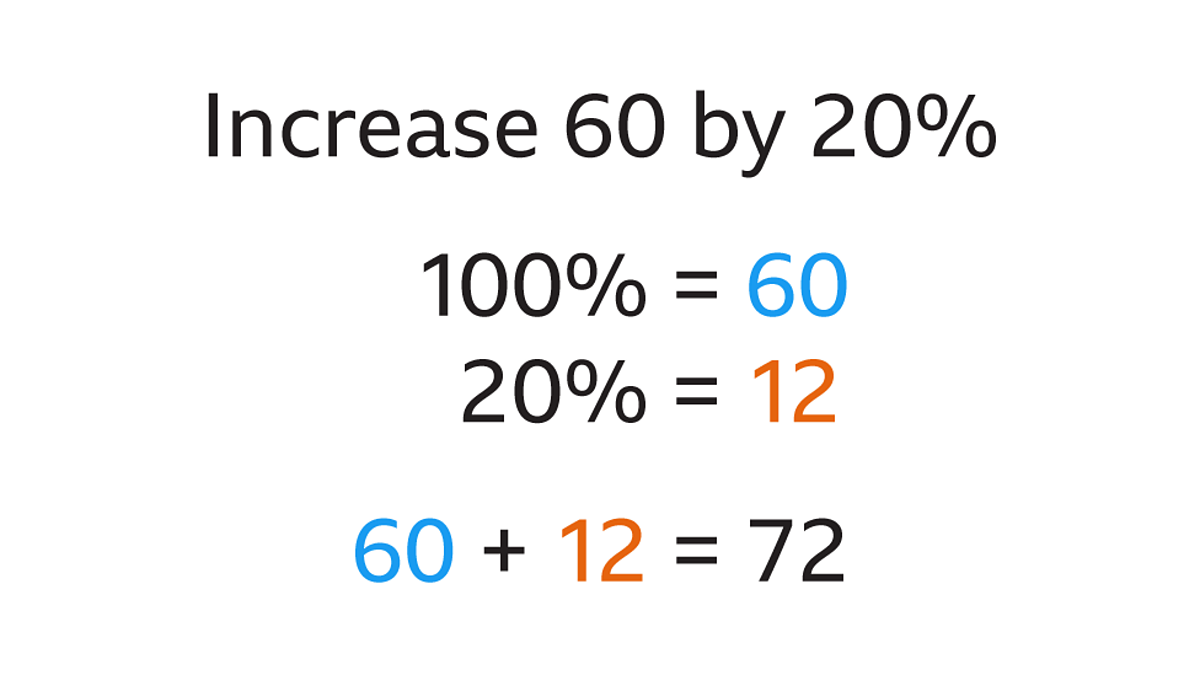
If you receive a $3,000 raise on a $60,000 salary, that is a 5% increase. To understand the true value of this raise, you must compare it to the percentage increase in the Consumer Price Index (CPI), which measures inflation. If the cost of living has increased by 6% over the same period, your 5% raise actually represents a decrease in real purchasing power. By understanding how to figure these percentages, you can negotiate more effectively, ensuring that your income growth exceeds the rate of inflation.
Tracking Savings and Net Worth Milestones
For those focused on long-term wealth building, percentage increase serves as a motivational tool and a diagnostic metric. Instead of focusing solely on the dollar amount in a savings account, look at the percentage growth of your net worth quarter-over-quarter.
Growth in net worth is often non-linear. In the early stages of a financial journey, a $5,000 increase might represent a 50% jump in total wealth. As your portfolio grows, maintaining a consistent percentage increase requires more sophisticated management. Tracking these percentages helps you identify “lifestyle creep”—a phenomenon where expenses increase at the same or higher percentage as income, preventing the accumulation of wealth.
Measuring Investment Performance and Portfolio Growth
In the realm of professional investing, percentage increase is the benchmark for success. It allows investors to compare their personal performance against broader market indices like the S&P 500 or the Dow Jones Industrial Average.

Calculating Annualized Returns
While a simple percentage increase tells you how much your investment grew from start to finish, the time component is equally important. This is where the Compound Annual Growth Rate (CAGR) comes into play. If an investment grows by 50% over five years, it did not grow by 10% each year due to the effects of compounding.
Investors use percentage increase to determine the total return, which includes both capital gains (price appreciation) and dividends. For instance, if a stock price increases by 8% and also pays a 2% dividend, the total percentage increase for the investor is 10%. Understanding these nuances is essential for choosing between “growth” stocks, which focus on price increases, and “value” or “income” stocks, which focus on dividends.
The Impact of Compounding Over Time
The “magic” of wealth creation lies in the percentage increase of an already increased amount. This is the principle of compound interest. If you earn a 10% increase on $10,000, you have $11,000. The following year, a 10% increase is calculated on the new $11,000 base, resulting in a $1,100 gain rather than $1,000.
By visualizing growth through percentages rather than fixed dollar amounts, investors can better appreciate the long-term benefits of staying invested. A consistent 7% annual percentage increase will double an investment roughly every ten years (the Rule of 72). Seeing the math behind these percentages helps investors resist the urge to panic-sell during temporary market downturns.
Percentage Increase in Business Financial Analysis
For entrepreneurs and corporate executives, percentage increase is the ultimate indicator of a company’s health and scalability. It is used to report to shareholders, secure loans from banks, and make internal strategic decisions.
Year-over-Year (YoY) Revenue Growth
The most common metric used in business reporting is Year-over-Year (YoY) growth. By comparing the revenue of the current quarter to the revenue of the same quarter in the previous year, businesses can account for seasonal fluctuations.
For example, a retail business might see a massive increase in sales in December compared to November. However, a 10% increase in December revenue compared to the previous December is a much more accurate reflection of whether the business is actually expanding. Consistently high percentage increases in revenue are what drive venture capital interest and high stock valuations for tech startups and established firms alike.
Analyzing Profit Margin Expansion
Revenue is only one side of the coin; profitability is what sustains a business. Financial analysts look at the percentage increase in “net profit margins” to see if a company is becoming more efficient.
If a company’s revenue increases by 20%, but its expenses increase by 25%, the business is actually becoming less profitable despite having more cash flow. By calculating the percentage increase (or decrease) in margins, management can identify where costs are spiraling out of control or where price hikes are successfully contributing to the bottom line.
Common Pitfalls and Advanced Financial Tools
While the math is simple, the interpretation of percentage increase can sometimes be misleading. Professional financiers must be aware of certain cognitive biases and mathematical anomalies that occur when dealing with growth metrics.
Avoiding the “Small Base” Trap
One of the most common distortions in financial reporting is the “base effect.” When a company or an investment starts with a very small value, even a minor numerical gain can result in a massive percentage increase.
If a new startup goes from $1 in revenue to $100, that is a 9,900% increase. While the percentage looks spectacular on a slide deck, the actual economic impact is negligible. Conversely, for a company like Apple or Microsoft to achieve even a 5% increase in revenue, they must generate billions of dollars in new sales. When evaluating investments, always look at the absolute numbers alongside the percentage increase to ensure you are getting a realistic picture of the growth.
Leveraging Financial Software for Automated Calculations
In modern finance, you rarely need to perform these calculations by hand, but you must know how to set them up in your tools. In Microsoft Excel or Google Sheets, calculating percentage increase is a daily task.
If your “Old Value” is in cell A1 and your “New Value” is in cell B1, the formula is: =(B1-A1)/A1. You then simply click the “Percent” button in the toolbar to format the result. For more complex financial modeling, tools like QuickBooks for business or Personal Capital for wealth management automatically generate these percentages in real-time dashboards.
By mastering how to figure percentage increase, you move beyond being a passive observer of your finances. You become an analyst capable of identifying trends, spotting inefficiencies, and making data-driven decisions that pave the way for long-term financial success. Whether you are managing a household budget or a multi-million dollar portfolio, the percentage increase remains the most vital metric in your financial toolkit.
aViewFromTheCave is a participant in the Amazon Services LLC Associates Program, an affiliate advertising program designed to provide a means for sites to earn advertising fees by advertising and linking to Amazon.com. Amazon, the Amazon logo, AmazonSupply, and the AmazonSupply logo are trademarks of Amazon.com, Inc. or its affiliates. As an Amazon Associate we earn affiliate commissions from qualifying purchases.