
In the realm of personal and business finance, the ability to “figure percent” is not merely a mathematical skill; it is a fundamental pillar of financial literacy. Percentages are the universal language of growth, risk, and value. Whether you are calculating the interest on a high-yield savings account, determining the impact of inflation on your purchasing power, or analyzing the return on a stock market investment, understanding how percentages work is essential for making informed decisions.
In this comprehensive guide, we will explore the nuances of percentage calculations through the lens of money management. By mastering these concepts, you transition from a passive observer of your finances to an active architect of your wealth.
The Fundamentals of Percentage in Personal Finance
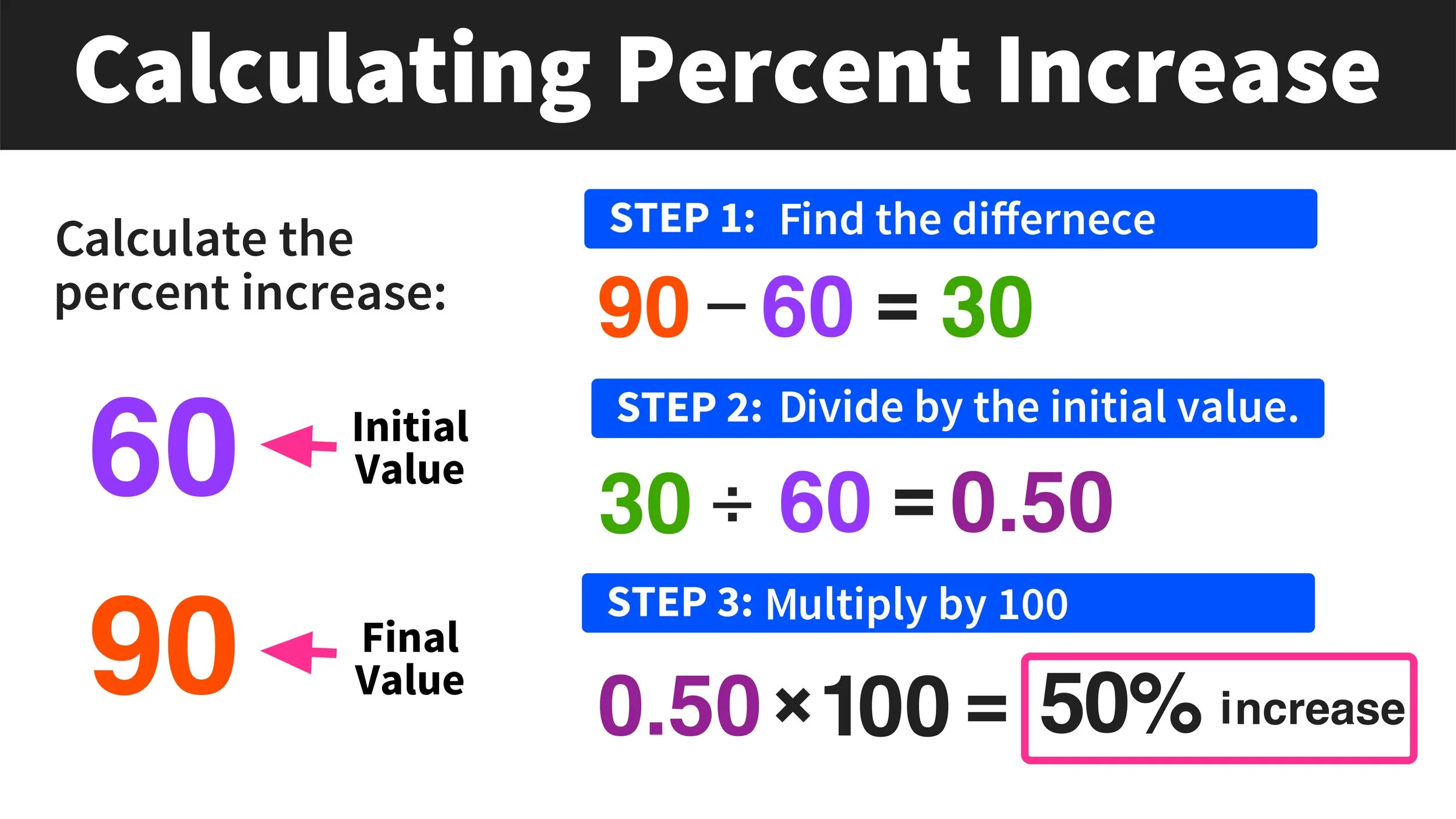
At its simplest level, a percentage is a way to express a number as a fraction of 100. In finance, this “part of a whole” concept is the basis for budgeting, savings goals, and expense tracking. To figure a percentage, you divide the “part” by the “whole” and multiply the result by 100.
The Core Formula: Converting Decimals to Percentages
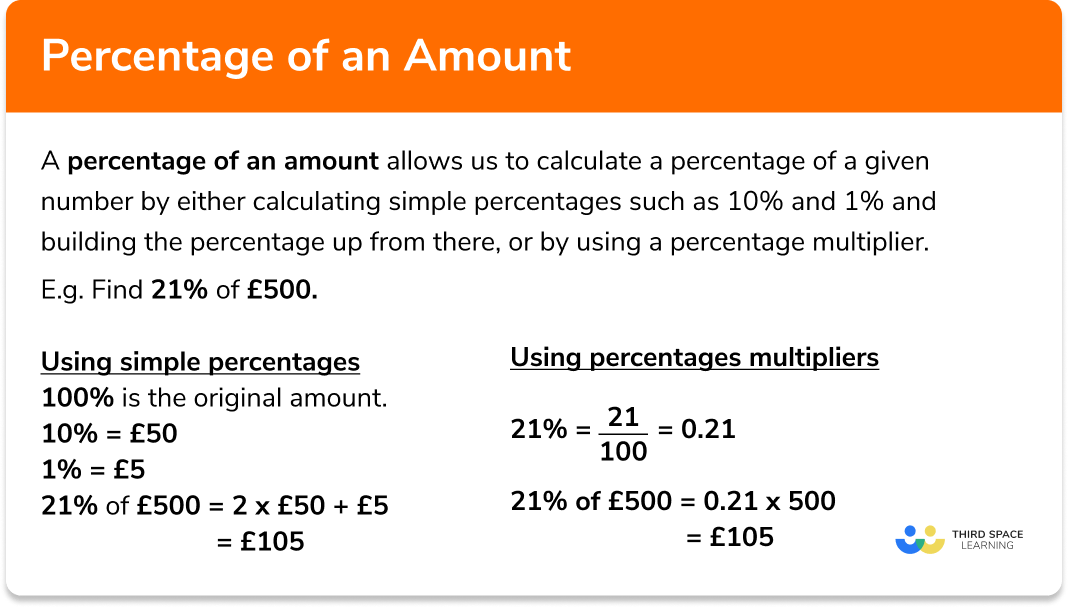
To calculate a basic percentage, the formula is: (Value / Total Value) × 100. For example, if you decide to save $500 out of a $4,000 monthly salary, you divide 500 by 4,000 to get 0.125. Multiplying by 100 gives you a 12.5% savings rate. This simple calculation is the first step in understanding your financial health. Understanding the relationship between decimals (0.125) and percentages (12.5%) is crucial because most financial software and spreadsheets require decimal inputs for calculations while displaying percentages for readability.
Visualizing the “Part of the Whole” in Your Monthly Budget
Budgeting frameworks, such as the popular 50/30/20 rule, are built entirely on percentages. This rule suggests allocating 50% of your income to needs, 30% to wants, and 20% to savings and debt repayment. By figuring the percentage of your spending in different categories, you can identify “leaks” in your cash flow. If your housing costs consume 45% of your income instead of the recommended 30%, you immediately see the structural imbalance in your finances that a raw dollar amount might not fully convey.
Calculating Returns and Growth in Investing
When we move from saving to investing, percentages become the primary metric for success. While dollar gains are satisfying, they don’t provide the context needed to compare different investment opportunities. Percentages allow you to compare a $1,000 gain on a $5,000 investment (a 20% return) against a $1,000 gain on a $50,000 investment (a 2% return).
Determining Return on Investment (ROI)
ROI is the most common percentage calculation in the business and investment world. The formula is: [(Current Value – Original Value) / Original Value] × 100. If you purchase shares for $2,000 and sell them for $2,600, your net profit is $600. To figure the percentage gain, you divide $600 by the original $2,000, resulting in a 30% ROI. This figure is vital because it allows you to benchmark your performance against market indices like the S&P 500, which historically returns about 10% annually before inflation.
The Power of Compound Interest Percentages
Albert Einstein famously called compound interest the “eighth wonder of the world.” Understanding how to figure the percentage growth of an investment over time is key to long-term wealth building. Unlike simple interest, which is calculated only on the principal, compound interest is calculated on the principal plus the accumulated interest. A 7% annual return compounded monthly will result in a higher effective yield than 7% compounded annually. To quickly estimate how long it takes for an investment to double at a certain percentage rate, investors use the “Rule of 72”: divide 72 by your expected annual interest rate (e.g., 72 / 6% = 12 years).
Diversification and Asset Allocation Percentages
Professional portfolio management relies heavily on “target weights,” which are expressed as percentages. A balanced portfolio might aim for 60% stocks and 40% bonds. As market values fluctuate, these percentages shift. If stocks perform exceptionally well, they might grow to represent 70% of your portfolio. “Rebalancing” is the process of figuring these new percentages and selling or buying assets to return to your original 60/40 target. This disciplined approach ensures you are “buying low and selling high” based on mathematical thresholds rather than emotional impulses.
Understanding Debt and Interest Rates
While percentages can work for you in investing, they can work against you in the form of debt. Figuring the percentage cost of borrowing is perhaps the most critical skill for maintaining financial stability.
Deciphering Annual Percentage Rates (APR)
When you take out a loan or use a credit card, the lender charges an Annual Percentage Rate (APR). However, the APR isn’t always as straightforward as it seems. It includes not just the interest rate but also any fees or additional costs associated with the loan. To figure out the true cost of a loan, you must look at the APR rather than the “base” interest rate. For instance, a mortgage with a 6% interest rate but high closing costs might have an APR of 6.4%. Over a 30-year term, that 0.4% difference can equate to tens of thousands of dollars.
The Cost of Compounding Debt
Credit cards are particularly dangerous because they often compound interest daily. If you have a $5,000 balance at a 24% APR, figuring the monthly percentage charge is roughly 2% (24% / 12 months). That 2% on $5,000 is $100 in interest for a single month. If you only make the minimum payment, the interest “capitalizes,” meaning you begin paying interest on your interest. Understanding this percentage-based trap is the strongest motivation for aggressive debt repayment.
Taxes, Inflation, and Purchasing Power
To truly understand how much money you have, you must be able to figure the percentages that “erode” your wealth: taxes and inflation. These are the “hidden” percentages that can significantly alter your financial reality.
Effective Tax Rates vs. Marginal Tax Brackets
Many people are confused by progressive tax systems. If you are in the “22% tax bracket,” you do not pay 22% on your entire income. Instead, you pay lower percentages on specific “buckets” of income and 22% only on the amount that falls within that specific range. Your effective tax rate is the actual percentage of your total income that goes to the government. Figuring this effective rate (Total Tax Paid / Total Taxable Income) is essential for accurate retirement planning and calculating your “take-home” pay.
How Inflation Percentages Erode Your Savings
Inflation is the percentage increase in the price of goods and services over time. If inflation is 3%, $100 today will only buy $97 worth of goods next year. To figure your “Real Rate of Return” on an investment, you must subtract the inflation percentage from your nominal percentage return. If your savings account pays 4% interest but inflation is 3%, your real growth is only 1%. During periods of high inflation, figuring this percentage is vital; if your raises at work are 3% but inflation is 8%, you are effectively taking a 5% pay cut in terms of purchasing power.
Using Financial Tools to Automate Percentage Calculations
While it is important to know how to figure percentages manually, modern financial management relies on tools that can handle complex, multi-variable calculations instantly.
Leveraging Spreadsheet Functions for Percentages
Microsoft Excel and Google Sheets are the gold standard for financial analysis. To figure a percentage in a spreadsheet, you simply use the division formula and format the cell as a percentage. For example, =B2/C2 where B2 is your profit and C2 is your revenue. Spreadsheets also offer advanced functions like IRR (Internal Rate of Return), which figures the annualized percentage return for a series of irregular cash flows—an essential tool for real estate investors and business owners.

Financial Calculators and Future Value
For long-term planning, such as retirement, you need to figure the “Future Value” (FV) of your money. This involves calculating how a percentage growth rate applied to a consistent monthly investment will result in a specific sum decades from now. Online financial calculators allow you to input your current age, retirement age, expected percentage return, and inflation rate to figure out exactly how much you need to save today. Seeing these percentages play out over 30 or 40 years highlights the importance of starting early; even a 1% difference in annual returns can lead to a hundreds-of-thousands-of-dollars difference in a final retirement nest egg.
In conclusion, “figuring percent” is far more than a middle-school math problem. In the world of money, percentages are the markers of progress, the warnings of danger, and the tools of strategic growth. By consistently applying these calculations to your budget, your investments, and your debts, you gain a level of clarity and control that raw numbers alone can never provide. Professional financial success is built on a foundation of percentages; mastering them is the first step toward a secure and prosperous future.
aViewFromTheCave is a participant in the Amazon Services LLC Associates Program, an affiliate advertising program designed to provide a means for sites to earn advertising fees by advertising and linking to Amazon.com. Amazon, the Amazon logo, AmazonSupply, and the AmazonSupply logo are trademarks of Amazon.com, Inc. or its affiliates. As an Amazon Associate we earn affiliate commissions from qualifying purchases.