
In the dynamic world of money, from personal finance to high-stakes investing and intricate business operations, the ability to understand and calculate percentages is not merely a mathematical skill—it’s a critical cornerstone of financial literacy. Percentages provide a standardized way to compare proportions, track changes, and evaluate performance, transforming raw numbers into digestible, actionable insights. Whether you’re assessing the interest rate on a loan, analyzing investment returns, setting a budget, or determining profit margins, mastering percentage calculations empowers you to make informed decisions and navigate your financial landscape with confidence. This article will demystify the process, demonstrating how to figure out a percentage between two numbers and illuminating its profound significance across various financial contexts.
The Core Principle of Percentage Calculation
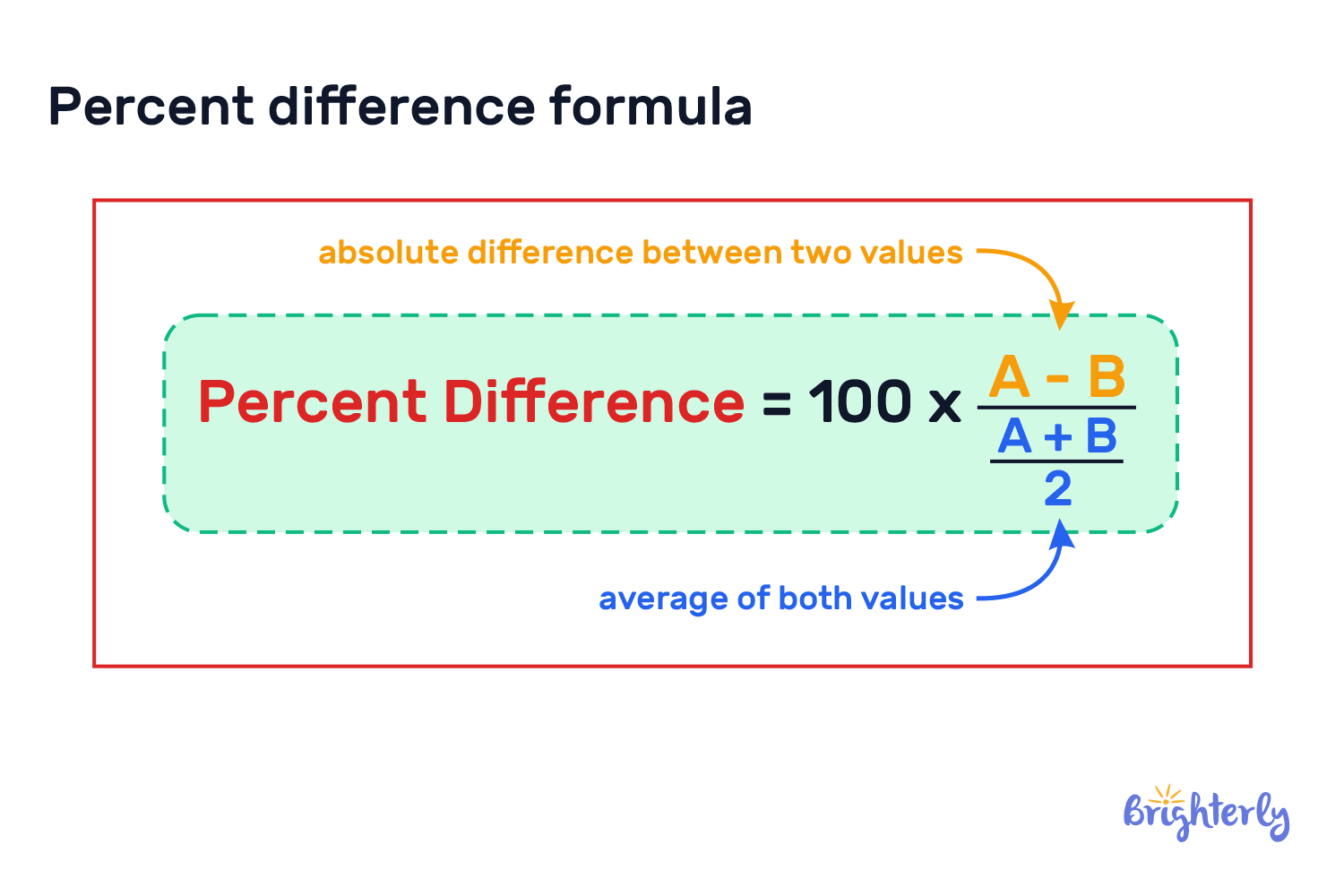
At its heart, a percentage is simply a way of expressing a number as a fraction of 100. It allows us to standardize comparisons, regardless of the absolute size of the numbers involved. Understanding the fundamental formula is the first step to unlocking its power.
Understanding the Basic Formula
The most common formula for calculating a percentage is straightforward:
Percentage = (Part / Whole) × 100
Let’s break down these components:
- Part: This is the specific amount or portion you are interested in.
- Whole: This represents the total amount or the base value against which the “part” is being compared.
- 100: Multiplying by 100 converts the decimal fraction into a percentage, making it easier to understand and compare.
Consider a simple example: If you earned $750 from a side hustle, and your total income for the month was $3,000, what percentage of your income came from the side hustle?
- Part = $750 (side hustle income)
- Whole = $3,000 (total income)
Percentage = (750 / 3000) × 100
Percentage = 0.25 × 100
Percentage = 25%
This means 25% of your monthly income was generated from your side hustle. This clear, quantifiable insight can inform budgeting decisions or motivate efforts to grow that income stream.
The “Part-to-Whole” Relationship
The concept of “part-to-whole” is crucial because it defines the context of your percentage. It’s not just about two numbers, but how one relates to the other as a proportion of a total. This relationship can manifest in several ways:
- Proportion of a Total: As seen above, identifying what portion an item makes up of a larger sum. This is vital in budgeting, where you might want to know what percentage of your total expenses goes towards housing, food, or entertainment.
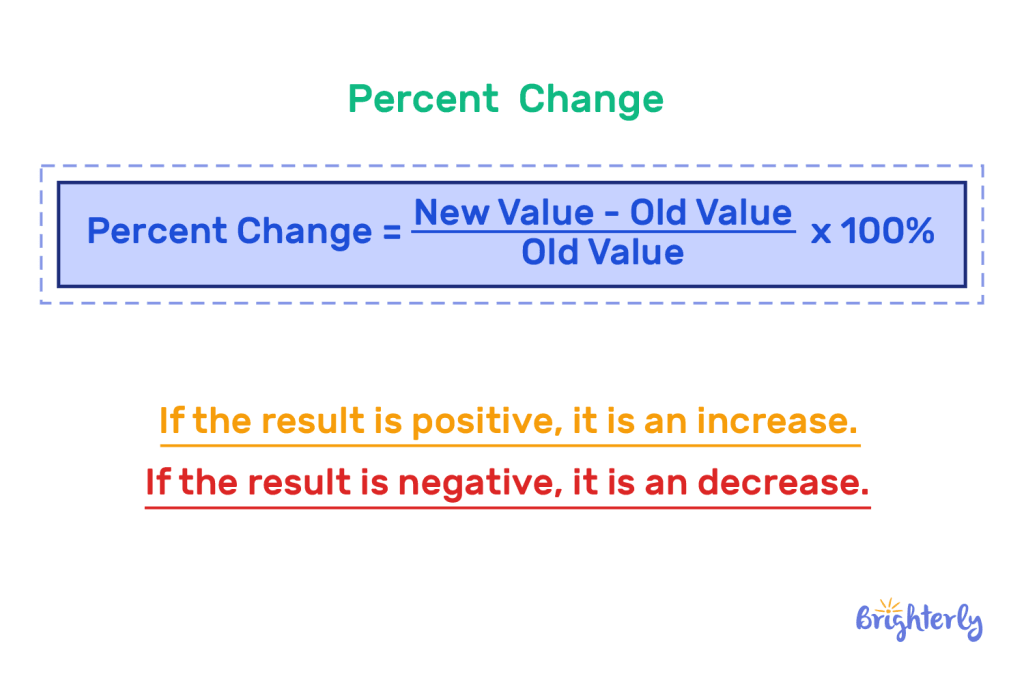
- Percentage Change: This calculates the increase or decrease from an initial value to a new value. Here, the “part” is the change itself, and the “whole” is the original value. The formula adapts slightly:
Percentage Change = ((New Value – Original Value) / Original Value) × 100
If your investment grew from $1,000 to $1,200, the change is $200.
Percentage Change = ((1200 – 1000) / 1000) × 100 = (200 / 1000) × 100 = 0.2 × 100 = 20% increase. - Difference as a Percentage: Sometimes you want to express the difference between two numbers as a percentage of one of those numbers, often to highlight a gap or a target deviation. For instance, if you aimed to save $500 and only saved $400, the shortfall is $100. What percentage of your target did you miss?
Percentage Missed = ($100 / $500) × 100 = 20%.
Understanding these nuances in the part-to-whole relationship allows for a more precise and contextually relevant application of percentage calculations in financial analysis.
Practical Applications in Personal Finance and Investing
The utility of percentages truly shines in personal finance and investing, where they translate complex numerical data into meaningful indicators of financial health and performance.
Analyzing Financial Growth and Decline
For investors, percentages are the language of returns.
- Return on Investment (ROI): This is perhaps the most fundamental metric. If you invest $10,000 and it grows to $11,500, your absolute gain is $1,500. Your ROI is ($1,500 / $10,000) × 100 = 15%. This 15% tells you far more than the raw $1,500, especially when comparing against other investment opportunities or market benchmarks.
- Portfolio Performance: Tracking your entire investment portfolio’s percentage growth over time (monthly, quarterly, annually) provides a clear picture of its health. A 7% annual growth rate sounds better than “it gained $7,000” if you don’t know the portfolio started at $100,000.
- Asset Allocation: Financial advisors often recommend specific percentage allocations for different asset classes (e.g., 60% stocks, 30% bonds, 10% cash). Regularly checking if your portfolio still aligns with these target percentages helps you rebalance and manage risk effectively.
Similarly, percentages help identify financial decline, such as a drop in stock value or a decrease in income, allowing for timely adjustments to strategy.
Calculating Discounts, Markups, and Interest Rates
Everyday financial transactions are saturated with percentages.
- Discounts: A sale offering “20% off” on an item priced at $50 means you save ($50 × 0.20) = $10, paying $40. Understanding how to quickly calculate this helps you determine actual savings.
- Markups: Businesses use percentages to price products. If an item costs them $100 to produce and they want a 50% markup, they’ll sell it for $100 + ($100 × 0.50) = $150.
- Interest Rates: Whether it’s the interest you earn on savings or the interest you pay on debt (credit cards, mortgages, loans), interest rates are always expressed as percentages. A 5% annual interest rate on a $10,000 loan means you’ll pay $500 in interest over a year (assuming simple interest). For compound interest, the calculation becomes more complex, but the base percentage rate remains central. A small difference in percentage points can mean thousands of dollars over the lifetime of a loan.
Budgeting and Expense Allocation
Effective personal finance begins with a robust budget, and percentages are its backbone.
- Expense Categories: By calculating what percentage of your total income each expense category consumes (e.g., housing, transportation, food, debt repayment), you gain immediate clarity on where your money is going. The popular 50/30/20 rule (50% needs, 30% wants, 20% savings/debt repayment) is a prime example of a budget structured around percentages.
- Savings Goals: If you aim to save 15% of your income each month, percentages provide a clear target and a simple way to track your progress against it. If your income changes, the percentage goal remains constant, automatically adjusting the dollar amount you need to save.
- Debt-to-Income Ratio: Lenders often assess your creditworthiness based on your debt-to-income ratio, which is your total monthly debt payments divided by your gross monthly income, expressed as a percentage. Keeping this ratio low is crucial for securing favorable loan terms.

Leveraging Percentages for Business and Online Income
Beyond personal finance, percentages are indispensable tools for businesses of all sizes, from startups to established enterprises, providing crucial metrics for performance analysis, strategic planning, and operational efficiency.
Profit Margins and Cost Analysis
For any business, profitability is paramount, and percentages are the primary way to measure and manage it.
- Gross Profit Margin: This tells you the percentage of revenue left after deducting the cost of goods sold (COGS). Formula: ((Revenue – COGS) / Revenue) × 100. A high gross margin indicates efficient production.
- Net Profit Margin: This is the ultimate measure of a company’s profitability, showing the percentage of revenue remaining after all expenses (COGS, operating expenses, interest, taxes) have been deducted. Formula: ((Net Income / Revenue) × 100). Comparing net profit margins year-over-year or against industry benchmarks reveals a company’s financial health and operational effectiveness.
- Cost of Sales as a Percentage of Revenue: Tracking this helps businesses understand if their production costs are growing disproportionately to their sales, indicating potential issues with pricing, supply chain, or efficiency.
These percentage-based metrics allow business owners to quickly assess viability, identify areas for cost reduction, and make informed pricing decisions.
Conversion Rates and Marketing ROI
In the realm of online income and digital marketing, percentages are the lifeblood of analytics, measuring the effectiveness of campaigns and sales funnels.
- Conversion Rate: This is the percentage of website visitors or leads who complete a desired action, such as making a purchase, signing up for a newsletter, or filling out a form. Formula: ((Number of Conversions / Total Visitors) × 100). A conversion rate of 2% means that for every 100 visitors, 2 make a purchase. Optimizing this percentage is a constant focus for online businesses.
- Click-Through Rate (CTR): In advertising, CTR is the percentage of people who see an ad and click on it. Formula: ((Number of Clicks / Number of Impressions) × 100). A higher CTR indicates more engaging ad copy or better targeting.
- Marketing ROI: To justify marketing spend, businesses calculate the percentage return on their investment in marketing campaigns. This often involves comparing the revenue generated from a campaign to its cost. While more complex than simple percentage change, it roots back to comparing two numbers (revenue generated vs. cost incurred) as a proportion.
These percentages provide immediate feedback on marketing strategies, allowing for agile adjustments to improve efficiency and maximize revenue.
Understanding Equity and Ownership Stakes
For entrepreneurs and investors in startups, percentages define ownership and control.
- Equity Ownership: When a company is formed or funded, shares are distributed, representing a percentage of ownership. An investor might take a 15% equity stake for their capital injection. This percentage determines their share of profits, voting rights, and influence.
- Dilution: As companies raise more funding, new shares are often issued, which dilutes the percentage ownership of existing shareholders. Understanding how a new funding round will impact your percentage stake is critical for founders and early investors.
- Profit Sharing: Many partnerships and compensation models for sales teams or online ventures involve profit-sharing agreements, where individuals receive a set percentage of the revenue or net profit they generate.
In these contexts, knowing “how do you figure out a percentage between two numbers” directly translates to understanding who owns what, who profits how much, and who holds power within a venture.
Common Pitfalls and Advanced Considerations
While the basic percentage calculation is simple, certain nuances and advanced applications require a deeper understanding to avoid misinterpretation and leverage their full potential.
The Importance of the Base Value
One of the most common errors in percentage calculations stems from incorrectly identifying the “whole” or the base value.
- Shifting Baselines: When discussing percentage increases or decreases over multiple periods, ensure you’re always using the correct original value for each calculation. For example, if a price increases by 10% in year one and then decreases by 10% in year two, the final price is not the original price, because the 10% decrease is calculated on a higher base.
- Original: $100
- Year 1: $100 + (10% of $100) = $110
- Year 2: $110 – (10% of $110) = $110 – $11 = $99
- Comparing Different Wholes: Avoid comparing percentages that are derived from vastly different base values without acknowledging the context. A 50% increase in sales from $100 to $150 is very different in impact from a 5% increase in sales from $1 million to $1.05 million, even though the latter is a smaller percentage. Always consider the absolute numbers behind the percentages.
Percentage Points vs. Percentage Change
This distinction is crucial for clear communication, especially in financial reporting and economic news.
- Percentage Change: As discussed, this is the relative change between two numbers expressed as a percentage of the original number. (e.g., “The stock price increased by 20%”).
- Percentage Points: This refers to the absolute difference between two percentages.
- If an interest rate rises from 5% to 7%, it has increased by 2 percentage points (7% – 5% = 2%).
- However, the percentage change in the interest rate itself is ((7-5)/5) × 100 = 40%.
Misunderstanding this difference can lead to significant misinterpretations of financial data, particularly concerning interest rates, inflation, or economic growth figures.
Tools and Software for Complex Calculations
While mental math and basic calculators suffice for simple percentage problems, financial professionals and individuals managing complex finances frequently rely on more sophisticated tools.
- Spreadsheets (Excel, Google Sheets): These are invaluable. They allow you to set up formulas (e.g.,
=A1/B1*100) that automatically update as your base numbers change, perform complex multi-step calculations, and visualize data trends. They are essential for budgeting models, investment tracking, and business financial statements. - Financial Calculators: Dedicated financial calculators can handle compound interest, present/future value calculations, and loan amortization schedules, all of which heavily rely on percentage concepts.
- Online Converters and Apps: Numerous websites and mobile applications offer quick percentage calculations for specific scenarios like tips, discounts, or loan payments, simplifying everyday financial tasks.
Mastering Percentages for Financial Empowerment
The ability to confidently figure out a percentage between two numbers transcends mere arithmetic; it is a fundamental skill that underpins sound financial decision-making. From analyzing the minutiae of your personal budget to evaluating the grand narratives of investment performance and business profitability, percentages offer a universal language for understanding proportion, growth, and impact.
The Psychological Impact of Percentages
Percentages help us contextualize large numbers that might otherwise feel overwhelming. A loss of $1,000 might seem significant, but if it’s only a 0.1% loss on a $1 million portfolio, the psychological impact and required response are different than if it’s a 20% loss on a $5,000 emergency fund. They provide a standardized mental framework for assessing risk, reward, and progress. Understanding percentages allows you to interpret financial news, evaluate economic indicators, and make choices that are aligned with your financial goals, free from the biases of raw numerical magnitudes.
Continuous Learning and Application
The world of finance is constantly evolving, but the bedrock of percentage calculations remains constant. Continuously applying these principles in your daily financial life—whether reviewing credit card statements, evaluating job offers with different benefits packages, or planning for retirement—will solidify your understanding and sharpen your financial acumen. By embracing percentages as a core analytical tool, you not only decode the complexities of money but also empower yourself to achieve greater financial control and prosperity. The question of “how do you figure out a percentage between two numbers” isn’t just about math; it’s about mastering the language of money itself.
aViewFromTheCave is a participant in the Amazon Services LLC Associates Program, an affiliate advertising program designed to provide a means for sites to earn advertising fees by advertising and linking to Amazon.com. Amazon, the Amazon logo, AmazonSupply, and the AmazonSupply logo are trademarks of Amazon.com, Inc. or its affiliates. As an Amazon Associate we earn affiliate commissions from qualifying purchases.