
For many, a car is not just a mode of transportation; it’s a necessity, a freedom, and often one of the largest financial commitments after a home. Navigating the complexities of car financing can feel daunting, with a myriad of terms, numbers, and decisions to make. The cornerstone of this financial decision-making is understanding your monthly car payment – how it’s calculated, what influences it, and how it impacts your overall financial health. This guide will demystify the process, empowering you with the knowledge to make informed choices and secure a payment that aligns with your budget.

Understanding the Core Components of Your Car Payment
To truly grasp how your monthly car payment is determined, it’s essential to break down the key variables that feed into the calculation. Each element plays a significant role, and a slight adjustment to one can have a substantial ripple effect on your final obligation.
The Vehicle’s Purchase Price
At the heart of the calculation is the actual selling price of the car. This isn’t necessarily the sticker price, but rather the negotiated price you agree upon with the dealership or seller. A lower purchase price, whether through savvy negotiation or choosing a more affordable model, directly translates to a smaller loan amount and, consequently, a lower monthly payment. Remember, every dollar saved on the purchase price is a dollar you don’t have to borrow and pay interest on.
Down Payment and Trade-in Value
Your down payment is the initial sum of money you pay upfront, reducing the total amount you need to finance. Similarly, if you’re trading in your old vehicle, its agreed-upon value also reduces the principal loan amount. Both a larger down payment and a higher trade-in value mean you’re borrowing less money, which directly lowers your monthly payments and the total interest you’ll pay over the life of the loan. Financial experts often recommend aiming for a down payment of at least 10-20% for new cars and 20% or more for used cars to mitigate depreciation and reduce your loan-to-value ratio.
Loan Term (Length of the Loan)
The loan term, often expressed in months (e.g., 36, 48, 60, 72, or even 84 months), dictates how long you have to repay the borrowed amount. A longer loan term results in lower monthly payments because you’re spreading the repayment over more installments. However, this comes at a significant cost: you’ll pay more in total interest over the life of the loan. Conversely, a shorter loan term means higher monthly payments but less total interest paid and a quicker path to ownership. Striking the right balance between affordability and minimizing interest costs is crucial here.
Interest Rate (Annual Percentage Rate – APR)
The interest rate, or Annual Percentage Rate (APR), is perhaps the most critical factor influencing your car payment after the principal amount. This is the cost of borrowing money, expressed as a percentage of the loan amount, that the lender charges you. A lower interest rate means less money added to your monthly payment and less total interest paid over the loan term. Your creditworthiness, the loan term, the type of vehicle, and even market conditions all influence the interest rate you’ll be offered. A difference of even a few percentage points can significantly alter your monthly payment and the overall cost of your car.
Sales Tax, Fees, and Other Costs
Beyond the vehicle’s price, several additional costs contribute to the total amount financed or paid out-of-pocket. Sales tax, based on your state and local regulations, can add thousands to the vehicle’s price. Dealer fees, registration fees, license plate fees, and sometimes even documentation fees are common. While some of these might be paid upfront, many are often rolled into the total loan amount, increasing your principal and, consequently, your monthly payment. It’s vital to inquire about all these charges during the negotiation process to get a clear picture of the all-inclusive price.
The Mathematics Behind Your Monthly Obligation
While understanding the components is the first step, seeing how they coalesce into a single monthly figure requires a bit of mathematics. Fortunately, you don’t need to be a math wizard to figure it out, thanks to readily available tools.
The Basic Loan Payment Formula Explained
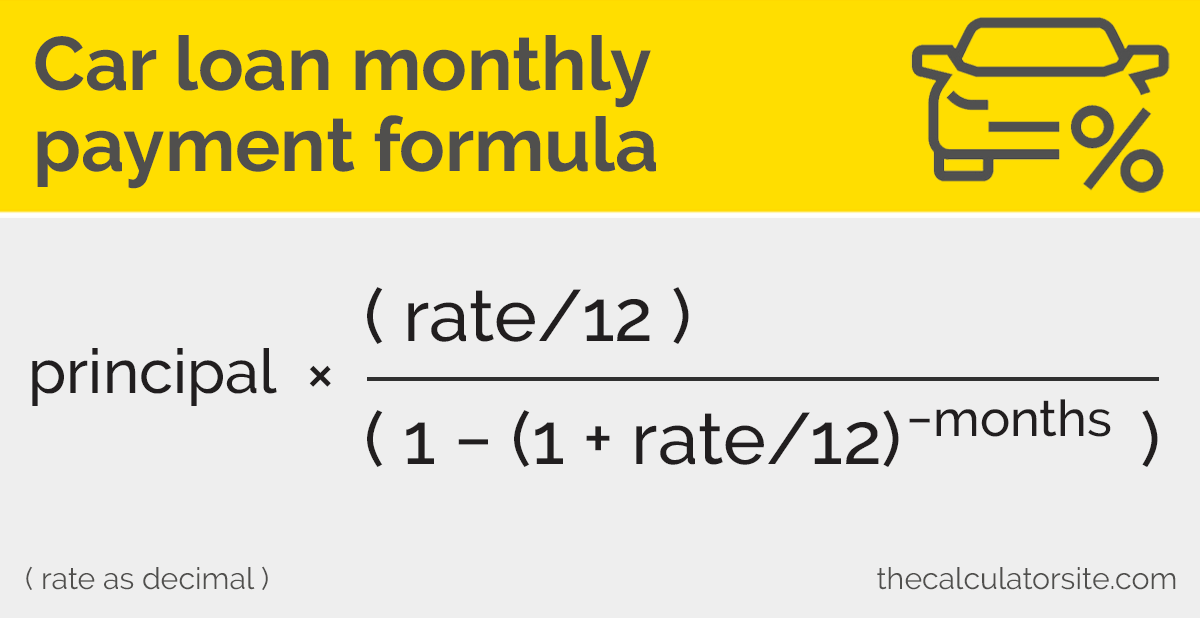
The most common formula used for calculating fixed-rate, amortizing loan payments (like most car loans) is:
$M = P [ i(1 + i)^n ] / [ (1 + i)^n – 1]$
Where:
- M = Monthly payment
- P = Principal loan amount (the amount you’re financing after down payment, trade-in, and including taxes/fees)
- i = Monthly interest rate (annual interest rate divided by 12)
- n = Total number of payments (loan term in years multiplied by 12)
While intimidating at first glance, this formula simply amortizes the principal and interest over the loan term. Each monthly payment includes a portion that goes towards reducing the principal and a portion that covers the accrued interest for that month. Early in the loan, a larger portion of your payment goes towards interest, and as the principal balance decreases, more of your payment starts going towards the principal.
Utilizing Online Car Payment Calculators
For most consumers, manually applying the formula isn’t practical. This is where online car payment calculators become invaluable. These tools are widely available on bank websites, dealership sites, and personal finance portals. You simply input the principal amount, interest rate (APR), and loan term, and the calculator instantly provides an estimated monthly payment. Many advanced calculators also allow you to factor in down payments, trade-in values, sales tax, and other fees, giving you a more accurate overall picture. Always use a few different calculators to cross-reference results and ensure consistency.
Understanding Amortization Schedules
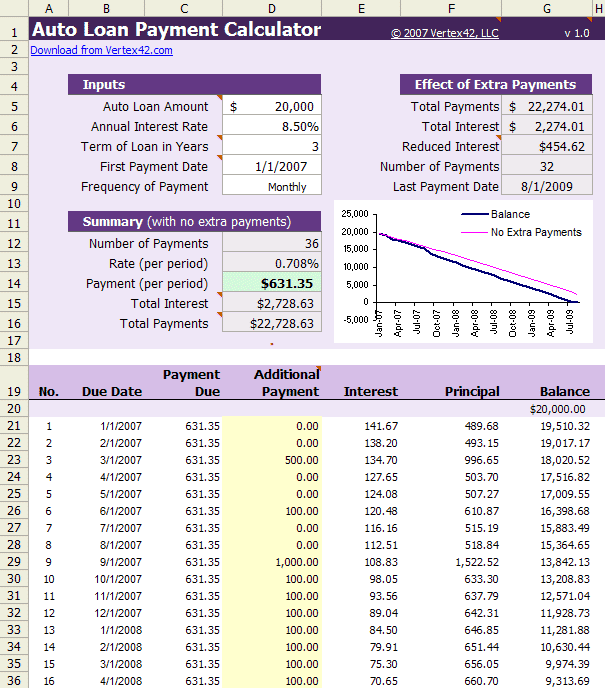
An amortization schedule is a table detailing each monthly loan payment over the entire life of the loan. For each payment, it shows:
- The payment number
- The fixed monthly payment amount
- The portion of that payment applied to interest
- The portion applied to the principal
- The remaining principal balance
Reviewing an amortization schedule offers transparency into how your payments reduce your debt over time and highlights the total interest you’ll pay. It’s particularly insightful for understanding the trade-offs between shorter and longer loan terms regarding total interest paid. Many online calculators can generate an amortization schedule, providing a detailed breakdown of your financial commitment.
Factors Influencing Your Interest Rate and Loan Approval
While the vehicle’s price and your down payment are largely within your control, the interest rate you qualify for is heavily influenced by external factors, primarily your creditworthiness.
Your Credit Score: The Cornerstone
Your credit score (e.g., FICO Score) is the single most important factor lenders use to assess your risk. A higher credit score (generally above 700-740) indicates a history of responsible borrowing and repayment, making you a low-risk borrower. This often translates to qualifying for the lowest available interest rates. Conversely, a lower credit score signals higher risk to lenders, resulting in higher interest rates, or in some cases, denial of a loan. Before applying for a car loan, it’s wise to check your credit score and report for any errors.
Debt-to-Income Ratio (DTI)
Lenders also evaluate your debt-to-income ratio (DTI), which compares your total monthly debt payments to your gross monthly income. A lower DTI indicates you have more disposable income available to manage new debt, making you a more attractive borrower. Lenders typically prefer a DTI of 36% or less, though some may go higher depending on other factors. A high DTI can signal that you’re overextended, potentially leading to a higher interest rate or loan denial, regardless of your credit score.
Lender Type and Loan Competition
The type of lender you choose can also impact your interest rate. Banks, credit unions, and captive finance companies (like Ford Credit or Toyota Financial Services) all offer car loans, but their rates and terms can vary significantly. Credit unions, for example, often offer highly competitive rates to their members. Shopping around and getting pre-approved from multiple lenders can foster competition, allowing you to compare offers and secure the best possible rate. Don’t simply accept the first offer from the dealership’s finance department; they often mark up interest rates.
Market Conditions and Economic Influences
Broader economic factors, such as the prime rate set by the Federal Reserve and the overall lending environment, can also affect car loan interest rates. During periods of economic expansion and low inflation, interest rates tend to be lower. Conversely, when the Federal Reserve raises rates to combat inflation, car loan rates typically follow suit. While these are largely out of your control, being aware of the prevailing economic climate can help you anticipate general interest rate trends.
Beyond the Monthly Payment: The True Cost of Car Ownership
While calculating the monthly car payment is crucial, it represents only one facet of the total financial commitment of owning a vehicle. Overlooking other recurring and hidden costs can lead to budget strain down the line.
Insurance Premiums
Car insurance is a legal requirement in most places and a substantial ongoing expense. Premiums vary widely based on your age, driving record, vehicle type, location, coverage levels, and chosen deductible. It’s imperative to get insurance quotes before finalizing your car purchase, as the make and model of the car can significantly impact your premiums. A “cheap” car with high insurance costs might end up being more expensive than a slightly pricier car with lower premiums.
Maintenance and Repairs
All cars require regular maintenance, such as oil changes, tire rotations, brake inspections, and fluid checks. As a car ages, unexpected repairs can also arise. Newer cars often come with a warranty, covering some costs, but these expire. Budgeting for routine maintenance and having an emergency fund for unexpected repairs is vital. Researching the typical maintenance costs for specific car models you’re considering can prevent sticker shock later.
Fuel Costs
Unless you purchase an electric vehicle, fuel will be a continuous expense. Your fuel costs will depend on the car’s fuel efficiency (MPG), current gas prices, and how much you drive. Factoring this into your monthly budget is essential, especially for longer commutes or frequent travel. Electric vehicles, while avoiding gasoline costs, will incur electricity charging costs, which also need to be considered.
Depreciation: The Hidden Cost
Depreciation is the loss of a vehicle’s value over time. It’s often the single largest “cost” of car ownership, yet it’s not a direct monthly payment. Most new cars lose a significant portion of their value in the first few years. Understanding depreciation is important if you plan to sell or trade in your car in the future, as it impacts your equity in the vehicle. While not a direct payment, it represents lost capital.
Registration and Licensing Fees
Annual or biennial registration and licensing fees are required to keep your car street legal. These costs vary by state and often depend on the vehicle’s age, weight, or value. They are an unavoidable part of car ownership and should be factored into your annual budget.
Strategic Tips for Managing and Reducing Your Car Payment
Empowered with a comprehensive understanding of car payments, you can now strategically approach the car-buying process to secure the best possible deal and manage your financial commitments effectively.
Boosting Your Down Payment
The most straightforward way to reduce your monthly payment and total interest is to make a larger down payment. By putting more money down upfront, you reduce the principal amount you need to finance, leading to smaller installments. Consider saving aggressively or waiting a bit longer to accumulate a substantial down payment.
Improving Your Credit Score
If your credit score isn’t optimal, taking steps to improve it before applying for a car loan can significantly lower your interest rate. This includes paying bills on time, reducing existing debt, and avoiding new credit applications in the months leading up to your car purchase. A higher score can save you thousands over the life of the loan.
Negotiating the Vehicle Price
Don’t be afraid to negotiate the purchase price of the vehicle. Research fair market values using resources like Kelley Blue Book or Edmunds, and be prepared to walk away if the deal isn’t right. Every dollar you shave off the purchase price directly reduces your loan amount. Remember to negotiate the out-the-door price, including all fees and taxes, not just the sticker price.
Shopping Around for the Best Loan
Never settle for the first loan offer. Get pre-approved from several different lenders – banks, credit unions, and online lenders – before stepping foot into a dealership. Comparing pre-approval offers gives you leverage and helps you identify the lowest interest rate available to you. With a pre-approval in hand, you can focus on negotiating the car price separately, rather than getting tangled in a combined negotiation for both car and financing.
Considering a Shorter Loan Term (with Caution)
While a shorter loan term means higher monthly payments, it dramatically reduces the total interest paid over the life of the loan. If your budget can comfortably accommodate higher payments, opting for a 36- or 48-month loan instead of 60 or 72 months can save you a substantial amount of money in the long run. Always ensure the shorter term payments are truly affordable and don’t strain your budget.
Refinancing Your Existing Car Loan
If you’ve already purchased a car and your credit score has improved, or if interest rates have dropped since you took out the loan, consider refinancing. Refinancing replaces your current loan with a new one, potentially at a lower interest rate or with different terms, which can reduce your monthly payment and/or the total interest you’ll pay. It’s worth exploring, especially if you secured your initial loan with less-than-ideal credit.
Conclusion: Empowering Your Car Buying Journey
Figuring out a monthly car payment goes far beyond a simple calculation; it’s a comprehensive financial decision that requires understanding various influencing factors and strategic planning. By dissecting the purchase price, down payment, loan term, and interest rate, and by leveraging online tools and understanding an amortization schedule, you gain clarity on your immediate financial commitment. Furthermore, recognizing the broader spectrum of car ownership costs – insurance, maintenance, fuel, and depreciation – ensures you budget realistically for the long haul. With careful preparation, diligent research, and savvy negotiation, you can navigate the car financing landscape confidently, securing a vehicle that fits your needs without derailing your financial well-being.
aViewFromTheCave is a participant in the Amazon Services LLC Associates Program, an affiliate advertising program designed to provide a means for sites to earn advertising fees by advertising and linking to Amazon.com. Amazon, the Amazon logo, AmazonSupply, and the AmazonSupply logo are trademarks of Amazon.com, Inc. or its affiliates. As an Amazon Associate we earn affiliate commissions from qualifying purchases.